Best Phishing Detection Tools for Employee Inboxes (2026)

The short answer
The best phishing detection tools for employee inboxes are AI Emaily for client-side triage with a reversible audit trail, Microsoft Defender for Office 365 and Google Workspace for provider-native filtering, and behavioral API tools like Abnormal Security or IRONSCALES for text-only business email compromise. Classic gateways scan links and attachments — BEC needs a tool that reads sender behavior instead.
Best phishing detection tools for employee inboxes, ranked on catching text-only business email compromise — not just link and attachment scans.
On this page
- 01How we compared
- 02The 8 best phishing detection tools for employee inboxes, compared
- 03Where a client-side layer fits in the phishing stack
- 041. AI Emaily — client-side triage with a reversible audit trail
- 052. Microsoft Defender for Office 365 — the provider-native anti-phishing layer
- 063. Google Workspace (Gmail) — advanced phishing settings, admin-configurable
- 074. Abnormal Security — behavioral API, built for BEC
- 085. IRONSCALES — behavioral AI plus a report-phishing loop
- 096. Cofense — employee reporting, simulation, analyst-supported triage
- 107. Proofpoint Essentials — the SMB secure email gateway
- 118. Mimecast — gateway with impersonation module and CyberGraph banners
- 12How to choose for your situation
The best phishing detection tools for employee inboxes fall into four shapes: provider-native controls in Gmail or Microsoft 365, a secure email gateway (SEG) in front of your mail server, an API-based post-delivery scanner that reads mail after it lands, and a client-side layer that gives the employee themselves a place to review and reverse what got filed. Most roundups rank on link and attachment detection, which is what the classic gateways were built for.
The axis that actually decides whether a tool catches modern phishing is different: can it flag a text-only message that carries no link and no attachment, just a request to reroute payroll or approve a wire. That is business email compromise (BEC), and it evades attachment-and-link scanning by design. According to the APWG's phishing activity resources, BEC lures continue to climb because they land clean past the filters most inboxes still trust to stop them.
For a small team without a security department, AI Emaily is the strongest starting point among the eight tools below — a client-side triage surface with an audit trail, undo on every filed message, and a place for staff to flag a suspicious sender before they act on it. For teams whose specific risk is invoice fraud or CEO impersonation at scale, dedicated behavioral engines like Abnormal Security or IRONSCALES do more than we do, and we say exactly where. We build AI Emaily.
How we compared#
We compared eight tools that show up when a business searches for phishing protection: two provider-native controls, two secure email gateways, two API-based behavioral platforms, one employee-reporting-and-simulation platform, and one client-side triage layer. We did not run our own detection benchmark. No vendor's independently audited BEC catch rate is public, so we did not manufacture one to rank on.
Instead we compared documented, verifiable capability across the dimensions that decide whether an employee is safer next Tuesday: where the tool sits in the mail flow, whether it can flag text-only impersonation, what an employee actually sees at the moment of risk, how a mistaken quarantine gets reversed, and how the tool is packaged.
- Where it inspects — before delivery (MX gateway), after delivery via API, provider-native, or inside the client
- Text-only BEC coverage — can it flag impersonation and payment redirection with no link and no attachment
- What the employee sees — an external-sender banner, a report-phishing button, a filed message with a visible reason, or nothing at all
- Reversibility — one-click release or a support ticket
- Provider coverage across Gmail, Microsoft 365, and general IMAP
- Packaging shape — never a specific price. Free tier, trial, per-seat, or usage-metered
A stronger link scanner will not catch text-only BEC
The 8 best phishing detection tools for employee inboxes, compared#
Packaging shapes below are what each vendor publishes as of August 2026. Verify current tiers on the vendor's own pricing page before you commit — plans in this category change more often than roundups get updated, and BEC-specific modules are usually the ones that move between tiers.
| Tool | Category | Where it inspects | Text-only BEC | Packaging shape |
|---|---|---|---|---|
| AI Emaily | Client-side triage layer | Inside the client, after provider filtering | Flags suspicious sender and impersonation patterns; not a dedicated BEC engine | 7-day free trial on Pro/Autopilot, then per-seat |
| Microsoft Defender for Office 365 | Provider-native (M365 add-on) | Exchange Online mail flow, pre-delivery | Anti-phishing policies with impersonation and mailbox intelligence at Plan 1+ | Add-on tier over Exchange Online Protection, per-user |
| Google Workspace (Gmail) | Provider-native | Gmail delivery pipeline, pre-delivery | Advanced phishing settings flag spoofing and unauthenticated senders | Included in Workspace subscription |
| Abnormal Security | API-based behavioral AI | After delivery, via Microsoft 365 or Google API — no MX change | Purpose-built for BEC, invoice fraud, vendor impersonation | Enterprise, usage-metered by mailbox count |
| IRONSCALES | API-based, with employee-reporting loop | After delivery, with a report-phishing button feeding the model | Behavioral AI plus crowdsourced signal from user reports | Per-mailbox tiers, module-gated |
| Cofense | Employee reporting, training and analyst-supported triage | After delivery, driven by user-reported mail | Reporter button plus PhishMe simulations and Triage/Vision analysis | Per-user modules, sold separately |
| Proofpoint Essentials | Secure email gateway (SMB) | MX record points to Proofpoint before your mail server | URL and attachment defense strong; impersonation depends on plan | Per-user subscription, SMB tier |
| Mimecast | Gateway plus impersonation and archiving bundle | MX gateway, with CyberGraph banners inside the mailbox | Impersonation Protect module and payment-fraud signals | Per-user subscription, bundled or modular add-ons |
Where a client-side layer fits in the phishing stack#
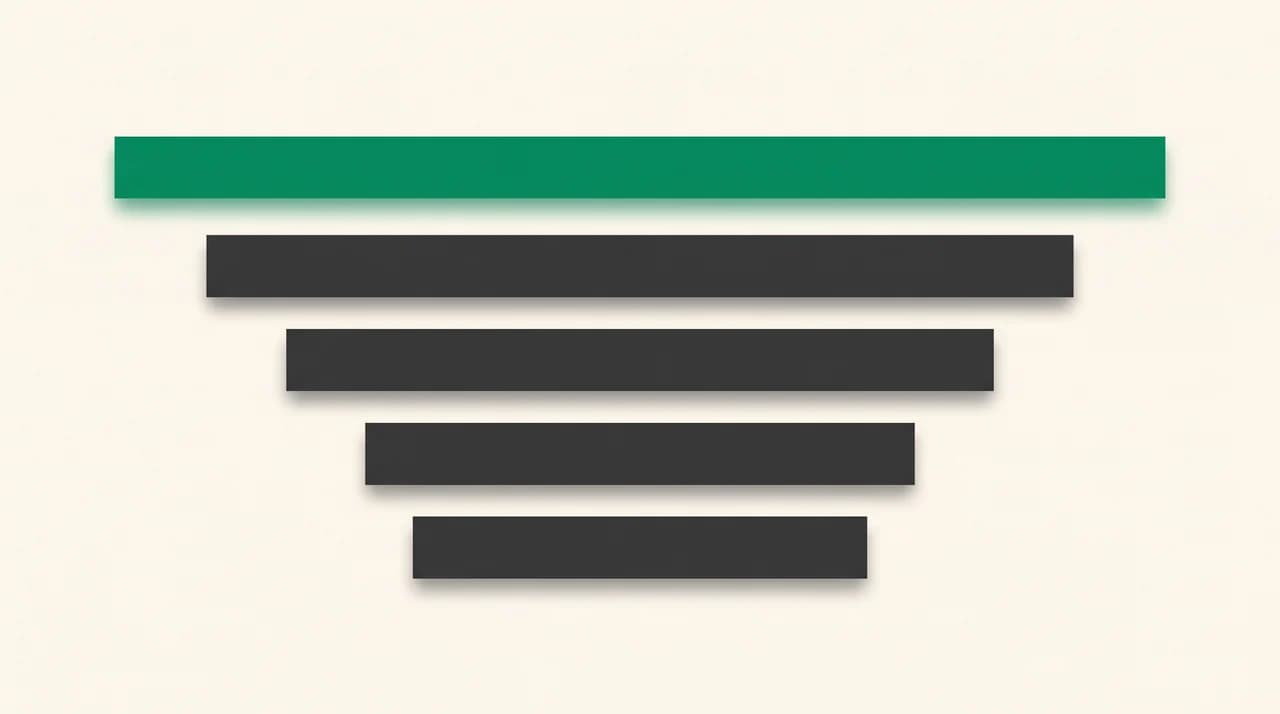
Two long sections follow — the AI Emaily entry and the seven other tools. Before that, a picture of what a client-side triage layer is doing that a gateway or an API scanner is not: it is not another filter in the mail path. It is a rest point for the employee, after everything upstream has done its job, where a suspicious message shows up with a visible reason it was flagged, a report button, and a one-click reversal if it turns out to be legitimate.
1. AI Emaily — client-side triage with a reversible audit trail#
AI Emaily is a client-side email application that connects to Gmail, Microsoft 365, and any IMAP mailbox. Its spam and phishing defence re-reviews mail after your provider has already filtered it, and the agent runs in three authority modes — Manual, Copilot, and Autopilot — so nothing consequential moves without the employee's approval unless they've explicitly turned that gate off for a specific action.
For phishing specifically, that changes what the employee experiences. A suspicious message arrives with a visible reason it was flagged — sender-behaviour and domain-pattern signals, a first-time-sender note, an impersonation hint against a name your Personal Context brain recognises. Every action on that message is written to an audit trail and is one click reversible. If the agent files something the employee actually wanted, it comes back in a second, and the sender's future mail is treated differently from then on.
What AI Emaily is not: a dedicated BEC detection engine. We do not sit at your MX record. We do not run an org-wide central console showing every message across every mailbox, and we do not maintain a vendor-risk graph the way Abnormal Security does. If your specific risk profile is a mid-size finance team targeted by invoice-redirect and vendor-impersonation fraud, Abnormal has built harder on that surgical problem than we have, and the honest recommendation is to start there — or to pair one with us.
For a small business, a solo operator, or a founder-run team whose real defence is a second pair of eyes on suspicious mail with the option to undo, AI Emaily's per-message visibility and reversibility is the differentiator on this list. Pricing is a 7-day free trial on Pro or Autopilot (card required, cancel any time before day 7), then per-seat monthly or annual. We build AI Emaily — verify current plans at the pricing page before you commit.
One important honesty note about voice framing
2. Microsoft Defender for Office 365 — the provider-native anti-phishing layer#
Every Microsoft 365 mailbox with Exchange Online gets baseline filtering from Exchange Online Protection (EOP). Microsoft Defender for Office 365 is the paid layer on top of that baseline. Plan 1 adds Safe Links (URL detonation and rewriting), Safe Attachments (attachment sandboxing), and anti-phishing policies with impersonation protection and mailbox intelligence. Plan 2 adds automated investigation and response, plus attack simulation training.
Impersonation protection is the module that matters for BEC. Configured properly, it can flag mail claiming to be from a protected user or protected domain when it fails to match the expected authentication and identity fingerprint. Mailbox intelligence extends that by learning who a given mailbox normally corresponds with, which is what lets it catch a message from a look-alike vendor domain the recipient has never actually written to before.
The catch is that the plan you are licensed for decides what you get. EOP alone will not stop targeted phishing. Defender Plan 1 adds the anti-phishing policies but not the automated response. Confirm which plan is licensed on your tenant before assuming you have the full feature set — Microsoft's own Defender documentation is the reference and links what is included at each tier.
3. Google Workspace (Gmail) — advanced phishing settings, admin-configurable#
Gmail's built-in phishing detection is provider-native and, on the volume of everyday junk, catches most of it before a user sees it. The controls that matter for employee-inbox phishing are in the Workspace Admin console: Advanced phishing and malware protection lets an admin turn on additional pre-delivery scanning for spoofing, unauthenticated senders, look-alike domains, encrypted attachments, and scripts.
For BEC-shaped mail, the relevant switches are the spoofing and authentication ones — mail that fails DMARC or comes from a domain similar to one the organisation regularly corresponds with can be sent to spam, quarantined, or shown in the inbox with a warning banner. That banner, the yellow one Gmail shows on a message it cannot authenticate, is often the single most effective phishing signal an employee sees.
Where Gmail is thinner than Microsoft's stack is the admin quarantine and investigation side. A blocked message goes to the user's own Spam folder rather than a central admin quarantine, and detailed post-incident investigation lives in the Security Investigation Tool, which is a Workspace Enterprise feature. Turn every advanced setting on for the whole domain before deciding you need a third party.
4. Abnormal Security — behavioral API, built for BEC#
Abnormal Security is an API-based post-delivery scanner built specifically for the phishing shapes classic gateways miss. It connects to Microsoft 365 or Google Workspace over API rather than an MX change, reads the mail flow to build a behavioral baseline per sender, per recipient and per vendor relationship, and flags deviations — a payment request from a slightly wrong domain, a message that does not match how that person normally writes, a vendor asking for updated bank details for the first time.
Because it runs after delivery, it can also remediate mail already in a mailbox — pulling a fraudulent message out of an inbox the moment a signal fires elsewhere, without waiting for the employee to click it. VendorBase, the vendor-risk graph, is the piece competitors do not have and the one that specifically addresses invoice fraud.
It is packaged for the enterprise buyer: usage-metered by mailbox count, sold through a security team rather than IT self-serve, and rarely priced publicly. For a small business without a dedicated security function, it is more machinery than the problem needs. For a mid-size finance team targeted by invoice-redirect fraud, it is the tool most sharply aimed at that specific risk.
5. IRONSCALES — behavioral AI plus a report-phishing loop#
IRONSCALES combines a behavioral AI scanner with an employee-reporting loop. The report-phishing button installed in the mail client feeds signal back into the model — when many employees flag mail from the same fingerprint, the tool remediates it across every other mailbox in the organisation automatically, without an admin having to run a script.
That crowd-plus-model design is the interesting axis. A pure behavioral tool learns from the mail flow alone. A pure reporting tool depends on employees noticing something is off. IRONSCALES pairs the two, which is why its remediation is fast on lures that would otherwise land in dozens of inboxes before anyone reacts.
It also includes phishing simulation and role-based training in the same platform, which competes directly with Cofense on that surface. Packaged per-mailbox with tiers gating which modules are included; verify on the vendor site which tier includes automated remediation versus only detection.
6. Cofense — employee reporting, simulation, analyst-supported triage#
Cofense's product line is centred on the employee as a phishing sensor. Cofense Reporter is the button that installs in Outlook or Google Workspace and lets a user report a suspicious message with one click. PhishMe runs simulated phishing campaigns to train that reporting habit. Triage and Vision are the platforms that take reported mail and either automate the analyst response or, at higher tiers, involve Cofense's own analysts.
It is a different shape of phishing tool than Abnormal or IRONSCALES. Those two lean on behavioral AI to catch mail before an employee reacts. Cofense leans on the employee reacting well, and then makes the response scale. For an organisation whose culture already values reporting, or one investing in security awareness, the fit is natural. For one that has not built that habit, the value shows up more slowly.
Modules are sold separately, so a small business often starts with Reporter and PhishMe and grows into Triage and Intelligence later. Check the vendor's own site for the current module split before you assume the price you were quoted covers analyst review.
7. Proofpoint Essentials — the SMB secure email gateway#
Proofpoint Essentials is Proofpoint's SMB-tier secure email gateway. Point your MX record at Proofpoint and mail is filtered before it reaches your mail server, with URL Defense rewriting links, Attachment Defense sandboxing files, and impersonation controls layered on top of spam scoring.
For classic phishing — a malicious link, a booby-trapped invoice, a credential-harvesting page — it is dependable and well documented. For text-only BEC, the depth of the impersonation module depends on the plan, and the gateway's advantage — inspecting mail before delivery — is less relevant when the mail carries no payload to sandbox. The employee still has to notice something is wrong.
Quarantine follows the classic gateway pattern: a digest email lands in each user's inbox on a schedule listing what was held, with a release link; admins get a console for search and release across the domain. Sold as a per-user subscription, distinct from Proofpoint's enterprise product line.
8. Mimecast — gateway with impersonation module and CyberGraph banners#
Mimecast is a gateway built around a bundle: spam and phishing filtering at the MX level, impersonation protection as a separately configurable module, and CyberGraph banners that appear inside the mailbox itself when the tool sees a message worth a second look. That banner is the piece most relevant to employee-inbox phishing — it puts the warning where the employee is about to click, not in an admin console they never open.
The impersonation module handles the text-only BEC axis: it looks at header authenticity, display-name anomalies, sender history, and payment-fraud phrasing, and can hold or tag mail that trips the pattern. Bundled with Mimecast's archiving and continuity is what gets it into compliance-heavy industries in the first place, and the archiving is genuinely strong — nothing client-side on this list replaces it.
Packaged per-user, with the impersonation module and CyberGraph either included or added depending on plan. Confirm on the current pricing page whether the tier under discussion includes the impersonation module you need — it is the piece most likely to be gated up a plan.
How to choose for your situation#
The right tool depends less on any single vendor's marketing than on who has to review what got flagged, and how targeted your organisation actually is. Match the situation below rather than picking whatever ranks first on a generic search.
- Small business or solo operator whose main phishing risk is one bad click on a spoofed invoice: start with a client-side layer like AI Emaily, on top of the phishing settings your provider already gives you. Visibility and one-click reversal on a filed message matter more than another URL scanner.
- Microsoft 365 tenant that hasn't checked its Defender licensing: confirm which plan is active before buying anything else. Plan 1's anti-phishing policies with impersonation protection may already be paid for and unused.
- Google Workspace tenant that hasn't turned on Advanced phishing and malware protection: do that first. The yellow banner Gmail shows on unauthenticated mail is often the single strongest phishing signal a non-technical employee sees, and it is admin-toggleable.
- Mid-size finance or ops team specifically targeted by invoice fraud or vendor impersonation: Abnormal Security's behavioral engine and VendorBase are aimed at exactly that. Start there — a small-business inbox tool is not the right instrument for a mailbox that moves seven-figure invoices.
- Organisation building a security-awareness culture, with employees willing to report: IRONSCALES or Cofense make that reporting feed a real remediation loop rather than just an inbox admins ignore.
- Regulated industry with archiving, journaling, or continuity requirements: Mimecast or Proofpoint Essentials, because the phishing layer is bundled with the compliance layer you already need — not because they are the sharpest instrument against BEC on this list.
Fix the workflow before you fix the tool
Frequently asked
See it in AI Emaily
Keep reading

Written by
Nafiul HasanNafiul Hasan is an entrepreneur and AI automation system builder with 10+ years of experience turning messy, manual workflows into reliable automated systems. He designs and ships AI enterprise solutions end-to-end — the agent logic, the data plumbing, and the product people actually use — and founded AI Emaily to give busy professionals their attention back. He writes here from the builder's seat: what works, what breaks, and how to put AI to work without giving up control.