Cancelling an Email Add-On Without Breaking Your Inbox

The short answer
Cancelling an email add-on rarely removes what it left behind: the OAuth grant to your account, labels and folders it created, filters that still reference it, and tracking pixels in old sent mail. Cancel the subscription first, then work through account security settings, filters, and labels in that order, and confirm any queued sends fired before you pull the plug.
How to cancel an email add-on safely: revoke its account access, clear leftover labels, and check scheduled sends before you cancel.
On this page
You cancel a scheduler, a tracker, or a Gmail add-on expecting your inbox to go back to how it was before you installed it. It doesn't. How to cancel an email add-on safely means treating cancellation as three separate actions, not one: stopping the billing, revoking the account access, and cleaning up what the tool left inside your mailbox.
Most people only do the first one. The subscription page has a clear "Cancel plan" button; the OAuth grant sitting in your Google or Microsoft account security settings does not, and it doesn't expire just because a card stopped being charged. Neither do the labels, filters, and signature edits the add-on made while it had access.
What Actually Moves and What Doesn't#
An email add-on — a Gmail add-on, an Outlook add-in, or a Chrome extension that reads or sends mail — gets there through an OAuth grant: a token your provider issued that says "this app can read/send/modify mail on this account." Cancelling the tool's subscription does not touch that token. Only revoking it, inside your provider's own security settings, does.
Split what you're dealing with into two categories before you touch anything:
- Billing-side, and it dies with cancellation — the recurring charge, the tool's own dashboard, any premium features gated behind their servers.
- Mailbox-side, and it survives cancellation until you remove it yourself — the OAuth grant, filters/rules the tool created or that reference it, labels and folders it applied, tracking pixels already sitting in sent mail, and anything queued in its own send-later or reminder queue at the moment you cancel.
Pre-Cancellation Checklist#
Do this before you click cancel, not after. Once the subscription lapses, some tools lock you out of the dashboard you'd need to check any of it.
- List every automation the tool runs today — scheduled sends, snoozes, follow-up reminders, auto-BCC, signature tracking.
- Note anything with a future fire date: a send-later draft queued for next Tuesday, a follow-up reminder set for a deal closing in three weeks.
- Export templates, saved replies, or tracking history you want to keep — most dashboards delete this on account closure, not on cancellation.
- Find the filters and rules it created (search your provider's filter list for the tool's forwarding address or a label it uses).
- Confirm which labels or folders it made, so you can decide whether to keep, archive, or delete them.
Steps: The Cancellation Order That Doesn't Break Anything#
Order matters here more than in most software cancellations, because an email add-on's access and its billing are two unrelated systems. Doing this in the wrong sequence is how people end up with a scheduled email that never sends or a mysterious label that forwards mail nowhere.
- 1
Let pending sends clear or migrate them
If anything is queued — a scheduled send, a snooze, a follow-up reminder — either wait for it to fire or manually recreate it in your provider's native tools before cancelling. Don't assume it'll fire after the account is closed.
- 2
Cancel the subscription
Do this in the tool's own billing dashboard. This stops the charge and, for most tools, stops new automation from running — but it does not touch the OAuth grant or anything already written into your mailbox.
- 3
Remove filters and rules that reference the tool
Open your provider's filter/rule list and delete anything forwarding to the add-on's address, applying its label, or triggered by a header it added. A dead filter that still matches mail is a silent leak, not just clutter.
- 4
Delete or archive the labels and folders it created
These don't disappear on their own. Decide per label: delete it, or keep it as a static archive of mail it already sorted — just don't leave it active with nothing populating it.
- 5
Revoke the app's access in your account security settings
In Google, this is Google Account → Security → Third-party apps with account access. In Microsoft, it's Microsoft account → Privacy → App access. Find the tool by name and remove access — this is the step cancelling the subscription never does for you.
- 6
Uninstall the browser extension or add-in last
Removing the Chrome extension or Outlook add-in from your browser only removes the local UI. It does not revoke server-side access on its own, so do this after the account-level revoke, not instead of it.
What Breaks When You Cancel — and What Doesn't#
The honest answer to "what breaks in my inbox" is: usually nothing breaks loudly. It fails quietly instead — a filter keeps matching mail and doing nothing useful with it, or a tracking pixel keeps loading from a server nobody's paying for anymore.
| What it left behind | What happens after you cancel | What to do |
|---|---|---|
| OAuth grant | Stays active indefinitely. Billing status has no effect on it. | Revoke it manually in Google/Microsoft account security settings. |
| Filters/rules referencing it | Keep running — matching mail, applying a label, forwarding to an address that may now bounce. | Delete or repoint them before cancelling. |
| Labels/folders it created | Stay in your mailbox forever unless deleted. Harmless but permanent. | Keep as a static archive or delete outright. |
| Scheduled sends in the tool's own queue | Depends on the tool — some send server-side regardless of plan status, others silently drop once the account is inactive. | Never assume. Let queued sends clear, or recreate them, before cancelling. |
| Tracking pixels/links in already-sent mail | Keep existing in recipients' inboxes. They still load, and still report opens, until the vendor's server goes down — which can be years later, or never. | Nothing to do retroactively; stop new mail from using them going forward. |
| Signature edits it made | Stay in your signature exactly as written until you edit it again. | Check your signature for a tracking pixel or a "sent via" line and remove it. |
An orphaned grant is a security gap, not just clutter
Rollback Plan: If Cancelling Breaks a Workflow You Still Need#
Re-subscribing does not restore anything retroactively. If you cancelled before a scheduled send fired and it got dropped, resubscribing brings back the dashboard, not the message that should have gone out three days ago. There is no undo for a missed send-later — only sending it again, late, with an apology if it needed to be on time.
The safer rollback is to not need one: keep the account you're cancelling active (but not paying) for a few days after you've moved its automations elsewhere, so you can confirm nothing depended on it that you missed. If the tool locks the dashboard on non-payment rather than on explicit account closure, check that before you assume you have a grace window.
If you deleted a filter or label and later realize you needed it, that part is trivial — recreate it in two minutes using your provider's native filter tools. The genuinely irreversible piece is a missed time-sensitive send, so that's the one worth over-checking before you cancel.
Doing It Without Downtime#
If the add-on is doing something you still need — scheduling, follow-up reminders, snooze — the goal isn't just "cancel cleanly," it's "cancel without a gap where that job isn't being done by anything." Set up the replacement first, confirm it's actually running on a real message, and only then cancel the old tool.
For a team or shared inbox, coordinate the cutover: if a colleague relies on a label the add-on applies to route support requests, killing that filter mid-week without warning them creates a worse mess than the add-on ever did. Do the cutover at a quiet point in the week, and tell anyone whose filters or shared labels touch the tool before, not after.
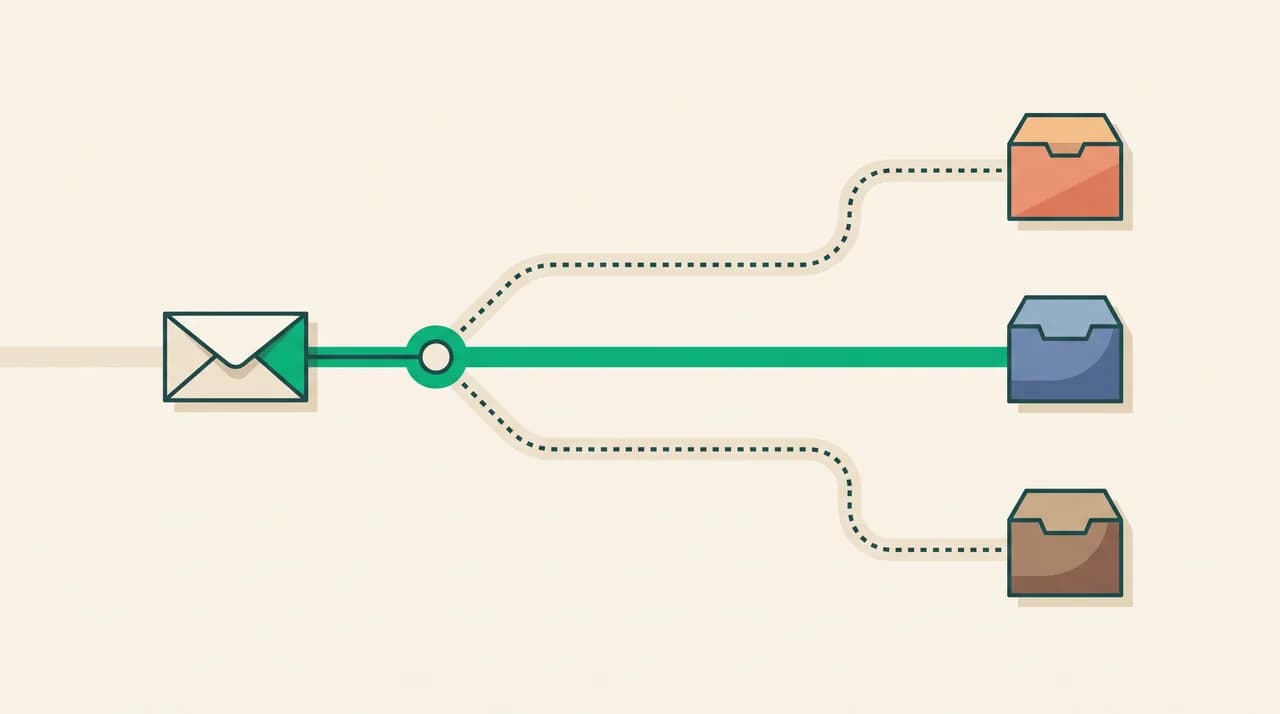
Most of what's above is true because add-ons stack. One scheduler, one tracker, one triage extension — each with its own OAuth grant, its own labels, its own signature edit — and each one is a separate cancellation checklist to run someday. AI Emaily folds send-later, follow-up reminders, and inbox triage into the client itself, so there's one connection to your Gmail or Outlook account instead of three or four accumulating side by side.
That doesn't mean zero account access — AI Emaily still connects via OAuth like any client that reads your mail — but it means one grant and one settings page to review, not a pile of unrelated add-ons each with their own offboarding day. We build AI Emaily.
Frequently asked
See it in AI Emaily
Keep reading

Written by
Nafiul HasanNafiul Hasan is an entrepreneur and AI automation system builder with 10+ years of experience turning messy, manual workflows into reliable automated systems. He designs and ships AI enterprise solutions end-to-end — the agent logic, the data plumbing, and the product people actually use — and founded AI Emaily to give busy professionals their attention back. He writes here from the builder's seat: what works, what breaks, and how to put AI to work without giving up control.