What You Can and Can't Take From Work Email When You Leave

The short answer
Almost nothing, by default — a company mailbox belongs to the employer, and most policies bar bulk export. You can usually keep your own personal contacts, genuinely personal correspondence, and your own portfolio work, after checking policy. The account itself gets disabled, forwarded, or handed to a manager on or shortly after your last day.
What you can legally keep from a work inbox when you leave a job, and what happens to the mailbox after your last day.
On this page
- 01What "you can't take it" actually means
- 02What you can and can't take: the causes table
- 03Fix 1: check the policy before you touch anything
- 04Fix 2: forward only what's genuinely yours
- 05Fix 3: request a formal handover instead of self-serve export
- 06How to tell which cause you have
- 07Preventing it: build your handover before your last week
- 08What happens to the mailbox after you leave
You're leaving a job and staring at a mailbox with years of contacts, threads and files in it. The honest answer is that the mailbox is company property, and in most organizations the acceptable-use policy you signed says so explicitly — which means the instinct to "back everything up" before your last day can turn a clean exit into a data-handling problem.
This post covers what you're actually allowed to take, what you're not, and what happens to the account itself once you're gone. It is not a guide to exporting company data before anyone notices. If that's what you're looking for, stop — read the last section on why that specific move goes wrong, then come back to the legitimate path below.
What "you can't take it" actually means#
A company email account is issued to you to do the job, the same way a laptop or a badge is. The mailbox, the address book built from company contacts, the message archive, and any attachments you sent or received through it are the employer's records, not yours — even the drafts you personally wrote.
Most companies formalize this in an acceptable-use or IT policy, and a growing number add it to the employee handbook or the offer letter directly. In the US, several states also apply computer-fraud and trade-secret law to bulk exports taken without authorization, which is why "I was just backing up my own files" is not a defense IT or legal counsel will accept at face value.
None of that means you leave with nothing. It means the default is company-owned, and anything you take has to fall into a specific, defensible category — not "everything, just in case."
What you can and can't take: the causes table#
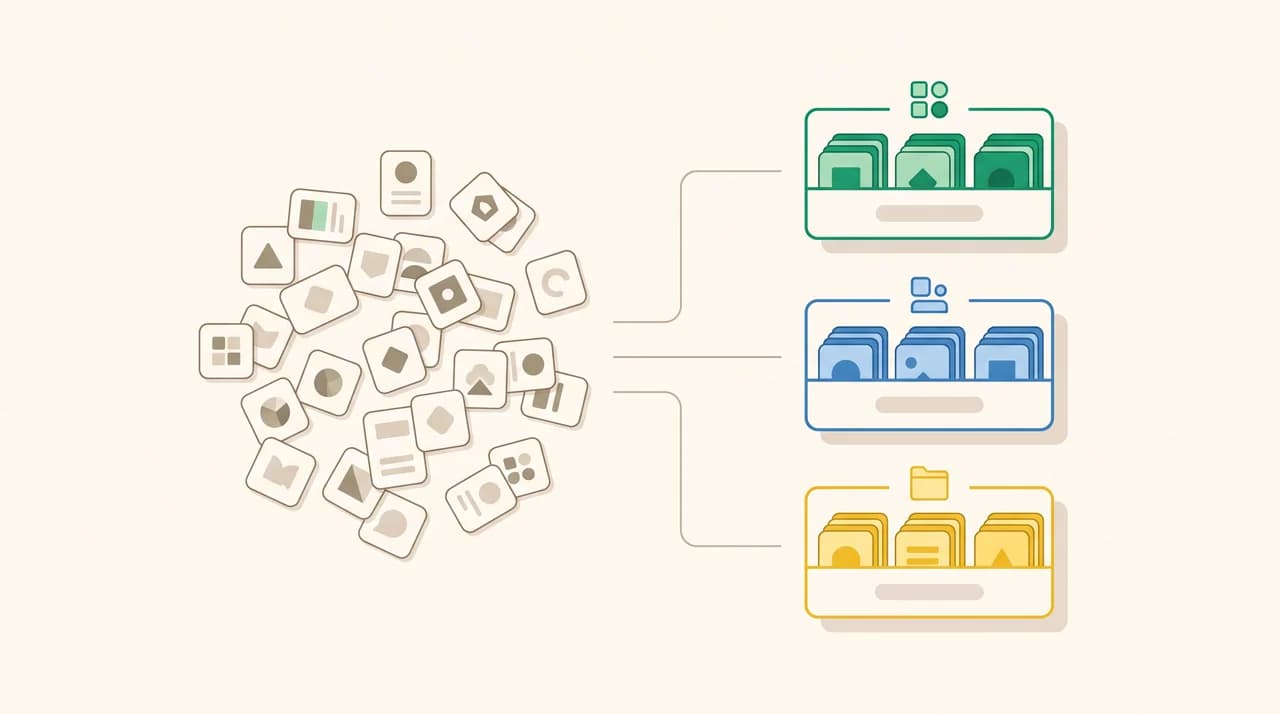
Think of this less as a legal loophole hunt and more as sorting two piles: things that are unambiguously yours, and things that only feel like they're yours because you're the one who touched them.
| Item | Can you take it? | How to confirm | What to do |
|---|---|---|---|
| Personal contacts (friends, family, your own network you brought in) | Usually yes | Check if the policy distinguishes personal vs. business contacts | Export just those rows, or manually add them to your personal account |
| Client or customer contact lists built on company time | No | Ask: did the company pay you to build this relationship? | Leave it; request a formal handover to your replacement instead |
| Your own resume, cover letters, certificates you emailed to HR | Usually yes | Confirm it's a document about you, not company work product | Forward to a personal address before your last day, with manager awareness |
| Work samples/portfolio pieces you personally created | Depends on your contract | Check the employment agreement's IP/work-for-hire clause | Ask HR in writing; many companies allow a redacted portfolio copy |
| Genuinely personal correspondence (a friend emailed your work address) | Usually yes | Would you be embarrassed if IT read it? If not personal, leave it | Forward the specific thread, not the whole mailbox |
| Proprietary data, pricing, financials, source code, trade secrets | No | If it would hurt the company in a competitor's hands, it's not yours | Never export; flag to IT if you need it for a legitimate handover task |
| Calendar invites for personal appointments booked through work email | Usually yes | Check if the event details reference company matters | Screenshot or manually re-add to a personal calendar |
Sort by that rule before you export anything: put each item in one of two piles, not a single "grab it all" folder.
Fix 1: check the policy before you touch anything#
- 1
Find the acceptable-use or IT policy
It usually lives in the employee handbook, the intranet, or the document you signed on day one. Search for "data," "export," or "offboarding."
- 2
Look for an explicit export clause
Some companies spell out exactly what departing employees may take (personal files, personal contacts) and require IT sign-off for anything else.
- 3
If it's silent, ask HR directly
Send a short, written question: "Can I export my personal contacts and the resume-related documents I sent to HR?" A written answer protects you if anyone later questions what left with you.
- 4
Do not proceed on assumption
"Nobody ever said I couldn't" is not the same as permission, and it's the detail that turns a routine exit into an investigation.
Fix 2: forward only what's genuinely yours#
- 1
Build a short, specific list
Write down exactly what you plan to forward — not "my emails," but named threads and named contacts. A vague list is how personal-mail forwarding turns into a bulk export.
- 2
Forward threads individually
Use your mail client's forward function on the specific personal threads you identified, sent to a personal address you control.
- 3
Export contacts as a filtered list, not the full address book
Most mail platforms let you select and export a subset of contacts rather than the whole directory. Take the subset that's personal, skip the rest.
- 4
Keep a copy of what you sent
Bcc yourself or keep the sent-items record. If anyone later asks what left the building, you can show exactly what it was.
Fix 3: request a formal handover instead of self-serve export#
- 1
Identify what your successor actually needs
Active client threads, project context, in-flight approvals — the things that would otherwise stall on your last day.
- 2
Ask your manager to formalize the handover
A documented handover — shared with a manager or replacement — is how legitimate business continuity works, and it protects you from being the one who quietly moved data out.
- 3
Set up an auto-reply, not a silent redirect
"I've left the company; please contact [colleague] at [address]" is standard practice. A rule that silently forwards incoming mail to your personal account after you leave is not the same thing, and most IT teams disable it as soon as they find it.
- 4
Confirm the handover in writing
A short email confirming what was handed off and to whom closes the loop cleanly, for you and for the company.
How to tell which cause you have#
If you're unsure whether something belongs in the "take it" pile, ask one question: was this created for the company, or is it about you personally? A client list, a deal spreadsheet, or a codebase was created for the company, no matter how much of your own effort went into it. Your resume, a friend's email, or your own contact roster from before you joined is about you.
The edge case that trips people up most is portfolio work — a design, a piece of writing, a deck you're proud of. Check your employment contract's IP clause first. Many contracts assign work product to the employer even when you did the creative labor, and "I made it" doesn't override "I was paid to make it."
Preventing it: build your handover before your last week#
The cleanest exits start weeks before the last day, not the night before. Keep your personal contacts and personal correspondence in a personal account from the start, so there's nothing to sort at the end. Ask HR for copies of your own HR documents as they're issued, rather than digging through a mailbox on your way out. And start the handover conversation with your manager as soon as you know you're leaving, so it's a documented process rather than a rushed export under deadline pressure.
A quick practical habit: never let your only copy of a personal document — a signed offer letter, a certificate, a reference — live solely in your work inbox. Forward it to yourself the day you receive it, while doing so is unambiguously routine and not tied to leaving.
The reason this keeps tripping people up is that a mailbox mixes company records and personal correspondence in one stream with no visual separation — a client thread and a note from your sister sit in the same inbox, so "just export what's mine" sounds simple until you're actually doing it. AI Emaily's rules and Context Brain keep a running, per-contact picture of which threads are personal versus work-related as they arrive, across every account you connect, so that distinction is already made by the time you need it rather than reconstructed under deadline pressure on your last day. We build AI Emaily.
What happens to the mailbox after you leave#
In Microsoft 365, an admin typically converts the departing user's mailbox to a shared mailbox or blocks sign-in and sets a forwarding rule to a manager, per Microsoft's own admin guidance on offboarding. In Google Workspace, an admin can transfer ownership of Drive files and reset or suspend the account, with mail either held, forwarded, or exported to an archive depending on company retention policy.
Either way, the account rarely disappears instantly — it's disabled or converted, and the content is retained on the company's schedule, not yours. That's also why racing to export data before your last day accomplishes less than it feels like: the company's copy still exists regardless of what you do to yours.
Don't set a silent forwarding rule
Frequently asked
See it in AI Emaily
Keep reading

Written by
Nafiul HasanNafiul Hasan is an entrepreneur and AI automation system builder with 10+ years of experience turning messy, manual workflows into reliable automated systems. He designs and ships AI enterprise solutions end-to-end — the agent logic, the data plumbing, and the product people actually use — and founded AI Emaily to give busy professionals their attention back. He writes here from the builder's seat: what works, what breaks, and how to put AI to work without giving up control.