Email Asking a Client for a Purchase Order Number

The short answer
Ask for the PO number in writing, before you start work if possible: name the project, state the quoted value, and give a deadline tied to your own start or invoice date. If a PO was promised and hasn't arrived, reference the promise date and resend the quote. Keep it short — accounts payable reads dozens of these a day.
Eight ready-to-send emails for chasing a PO number, before work starts and after it's overdue.
On this page
- 01When to send this
- 02What a good PO request email contains
- 03The templates
- 041. Requesting a PO before work starts
- 052. Chasing a PO that was promised and hasn't arrived
- 063. Asking for a PO increase when the work overruns
- 074. Re-invoicing after a portal rejection for a missing PO
- 08What is a PO increase request, exactly
- 09The hard version of this situation
- 10What to do if there's no reply
- 11Chasing a PO without doing it manually every time
A purchase order number is the one thing that decides whether your invoice gets paid on the first pass or bounces back three weeks later with "no PO on file." Most of the time the client isn't stalling — the PO simply hasn't been raised yet, or it sat in someone's queue behind fifteen other approvals.
This post has eight templates: requesting a PO before you start, chasing one that was promised and never arrived, asking for a PO increase mid-project, and re-invoicing after a portal rejection. There's also a template for the situation nobody plans for — you already did the work and there's still no PO number anywhere.
When to send this#
Send a PO request the moment a client says yes to a quote, before you touch the work. A PO is the client's own internal authorization to spend money — it protects you as much as it protects their finance team, because it means someone with budget authority already signed off.
Three moments call for a PO email: at kickoff, when a promised PO is late, and when the scope grows past what the original PO covers. Each needs a different message — sending the kickoff template to chase a late PO reads as if you forgot the earlier conversation.
- At the quote-acceptance stage, before any work starts
- When a promised PO hasn't arrived by the date the client gave you
- When the project value exceeds the PO you already have
- When an invoice bounces back from a portal citing a missing or mismatched PO
What a good PO request email contains#
Accounts payable and procurement teams triage email fast. A PO request that makes them stop and think — because a field is missing or the amount doesn't match a quote on file — goes to the bottom of the pile. Give them everything they need to raise the PO without a follow-up question.
| Element | Why it matters |
|---|---|
| Project or job name | Matches the client's internal record; a generic subject line gets skimmed past |
| Quoted value | The number procurement checks against the PO amount before approving it |
| Reference to the signed quote or SOW | Gives them a document to attach to the PO request internally |
| Your invoice-ready deadline | Frames the PO as blocking your start or your billing, not a formality |
| Where to send it | One line — email address or portal link — removes a decision |
The templates#
Copy any of these directly. Brackets mark what you fill in: [PO NUMBER], [PO VALUE], [PROJECT CODE]. Keep the subject line specific — it's what gets a PO request routed to the right inbox instead of a general queue.
1. Requesting a PO before work starts#
Subject: PO number needed to begin [PROJECT NAME]
Hi [Name],
Thanks for confirming the quote for [PROJECT NAME] at [PO VALUE]. Before we schedule the work, could you send over the purchase order number your finance team will use for this? We'll reference it on the invoice once the work is complete.
If it's easier, I'm happy to send the quote again for your records — just let me know.
We're aiming to start the week of [date], so if the PO could be raised before then, that keeps us on schedule.
Thanks, [Your name]
2. Chasing a PO that was promised and hasn't arrived#
Subject: Following up — PO for [PROJECT NAME]
Hi [Name],
Checking in on the PO number for [PROJECT NAME]. When we spoke on [date], you mentioned it would be raised by [date given]. I don't see it come through yet — could you check where it's sitting?
For reference, the quoted value was [PO VALUE] and the project code (if your system uses one) is [PROJECT CODE].
No rush if it's just moving through approval, but let me know if there's anything I can send to help it along.
Thanks, [Your name]
Reference the promise date, not just the ask
3. Asking for a PO increase when the work overruns#
Subject: PO increase needed for [PROJECT NAME] — [PROJECT CODE]
Hi [Name],
The current PO for [PROJECT NAME] ([PO NUMBER]) covers [original PO value]. With the additional scope we discussed on [date] — [one-line description of the added work] — the total now comes to [new total].
Could you have the PO increased by [difference], or raise a supplementary PO for that amount? I want to make sure the invoice matches whatever's on file before I send it.
Happy to resend the revised scope or quote if that helps the approval.
Thanks, [Your name]
4. Re-invoicing after a portal rejection for a missing PO#
Subject: Resubmitting invoice [invoice number] with PO reference
Hi [Name],
Invoice [invoice number] for [PROJECT NAME] came back through your portal flagged for a missing PO number. Could you confirm the correct PO to reference so I can resubmit?
If a PO hasn't been raised yet for this work, let me know and I'll hold off resubmitting until it's in place — no point sending it back through to bounce a second time.
Thanks, [Your name]
What is a PO increase request, exactly#
A PO increase request asks the client to raise the authorized spend amount on an existing purchase order, either by amending it or issuing a supplementary PO for the difference. It's distinct from a new PO request because the original PO number, project reference, and vendor record already exist — you're only changing the dollar figure.
Procurement teams generally prefer an amendment to the existing PO over a brand-new one, since it keeps one audit trail for the project instead of two. Say which you'd accept in the email if your client's system supports both — it saves them a decision.
The hard version of this situation#
Sometimes the work already happened and there's still no PO — a verbal go-ahead, an email approval that never turned into a PO, or a rush job where paperwork got skipped on both sides. The instinct is to explain the process failure. Don't. That explanation gives the client's finance team a reason to stall while they figure out whose mistake it was, and it's rarely worth the delay to your payment.
Ask for retrospective cover instead: a PO dated to match the work, or written confirmation you can attach to the invoice in its place. Keep the tone matter-of-fact — this happens often enough that most procurement teams have a process for it, even if it's not their preferred path.
Template — asking for retrospective PO cover
What to do if there's no reply#
One unanswered PO request usually means it's sitting in someone's queue, not that it's being ignored. Give it three to five business days, then follow up with the same subject line so it threads with the original — a new subject looks like a new, lower-priority request.
If a second follow-up also goes quiet, widen who you're asking. Most companies have a general accounts payable or procurement inbox separate from your day-to-day contact, and that inbox often moves faster because it's someone's whole job rather than a side task.
- 1
Day 1
Send the initial PO request with project name, value, and your target start or invoice date.
- 2
Day 4–5
Reply on the same thread, reference the date you first asked, and ask if it's still moving through approval.
- 3
Day 8–10
CC or move to the general accounts payable / procurement inbox if one exists, referencing the earlier thread.
- 4
Day 14+
Raise it as a blocker with your main contact directly — at this point it's reasonable to say the start date or invoice is at risk.
Chasing a PO without doing it manually every time#
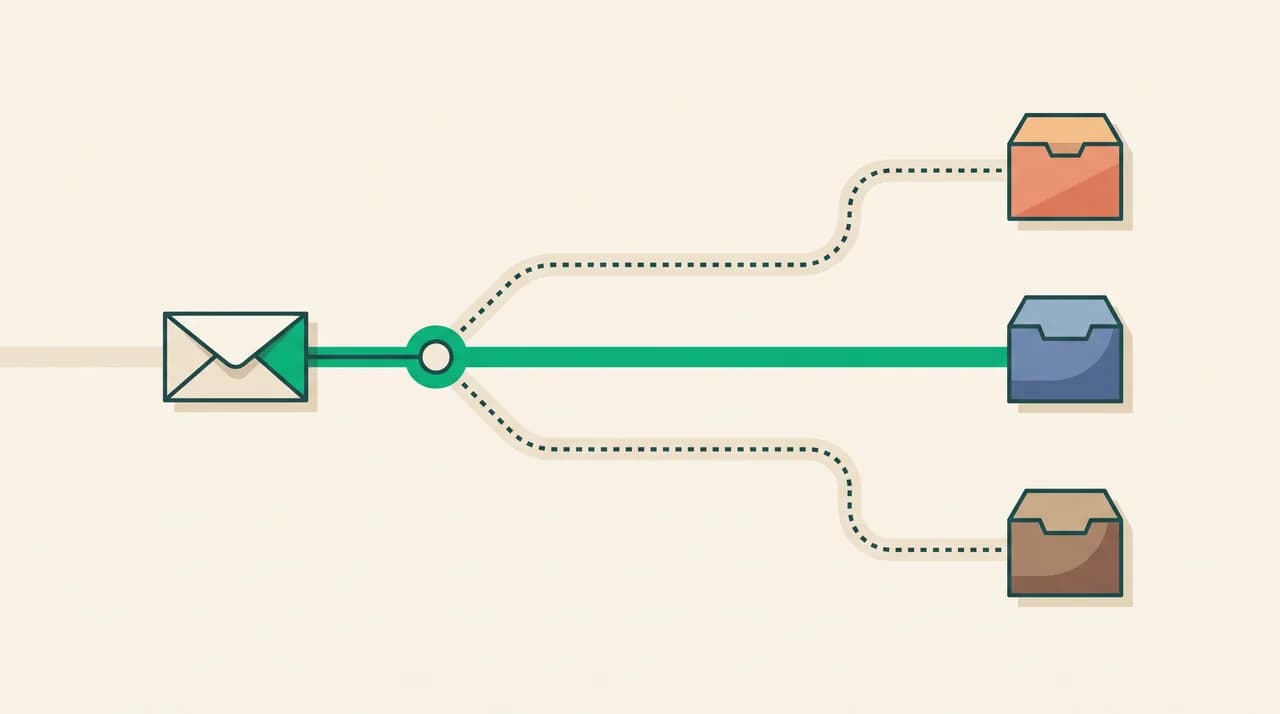
The templates above cover the message; the harder part is remembering which client owes you a PO, when you last asked, and what date they promised it by, especially across a dozen open projects. That's the part that quietly slips.
AI Emaily's AI drafting keeps your usual PO-request wording in your Personal Context and client profiles, so a follow-up email pulls in the right project name, PO value, and prior promise date instead of you rewriting it from a blank page each time. It drafts the follow-up in your voice for you to review and send — it doesn't chase for you or send anything without your approval. We build AI Emaily.
Frequently asked
See it in AI Emaily
Keep reading
Sources

Written by
Nafiul HasanNafiul Hasan is an entrepreneur and AI automation system builder with 10+ years of experience turning messy, manual workflows into reliable automated systems. He designs and ships AI enterprise solutions end-to-end — the agent logic, the data plumbing, and the product people actually use — and founded AI Emaily to give busy professionals their attention back. He writes here from the builder's seat: what works, what breaks, and how to put AI to work without giving up control.