Deleted Items vs Recoverable Items in Outlook: The Real Difference

The short answer
Deleted Items is the visible folder in your mailbox where deleted mail lands, with no platform-enforced time limit. The Recoverable Items folder is a hidden, non-browsable area behind it that stores permanently deleted mail plus audit and hold data, governed by a 14-to-30-day retention window and its own separate 30 GB (100 GB on hold) storage quota.
Deleted Items is visible and self-managed; the Recoverable Items folder in Outlook is hidden, quota-limited, and governed by retention and holds.
On this page
- 01The verdict, up front
- 02Deleted Items vs Recoverable Items, at a glance
- 03Where Deleted Items wins
- 04Where Recoverable Items wins
- 05Why the Recoverable Items folder fills up — and blocks new deletions
- 06Litigation hold and retention policies change every rule above
- 07How to actually get something back
- 08Which Microsoft 365 plan changes these numbers
- 09Who each is genuinely for
- 10A third option, honestly
Deleted Items and the Recoverable Items folder in Outlook look like they do the same job: they hold mail you deleted, in case you want it back. They don't work the same way, and mixing them up is why deleting old mail sometimes fails for no obvious reason.
Deleted Items is a folder you can see, open, and manage like any other folder in your mailbox. The Recoverable Items folder is not something you can browse at all — it's a hidden storage area behind the scenes that Exchange Online and Microsoft 365 use as a server-side safety net, and it carries its own separate storage quota that counts against your mailbox no matter how empty Deleted Items looks.
That second part is the one most how-to articles skip, and it's the reason a mailbox can refuse to let you delete anything even when Deleted Items is completely empty.
The verdict, up front#
Deleted Items is the visible folder that appears in your folder list, right where you'd expect it. Outlook places anything you delete from your Inbox or any other visible folder into it. Nothing about the platform automatically empties Deleted Items on a timer — items sit there until you delete them yourself, unless your organization has applied its own retention policy to that specific folder.
The Recoverable Items folder is different in every way that matters. It lives outside the folder list you can see in Outlook or Outlook on the web, in what Exchange calls the non-IPM subtree — the part of a mailbox reserved for internal, operational data rather than mail you read and reply to. You never open it directly. It fills up the moment you empty Deleted Items, permanently delete a message with Shift+Delete, or purge anything through Outlook's own Recover Deleted Items tool, and Exchange Online enforces both a time limit and a separate storage quota on what ends up inside it.
The time limit is the deleted item retention period: 14 days by default, and an admin can extend it to a maximum of 30 days — never longer, and never at an individual user's discretion. The storage quota is 30 GB for a mailbox that isn't on any hold, with a 20 GB warning threshold before that point. If the mailbox is placed on Litigation Hold or In-Place Hold, or has a Microsoft 365 retention policy applied, that quota rises to 100 GB, with a 90 GB warning. Cross either limit and Exchange stops accepting new items into Recoverable Items — and because everything you delete has to pass through it first, that means you lose the ability to delete anything at all until the folder is cleaned up.
Deleted Items vs Recoverable Items, at a glance#
Both folders exist to soften the same action — deleting something — but they diverge on every dimension that decides whether you can actually get an item back.
| Dimension | Deleted Items | Recoverable Items |
|---|---|---|
| Visibility | A visible folder in the folder list, in Outlook and Outlook on the web | Hidden — lives in the non-IPM subtree and never appears as a folder you can open |
| What lands there | Anything you delete from Inbox, Sent Items, or any other visible folder | Anything emptied or hard-deleted (Shift+Delete) out of Deleted Items, plus internal audit, version, and hold data |
| Storage quota | Counts against your normal mailbox storage quota (50–100 GB depending on plan) | Its own separate quota: 30 GB (20 GB warning) not on hold; 100 GB (90 GB warning) on hold |
| Time limit | None enforced by the platform by default | 14 days by default; admin-extendable to a 30-day maximum |
| Subfolders | None — it's a single folder | Seven: Deletions, Purges, Versions, Audits, DiscoveryHolds, Calendar Logging, SubstrateHolds |
| End-user recovery | Open the folder and drag the item back | Only the Deletions subfolder, through Outlook's Recover Deleted Items tool |
| Admin recovery | Not applicable — items are already visible | Exchange admin center for Deletions-level items; Microsoft Purview eDiscovery for anything already purged, if single item recovery or a hold was active |
| Affected by litigation hold | No | Yes — a hold stops automatic purging entirely and keeps every subfolder populated indefinitely |
| What happens at the limit | Nothing unusual — ordinary mailbox storage warnings apply | New deletions fail outright; you cannot delete mail from any folder until it's cleared |
Where Deleted Items wins#
Deleted Items wins on the thing most people actually want from a deletion workflow: visibility and control. You can see everything in it, search it, sort it, and permanently empty it on your own schedule. Nothing about it is hidden, and nothing about it is governed by a compliance mechanism you didn't choose.
For a mailbox that isn't on any hold and isn't subject to a regulatory retention obligation, Deleted Items is effectively the entire deletion story. There's no separate quota to track, no subfolder structure to understand, and no 14-day clock running in the background — the folder behaves exactly the way it looks like it behaves.
- You just want deleted mail out of sight until you're sure you don't need it back
- Nobody has placed the mailbox on a legal or compliance hold
- You want to permanently empty everything on your own schedule, without waiting on a retention window
Where Recoverable Items wins#
Recoverable Items exists precisely because Deleted Items offers no real safety net once someone empties it or Shift-Deletes something out of it. Recoverable Items is what stands between an empty Deleted Items folder and mail that's gone for good — and for an accidental-deletion scenario or a legal hold, that gap is the entire value.
It isn't one undifferentiated bucket. It's seven subfolders, and only one of them is something you, as the mailbox owner, will ever interact with directly.
| Subfolder | Visible to end users? | What lands there |
|---|---|---|
| Deletions | Yes, via Recover Deleted Items | Everything emptied from Deleted Items or Shift-Deleted from any other folder |
| Purges | No | Items hard-deleted out of Deletions once single item recovery or Litigation Hold is enabled — otherwise they're simply gone |
| Versions | No | The pre-edit copy of an item, saved only while a hold or retention policy is active (copy-on-write) |
| Audits | No | Mailbox audit log entries, if audit logging is turned on |
| DiscoveryHolds | No | Items matching an In-Place Hold or retention policy's search criteria, once hard-deleted |
| Calendar Logging | No | A record of calendar changes inside the mailbox |
| SubstrateHolds | No | Preserved copies of modified or deleted Teams messages, under a hold or Teams retention policy |
This is probably already on
The other six subfolders exist purely so compliance and legal teams — or Exchange itself — can reconstruct what happened to a mailbox after the fact. That's the entire reason Recoverable Items wins on anything involving audits, legal holds, or a deletion someone insists never happened: Deleted Items has nothing equivalent to offer.
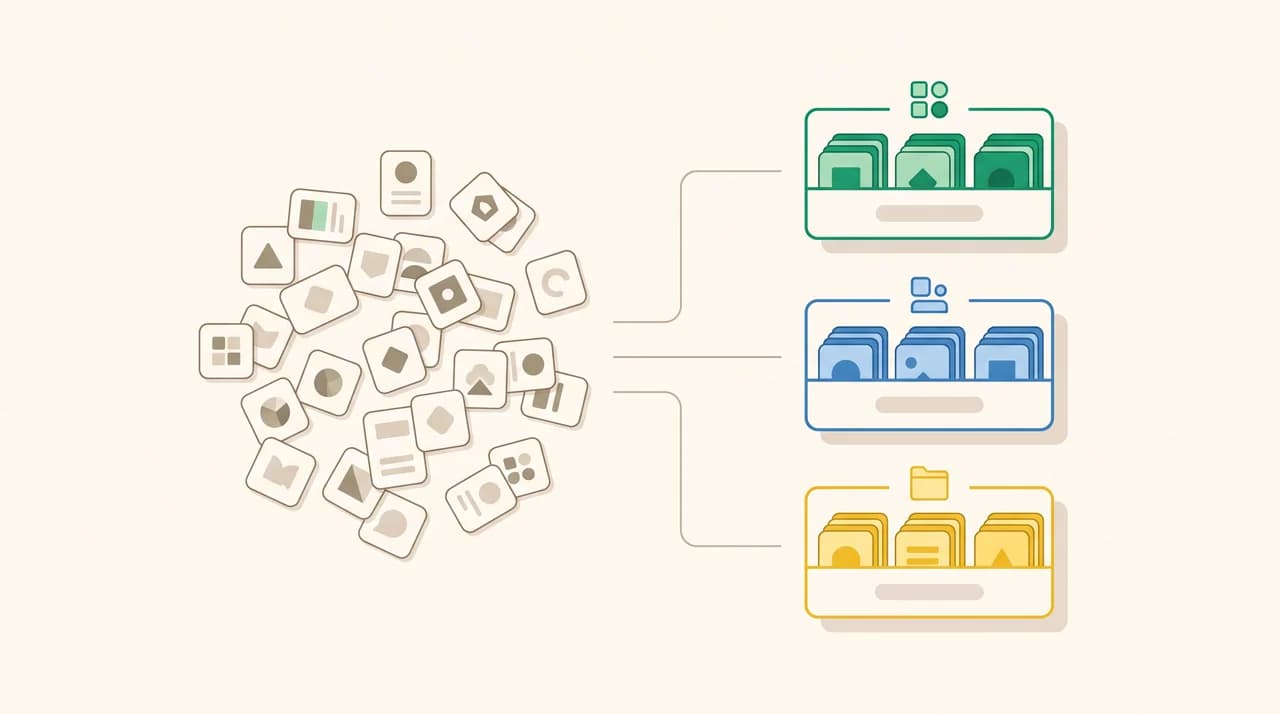
Why the Recoverable Items folder fills up — and blocks new deletions#
Because Deleted Items has no automatic purge of its own, most of what lands in Recoverable Items comes from routine habits: emptying Deleted Items regularly, or an IT-run retention policy that moves mail through it on a schedule.
On a mailbox that isn't on any hold, this mostly self-manages. The Managed Folder Assistant purges the Deletions subfolder automatically once the 14-day (or admin-extended 30-day) window closes, oldest items first, so the folder rarely grows without limit.
The problem case is a mailbox on Litigation Hold, In-Place Hold, or a retention policy. Any of those stops the Managed Folder Assistant from purging Deletions, Purges, and DiscoveryHolds at all, for as long as the hold stays active. Everything ever deleted keeps accumulating, and because the mailbox is on hold, the 100 GB ceiling — not the 14-day clock — is the only thing standing between normal use and a full folder.
There's a message-count ceiling too, separate from the storage quota: 3 million items per Recoverable Items subfolder, with a warning logged at 2.75 million. A mailbox with heavy calendar sync or a chatty add-in generating small items can hit that count before it ever approaches the gigabyte limit.
What actually happens at the limit
Litigation hold and retention policies change every rule above#
A hold doesn't just raise the storage ceiling — it changes how the whole system behaves. With Litigation Hold or In-Place Hold applied, the Managed Folder Assistant stops purging Deletions, Purges, and DiscoveryHolds entirely, indefinitely, for as long as the hold is in place. If both are applied to the same mailbox, Litigation Hold takes precedence, since it puts the entire mailbox on hold rather than just the items matching a search query.
A hold also switches on copy-on-write page protection. Any time a held item's subject, body, attachments, recipients, or send/receive dates change, Exchange saves the pre-edit copy into the Versions subfolder before writing the update. Drafts are exempt, and so are read/unread flips or a plain move between folders — those don't count as a modification worth preserving.
This structure is also what makes eDiscovery over deleted mail possible at all. A discovery manager searching through Microsoft Purview eDiscovery can reach content across Deletions, Purges, Versions, and DiscoveryHolds — folders an end user cannot see, let alone search, from inside Outlook. When a hold is eventually removed, the Managed Folder Assistant resumes normal purging, and the Versions subfolder is cleared out.
How to actually get something back#
The recovery path narrows fast the longer an item has been gone, and knowing which stage you're at matters more than any single trick.
- 1
Check Deleted Items first
If the message is still sitting in the visible Deleted Items folder, this is the easy case — drag it back to Inbox, or right-click and choose Move.
- 2
Use Recover Deleted Items
If Deleted Items has already been emptied, open it anyway and look for Recover Deleted Items from Server (classic Outlook for Windows) or the equivalent recovery option in Outlook on the web and new Outlook. This reaches only the Deletions subfolder, and only within the deleted item retention window — 14 days by default.
- 3
Ask an admin if you've missed the window
Once an item is purged out of Deletions — whether you emptied the recovery view yourself or the Managed Folder Assistant cleaned it up automatically — it moves to Purges, a subfolder you cannot see or recover from yourself. An Exchange admin can attempt the same Deletions-level recovery on your behalf from the Exchange admin center, but that only helps if the item hasn't already crossed into Purges.
- 4
Escalate to eDiscovery for anything already purged
Recovering an item from Purges is possible only if single item recovery or a hold was active when it was deleted, and only before the deleted item retention period expires for that specific item. That recovery runs through Microsoft Purview eDiscovery — the classic Content Search and eDiscovery tools it replaced were retired in 2025 — not through Outlook or the Exchange admin center directly.
The practical takeaway is that the fifteen minutes right after a permanent deletion matter more than most people assume. Every stage after Deletions narrows who can get an item back, and whether they can get it back at all.
Which Microsoft 365 plan changes these numbers#
Business Basic, Standard, Business Premium, and Enterprise E3/E5 all share the identical baseline Recoverable Items quota — 30 GB not on hold, 100 GB on hold — and the same 14-day default, 30-day maximum retention window. Microsoft doesn't gate the mechanism itself by tier.
What the tier actually changes is the archive mailbox sitting behind it. Business Basic and Standard cap the archive mailbox, and its own Recoverable Items folder, at a flat 50 GB with no auto-expansion available. Business Premium and Enterprise E3/E5 support auto-expanding archiving, which lets that same Recoverable Items ceiling grow toward 1.5 TB once an admin turns it on. A mailbox that keeps hitting the wall on Business Standard often isn't out of options — it's on a plan that never unlocks the release valve.
| Plan | Recoverable Items quota (primary mailbox) | Archive mailbox headroom |
|---|---|---|
| Business Basic / Standard | 30 GB (100 GB on hold) | 50 GB archive mailbox, no auto-expanding archiving |
| Business Premium | 30 GB (100 GB on hold) | Up to 1.5 TB with auto-expanding archiving enabled |
| Enterprise E3 / E5 | 30 GB (100 GB on hold) | Up to 1.5 TB with auto-expanding archiving enabled |
Verify before you plan around it
Who each is genuinely for#
The right answer depends on what's actually driving the search, not on which folder sounds more thorough.
| If this is you | What matters | Why |
|---|---|---|
| Solo user who just wants deleted mail gone | Deleted Items alone, managed on your own schedule | No hold applies, no compliance need — the visible folder is the entire workflow |
| Anyone worried about an accidental Shift+Delete | Recoverable Items' 14-day (or admin-extended 30-day) Deletions window | Self-service recovery through Recover Deleted Items, no admin ticket required |
| An admin managing a mailbox near its storage cap | The Recoverable Items quota specifically, not Deleted Items | A full mailbox and a full Recoverable Items folder produce the same symptom — can't delete — but need different fixes |
| Legal, compliance, or HR handling a hold | Litigation Hold and In-Place Hold behavior across Purges, Versions, and DiscoveryHolds | These subfolders exist specifically to make deleted mail discoverable during an investigation |
A third option, honestly#
Neither Deleted Items nor Recoverable Items is something an email client manages. They're server-side Exchange mechanics, and no client — AI Emaily included — changes retention windows, raises quotas, or reaches into Purges. That limit is worth stating plainly before anything else in this section.
The actual problem that sends most people searching for these two folders in the first place usually isn't the folders themselves — it's a mailbox creeping toward a storage wall, and the fastest way past that isn't deleting faster, it's knowing what's actually worth deleting. AI Emaily's semantic search and inbox triage surface the largest, oldest, and most redundant mail sitting in a connected mailbox before it ever reaches that wall, and it does that across Gmail, Outlook, and IMAP accounts at once rather than one folder in one mailbox at a time. We build AI Emaily.
The limit stays in force even here: AI Emaily can help you find and clear what's filling a mailbox before Recoverable Items gets involved, but once something has already been purged into Purges or DiscoveryHolds, the only paths back are the admin and eDiscovery routes described above.
Frequently asked
See it in AI Emaily
Keep reading
Sources

Written by
Nafiul HasanNafiul Hasan is an entrepreneur and AI automation system builder with 10+ years of experience turning messy, manual workflows into reliable automated systems. He designs and ships AI enterprise solutions end-to-end — the agent logic, the data plumbing, and the product people actually use — and founded AI Emaily to give busy professionals their attention back. He writes here from the builder's seat: what works, what breaks, and how to put AI to work without giving up control.