Locked Out of My Email Account: A Recovery Decision Tree

The short answer
If you are locked out of your email account and can't get in, the right path depends on whether it is personal or work-managed, whether you still have a second factor, and whether the cause is a forgotten password, a security hold, or an administrator action. Personal accounts usually recover in under 30 minutes.
Locked out of your email account? This recovery decision tree routes you to the right fix — forgotten password, security hold, or admin lockout.
On this page
If you are locked out of your email account and can't get in, the recovery path depends entirely on which of three situations you are actually in. A forgotten password with a working recovery method clears in minutes. A security hold placed after suspicious activity can take hours, and the steps are different. A lockout imposed by an administrator at your company requires something different again — and nothing you do on the login page will fix it.
This guide routes you through three diagnostic questions: is the account personal or work-managed, do you still hold a second factor, and is the lockout from a wrong password, a security event, or an admin action? Your answers send you to the one fix that applies.
What 'locked out' actually means#
The error message almost never names the cause. 'Your account has been disabled' looks identical whether you typed the wrong password too many times, Google flagged unusual sign-in activity, or your IT department suspended the account. The table below maps each situation to how to confirm it and who can resolve it.
| Cause | How to confirm | Who can fix it |
|---|---|---|
| Forgotten password — recovery method available | Login page shows 'Wrong password' or the 'Forgot password' link is active | You, via self-service recovery |
| Too many failed login attempts | Error shows a lockout timer or 'Try again later' message | Usually auto-clears in 15 to 60 minutes; then self-service recovery |
| Security hold after suspicious activity | Provider sent a security alert to your recovery email or phone | You, via identity verification on the provider's recovery page |
| Lost second factor with no backup codes | You know the password but no 2FA option works | You, via the provider's account recovery form — can take 24 to 72 hours |
| Administrator-imposed lock | Error says 'disabled by your administrator' or names your organisation | Your IT helpdesk or account owner only — not self-service |
| Account disabled for a policy violation | Provider message cites Terms of Service or a specific policy | Provider support; outcomes vary and are not guaranteed |
Fix 1: Forgotten password with a working recovery method#
This is the most common cause and the fastest to resolve, provided at least one recovery option — a backup email address, phone number, or authenticator app — is still accessible to you.
If you set up a recovery method when you created the account and you still have access to it, the process takes under five minutes. The only variable is how long the verification code takes to arrive.
- 1
Go to the provider's sign-in page directly
Click 'Forgot password', 'Trouble signing in', or 'Can't access your account'. Navigate to gmail.com, outlook.com, or your provider's login page — do not use a link from an email you were not expecting.
- 2
Choose a recovery method
Select the backup email address, phone number, or authenticator app you registered when you created the account. If none of those options appear, your recovery methods were never saved — skip to Fix 3 if this is a work account, or proceed to the account recovery form for a personal one.
- 3
Enter the verification code
Check the recovery device or address for the code. Codes expire quickly, usually within 10 minutes. If nothing arrives, check spam and then request a new code once.
- 4
Set a new password
Use a password manager to generate a random password of at least 16 characters. Do not reuse a password from another account — reuse is how one breach becomes several.
- 5
Review your recent account activity
Once inside, open your security settings and check for unfamiliar sessions or connected devices. Sign out any you do not recognise. Save backup codes now if the provider offers them.
Fix 2: Security hold after suspicious activity#
Google, Microsoft, and Apple temporarily freeze an account when sign-in activity does not match your usual pattern — an unfamiliar device, an unusual location, or a credential that appeared in a known data breach. The account is not deleted. You need to confirm your identity to lift the hold.
Check your recovery email address or phone first. The provider typically sends a security alert there before or during the lockout. That message tells you where to go and what the provider needs from you.
- 1
Check your recovery address for a security alert
Open your backup email inbox or SMS messages for a message from your provider. The subject usually contains words like 'security alert', 'suspicious sign-in', or 'action required'.
- 2
Navigate to the provider's recovery page directly
Do not click links in emails you were not expecting — phishing messages mimic real security alerts. Open a new browser tab and go to accounts.google.com, account.microsoft.com, or iforgot.apple.com.
- 3
Complete identity verification
The provider may send a code to your recovery phone, ask for backup codes, or in some cases request ID documentation. Follow each prompt in order — skipping steps usually resets the process.
- 4
Change your password immediately after recovery
Set a new password before doing anything else. If the same password was in use on other accounts, change those too. A security hold often indicates the old credential is known to someone else.
- 5
Revoke unfamiliar sessions and connected apps
In your security settings, review which devices are connected and which third-party apps have been granted access. Sign out any unfamiliar sessions and remove access for apps you did not add.
Do not click recovery links in unexpected emails
Fix 3: Administrator-managed or work account#
A Google Workspace, Microsoft 365, or organisation-hosted email account belongs to the organisation, not to you personally. If the administrator has disabled your account or reset your credentials, self-service recovery will not restore access. The login page may surface a recovery link, but it routes to settings your admin controls — not to a personal recovery path.
The fix here is a conversation with IT, not a sequence of clicks on the login page.
- 1
Confirm it is an admin lockout
The error message will name your organisation, say 'disabled by your administrator', or display a contact address for your IT helpdesk. If you see a personal recovery option such as a phone or backup email, you may be in Fix 1 or Fix 2 territory instead.
- 2
Contact your IT helpdesk using an out-of-band channel
Since your primary account is locked, reach IT by phone, in person, or via a secondary personal email address. Have your employee ID or other identity credential ready before the conversation.
- 3
Provide the identity verification IT requires
Common requirements include manager confirmation, an employee badge, or the answer to a registered security question. Do not share passwords — IT does not need your password to unlock your account.
- 4
Ask whether self-service recovery is enabled for your account
Once access is restored, ask IT whether your account can be configured for self-service recovery, and which steps to follow next time. Some organisations disable it by policy; knowing that now saves time later.
- 5
Set up any recovery methods your IT policy allows
Update a recovery phone number or save backup codes if your organisation permits it. Keep a note of your helpdesk contact so you are not searching for it at the worst possible moment.
Who owns a work email account
How to tell which cause you have#
Start with one question: is the email address under a company or school domain? If yes, contact your IT helpdesk before trying anything else. Self-service recovery on a Google Workspace or Microsoft 365 account only works if the administrator has specifically enabled it, and many have not.
If it is a personal account, read the error message carefully. A message mentioning 'too many attempts' or showing a countdown timer is a temporary lockout — wait 30 to 60 minutes, then try Fix 1. A security alert sent to your recovery address means Fix 2. A prompt that asks you to verify your identity but gives you no working option — lost phone, no backup codes — means you are headed into the slower account recovery form that Fix 2 describes, with a resolution time measured in hours rather than minutes.
The distinction that matters most is between a security hold and a forgotten password. A security hold usually arrives with an alert email to your recovery address; a forgotten-password lockout does not. If you received a security alert you did not trigger, treat the situation as a potential compromise: change passwords on all connected accounts after you recover access, and check whether any app was granted access without your knowledge.
Preventing it from happening again#
Two measures prevent almost every personal lockout: a password manager and saved backup codes.
A password manager stores your credentials so you never need to remember a password, which eliminates the forgotten-password scenario entirely. Use it to generate a unique, random password of at least 16 characters for each email account. Most managers support biometric unlock on mobile, so day-to-day access is not slower.
When you enable two-factor authentication — and you should — immediately download and save the backup codes the provider offers. These codes are your exit if you lose your phone or change your number. Store them somewhere physical, such as a printed sheet in a locked drawer, or in the encrypted notes section of your password manager. Do not store them only on the same device as your authenticator app.
For work accounts, ask IT whether your account has self-service recovery enabled before you need it. Find out who to call and what identity verification they require. The time to discover the answer is not the moment you are locked out.
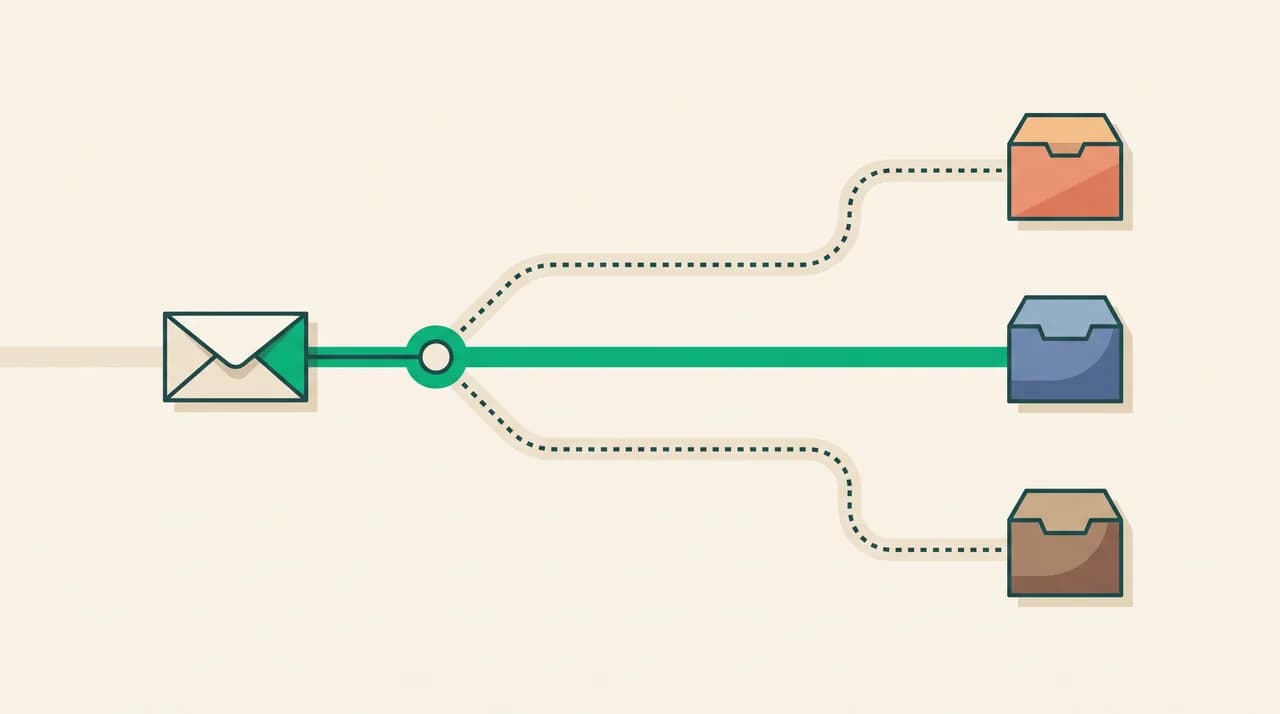
One quieter version of being locked out arrives after you recover access: the inbox that has become so cluttered during the outage that finding what is urgent takes almost as long as the lockout itself. We build AI Emaily, an AI-native email client that triages on reconnect and surfaces the threads that need your attention first, with drafts held for your approval before anything sends. It does not store your password or recovery details, and it does not train on your mail — the voice it drafts in comes from a user-set Context brain and per-client profiles you control. If inbox recovery is where you end up after a lockout, a 7-day free trial is available at /pricing — card required, nothing charged if you cancel before day 7.
Frequently asked
See it in AI Emaily
Sources

Written by
Nafiul HasanNafiul Hasan is an entrepreneur and AI automation system builder with 10+ years of experience turning messy, manual workflows into reliable automated systems. He designs and ships AI enterprise solutions end-to-end — the agent logic, the data plumbing, and the product people actually use — and founded AI Emaily to give busy professionals their attention back. He writes here from the builder's seat: what works, what breaks, and how to put AI to work without giving up control.