Build an Escalation Ladder for Your Own Inbox

The short answer
Publish a three-rung escalation ladder: flag genuinely urgent email in the subject line, move to a named channel (a direct message or a text, not a shared inbox) after a stated window like two hours, then call. Write the wording into your signature or team page, and answer the phone every single time or senders stop trusting any of it.
An email escalation policy for urgent requests: a 3-rung ladder from email to a named channel to a phone call, plus wording to publish.
On this page
- 01Before you build one, get four things straight
- 02How do you build the ladder, step by step?
- 03Does the ladder look the same for a solo inbox and a team?
- 04What if you're the sender and no ladder exists?
- 05What do you do when the ladder itself doesn't work?
- 06A faster way to run the ladder once it exists
An email escalation policy for urgent requests is a published, three-step path — flagged email, then a named backup channel, then a phone call — that tells senders exactly when and how to reach you if something genuinely can't wait for a normal reply. It only works if each rung has a stated time window and you actually honor the last one: pick up the phone.
Most people don't have this. They have an inbox that treats every message the same until a sender gets frustrated enough to call, and by then whatever was urgent has usually already gone wrong. An escalation ladder moves that decision from the sender's frustration to a rule you set in advance — for you and for the people who write to you.
This is not the same thing as a response-time SLA. An SLA covers the normal case: every message gets a reply within your stated window, sorted by category. An escalation ladder is the exception path for the small number of messages where the normal window is too slow — the one that follows below is deliberately narrow, because a ladder everyone uses for everything stops meaning anything.
The same three rungs work whether you're a freelancer who answers your own phone, an employee inside a company that already has an on-call rotation, or the one person a small team routes urgent client issues through. What changes between those settings is the specific channel and window at each rung, not the shape of the ladder itself — which is why it's worth building once, in writing, rather than improvising it under pressure each time something breaks.
Before you build one, get four things straight#
A ladder fails less often because the wording is wrong than because one of these was never decided. Work through them before you publish anything.
- Define what's NOT urgent as clearly as what is. "Urgent" without a boundary becomes everyone's marketing deadline. Write down two or three concrete triggers — a production outage, a client contract that expires today, a wire transfer with a same-day cutoff — and exclude everything else by name.
- Pick a rung-2 channel you'll actually monitor. A shared support inbox or a channel with forty people in it is not a backup channel — it's the same problem in a different app. Rung 2 has to be a single named person's phone or direct message.
- Get buy-in from whoever will actually use it. A ladder your manager, your three biggest clients, or your direct reports don't know exists doesn't get used correctly — they'll still just call you at random, or worse, not call at all when it matters.
- Be honestly reachable at rung 3. If the number you publish rings a phone you leave in another room, don't publish rung 3 as a phone call — publish the true fastest path, even if that's a text instead.
How do you build the ladder, step by step?#
- 1
Write down your urgent triggers
List the two or three situations that genuinely justify skipping the queue — something broken in production, a deadline with real financial or legal consequences today, a person who needs a decision to keep moving. Everything else routes through your normal reply window.
- 2
Set the rung-1 signal and its window
Decide how a sender flags rung 1 — a subject-line prefix like URGENT: or your mail client's high-importance flag — and how long you'll take to respond to it. Two business hours is a common default for a solo operator; a team with an on-call rotation can go shorter.
- 3
Name your rung-2 channel
This is a single, specific path: a direct Slack or Teams message to you by name, a text to a real number, or a phone call to a designated backup if you're unreachable. Never point rung 2 at a distribution list or a generic inbox — that just moves the same delay one hop later.
- 4
Reserve rung 3 for the triggers from step 1
A phone call is rung 3, not rung 1. Publish a real number and commit to answering it, or to calling back within minutes, for the specific situations you named — not for anything a sender personally feels is important.
- 5
Publish the wording where senders will see it before they need it
An email signature line, a pinned Slack message, or a line on your team's contact page works. A policy buried three clicks into a wiki that nobody reads until they're already stuck doesn't function as an escalation path — it functions as documentation nobody used.
- 6
Test it once before you rely on it
Send yourself (or ask a colleague to send) a rung-1 flagged message and confirm it actually stands out in your inbox. Then confirm the rung-2 channel notifies you the way you think it does. A ladder you've never tested is a guess.
Does the ladder look the same for a solo inbox and a team?#
No — the channel changes with the setup, but the three-rung shape and the discipline of stating a window per rung don't. The table below is a starting point for four common situations; adjust the specific channel and window, not the structure.
| Setting | Rung 1 (email) | Rung 2 (named channel) | Rung 3 (call) — reserve for |
|---|---|---|---|
| Solo / freelancer | Subject prefix + 4-hour window | Personal cell, text only | A client deadline today with real financial cost |
| Small team (Slack/Teams) | High-importance flag + 2-hour window | Direct DM to the on-duty person, not the team channel | Something customer-facing is down right now |
| Enterprise employee | Follow your org's existing SLA/on-call policy first | Named backup in the on-call rotation tool | Whatever your incident policy already defines as sev-1 |
| Client-facing / agency | Subject prefix + stated business-hours window | A shared but small "urgent" alias monitored by one named person | A live event, launch, or contractual deadline in progress |
What if you're the sender and no ladder exists?#
This is the other direction of the same problem, and it's worth answering here because it's how most people first run into escalation: you sent something genuinely time-sensitive, the recipient hasn't published a policy, and email has gone quiet.
Apply the same three rungs to yourself. Send the flagged email first and give it a real window — don't escalate after ten minutes. If that window passes, move to a named channel you know reaches them: a text, a direct message, or a colleague who can walk over. Reserve an unannounced phone call for the situations you'd put in step 1 above — something breaking, a hard deadline, a decision blocking other people. Calling someone who hasn't opted into rung 3 for something that could have waited is what erodes the norm for everyone, including you the next time you need it.
What do you do when the ladder itself doesn't work?#
Two failure modes show up in practice, and they need different fixes. The first is rung 3 going unanswered — the call rings out or hits voicemail. Have a named backup person for exactly this case, stated alongside the primary contact, so a genuine emergency never dead-ends at one unreachable phone.
The second is quieter and more common: the ladder gets used for things that aren't actually urgent, until you start ignoring rung 1 flags altogether. When that happens, the fix isn't a sterner warning — it's tightening the trigger list from step 1 and saying so plainly the next time it's misused, so the definition holds instead of drifting.
A third failure shows up across time zones: rung 2 assumes someone is awake to see a direct message, and rung 3 assumes a phone call lands during waking hours. If your senders span time zones, state that explicitly in the wording — for example, rung 3 during your overnight hours routes to a named backup instead of your own phone, so the ladder doesn't quietly stop working for exactly the senders furthest away.
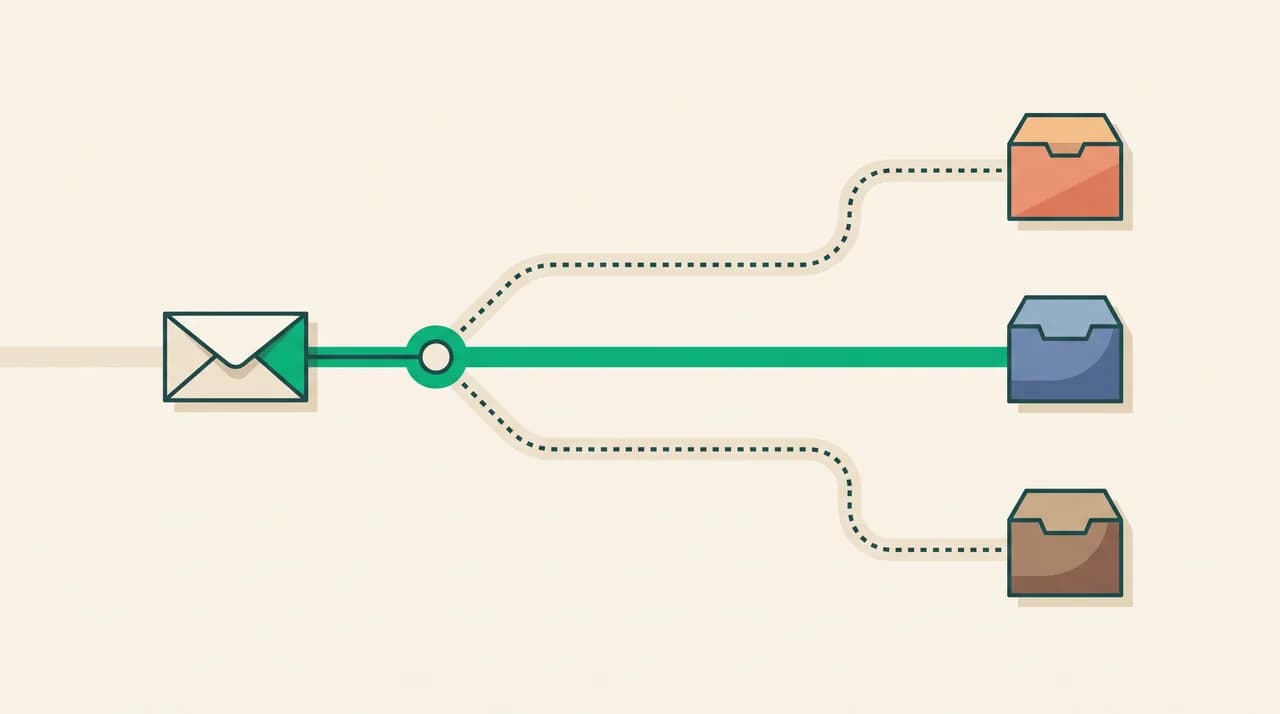
Don't publish rung 3 unless you'll honor it
A faster way to run the ladder once it exists#
Publishing the wording is the easy part. The harder part is noticing rung 1 the moment it lands, especially on a day when forty other messages arrive first — and that's the step people quietly drop after a week or two.
AI Emaily's email assistant can watch for the exact signal your ladder defines — a subject-line flag, a sender you've marked high-priority, a high-importance header — and surface it separately from everything else in the inbox, instead of relying on you to notice it while scrolling. It doesn't decide when to escalate for you; it just makes sure the rung-1 signal you already defined doesn't get buried on a busy day. We build AI Emaily.
Frequently asked
See it in AI Emaily
Keep reading

Written by
Nafiul HasanNafiul Hasan is an entrepreneur and AI automation system builder with 10+ years of experience turning messy, manual workflows into reliable automated systems. He designs and ships AI enterprise solutions end-to-end — the agent logic, the data plumbing, and the product people actually use — and founded AI Emaily to give busy professionals their attention back. He writes here from the builder's seat: what works, what breaks, and how to put AI to work without giving up control.