Cora Review (2026): The Digest-First Email Assistant

The short answer
Cora's digest-first model works well when most of your mail is genuinely not urgent. It screens the inbox down to human messages needing a reply, archives the rest under a Next Brief label, and summarises them twice daily. The trade is latency and Gmail-only support, not accuracy.
Cora email assistant review: how the twice-daily brief works, what happens to the mail it filters out, and who the Gmail-only model actually fits.
On this page
- 01The short answer
- 02How the digest-first model actually works
- 03How does Cora decide what is important?
- 04What happens to the mail Cora filters out?
- 05The criteria that actually matter
- 06Cora scored against those criteria
- 07A worked example: one Tuesday
- 08Cora setup and Gmail permissions
- 09Red flags to check before you commit
- 10What we'd pick and why (honest)
This Cora email assistant review grades one specific promise: that you never have to open your inbox again. Cora screens Gmail down to the human messages that actually need a reply, archives the rest, and summarises the archive into a brief twice a day.
So the useful question is not whether the sorting is accurate. It is whether you can run a mailbox where the inbox is no longer the record of what arrived. Most reviews grade the first thing; this one grades the second.
Verified on cora.computer in August 2026: Gmail and Google Workspace only, a seven-day free trial, and no autonomous sending — Cora writes drafts and you send them. Check the vendor's own page before you pay; these move.
The short answer#
Cora is a good fit if most of your mail is genuinely low-stakes and you live entirely in Gmail. The twice-daily brief turns newsletters, notifications, calendar invites and FYIs into something you read once and finish, and the screened inbox holds only human threads waiting on you.
It is a bad fit in two situations, both structural rather than fixable. On Outlook, Microsoft 365 or plain IMAP, Cora does not support you today — its own site puts other providers on a waitlist. And if one missed thread costs real money, a batched cadence adds hours of latency by design.
The honest summary: Cora is the most committed digest-first product in this category, and that commitment is both why it works and why it carries risk. The benefit arrives only once you stop checking.
Verify before you buy
How the digest-first model actually works#
- 1
Connect a Google mailbox
Cora authorises against Gmail or Google Workspace. Other providers were on a waitlist as of August 2026, not shipping.
- 2
Cora screens incoming mail
Messages it judges to need a human reply stay in the inbox and arrive live. Everything else is archived out of the inbox as it lands.
- 3
Archived mail is labelled, not deleted
Cora applies a Next Brief label to what it archives. The mail stays in the account and stays searchable — just not in the inbox.
- 4
A brief arrives twice a day
Morning and afternoon, Cora sends a summary of what it archived: newsletters, notifications, calendar invites and FYIs, grouped for a short read.
- 5
Drafts wait in your drafts folder
For routine requests Cora writes a reply and leaves it as a draft. Its site states plainly that it does not send on its own.
How does Cora decide what is important?#
Cora's public materials describe the signal but not the model. On signup it reads a slice of your email history to learn who you reply to, what you act on, and how you write. From then on it sorts arriving mail into two buckets: needs a reply now, or belongs in the next brief.
What it does not publish is a rule you can read. There is no visible threshold, no per-sender rule table to audit, and no explanation of why one message went to the brief and another did not. You correct it by example: recategorise a message, or tell it in chat what to treat differently.
- Signals it describes using: who you respond to quickly, what kinds of mail you act on, and your writing patterns.
- Correction happens by instruction and example, not by editing a rule you can see.
- The classification is binary in effect — inbox now, or brief later.
- No accuracy figure is published, and any review quoting one is guessing.
What happens to the mail Cora filters out?#
This is the part most Cora reviews skip, and it is the part that decides whether the product suits you. Filtered mail is archived, not deleted, and it carries a Next Brief label. It stays in the Gmail account, stays in search, and stays in All Mail.
So nothing is lost. What changes is subtler and more consequential: your inbox stops being the arrival record. After a week on Cora, "I never got that" and "I never saw that" become different statements, and only the second one is true.
For most people that trade is fine — it is the one any aggressive filter asks for. It stops being fine when somebody else's expectation is attached: a renewal notice, a legal deadline, a client who assumes you read your mail.
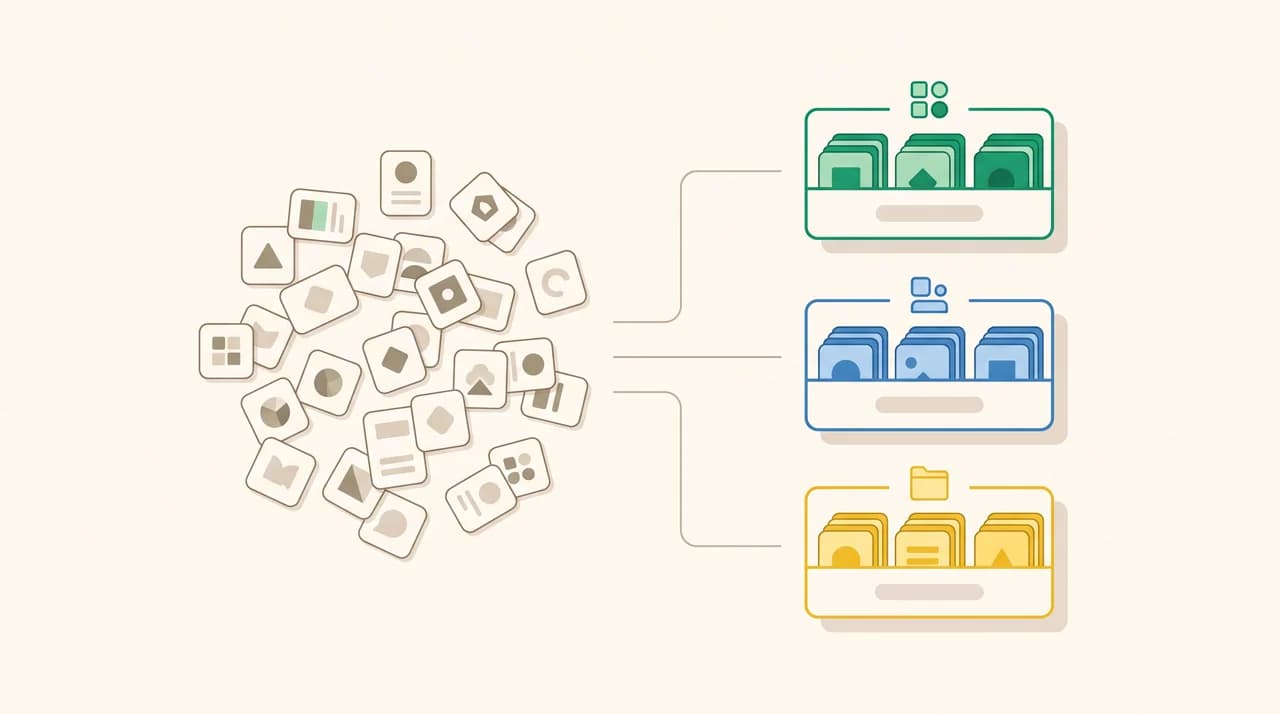
The archive is a label, not a separate store
The criteria that actually matter#
Grading a digest-first assistant on "does the AI understand my email" misses the decision. Sorting quality matters less than a handful of things you can check before you install anything.
These are the criteria that produce regret. Accuracy is the one everybody grades and the one that matters least: every tool here handles the easy majority well, and none is dependable on the hard few per cent.
- Provider coverage — does it cover every mailbox you own, or one of them?
- Cadence and latency — how long can a mis-sorted urgent thread sit before you see it?
- Recovery path — where does filtered mail go, how do you find it, and does it survive cancellation?
- Correction model — can you read and edit the rule, or only nudge the behaviour?
- Send authority — can anything leave your account without you pressing send, and is there a record if it does?
- Exit cost — if you stop paying today, what does the mailbox look like on Monday?
Cora scored against those criteria#
| Criterion | Cora, verified August 2026 | Verdict |
|---|---|---|
| Provider coverage | Gmail and Google Workspace only; other providers on a waitlist | Weak — disqualifying if you are not on Google |
| Cadence and latency | Brief twice daily, morning and afternoon; screened human mail still arrives live | Mixed — live for the inbox, batched for the rest |
| Recovery path | Archived under a Next Brief label; still in the account, still searchable | Strong — nothing is deleted |
| Correction model | Recategorise a message or instruct it in chat; no rule table to inspect | Weak — easy to use, hard to audit |
| Send authority | Drafts only; Cora states it never sends independently | Strong — the safest available default |
| Setup effort | Opinionated out of the box, very little to configure | Strong — shortest path to a quiet inbox in this category |
| Exit cost | Filtering stops; previously archived mail keeps its label in Gmail | Moderate — the label stays, the tidiness does not |
| Transparency | No published accuracy figure and no per-message explanation | Weak — you either trust it or you check it |
A worked example: one Tuesday#
That last row is the whole review. Nothing malfunctioned: the renewal was correctly read as billing mail, correctly routed, and the brief arrived on schedule. The delay was the architecture working as intended.
Whether seven hours is acceptable depends entirely on your work. For most salaried roles it is invisible. For a founder chasing a wire, a recruiter with a candidate weighing two offers, or anyone whose deadlines are measured in hours, it is the thing to test in week one.
Cora setup and Gmail permissions#
Setup is short, and the part worth slowing down for is the permission grant. Archiving, labelling and drafting are all modifications, so Cora needs modify access to Gmail rather than read-only. That is normal for the category and still worth understanding before you click.
- 1
Check you are allowed to connect it
On Google Workspace, an admin can restrict which third-party apps reach Gmail data. If that control is on, the grant fails at the consent screen and you need your admin, not Cora's support.
- 2
Read the scopes on the consent screen
Anything that promises to tidy your inbox has to be able to change it. Decide whether you are comfortable with that before you continue, not afterwards.
- 3
Connect real mail, not a test account
The screening depends on your actual history, so a clean test mailbox tells you nothing about how it will behave on yours.
- 4
Run the trial across a busy fortnight
Cora offers seven days free. Starting during a quiet week or a holiday produces a flattering result and no information.
- 5
Plant a tripwire
Have someone send you something genuinely urgent that looks unimportant. Where it lands is the most useful data point you will get.
Red flags to check before you commit#
None of these are accusations. They are the specific ways a digest-first tool goes wrong, and every one of them is checkable inside a trial.
- Provider lock-in. Gmail and Workspace only as of August 2026, so a second mailbox elsewhere is not covered at all.
- Admin-blocked OAuth. On managed Workspace domains the connection can be refused at the org level, usually as a confusing error rather than a clear one.
- Silent misses. Because filtered mail never reaches the inbox, a wrong sort stays invisible until somebody asks why you did not reply.
- Cadence mismatch. Twice a day is right for most people and wrong for anyone with hour-scale obligations.
- Draft drift. Drafts modelled on your own history read convincingly, which is exactly why sending one unread is the risk.
- Habit dependency. Keep checking the inbox between briefs and you have paid for a summary of mail you already read.
What we'd pick and why (honest)#
We build AI Emaily, so treat this section as an interested party's opinion and check it against both vendors' pages. The honest answer here is not "us" for every reader, and pretending otherwise would make the rest of this page worth nothing.
Cora is more committed to the digest than we are, and that commitment is a real advantage. Its design assumes the brief is the product and the mailbox is the residue. AI Emaily has a brief too, but ours sits inside a mail client you still open — so if your goal is to stop opening a mail client at all, Cora is built for that and we are not. Cora also needs almost no configuration, where we ask you to set up context first. Those are genuine costs on our side.
AI Emaily is the better answer when the mailbox is not one Gmail account. We run Gmail, Outlook and IMAP in a single client, so a second provider is not a waitlist entry. Filing is driven by rules and a Personal Context brain you set and can read, not an inferred model you can only nudge. And agent actions are approve-before-send by default, with undo and an audit log — because the expensive failure here is not a missed newsletter, it is an action you did not authorise.
We are the wrong pick if you want zero setup, one Gmail account, and a twice-daily summary and nothing more — that is Cora's exact shape, and we would be a heavier tool doing a job it already does well. Our own edges, stated plainly: the desktop app is a real download built on the web codebase, so features land the same day as web but it is not a native-toolkit client, it is Apple Silicon only on Mac, there is no Linux build, and Android is a PWA.
So the scoped verdict: Gmail-only, a low-stakes majority, shortest path to a quiet inbox — Cora. Multiple providers, or an inbox where a wrong action costs more than a wrong sort — AI Emaily. Neither answer changes if the other gets cheaper, because the decision is architectural.
The test that settles it
Frequently asked
See it in AI Emaily
Keep reading
Sources

Written by
Nafiul HasanNafiul Hasan is an entrepreneur and AI automation system builder with 10+ years of experience turning messy, manual workflows into reliable automated systems. He designs and ships AI enterprise solutions end-to-end — the agent logic, the data plumbing, and the product people actually use — and founded AI Emaily to give busy professionals their attention back. He writes here from the builder's seat: what works, what breaks, and how to put AI to work without giving up control.