How Many Templates Can You Save in Gmail?


The short answer
Yes — Gmail limits you to 50 saved templates per account, with no way to raise it on any plan, including Google Workspace. That ceiling rarely bites first, though: most template lists become an unsearchable mess of 15 to 20 similarly named entries in one flat dropdown long before anyone reaches 50.
How many templates can you save in Gmail? The cap is 50, but lists get unusable well before that — the real number, and the fix.
On this page
How many templates can you save in Gmail? Fifty. That is the hard cap on Gmail's template feature (the one long-time users still call Canned Responses), and it applies per account with no setting anywhere to raise it — not on a personal Gmail account, not on Google Workspace, not on any paid tier.
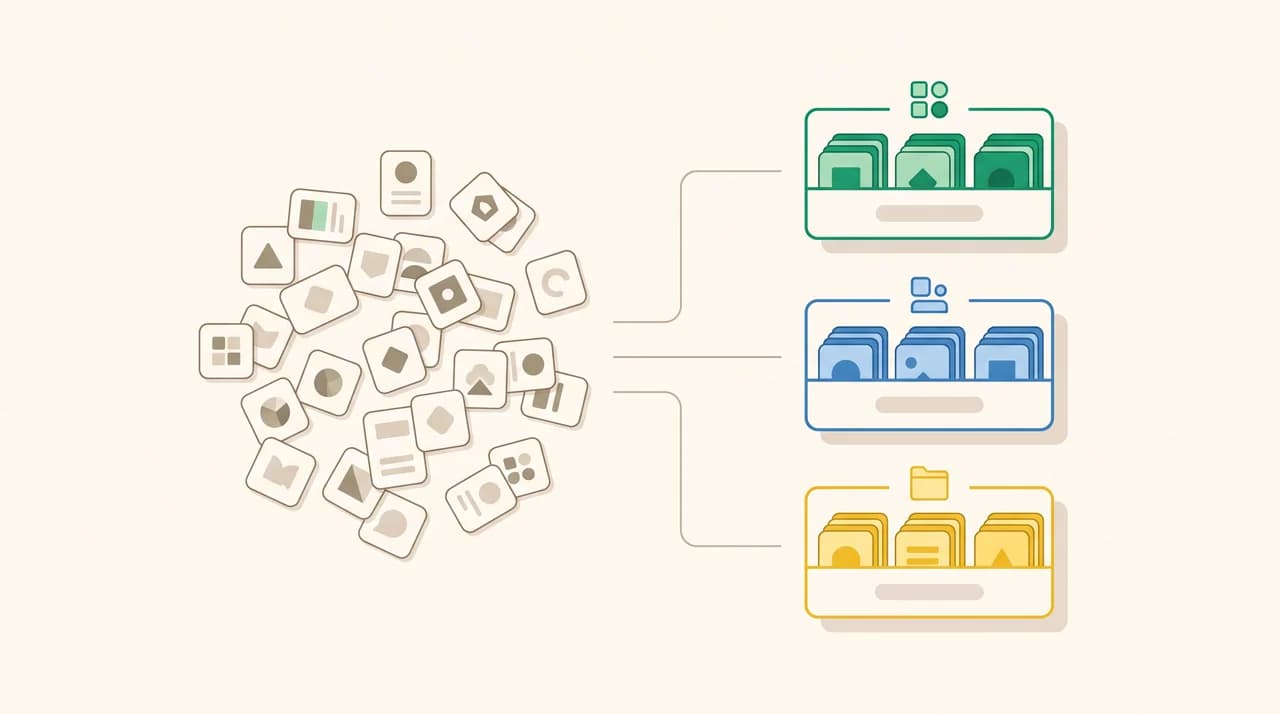
But 50 is the wrong number to worry about first. The templates submenu is a flat, alphabetical-ish list with no folders, no tags, and no search box. Long before you hit the count limit, you hit a usability limit: scrolling past a dozen entries named things like Follow-up, Follow-up 2, and Follow-up new trying to remember which one you actually want. This post covers both — the real ceiling, why lists go unusable well before it, and what to do about each.
It also covers the two things people ask right after the number: why a save sometimes fails even when you are nowhere near 50, and whether there is any way to hand a template to a teammate. Neither has a setting to fix it, but both have a workaround worth knowing before you assume something is broken.
Before you start#
A Gmail template is a saved block of subject-plus-body text you insert into a compose window with a couple of clicks. If you have not enabled the feature yet, it lives under the gear icon, then See all settings, then the Advanced tab — a separate guide on this site walks through enabling and saving your first one, so we will not repeat those steps here.
Three things about how templates work matter before you start managing a list of them:
- Templates are desktop-web only. You cannot create, edit, insert, or delete a template from the Gmail app on iPhone or Android — there is no Templates option in the mobile compose menu at all.
- Templates are private to the Gmail account that saved them. Gmail has no built-in way to share a template with a teammate or a whole team; each person maintains their own separate list, even inside the same Google Workspace organization.
- The list has no structure. No folders, no color labels, no favorites, no search field — just an alphabetized menu you scroll through every time you insert one.
Enable Templates before you audit anything
Steps: how to check and manage your template count#
Gmail does not show you a running count anywhere in settings, so the first job is just figuring out where you stand. Here is the sequence to audit and rein in a growing list.
- 1
Open the Templates submenu to see the full list
Start a new compose window, click the three-dot menu, and hover over Templates. Every saved template appears under Insert template. There is no counter, so scroll to the bottom and count manually if you are close to 50.
- 2
Flag near-duplicates
Look for templates that do the same job with slightly different wording — Meeting follow-up, Meeting recap, and Follow-up after call are usually one template that got saved three times under three names.
- 3
Consolidate duplicates into one template with placeholders
Merge the near-duplicates into a single version with bracketed gaps like [name] or [date] for the parts that actually change. One well-built template with placeholders replaces three narrow ones, and it is also the fastest way to claw back slots if you are close to the 50 cap.
- 4
Rename what's left for a five-second scan
A name like Client — invoice reminder beats Template 4 the moment you are choosing from more than ten options in a dropdown with no preview. Put the situation first in the name, since that is what you are scanning for, not a version number.
- 5
Delete anything you have not inserted in months
Open the three-dot menu, hover over Templates, then Delete template, and remove entries you no longer send. This is the only step that actually frees up a slot toward the 50 cap.
- 6
Re-check if saving still fails
If Save as new template still does nothing after cleanup, you are either still at 50 or the specific template you are saving is too large — see the troubleshooting section below.
None of this is Gmail-specific busywork — it is the same shelf-tidying every reusable-text system needs once it grows past a handful of entries. The difference is that Gmail gives you no tool to do it with beyond delete and rename.
Platform differences: where you can save, edit, and insert templates#
The 50-template cap is consistent everywhere, but what you can actually do with templates changes sharply depending on where you are signed in. This is the part that trips people up mid-workflow, usually on a phone.
| Surface | Save or edit templates | Insert templates | Notes |
|---|---|---|---|
| Gmail on a desktop browser | Yes | Yes | The only place the full feature works. All setup, saving, editing, and deleting happens here. |
| Gmail app — Android | No | No | No Templates option exists in the mobile compose menu. This is a Gmail limitation, not a device or account setting. |
| Gmail app — iOS | No | No | Same gap as Android. Google has not added templates to either mobile app. |
| Mobile browser, desktop site requested | Partial | Yes | Loads the full compose menu, including Templates, but the layout is cramped and easy to mis-tap on a small screen. |
| Google Workspace (managed) account | Depends on admin policy | Depends on admin policy | Same 50-template cap as personal Gmail. An organization admin can restrict access to Advanced settings, which hides the toggle even though the feature itself is unchanged. |
What to do when templates won't save or won't show up#
Most template problems trace back to one of four causes, and the fix is different for each.
- You are at the 50-template cap. Save as new template does nothing, or Gmail shows an error. Delete at least one existing template — there is no other way to add a fifty-first. Consolidating duplicates from the steps above is usually the fastest way to free a slot without losing coverage.
- You are under 50, but a specific template still won't save. This usually means the template itself is unusually large: heavy inline formatting or an embedded image can push a single entry over Gmail's per-template size ceiling even while your total count is nowhere near 50. Trim the content — plain text and light formatting, not a pasted screenshot — and try again.
- You cannot find Templates in the menu at all. Either the feature was never enabled — check See all settings, then Advanced, and confirm the row shows Disable, not Enable — or you are looking in the Gmail mobile app, which does not have this feature regardless of settings.
- A colleague can't see a template you saved. Templates do not sync across accounts or team members. If you need the same reply available to several people, each person has to recreate it individually in their own account — Gmail has no shared or team template library, and no admin console setting changes that.
The 50 count and the size ceiling are two different walls
A faster way to manage reply templates#
Everything above still works, and for a small list it is the whole answer. Past 15 or 20 entries you are scanning a flat, unlabeled dropdown for the right name, and past 50 you cannot save a new one until you delete an old one — with no folders, no search, and no way to hand a template to a teammate.
AI Emaily's reply templates replace that dropdown with a searchable library and real {{variables}} that auto-fill from the message and contact, instead of bracketed placeholders you type by hand. The library follows you across every account you connect — Gmail, Outlook, iCloud, any IMAP mailbox — and nothing sends without your approval. We build AI Emaily. There is a 7-day free trial on the plan that includes it, card required, $0 if you cancel before day 7, at app.aiemaily.com.
Frequently asked
See it in AI Emaily
Keep reading

Written by
Nafiul HasanNafiul Hasan is an entrepreneur and AI automation system builder with 10+ years of experience turning messy, manual workflows into reliable automated systems. He designs and ships AI enterprise solutions end-to-end — the agent logic, the data plumbing, and the product people actually use — and founded AI Emaily to give busy professionals their attention back. He writes here from the builder's seat: what works, what breaks, and how to put AI to work without giving up control.