What Is "Other Contacts" in Google Contacts?


The short answer
Other Contacts is Google's auto-generated list of every address you've emailed or received mail from but never explicitly saved. It exists only to power autocomplete and suggestion chips across Gmail, Calendar and Docs. You can delete individual entries or clear the whole list from contacts.google.com/other anytime, and doing so never touches your real, saved Contacts.
What Other Contacts in Google Contacts is, why strangers end up in it, and how to delete or move entries without touching your real address book.
On this page
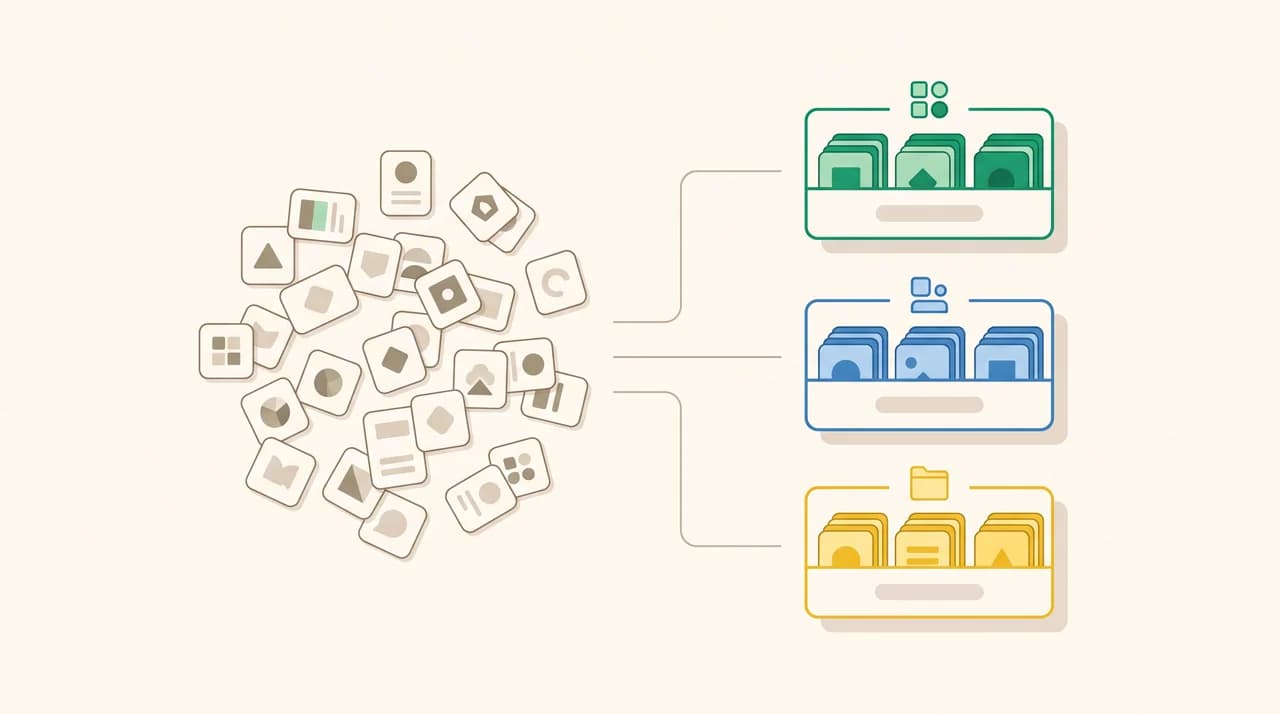
Other Contacts is a second, separate list inside Google Contacts that you never asked for and never built by hand. Every time you send mail to a new address, receive mail from one, or get CC'd on a thread with strangers, Google quietly logs that address there.
It isn't your address book. It's closer to a running log of "people this Google account has exchanged mail with," kept purely so Gmail's compose field can suggest the right address before you finish typing a name.
How Other Contacts actually gets filled in#
Google doesn't ask permission before adding an entry to Other Contacts. The trigger is any two-way or one-way mail interaction: you send to an address, an address sends to you, or an address appears in the To/CC line of a thread you're part of.
That's a much lower bar than saving a contact on purpose. A vendor's no-reply address, a colleague's colleague looped into one email, a stranger who mis-typed your address and got a bounce reply from you — all of them can land in Other Contacts without you ever meaning to keep a record of them.
The list lives at contacts.google.com/other, separate from the main Contacts view, and it also shows up as its own tab if you open the Google Contacts app on Android. Entries there usually carry just a name (if Gmail could infer one) and an email address — none of the phone numbers, notes or custom fields a manually saved contact can have.
Its only real job is autocomplete. When you start typing a name or address in Gmail's To field, add a guest in Google Calendar, share a Google Doc, or pick a recipient in Google Meet, the suggestions drawing from your history pull from both Contacts and Other Contacts. That's the entire reason the list exists.
On a Google Workspace account the same behavior applies, though a Workspace admin can sometimes restrict directory-wide suggestion sharing at the organization level. For a personal Gmail account, the setting lives entirely with you.
The name attached to each entry isn't verified — Google pulls it straight from the display name in that email's From or To header, the same field a phishing sender can set to anything they like. A generic "Support Team" or a name that doesn't match the domain it's attached to is a header artifact, not evidence of who actually controls that address.
Why it matters — what breaks without it#
If Other Contacts didn't exist, autocomplete would only suggest people you'd deliberately saved, and Gmail would suggest almost nobody. Most people save a handful of contacts on purpose and email hundreds of addresses they never formally add — recruiters, one-off vendors, a landlord, a parent's school administrator.
Other Contacts is what makes typing three letters of a name you emailed once six months ago still surface the right suggestion. Turn it off entirely and autocomplete narrows down to your deliberately curated list, which for most inboxes is a small fraction of who you actually correspond with.
The trade-off is the privacy discomfort this post exists to answer: the same mechanism that makes autocomplete useful is what fills the list with people you'd rather not see catalogued anywhere, including yourself if someone else looks at their own Other Contacts and finds you in it.
It cuts both ways, and you only ever see your own half. You can audit and clear the addresses your account has logged, but you have no visibility into — and no control over — whether your own address sits in someone else's Other Contacts after a single email exchange.
Contacts vs. Other Contacts#
| Contacts | Other Contacts | |
|---|---|---|
| How it's created | You add or save it deliberately | Google adds it automatically from mail activity |
| What it can hold | Name, phone, notes, custom fields, groups | Usually just a name and an email address |
| Where it's used | Autocomplete, Contacts app, sharing across Google services | Autocomplete and suggestion chips only |
| Syncs to your phone | Yes, via your Google account's synced groups | Typically excluded from default phone contact sync |
| Can you organize it | Labels, groups, starring, merging | No labels or groups — flat list only |
| Deleting it | Removes a real saved contact | Removes a suggestion; no relationship is lost |
| Best for | People you deal with repeatedly | One-off senders you might email again |
Common misconceptions about Other Contacts#
"These are people who have my address saved." Not necessarily. Other Contacts reflects your Gmail activity, not theirs. Someone appearing there has exchanged mail with your account — they may not have you saved anywhere on their end, and you may not know them at all if you were CC'd into a thread.
"Deleting an entry deletes the emails too." No. Other Contacts is a suggestion index, not a record of messages. Removing an entry only stops it from showing up in autocomplete; every email you've sent or received from that address stays exactly where it was.
"If I delete the list, Google stops adding to it." Also no. Clearing Other Contacts empties the current list, but the setting that generates new entries keeps running. New addresses will start reappearing the next time you send or receive mail from someone new, unless you separately turn off Gmail's "create contacts for auto-complete" setting.
"Duplicate suggestions mean my contacts are corrupted." Usually it just means the same person exists twice: once as a real Contact and once as an Other Contact from before you saved them, or with a slightly different spelled name. That's a merge job on the Contacts side, not a sign anything in Other Contacts is broken.
Want it to stay stopped, not just empty?
Moving an entry from Other Contacts to your real Contacts#
If you actually want to keep someone — a new client, a recurring vendor — open their entry in Other Contacts and select "Add to contacts." That single action creates a real Contacts entry and removes the address from the Other Contacts list, since it's no longer just a suggestion; it's a saved relationship now.
There's no bulk "promote all" option, deliberately. Other Contacts is meant to stay a low-commitment holding area, and moving dozens of entries into your permanent address book at once would defeat the point of keeping the two lists separate in the first place.
If you're doing a bigger cleanup — say, after realizing your Other Contacts list has years of one-off addresses in it — the practical approach is to scan it once, promote the handful you actually recognize as ongoing relationships, and delete the rest. Nothing about the messages themselves changes either way.
How this shows up in AI Emaily#
The mechanism behind Other Contacts — that Google treats "who you've exchanged mail with" as a real signal, separate from who you've formally saved — is the same signal AI Emaily's Rules Brain and Context Engine use to decide how to triage and draft, without asking you to maintain an address book by hand. A first-time sender isn't invisible to it; it's read against your actual mail history and your per-client Context profiles, not a static saved-contacts list. AI Emaily doesn't edit your Google Contacts or Other Contacts list directly today — that stays Google's job. We build AI Emaily, and where it fits is one layer up: turning that same correspondence history into triage priority and voice-matched drafts, on top of whichever provider's contact list you're already running.
Frequently asked
See it in AI Emaily
Keep reading
Sources

Written by
Nafiul HasanNafiul Hasan is an entrepreneur and AI automation system builder with 10+ years of experience turning messy, manual workflows into reliable automated systems. He designs and ships AI enterprise solutions end-to-end — the agent logic, the data plumbing, and the product people actually use — and founded AI Emaily to give busy professionals their attention back. He writes here from the builder's seat: what works, what breaks, and how to put AI to work without giving up control.