How to Respond to an Invoice Dispute Email: 10 Templates

The short answer
Acknowledge the dispute, name the invoice number and the specific line in question, then address it directly: correct a genuine error, share documentation if the work was delivered, or request specifics in writing if the objection is vague. Set a concrete next step with a date, and reply within one business day.
Ten copy-paste templates for responding to an invoice dispute email — wrong amount, missing PO, work not recognised, or a stalling tactic.
On this page
- 01When to respond — and when not to wait
- 02What every good response contains
- 03Ten invoice dispute response templates
- 04Work the client says they do not recognise
- 05A missing purchase order
- 06Dissatisfaction used as a payment delay
- 07The hard version: holding the invoice and keeping the relationship
- 08What to do if there is no reply
- 09Draft dispute replies in your voice, without starting from blank
A client disputes an invoice and the first instinct is to defend yourself. That instinct will almost always make it worse. The dispute is information — the client is telling you what they cannot reconcile, whether the explanation is arithmetic, recognition, process, or dissatisfaction — and the fastest path to payment is to treat it as a problem to solve rather than an accusation to refute.
How to respond to an invoice dispute email is not a single answer. It depends on which of the four main dispute types you are dealing with: a wrong amount, work the client says they do not recognise, a missing purchase order, or dissatisfaction being used to delay payment. Each has a different first move. The ten templates below cover all four, with specific bracket placeholders you can fill in and send the same day.
When to respond — and when not to wait#
Send your reply within one business day. Invoice disputes do not resolve themselves by waiting, and a delayed response signals — consciously or not — that the invoice is ambiguous or that you are not confident in it. Neither is a message you want to send.
The one exception is when you need documentation you do not yet have. If the dispute centres on a deliverable you need to locate the proof of receipt for, send a short holding reply — something like 'I am pulling the delivery confirmation now and will follow up by [DATE]' — rather than going silent for three days and then sending a complete response. The holding reply preserves your timeline; the silence lets the dispute age.
Respond to every dispute, even the ones that look like stalling. If a client disputes an invoice and you do not reply, you have implicitly conceded the point. Under the Uniform Commercial Code and similar frameworks in other jurisdictions, failure to object to a disputed account stated within a reasonable time can be treated as acceptance. Responding — even to say the invoice stands as issued pending specific details — preserves your legal position and keeps you in the record.
What every good response contains#
Before you reach for a template, it is worth knowing what a well-structured dispute response is doing. It has four jobs: acknowledge the question, address the specific issue, document everything relevant, and set a next step with a date. Any reply that does all four in plain language is a good dispute response, regardless of the template it started from.
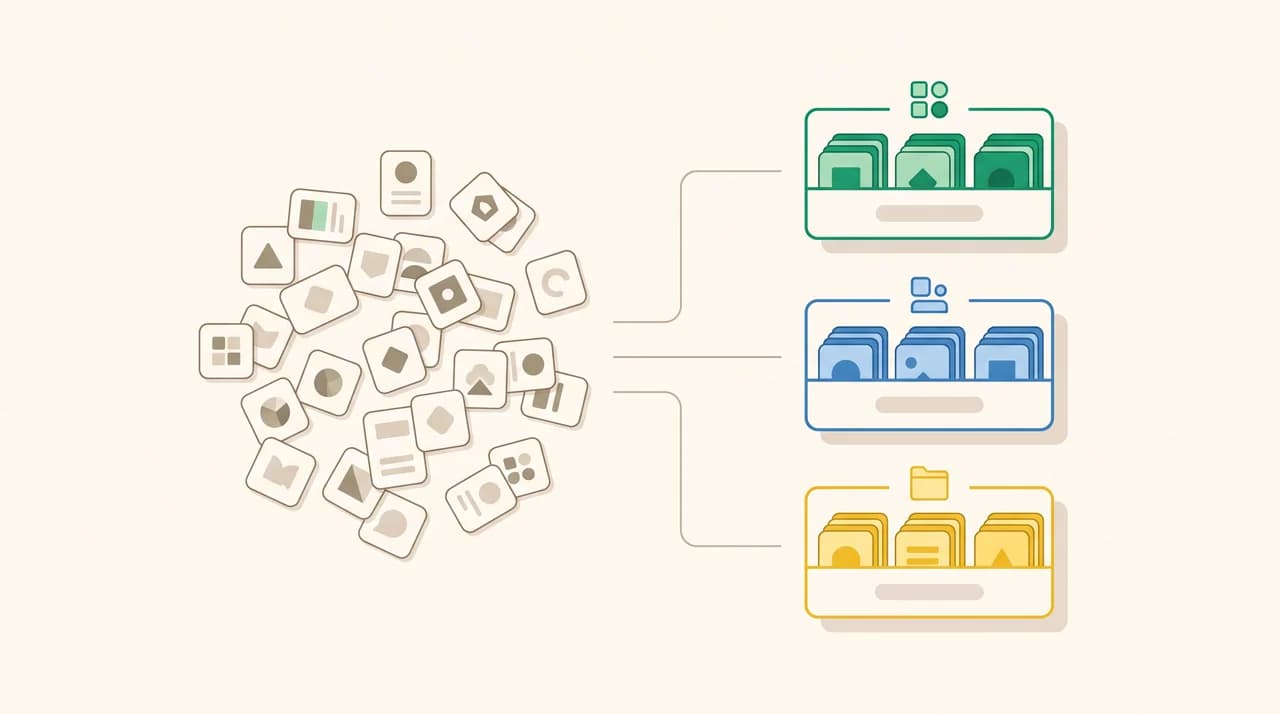
The table below maps the four main dispute types to the angle each one needs and the templates in this post that cover it.
| Dispute type | What is really happening | The right angle | Templates |
|---|---|---|---|
| Wrong amount | An arithmetic error, or a rate that does not match the agreed figure | Acknowledge, verify, and either correct the error or point to the contractual basis for the rate with documentation | 1, 2, 3 |
| Work not recognised | The client has no record of receiving the deliverable, or disputes that it falls within the agreed scope | Share proof of delivery with a reference and timestamp, or map the work explicitly to the scope wording in the agreement | 4, 5 |
| Missing purchase order | The AP system cannot process without a PO reference — a process issue, not usually a dispute about the work or the amount | Request the PO number without delay, reissue the invoice promptly, and hold the original due date where you can | 6, 7 |
| Dissatisfaction as delay | A quality concern — genuine or vague — attached to an invoice as a reason not to pay yet | Separate the quality question from the payment obligation, take genuine concerns seriously, and put the burden of specificity on the client in writing for vague ones | 8, 9, 10 |
Locate the documentation before you reply
The templates follow. Each is ready to personalise — swap the bracket placeholders for the real details, adjust the voice to match how you normally write with this client, and check that the figures and dates are accurate before you send.
Ten invoice dispute response templates#
The first three templates handle wrong-amount disputes. They cover different versions of the same core disagreement: the arithmetic is off, the rate does not match what was agreed, or the hours are contested.
When the amount is correct but the rate is in dispute, do not concede the point — point to the source document instead. The goal of this template is to close the loop on the factual question while keeping the tone collaborative.
When the dispute is over hours or time logged, the client is asking for evidence, not an argument. This template shares the underlying record and invites them to identify the specific session or entry they question, rather than disputing the total in the abstract.
Work the client says they do not recognise#
When a client says they have no record of receiving a deliverable, the response is proof of delivery with a timestamp and a reference — not a re-explanation of the work. This template handles the cleaner case where you have the documentation and the deliverable was unambiguously sent.
Scope disputes are harder because both parties can hold a good-faith reading of an ambiguous agreement. This template acknowledges the question, maps the work to the specific scope language, and proposes a path through — without conceding the invoice or escalating into an argument about intent.
A missing purchase order#
Missing-PO disputes are usually a process issue, not a question about the work or the amount. The client's accounts payable system needs a reference number before it can release payment. This template keeps the tone neutral and focuses entirely on unblocking the process as quickly as possible.
If the PO was already provided and the client has raised the missing-PO objection anyway, the job is to surface the paper trail calmly and ask for confirmation of the next processing step. This template avoids sounding accusatory while making the documented timeline clear.
Dissatisfaction used as a payment delay#
The most nuanced category. When a client raises a quality concern alongside an invoice, the first step is to decide whether the concern is genuine. If it is, the right response acknowledges it, addresses the specific point, and offers a fair resolution path — do not skip straight to defending the invoice before you have understood what they are actually saying.
When the quality objection is vague — 'I was not satisfied' with no specifics — it is often a stalling tactic. This template keeps the relationship intact, takes the concern seriously in principle, and puts the burden of specificity back on the client in writing. The invoice stands as issued until they provide a concrete dispute to address.
A partial payment offer is a common variation of the dissatisfaction dispute: the client sends less than the invoice total without prior agreement, implying the rest is withheld until something is resolved. This template acknowledges the payment, clarifies the outstanding balance, and asks for a specific position — without assuming bad faith.
The hard version: holding the invoice and keeping the relationship#
The templates above handle the most common forms of each dispute type. The genuinely hard situation is one step beyond: you are reasonably confident the dispute is a stalling tactic, the client relationship matters, and you still need to hold the invoice without tipping into an ultimatum that poisons the account.
The principle is this: separate the relationship from the debt. You can be warm, thorough, and professional in your reply while being completely clear that the invoice stands as issued. Those two things are not in tension. What would put them in tension is conceding the amount without a specific dispute to concede against, or applying pressure in a way that makes the client defensive rather than motivated to resolve.
Template 9 handles the vague-objection version. For a case where the dispute looks clearly pretextual — a concern raised after approval was given, never mentioned during the work, with a payment that is simply late — the move is to document the timeline in writing and set a deadline for specifics. You are not accusing the client of bad faith. You are asking them to do the one thing a genuine dispute requires: name the specific issue. A real dispute can be resolved. A vague one cannot, which is precisely the point.
What to avoid in every version of this situation: do not waive the debt in writing, do not say anything that could be read as accepting a lower amount as settlement, and do not let the dispute go without a response from you in the record. Under GOV.UK guidance on late commercial payments and most standard contract law, the clock on your remedies starts ticking from the original due date — so a documented, timely response is also how you preserve your late-payment interest rights if it comes to that.
Do not waive debt in writing
What to do if there is no reply#
You have sent a well-structured response. You have addressed the dispute specifically. You have set a deadline. And then nothing.
Wait until the deadline you named passes, then send one follow-up that references your original response, restates the outstanding amount and the new payment date, and notes that you will take further steps if the invoice is not resolved by that date. Do not re-explain, do not apologise, and do not soften the message. You have already done the substantive work. This message is short and factual.
If there is still no reply after the follow-up, you have a few options depending on the relationship and the amount: a formal letter before action, escalation through your accounts receivable process, a collections referral, or small claims court for amounts within the applicable limit. In the UK, GOV.UK's late commercial payments guidance sets out the statutory interest you can charge — 8 percentage points over the Bank of England base rate — from the day after payment was due, along with fixed debt recovery costs. Similar late-payment legislation applies in most commercial jurisdictions.
None of those steps are decisions to take lightly in a relationship you want to preserve. Before you escalate, a short phone call is usually the fastest way to learn whether the dispute reflects genuine confusion or deliberate delay. An email thread can spiral. A ten-minute call with the right person often settles what ten emails have not.
Draft dispute replies in your voice, without starting from blank#
The templates here handle the structure. What they cannot do is match the tone you have built with a specific client over months or years. When the relationship matters, that gap is what turns a technically correct reply into one that lands badly.
We build AI Emaily, an AI-native email client that drafts dispute responses using your Personal Context brain and per-client profiles — not by reading your past mail. You define the context: your usual framing, your preferences on directness, the history with this specific client. AI Emaily drafts the reply in your voice, with the right structure already in place, so you spend a few minutes reviewing and personalising rather than an hour writing from scratch.
Nothing goes to a client until you have read it. Every draft waits in Copilot mode by default, logged and reversible. For a situation as relationship-sensitive as an invoice dispute, that human review step is not optional — it is the point. The current plans and a 7-day free trial are at aiemaily.com/pricing.
Frequently asked
See it in AI Emaily
Keep reading
Sources

Written by
Nafiul HasanNafiul Hasan is an entrepreneur and AI automation system builder with 10+ years of experience turning messy, manual workflows into reliable automated systems. He designs and ships AI enterprise solutions end-to-end — the agent logic, the data plumbing, and the product people actually use — and founded AI Emaily to give busy professionals their attention back. He writes here from the builder's seat: what works, what breaks, and how to put AI to work without giving up control.