Internal Email Subject Line Conventions That Actually Help

The short answer
Prefix internal subject lines with a short, closed set of tags — ACTION, FYI, DECISION, EOM — plus a date for anything with a deadline. Keep the list under six tags, put it before the topic, and pair it with a one-line team doc. The tag tells the reader how to triage before opening the message.
Internal email subject line conventions: ACTION/FYI/DECISION/EOM prefixes, deadline tags, and how to roll out a system your team keeps using.
On this page
- 01Why bother tagging subject lines at all?
- 02Before you start: pick the smallest set of tags that covers real cases
- 03What does EOM mean in an email subject, and when should you use it?
- 04Steps: rolling out a subject-line convention your team keeps using
- 05How do the major platforms handle subject-line tags?
- 06What to do when the convention stops working
- 07A faster way: let rules do the sorting instead of relying on tags alone
The internal email subject line conventions that hold up are the ones with the fewest tags: ACTION for something the recipient must do, FYI for context that needs no reply, DECISION for a choice that needs a yes or no, and EOM when the whole message fits in the subject line. Add a due date in brackets when timing matters. That's the whole system — four tags, one date format, applied consistently.
Most teams don't fail at this because the idea is hard. They fail because someone writes a wiki page with twelve tags, nobody reads it, and by week three half the team is back to blank subject lines. The fix isn't a better wiki page. It's a smaller set of tags, a clear rule for when to use each one, and a way to see whether people are actually using it — which is the part this guide covers in detail.
Why bother tagging subject lines at all?#
An inbox with 40 unread internal emails from one day is not a reading problem, it's a sorting problem. The recipient has to open every message to find out whether it needs a reply today, needs a reply eventually, or needs no reply at all. A subject-line tag answers that question before the message is opened, which is the only point in the flow where triage is actually cheap.
This matters more for internal mail than for anything coming from outside the company, because internal senders control both ends. You can't ask a customer to tag their subject lines. You can ask a coworker, and if the convention is short enough, most of them will.
- Triage happens in the inbox list, not inside the message — a tag is the only signal visible at that stage
- Search and filtering both work on subject text, so a consistent prefix becomes a free search index
- A tag sets an expectation for response time, which cuts the back-and-forth of "did you see this?" follow-ups
Before you start: pick the smallest set of tags that covers real cases#
Every team that has run this successfully starts from the same short list and resists the urge to add more. The four core tags cover the vast majority of internal mail:
- [ACTION] — the recipient needs to do something, and the message says what and by when
- [FYI] — informational, no reply expected, safe to read whenever
- [DECISION] — a choice is needed, usually with 2–3 named options and a deadline
- [NO REPLY NEEDED] — closes a thread that might otherwise get an unnecessary "thanks!" reply
Resist a fifth tag
What does EOM mean in an email subject, and when should you use it?#
EOM stands for "end of message" — it tells the recipient the entire content is in the subject line and the body is empty or just a signature, so there's no need to open the email at all. "[EOM] Meeting moved to 3pm" is a complete message; the recipient reads it in the inbox list and moves on.
EOM only works when the subject genuinely says everything. If you write "[EOM] Update on the Peterson account" and then open a two-paragraph body anyway, you've broken the contract, and readers stop trusting your EOM tags specifically — which defeats the point. Use it for status changes, single-fact answers, and scheduling confirmations. Don't use it for anything that needs context, a link, or a decision.
Steps: rolling out a subject-line convention your team keeps using#
- 1
Write the tag list down in one place, not a policy document
A pinned Slack message, a single line in the team's onboarding doc, or a shared-inbox description field. Four tags and one sentence each. A twelve-page communication policy gets read once and never again.
- 2
Put the tag before the topic, in brackets, every time
"[ACTION] Sign the vendor contract by Friday" — not "Vendor contract — action needed." Brackets at the front sort predictably in a subject column and are easy to scan in a list view.
- 3
Add a deadline in the subject when timing is the point
"[ACTION] Approve the Q3 budget (due Thu 8/28)" gives the recipient everything they need to prioritize without opening the message. Use a real date, not "soon" or "ASAP" — those compress every request into the same false urgency.
- 4
Model it for two weeks before asking anyone else to adopt it
A manager or team lead who tags their own subject lines consistently for two weeks gives the rest of the team a working example to copy. A convention announced but never demonstrated gets ignored.
- 5
Check adoption with search, not a survey
Search the shared inbox or your own sent folder for "[ACTION]" or "[FYI]" after a month. If usage is patchy, the tag list is probably still too long, or nobody modeled it consistently. Fix the cause, not the compliance.
How do the major platforms handle subject-line tags?#
None of the major clients understand ACTION/FYI/DECISION as structured metadata — they're plain text that happens to sort well. But each platform has its own related feature worth knowing about so you don't duplicate work a client already does natively.
| Platform | Native priority signal | Interaction with text tags | Notes |
|---|---|---|---|
| Gmail | Importance markers (yellow arrow) — automatic, not manually set | Fully compatible; tags are just subject text | Gmail's own importance markers are inferred from behavior, not something a sender controls, so they don't conflict with a manual tag convention |
| Outlook / Microsoft 365 | High Importance flag (red !) — sender-set per message | Tags work alongside the flag, but overlap if used for the same purpose | A team using both [ACTION] and the red flag on the same messages usually drops one within a few weeks — pick one signal for urgency |
| Slack (for reference) | None — channels and threads instead of subjects | N/A | Teams that route ACTION/FYI items to email specifically because Slack threads bury them should keep that email discipline separate from Slack norms |
| IMAP / generic clients | None built in | Fully compatible; tags are the only structured signal available | This is where subject-line tags matter most — no client-side feature substitutes for them |
What to do when the convention stops working#
A tagging system that worked for the first month and then quietly died usually has one of three causes, and each has a specific fix rather than a general reminder to "please use the tags."
- Tag creep: more than four or five tags are in circulation. Audit a week of subject lines, count distinct tags, and cut anything that overlaps another tag's meaning.
- No enforcement at the top: if managers stop tagging their own mail, the team follows within weeks. The fix is someone visible modeling it again, not a reminder email.
- Wrong tag on the wrong message: an [FYI] that actually needs a reply trains readers to open everything anyway, which erases the value of the whole system. When this happens more than occasionally, it usually means the sender is using FYI to avoid an uncomfortable ACTION request — worth naming directly.
Don't rebuild the wiki page
A faster way: let rules do the sorting instead of relying on tags alone#
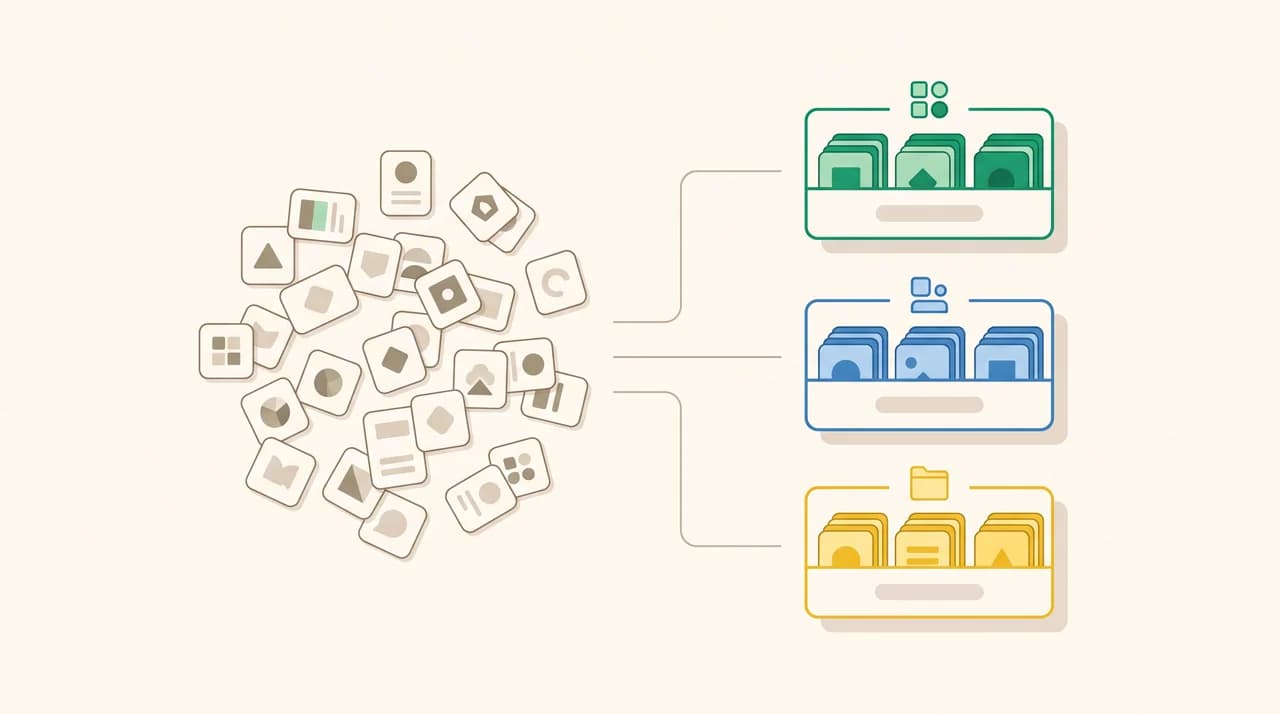
A tagging convention still depends on every sender doing it right, every time, forever — and it breaks the moment someone forgets a bracket or a new hire hasn't seen the pinned message yet. AI Emaily's Rules and Context Brain read the sender, thread history, and message content and route mail into the right lane automatically, so triage doesn't depend entirely on the sender remembering the convention.
The steps above still work on their own, and a team that never adopts any software gets real value from four tags and a deadline. This is what the same discipline looks like when it runs continuously instead of depending on habit: a message that reads as an approval request gets filed and surfaced the way an [ACTION] tag would, even from someone who never learned the convention. We build AI Emaily — see how it applies to inbox routing in the Rules and Context Brain docs.
Frequently asked
See it in AI Emaily
Keep reading

Written by
Nafiul HasanNafiul Hasan is an entrepreneur and AI automation system builder with 10+ years of experience turning messy, manual workflows into reliable automated systems. He designs and ships AI enterprise solutions end-to-end — the agent logic, the data plumbing, and the product people actually use — and founded AI Emaily to give busy professionals their attention back. He writes here from the builder's seat: what works, what breaks, and how to put AI to work without giving up control.