Topic
Email etiquette & communication
Tone, subject lines, sign-offs, and clear writing.
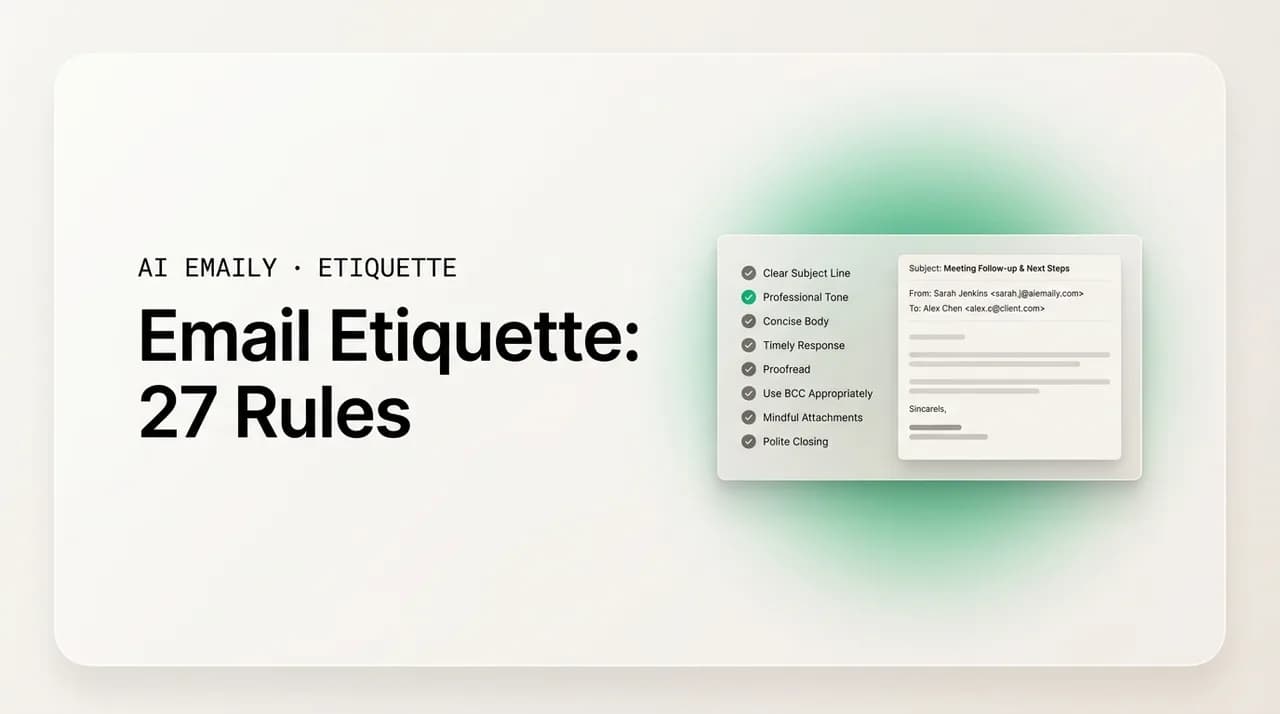
Email Etiquette: 27 Rules Every Professional Should Follow in 2026
Email etiquette rules for 2026: 27 professional, workplace-tested habits for subject lines, tone, brevity, reply-all, CC/BCC, sign-offs, and more.
 Nafiul Hasan
Business Email Etiquette: The Complete Professional Guide for 2026
Business email etiquette for 2026: structure, tone by relationship, response-time norms, hierarchy, cultural rules, and the mistakes to avoid.
Nafiul Hasan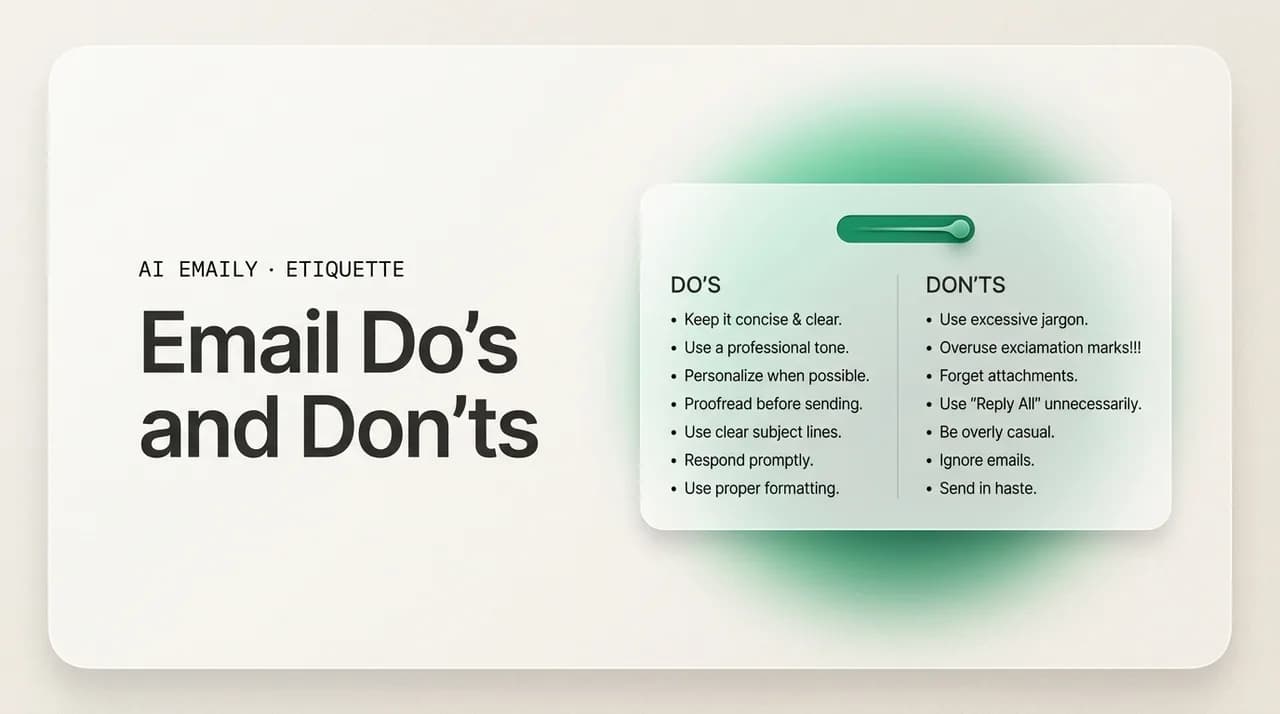
Email Do's and Don'ts: 30 Habits That Separate Pros From Amateurs
Email do's and don'ts for 2026: clear subjects, concise writing, proofreading, and reply timing — plus the reply-all storms, all-caps, and angry sends to avoid.
Nafiul Hasan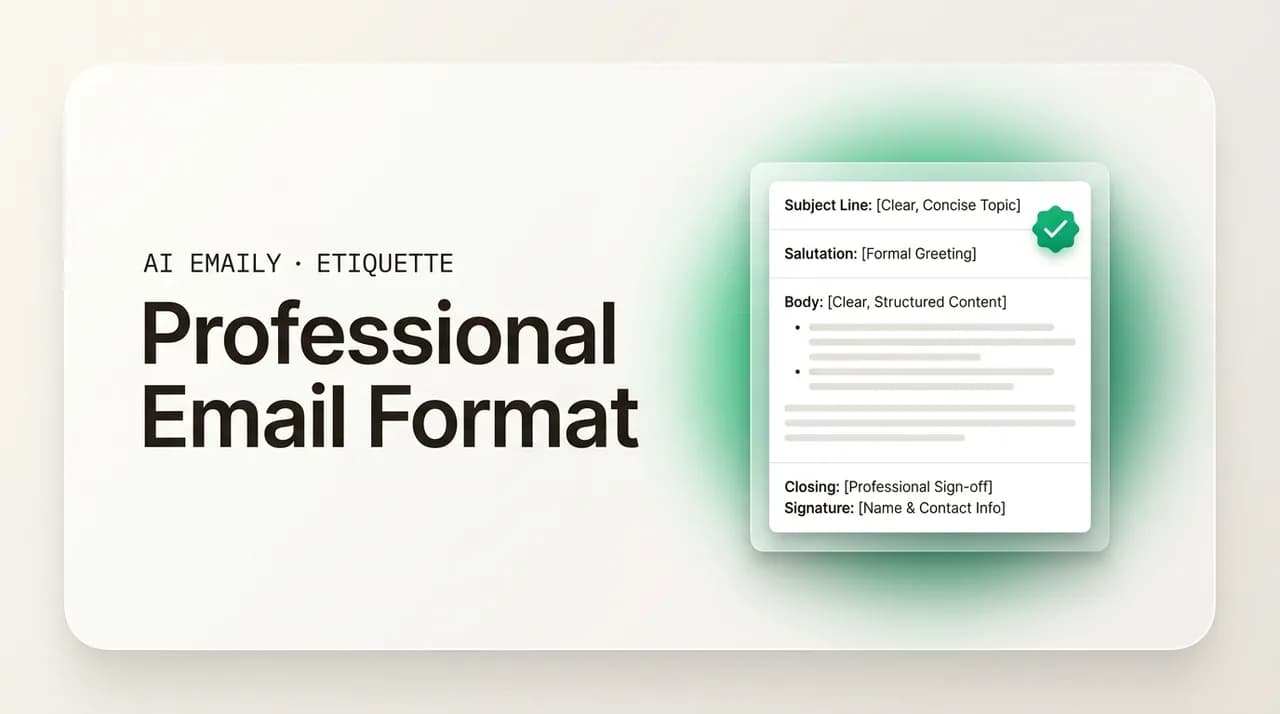
Professional Email Format: Structure, Examples, and a 2026 Template
The professional email format explained part by part, with a reusable template, formatting rules for scannability, and examples you can copy in 2026.
Nafiul Hasan
How to Start an Email: Greetings and Opening Lines That Work in 2026
How to start an email that gets read: the right greeting for every formality, strong opening lines by context, the clichés to cut, and examples you can adapt.
Nafiul Hasan
How to End an Email: Closing Lines and Sign-Offs for Every Situation
How to end an email: write a closing line that drives the next step, pick the right sign-off by tone, and avoid the endings that cost you replies.
Nafiul Hasan
100+ Email Sign-Offs: How to Sign Off an Email Professionally in 2026
100+ email sign-offs ranked by formality, with the closings that get more replies, ones to avoid, regional notes, and how to match each to your tone.
Nafiul Hasan
Professional Email Greetings: How to Say Hello in Any Email (2026)
Professional email greetings explained: Dear, Hello, Hi, and Hey by formality, what to use when you don't know the name, group greetings, titles, and punctuation.
Nafiul Hasan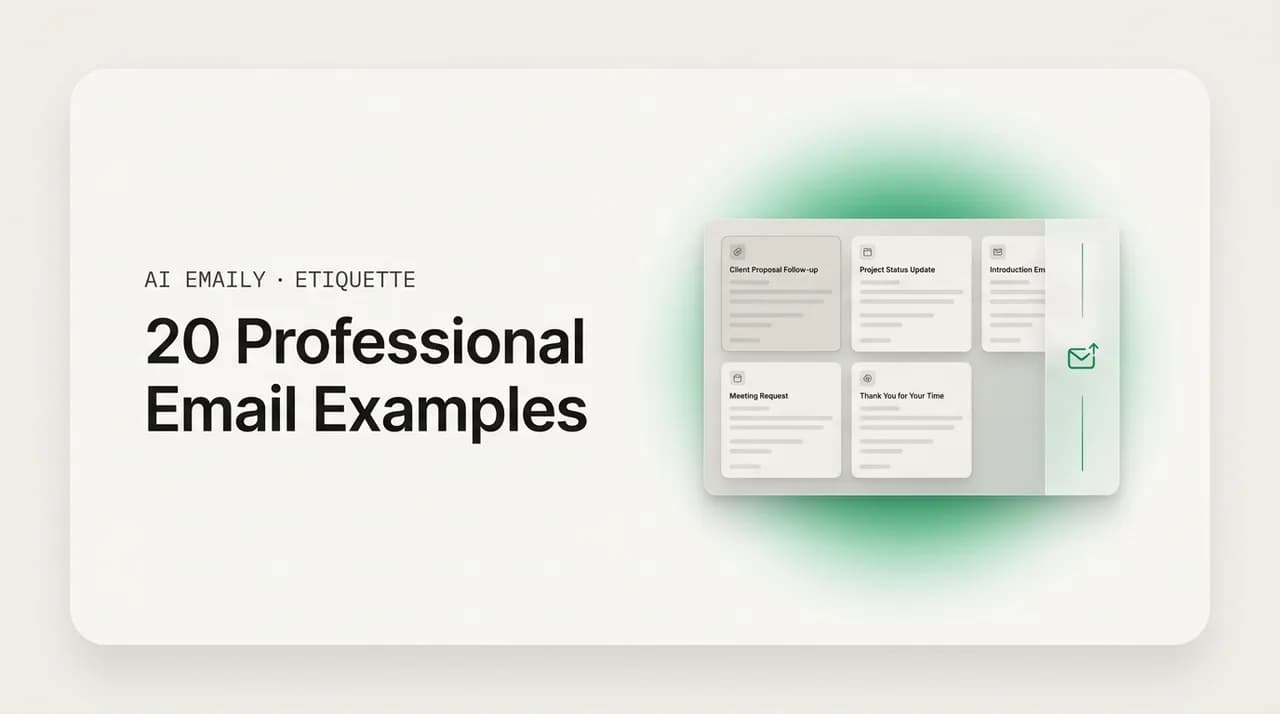
20 Professional Email Examples for Every Situation (2026)
20 professional email examples you can copy and adapt — introductions, follow-ups, requests, apologies, thank-yous, and more — each with the structure that makes it work and notes on tone.
Nafiul Hasan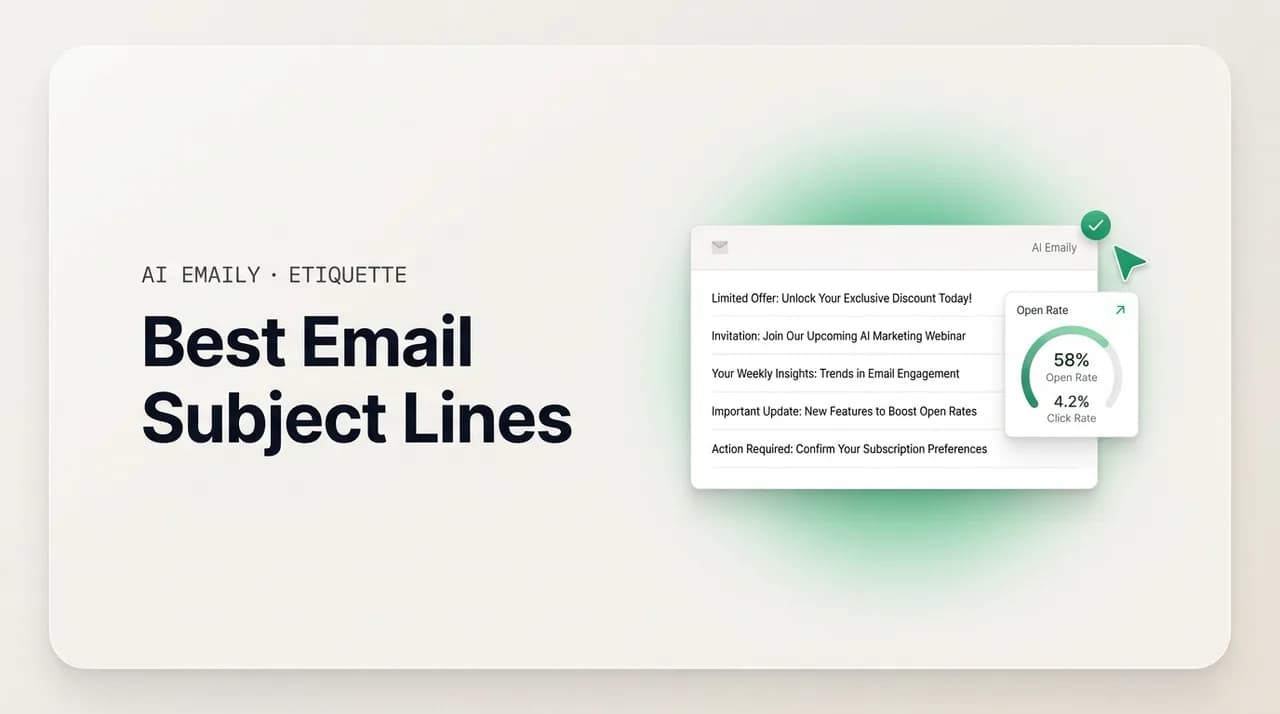
Best Email Subject Lines: Data-Backed Rules for Getting Opened in 2026
Email subject lines decide whether your message gets opened. Here are the data-backed rules — ideal length, the words to cut, formulas by goal — plus 80+ real subject-line examples for cold, follow-up, sales, and internal email.
Nafiul Hasan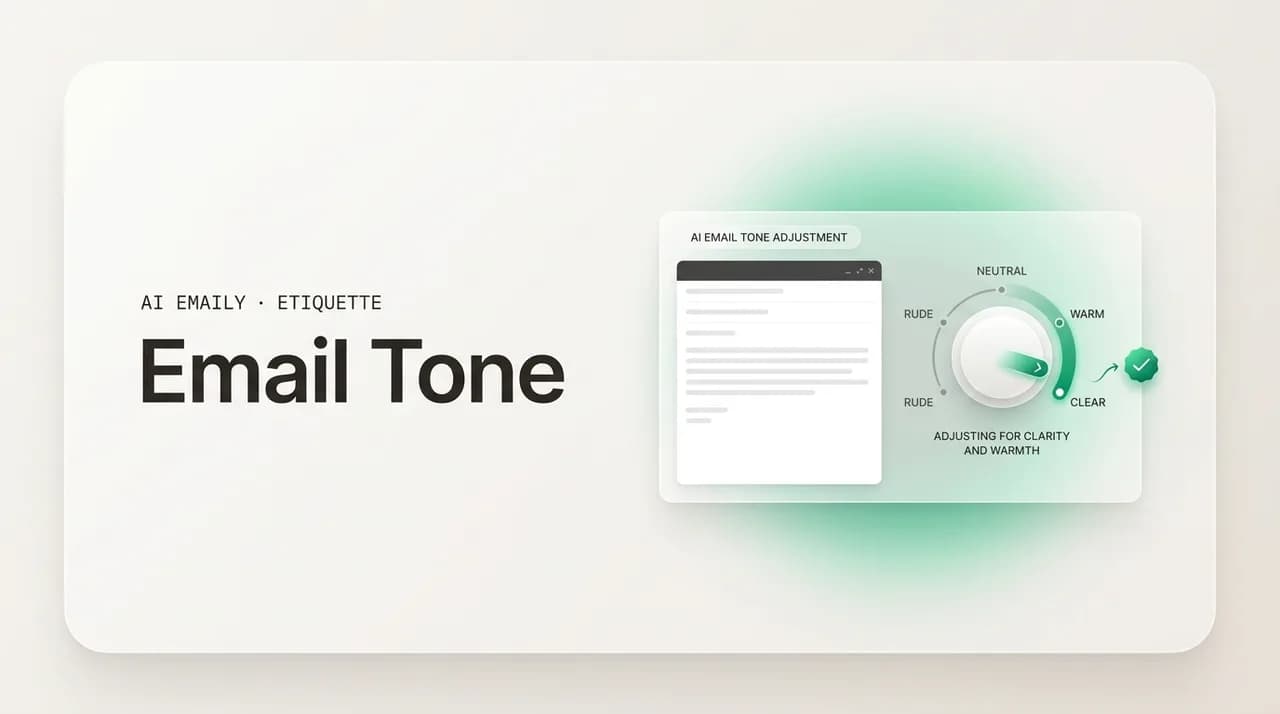
Email Tone: How to Strike the Right Tone (and Avoid Sounding Rude)
How to strike the right email tone for every reader and situation — the warmth-versus-directness balance, the lines that quietly sound rude or cold, before-and-after rewrites, and a simple system so your email reads the way you meant it.
Nafiul Hasan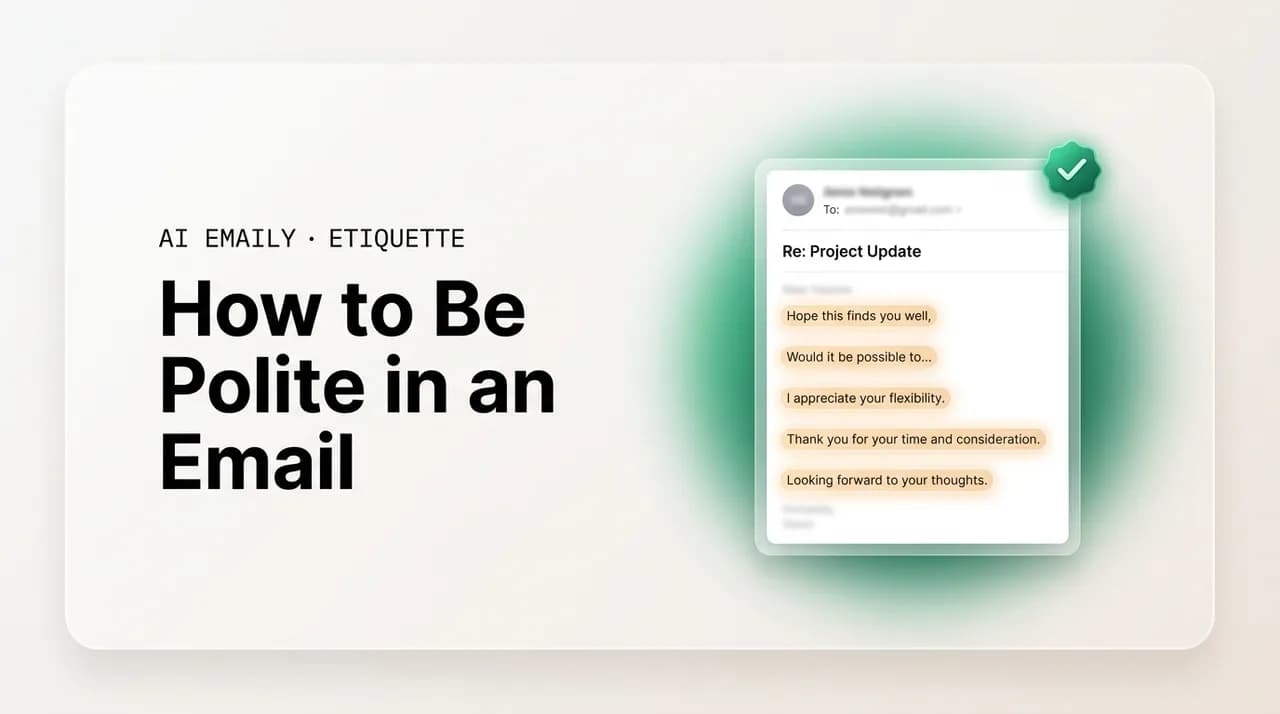
How to Be Polite in an Email: Phrases That Stay Warm and Clear
How to be polite in an email without going soft: the phrases that stay warm and clear, how to soften a request, decline gracefully, chase a reply, and the blunt-to-polite swaps that keep you respected.
Nafiul HasanEverything else in email etiquette & communication
- Reply All Etiquette: When to Reply, Reply All, and Stay Out of It30m
- CC vs BCC: What They Mean and When to Use Each (With Examples)28m
- How to Address Multiple People in an Email34m
- Formal vs Informal Email: How to Choose the Right Register Every Time29m
- How Long Should an Email Be? The 2026 Rule for Getting Read and Replied To28m
- Email Formatting Best Practices (Make It Readable)33m
- Can Work Emails Be Used as Evidence? What to Assume11m
- How Long Should You Take to Reply to an Email?11m
- How to De-escalate an Email Conflict Before It Spreads10m
- Passive-Aggressive Email Phrases and What They Really Mean11m
- "Per My Last Email": What It Signals and What to Say11m
- How to Reply to an Email Months Late Without Groveling13m
- Email Etiquette Across Time Zones: Rules That Work12m
- How to Email Someone Senior for the First Time13m
- How to Email Junior Colleagues Without Condescension13m
- Cross-Cultural Email Etiquette: Directness by Region13m
- Writing Professional Emails in a Second Language12m
- When Not to Use Email at Work: A Decision Rule14m
- How to Move an Email Thread to a Call, Politely14m
- How to End an Email Thread Politely (and Actually Stop)12m
- Email Etiquette When Forwarding a Thread to Someone New13m
- How to Write an All-Company Email People Actually Read12m
- How to Document a Decision by Email So It Sticks13m
- Why People CC Your Boss on Email, and How to Respond11m
- Left Off an Email Thread? What It Means and What to Do12m
- Quoting and Trimming Replies: How Much to Leave In10m
- Internal Email Subject Line Conventions That Actually Help9m
- When to Mark an Email High Importance (and When Not To)9m
- Group Email Etiquette: Distribution Lists and Aliases9m
- How to Fix an Over-CC Culture at Work11m
- Write Every Email Assuming It Will Be Forwarded9m
Email, finally worthy of your attention.
Start your 7-day free trial. Cancel anytime.
- 7-day free trial
- Cancel anytime
- Every provider