How to Email Junior Colleagues Without Condescension

The short answer
Phrases like 'as you know', 'just to be clear', and 'obviously' read as condescending downward even when they feel neutral to the sender. Replace them with direct requests, skip the context dump, give feedback privately, and ask one question instead of five. The edit is usually removal, not softening.
How to email a junior colleague without sounding condescending: the phrases that land wrong and what to write instead.
On this page
If you manage or mentor junior colleagues, there is a reasonable chance at least one of your emails landed harder than you intended. The phrase felt neutral when you typed it. The recipient read it as a lecture. Neither of you is wrong about the literal words — you are disagreeing about the subtext those words carry when they travel downward.
The mismatch is most common in the first year of managing people. Language that felt collegial to you as a peer starts carrying a supervisory charge the moment you become someone's manager, and the shift is invisible from your side. You are still typing the same sentences. The recipient is now reading them from a different chair, one where any correction, follow-up, or clarification carries the implicit weight of a performance review.
This guide is the mirror image of the advice about emailing senior colleagues. It covers the specific phrases that read as condescending even when meant as helpful — 'as you know', 'just to be clear', the five-paragraph context dump before a one-line request, the CC'd manager — and what to write instead. The goal is not to soften everything into vagueness. It is to be clear without being a lecture.
The short answer#
Condescension in downward email is rarely a matter of intent. It is a structural problem: you are explaining things the recipient already knows, signaling doubt in their competence, or using a phrase that has acquired a specific meaning from overuse. The fix is usually to cut, not to soften.
The phrases most often identified as condescending in workplace research include 'as you know', 'to be clear', 'obviously', 'just a reminder', and any sentence that ends with '...which I am sure you are aware of'. Each one implies that the recipient missed something obvious or required reminding. The research consensus from sources like Harvard Business Review on workplace communication suggests this kind of phrasing is consistently identified as undermining, not clarifying. Even 'just checking in' can read as a supervision signal rather than a courtesy, depending on how soon it arrives after the first message.
A useful diagnostic: if you removed every hedge, softener, and preamble from the email, would the remaining sentence still be a reasonable message to send? If yes, the padding was doing no work and probably signaling doubt. If the raw request suddenly reads as rude on its own, the problem is the request itself, not the wording around it — and no amount of 'just to be clear' will fix that.
The direction asymmetry
Before you start: two questions worth answering first#
Before working through the steps below, check two things that will determine whether this is a tone problem or something underneath it.
First: is the email necessary at all? A large share of condescending email is condescending primarily because it exists. A follow-up sent 45 minutes after the first email is not a courtesy — it signals that you do not trust the recipient to act. Many managers who want to write less patronizing email would be better served by sending fewer emails, period.
Second: are you writing to someone or at them? If you are composing a message to document your instructions — to create a record in case something goes wrong — the email is not actually for the recipient. That intent leaks through the language. A message written to protect yourself reads as a message that does not trust the other person, because that is exactly what it is. Acas, the UK workplace advisory body, notes that written communication which functions as a paper trail rather than genuine exchange is a common source of workplace tension. The tell for the recipient is usually numbered instructions restating things they have already been told once verbally, or a summary of a prior conversation with timestamps. Both formats are appropriate in a genuine performance discussion. Neither belongs in a routine work handoff.
How to email a junior colleague without sounding condescending#
- 1
Lead with the request, not the context
State what you need in the first sentence. Context and background come after, not before. 'Could you send me the draft by Thursday? Background if it helps: ...' reads as a request with optional context attached. 'As you know, the client review is Friday, and given that the team needs time to incorporate feedback, I was wondering if you might be able to get me the draft by Thursday' reads as a lesson. The recipient needs to read four lines before they learn what is actually being asked.
- 2
Remove the phrases that imply they missed something
Cut 'as you know', 'to be clear', 'obviously', 'just a reminder', and 'per my last email' from your defaults. When you find yourself typing one of these, ask what you are actually trying to communicate. 'Just a reminder' means 'I do not think you remembered.' If you believe they forgot, say so directly: 'This slipped through last week — sending again.' That is honest and does not require a patronizing hedge around the actual observation.
- 3
Give feedback in private and on the work, not the person
Reply-all corrections are the most consistent source of condescension in downward email. If a direct report made an error in a group thread, take it off the group. 'Pulling this to a separate thread' followed by a direct correction is respectful. A correction sent in reply-all — even a gentle one — is a public dressing-down, and the junior colleague knows the difference. The correction lands the same; the audience changes everything. The same principle applies to shared-document comments: a critical note left on a Google Doc or Notion page during a review is legible to everyone who opens the file afterward, sometimes for months. If the point is developmental rather than a fix, resolve it in a direct message so the artifact does not carry the correction forward.
- 4
Ask one question, not five
A five-question email to a junior colleague signals that you do not trust them to figure out the surrounding context. It also signals you have not prioritized: if every question is urgent, no question is. Send one question. If you genuinely need five answers, schedule a fifteen-minute call — that is a more efficient format than an email thread that will take three days to resolve anyway.
- 5
Match your level of explanation to demonstrated knowledge
Over-explaining is the structural cause of most condescending email. Before you add context, ask whether this person has already shown they know it. If they have, skip the explanation. If you genuinely do not know whether they know, ask: 'Does this need more background?' is more respectful than deciding for them that it does. The question also opens a conversation rather than ending it.
- 6
Reread the email as if you are the recipient
Before you send, spend ten seconds reading the email from the other chair. Look specifically for sentences where you are telling the recipient something about themselves — their knowledge gaps, their likely mistakes, their need for reminders. Any sentence that could be heard as 'I assume you need this spelled out' is a candidate for deletion. If the email still makes sense without it, delete it. A tighter test is to imagine the recipient reading the email out loud to a peer. Sentences you would edit for that hearing are the ones the recipient will edit privately in their head anyway — better to spare them the work.
Where the same phrase lands differently#
Condescension in email is partly about the words and partly about the channel. The same phrase carries different weight in a direct message, a reply-all, or a comment thread in a shared document. The table below maps where the risk is highest and why.
| Channel | Higher-risk phrases and behaviors | Why it hits harder here |
|---|---|---|
| Direct email (one-to-one) | 'Just to be clear', 'as you know', long context before the request | The recipient knows this is addressed specifically to them. A lecture in a direct email reads as a personal judgment on their competence. |
| Reply-all or group thread | Any correction, 'per my last email', pointing out someone's error | Every correction is public. Even neutral phrasing becomes a dressing-down when the rest of the team can see it. Take corrections off-thread. |
| Comment in a shared document | Long explanatory comments, 'see above', 'as noted earlier' | Comments live next to the work. A comment longer than the text it annotates implies the work was more wrong than it was. |
| Slack or Teams message | 'Did you see my email?', following up within an hour of sending | A Slack message minutes after an email reads as surveillance, not a courtesy. Trust the person to manage their own queue. |
| Calendar invite with no agenda | The absence of context is itself a signal | A blank invite sent to a junior colleague implies their time is less important than yours. Add three bullet points about the purpose. |
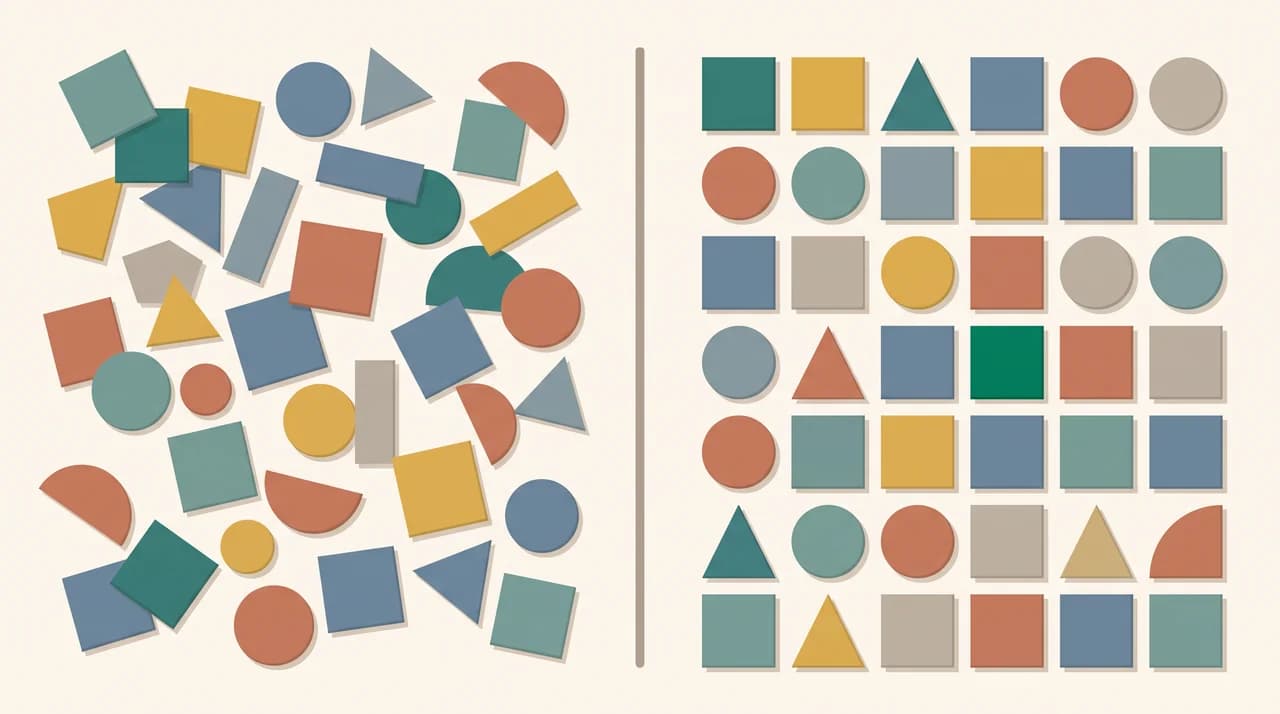
The pattern across all five channels is the same: condescension most often enters through additions rather than omissions. The extra sentence of context, the extra follow-up, the extra question. Cutting to what the person actually needs to know is both more respectful and more effective.
What to do when you have already sent it#
If you catch a condescending phrase immediately after sending, a one-line follow-up is usually the right move: 'Ignore the as-you-know in that last email — clunky wording on my part.' Owning it quickly lands better than hoping it was not noticed.
If the relationship has been damaged over time by a pattern of downward condescension — multiple junior colleagues have given you the same feedback, or a manager has mentioned it — a single phrasing fix will not solve it. The emails are a symptom. The underlying issue is usually a trust deficit: the messages are structured around documenting your instructions rather than helping the recipient do their work.
In that case, the most effective intervention is not to audit phrases but to change the default action. For one month, before sending any instructional email to a direct report, ask whether a two-minute conversation would do the same job. Most of the time it would. A conversation cannot be condescending in the same way an email can — it requires the other person to actually respond.
When the feedback has already been given to you
A faster way to catch the phrase before it sends#
Reading an email from the other person's chair — step six above — is reliable but easy to skip when you are moving fast. We build AI Emaily, an AI-native email client that drafts replies from a user-set Personal Context brain and per-client profiles, not by training on your past sent mail. The drafts it produces tend to strip the padding and context-dump sentences that carry most of the condescension, because those sentences rarely reflect the voice you actually want to use.
You approve every word before it leaves your outbox. If a draft reads sharper or more patronizing than you intended, you catch it at the review step rather than three minutes after hitting send. There is a 7-day free trial on the Pro and Autopilot plans. See aiemaily.com for what the product covers and the pricing page for current plan details.
Frequently asked
See it in AI Emaily
Keep reading

Written by
Nafiul HasanNafiul Hasan is an entrepreneur and AI automation system builder with 10+ years of experience turning messy, manual workflows into reliable automated systems. He designs and ships AI enterprise solutions end-to-end — the agent logic, the data plumbing, and the product people actually use — and founded AI Emaily to give busy professionals their attention back. He writes here from the builder's seat: what works, what breaks, and how to put AI to work without giving up control.