How to Fix an Over-CC Culture at Work

The short answer
Publish one CC rule the whole team can recite: CC means no reply needed, To means you own the action, BCC is for one-way broadcasts only. Measure CC volume for a week before and after you announce it. Then have the manager stop CC'ing themselves on everything — that single change does more than the rule alone.
How to reduce CC culture at work: a one-line rule, a two-week audit, and the manager habits that make it stick.
On this page
Over-CC culture is the habit of copying far more people on an email than the message actually requires — usually out of fear of being blamed for leaving someone out, rather than because those people need to act on anything. Reducing CC culture at work takes three things, not a tooling change: a one-line rule that separates FYI from action, a two-week measurement of what's actually happening, and someone senior visibly following the rule first.
Teams that skip the third step usually see volume creep straight back up within a month, because a rule nobody in charge follows is really just a suggestion.
What over-CC culture actually looks like#
An over-CC culture doesn't announce itself as a policy problem. It shows up as symptoms: a sender adds five names to a routine status update 'just in case,' a manager is copied on threads they never once comment on, and half the team reads every message twice — once to check whether it needs a reply, once to confirm it doesn't.
The habit spreads because copying more people feels safe and costs the sender nothing in the moment. The cost lands on everyone else: each unnecessary CC is a small decision — read it now, read it later, or risk missing it — multiplied across a team of ten or twenty people, several times a day, every working day.
The tell that you have a culture problem, not an individual one, is scope. One over-CC'er is a coaching conversation. A whole team that reflexively adds 'just to be safe' names to every thread has a norm, and norms don't change because one person reads an article about email etiquette. They change when the team agrees on a rule, checks whether it's actually working, and watches someone senior follow it in public.
Why your team over-CC's everyone#
Before you write a rule, find out which of these is actually driving the habit on your team. The fix is different depending on whether it's fear, unclear ownership, a tooling gap, or one person's habit that everyone else quietly copied.
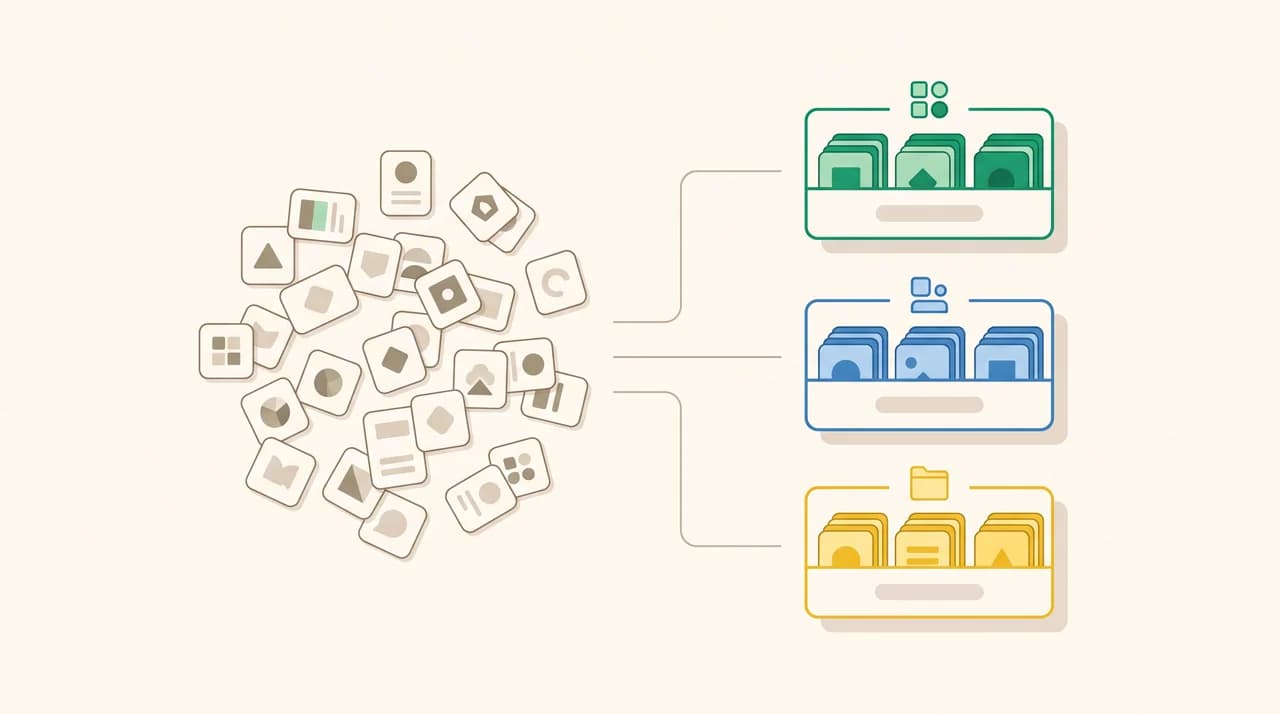
| Cause | How to confirm it | Fix |
|---|---|---|
| Fear of being blamed for 'not knowing' | Ask two people why they CC'd you on their last thread; listen for 'just in case' or 'so no one says I didn't tell them' | Say out loud that being CC'd doesn't create responsibility, and that missing an FYI is not treated as a mistake |
| No shared definition of CC versus To | Ask five people on the team what CC means; you will get close to five different answers | Publish one line: CC means no reply is expected, To means you own an action |
| A manager who CC's themselves on everything | Check the manager's own sent folder for a week and count how many threads they added themselves to | The manager stops first — the rule doesn't hold until they do it visibly |
| Project status stuck in email instead of a shared doc or tracker | Ask whether any recurring CC thread is really a status update aimed at a whole group | Move recurring status updates into the tool built for tracking them, not a reply chain |
| One habitual over-CC'er nobody has corrected | Look at who's copied even on threads about work they don't own | A direct, private conversation with that one person — not a team-wide policy |
| Reply-all treated as the safe default | Watch whether people reply-all to a CC thread even for a one-word acknowledgment | Make reply-all a deliberate choice with a reason, not the default keystroke for any reply |
Fix 1: Write a CC rule your team can actually recite#
This is the fastest of the three fixes and the one that makes the other two possible. Without a written rule, 'reduce CC culture' is just a vibe — nobody knows what they're supposed to do differently tomorrow morning.
- 1
Draft one line, not a policy document
CC means the message is informational and no reply is expected. To means you're on the hook for an action or a decision. That's the whole rule — resist the urge to add exceptions for every edge case someone raises.
- 2
Add a BCC clause
BCC is for genuinely one-way messages to a large group — an announcement, a broadcast. It is not for quietly tracking who's aware of a conversation without telling the other recipients; that erodes trust the moment someone finds out, and someone always finds out.
- 3
Get one visible sign-off
Have the most senior person on the team announce the rule themselves, in the channel or meeting where people actually read things. A rule that arrives from 'the company' lands differently than one the person who runs the standup says out loud.
- 4
Put it somewhere permanent
Pin it in the team channel and add it to the onboarding doc. A rule that only exists in a launch email is forgotten within two weeks — a durable location matters more than a memorable launch.
- 5
Set a start date, not an immediate switch
Give the team two or three days' notice so the audit in Fix 2 has a clean before-and-after line to measure against.
Don't use BCC to dodge a hard conversation
Fix 2: Run a two-week CC audit#
The rule only sticks if the team can see it working. A short, honest audit does that without turning into surveillance — the point is a shared number the team believes, not a log of who's slow to change.
- 1
Week 1: measure the baseline
Before announcing anything, ask a handful of volunteers — five or six people, not the whole team — to note, for one week, how many emails they were CC'd on and how many of those actually needed a reply from them.
- 2
Announce the rule partway through
Roll out the CC, To and BCC rule from Fix 1 with a clear start date, so the second week's numbers reflect a team that actually knows the rule exists.
- 3
Week 2: measure again
Same volunteers, same method, same honesty about whether a reply was really needed. You're comparing the same people's mail against itself, not comparing different people against each other.
- 4
Share the comparison openly
Post the before-and-after numbers to the team, even if the change is modest. Seeing the effect in a number is what makes the rule feel real instead of theoretical.
- 5
Follow up on outliers privately
If one or two people's habits didn't move, that's a one-to-one conversation from Fix 3, not a second team-wide announcement or a public callout.
Fix 3: Model the change from the top#
Rules and measurement get a team most of the way there. The last mile is behavioral, and it belongs to whoever is most senior on the thread — not because they're the most at fault, but because they're the one everyone else is quietly watching.
- 1
Stop CC'ing yourself on everything
If you manage the team, audit your own habit first. Managers who CC themselves on every thread as a monitoring reflex are the single most common reason a CC rule doesn't take across a whole group.
- 2
Stop replying-all to CC-only threads
A reply-all response to a message that was informational turns one FYI into a thread everyone has to read again. If a reply is genuinely needed, take the conversation off CC and address the specific person directly.
- 3
Say it out loud when someone over-CC's you
'You don't need to CC me on this one' — said kindly, in the moment — teaches the rule faster than any document ever will, because it's specific and it costs the other person nothing to hear.
- 4
Retire 'CC me on everything' as a habit
Some managers ask to be CC'd on a whole category of mail as a substitute for a real check-in. Replace it with a short recurring update instead — it gives the same visibility without adding you to every thread the team sends.
- 5
Praise it when someone gets it right
Notice, in the open, when someone routes a message correctly instead of defaulting to reply-all-and-CC-everyone. Positive reinforcement moves a norm faster than correcting the people who get it wrong.
How to tell which cause you actually have#
If the habit is concentrated in one or two people, you don't need a team-wide rule yet — you need Fix 3's private conversation, aimed specifically at those two people, before you spend a meeting announcing a policy the rest of the team didn't need.
If the habit is genuinely team-wide — most people CC broadly, and nobody can tell you exactly why — you're looking at the fear-driven or undefined-rule causes from the table above. Fix 1 and Fix 2 together are the right response: define the rule, then measure whether the behavior actually changes.
If the worst offender is the manager, none of the above will hold on its own. A team can adopt a written rule for a month and abandon it the moment they watch their manager CC five people on a routine update. In that specific case, Fix 3 has to happen before Fix 1 is ever announced, or the announcement itself becomes evidence that the rule doesn't apply to leadership.
If the real problem is that status updates live in email instead of a project tool, no CC rule fixes it — you're solving the wrong layer entirely. Move the status updates first, and see how much of the 'over-CC' volume was really a missing tool rather than a communication habit.
Preventing it from creeping back#
A CC rule fades the same way it formed — gradually, one 'just in case' at a time. Three habits keep it from creeping back once it's working.
Put it in onboarding. New hires learn a team's real CC norm from whoever sits near them in the first week, not from a document, unless that document is part of an actual onboarding conversation someone walks them through.
Revisit it after a reorg or a stressful incident. Fear-driven CC'ing spikes right after a mistake gets blamed on someone, or after a reshuffle changes who reports to whom. That's exactly when to re-state the rule out loud, not wait for it to quietly erode.
Check CC volume the way you'd check any other team health signal — briefly, periodically, without turning it into a metric anyone starts optimizing against.
The reason this takes ongoing attention is that enforcing a CC rule by hand means someone has to keep noticing when it slips, and nobody has time to audit headers forever. AI Emaily's rules brain can apply the same CC-versus-To distinction automatically: threads where you're only copied get filed out of the view that expects a reply, so the fear of 'missing something on CC' stops driving the habit in the first place. We build AI Emaily.
Frequently asked
See it in AI Emaily
Keep reading

Written by
Nafiul HasanNafiul Hasan is an entrepreneur and AI automation system builder with 10+ years of experience turning messy, manual workflows into reliable automated systems. He designs and ships AI enterprise solutions end-to-end — the agent logic, the data plumbing, and the product people actually use — and founded AI Emaily to give busy professionals their attention back. He writes here from the builder's seat: what works, what breaks, and how to put AI to work without giving up control.