No-Email Fridays: Does a Mail-Free Day Actually Work?

The short answer
A no-email day rarely cuts total email volume — it mostly shifts messages to Thursday evening or Monday morning. It works as a focus tool, not a volume fix: scope it to internal mail, exempt same-day SLAs, give people a phone alternative, and measure the days on either side, not just the day itself.
A practical no email day at work policy: what to exempt, how to announce it, and why the mail mostly moves instead of disappearing.
On this page
A no email day at work policy blocks off one day a week — almost always a Friday — when employees are asked to stop sending and checking internal email and use the phone, a chat tool, or a walk across the office instead. The idea isn't new: a handful of companies made headlines experimenting with an internal email ban back in the mid-2000s, and it resurfaces every few years whenever inboxes get loud again.
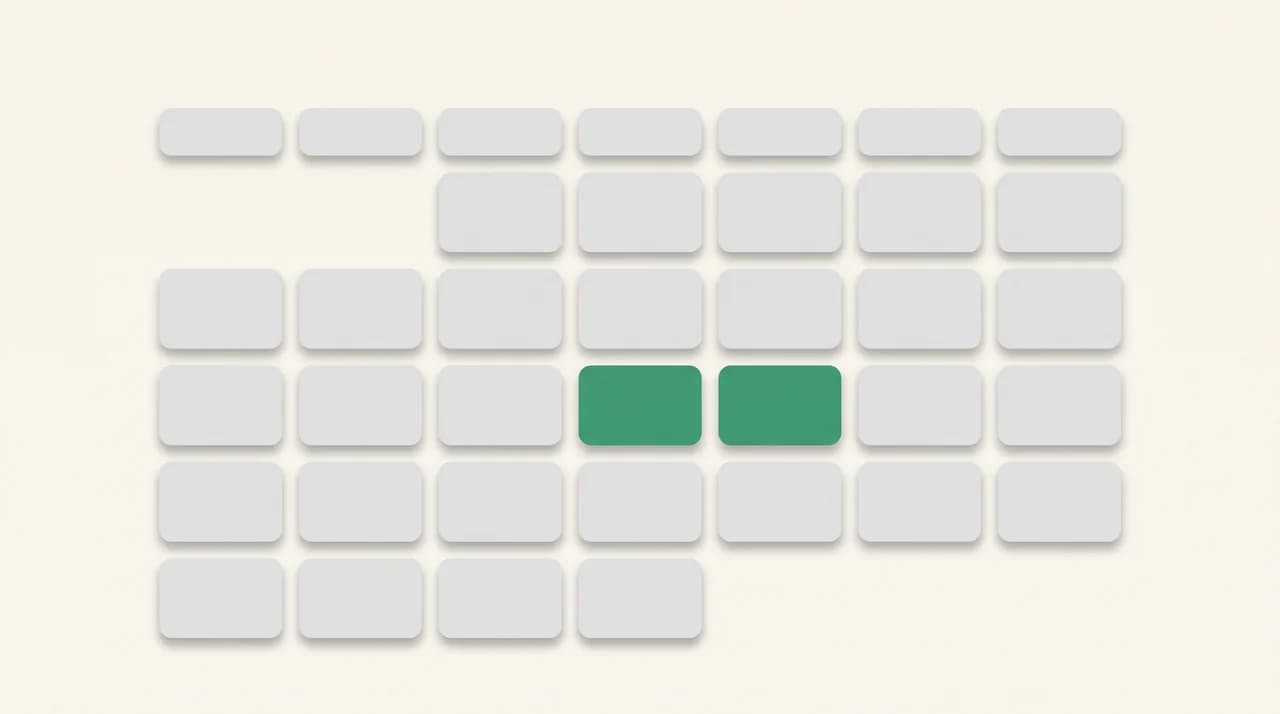
The honest answer is that a no-email day does not reduce how much mail your company sends in a week. It mostly moves the timing. A message that would have gone out Friday afternoon gets written Thursday night instead, or it waits until Monday morning and arrives in a pile with everything else that queued up. Total volume across the week barely changes for most teams that try it.
What does change, for teams that actually enforce the rule instead of quietly letting it slide, is the shape of one day. Fewer notifications breaking up deep work, more two-minute phone calls that would otherwise have been three-message threads, and a specific day people can point to when they explain why a reply is coming tomorrow. That's a real, measurable benefit — it's just a different benefit than "less email," and mixing the two up is how these policies get scrapped after one Friday that didn't feel different.
Before you start#
Before you announce a no-email day, decide what it actually covers. The details are where these policies succeed or fail — a rule that just says "no email on Fridays" with nothing else specified turns into a dozen arguments over exceptions within the first week.
Scope is usually the decision that eats the most time in that pre-launch conversation, and it helps to work it through with a concrete case instead of debating it in the abstract. Picture a mid-size company where sales wants client email folded into the ban and support pushes back immediately.
The workable middle ground most teams land on is internal-only from day one, with client and vendor mail excluded entirely and a note on the calendar to revisit that scope once the trial period has run its course. Settling this in the room before the announcement goes out is what keeps the first Friday from turning into a string of one-off exceptions granted over chat, each one quietly widening the hole in the policy.
Answer these before you write anything down:
- Scope — internal email only, or does it reach vendors and clients too? Client-facing teams almost always need to stay reachable externally.
- Exemptions — who is exempt by role: support, on-call, anyone with a same-day SLA — and how do they signal it without unwinding the rule for everyone else?
- Duration — a fixed trial with a real end date to review, not an open-ended mandate nobody revisits.
- Alternative channel — what replaces email that day: phone, a chat tool, or literally walking over — and does everyone actually have that option available to them?
- Leadership example — will managers actually stop emailing that day, or does the rule apply to everyone except the people who wrote it?
How to run a no-email day, step by step#
- 1
Pick the day and write the scope down
Friday is the default because it typically has fewer meetings and closes out the week, but pick whatever day has the least client contact for your team. Write the scope — internal only, exemptions, duration — as a one-page document, not a verbal announcement in a stand-up.
- 2
Decide what happens to messages that would have gone out
Most policies use one of two approaches: hold-and-send, where drafts queue until the next business day, or an away-message telling senders you're reachable by phone instead. Pick one and apply it consistently, or people quietly default to whichever is easier that day.
- 3
Set up the alternative channel before day one
If the plan is "call instead," confirm extensions and cell numbers are actually shared, not assumed. A no-email day that quietly turns into a no-communication day just delays every decision by 24 hours, and that's the version people remember and resent.
- 4
Announce it two weeks ahead, in writing
Give people time to tell clients, reschedule anything time-sensitive, and ask questions before the first Friday. A same-week announcement reads as a mandate dropped on the team rather than a trial they had input on, and mandates get resented faster.
- 5
Run it as a fixed trial, not a permanent rule
Four to six weeks is usually enough to get past the awkward first week without letting the policy fade into "a thing we used to do." Put the review date on the calendar the day you announce it, not weeks later once momentum is gone.
- 6
Check the two days on either side, not just the day itself
The real test of a no-email day is whether Thursday and Monday get measurably heavier. If your message count on those two days climbs by roughly what Friday used to carry, the policy redistributed load rather than removed it — a fine outcome, but a different one than most people expect going in.
How the policy differs by team#
A no-email day rarely works the same way for every function in a company. Teams with hard external deadlines or client SLAs need a narrower version of the rule than teams that mostly email each other.
Company structure shifts this further, past just which function a team sits in. A single-office team can rely on walking over to someone's desk as the fallback; a fully distributed team spread across time zones has no equivalent, so its alternative channel has to be a scheduled call or an async chat tool that doesn't demand everyone be online at once — otherwise the no-email day quietly becomes a no-communication day for whoever's in the minority time zone that week.
Seniority matters just as much. A policy that individual contributors follow but that managers and directors quietly skip doesn't hold for long, because a large share of the email volume in most companies is status updates and requests moving up and down the reporting line, not sideways between peers doing the same job.
| Team | Can go fully quiet? | What to do instead |
|---|---|---|
| Internal ops / engineering | Yes, most weeks | Full no-email day; route anything urgent to chat or a stand-up call |
| Sales / account management | No — client inbox stays open | Internal-only ban; external replies still go out same day |
| Support / help desk | No — tickets keep an SLA | Exempt entirely, or rotate one on-call person per shift |
| Executive assistants / scheduling | Partial | Calendar and travel changes still go through; internal FYI threads wait |
| IT / on-call | No | Exempt by definition — the policy shouldn't touch incident response |
What to do when it doesn't work#
Three failure modes show up in almost every team that tries this, and none of them mean the idea is broken — they mean the policy needs a specific fix.
Mail piles up and Monday gets worse. If Friday's messages just move to Monday morning, you haven't reduced anything, you've concentrated it into a worse pile. The fix is usually the hold-and-send approach from the steps above: drafts queue automatically and release across Monday morning on a schedule rather than all landing at 9:01 a.m. at once.
External senders never got the memo. Nobody outside the company reads an internal policy document, so a no-email day does nothing to the mail arriving from clients, vendors, or cold outreach — it only changes what your team sends back. If the actual goal was "less mail arriving," this is the wrong tool; that's a filtering and triage problem, not a scheduling one.
People quietly stop following it. This is the most common failure, and it's almost always a leadership-modeling problem rather than a rank-and-file one. If managers didn't actually stop emailing on the day, restate the rule once, publicly, with a specific example. If it still doesn't hold after that, the policy is dead, and pretending otherwise just teaches people that written rules here are optional.
New hires break the pattern without meaning to. Someone who started three weeks ago has no context for why Friday looks different, likely missed the original two-week announcement because they weren't hired yet, and sends a routine internal email that everyone else reads as someone ignoring the rule. The fix is to fold the policy into onboarding material directly instead of assuming it comes up naturally in conversation, and to treat a new hire's first slip as a gap in how the policy was explained, not a discipline issue.
The volume doesn't disappear — it moves
A faster way to deal with what piles up#
None of this changes the fact that mail still arrives on the day you've declared quiet — it just waits. Someone still has to sort what came in, decide what can hold until Monday, and draft the handful of replies that can't. AI Emaily's agent can do that sorting continuously: filing, snoozing, and drafting the routine replies while your team is intentionally offline, so the Monday queue arrives already triaged instead of just full.
In Copilot mode nothing sends without your approval, and every action it takes is logged in an audit trail you can undo. It won't decide your no-email policy for you, but it does mean the policy doesn't have to cost you a slower Monday to get one quiet Friday. We build AI Emaily.
Frequently asked
See it in AI Emaily
Keep reading

Written by
Nafiul HasanNafiul Hasan is an entrepreneur and AI automation system builder with 10+ years of experience turning messy, manual workflows into reliable automated systems. He designs and ships AI enterprise solutions end-to-end — the agent logic, the data plumbing, and the product people actually use — and founded AI Emaily to give busy professionals their attention back. He writes here from the builder's seat: what works, what breaks, and how to put AI to work without giving up control.