Writing Professional Emails in a Second Language

The short answer
To write professional emails confidently in a second language, build a core set of sentence frames for common situations, get the register right before you write the first word, and compose from your intent rather than translating sentence by sentence. AI drafting tools can help phrase things accurately without removing your voice.
How to write professional emails in a second language: sentence frames, register traps, and how to use AI drafting without losing your own voice.
On this page
- 01What do you need before you start writing?
- 02How do you write professional emails in a second language, step by step?
- 03How does professional email register differ across languages?
- 04What do you do when the draft still does not feel right?
- 05A faster way to draft professional emails in a second language
How to write professional emails in a second language is not, primarily, a vocabulary question. Most people who work in a second language already know the words they need. The problem is the layer above vocabulary: register. Does this greeting signal that I know this person well, or that I am meeting them for the first time? Does the direct opening that works in English come across as rude in German, or is directness actually the expected style there? Is the sign-off I copied from a template too warm for a first contact in Japanese?
Getting those calls wrong does not make the email grammatically incorrect. It makes it socially off, in ways the recipient feels but often will not name. A French client who expected vous and received tu notices. A British colleague who got an opening they read as inappropriately casual notices. The words were fine; the register was not. That gap is what this guide addresses.
The approach here is composing directly in the second language, not translating from your first. Translation produces text that reads as translated. Composition produces text that reads as written. Those two things are noticeably different to a native reader, and the difference lives in sentence structure, openings, and sign-offs rather than in vocabulary. The steps below give you a working method for both.
What do you need before you start writing?#
Three things determine whether the email lands correctly, and all three need to be clear before you open the draft.
The first is the language's formality system. Many professional languages have a formal and an informal second person that English does not — German Sie and du, French vous and tu, Spanish usted and tu, Italian Lei and tu, Korean and Japanese with multiple honorific levels. English speakers consistently underestimate this risk because there is no equivalent pressure in English. Getting the register wrong is not a grammar error; it is a social signal, and it hits the recipient before they have read past your greeting.
The second is your relationship with the recipient. First contact with someone more senior than you is not the same situation as a quick reply to a colleague you have worked with for two years. The email that is correct for one relationship is often wrong for the other, even inside the same language.
The third is your intent. What do you want to happen when this person finishes reading? A specific answer, a meeting, a decision, an acknowledgment? Know that before you write. A second-language email that is also unclear on purpose is twice as hard to rescue.
When unsure, choose formal
How do you write professional emails in a second language, step by step?#
Follow this sequence and the specific language norms fall into place more predictably.
- 1
Establish the correct register before you write anything
Decide formal or informal before the greeting, not after. If an existing thread is present, check the register the other person used — if they wrote tu or du, you can reciprocate. For first contact, use formal as the default. Name the specific register in your own notes (Sie, vous, usted) and hold it consistently through the entire email, including the closing. A slip from formal to informal mid-email is one of the most common second-language errors and rarely goes unnoticed by a native reader.
- 2
Open with the culturally correct greeting
Greetings differ more than vocabulary alone explains. German business email commonly opens with 'Sehr geehrte Frau / geehrter Herr [surname]' in formal contexts, not a generic 'Hello.' French formal email uses 'Madame,' 'Monsieur,' or the full salutation for first contact. Japanese email opens with a ritual courtesy phrase acknowledging the season or the relationship before stating any purpose. English business email has the shortest greeting convention of the major professional languages, which is why English speakers often under-prepare recipients from other cultures. Research the specific convention for your target language and use it. Do not substitute an English-style opening with the words translated.
- 3
State your purpose in the first sentence of the body
Most professional email cultures expect a clear statement of purpose early. Even in Japanese, where the opening courtesy comes first, the purpose follows immediately after. The version that trips up non-native writers is burying the request or question several paragraphs in. That signals hesitation or poor structure, and both read as uncertainty. Put the purpose in the first or second sentence of the body, after the greeting. 'I am writing to follow up on our conversation about...' or 'I have a question regarding the proposal you sent last week.' The shorter version is nearly always better.
- 4
Build the body around sentence frames
A sentence frame is a fixed structure you fill in for each situation: 'I would be grateful if you could...' (English, polite request), 'Ich wäre Ihnen dankbar, wenn Sie...' (German, formal), 'Je me permets de vous contacter au sujet de...' (French, first contact). Build a personal library of ten to fifteen frames covering the situations that come up most often in your work: requests, follow-ups, apologies, confirmations, and closings. Using these frames consistently produces more natural-sounding output than constructing each sentence from scratch, because native writers have their own internalized library of the same structures and recognize the patterns.
- 5
Close with the sign-off that matches the register you opened with
The sign-off is the second most noticed register signal after the greeting. Formal German email closes with 'Mit freundlichen Grüßen' — not 'Viele Grüße' for formal first contact. Formal French email closes with a longer courtesy formula. English formal uses 'Yours sincerely' when you have used the recipient's name, or 'Yours faithfully' when you have not. English informal uses 'Best regards,' 'Kind regards,' or simply 'Best.' Do not port your native-language sign-off habits into the second language. They rarely transfer cleanly. Match the sign-off to the register you opened with, and hold it there.
How does professional email register differ across languages?#
The table below summarizes the main dimensions where languages diverge in business email. Use it as a starting map, not an exhaustive ruleset — regional variation and company culture both shift the defaults. Verify specific conventions against current Cambridge English and professional-writing resources for your target language.
| Language / Region | Formal vs informal split | Structure norm | Common English-speaker trap |
|---|---|---|---|
| German (DACH) | Sie (formal) vs du (informal); Sie is standard for first contact outside your immediate team | Direct, brief, purpose-first; small talk before the point is not expected | Treating directness as coldness and softening the message with hedges that read as vague or evasive |
| French | vous (formal) vs tu (informal); vous is maintained much longer than English speakers expect, even with regular contacts | Formal greeting and closing formulas are longer than English conventions; purpose follows after the salutation | Switching to tu before the other person does, or using an English-length closing formula |
| Japanese | Multiple honorific levels; business email uses formal honorifics for all external correspondence | Opens with a seasonal or relational courtesy phrase before stating any purpose | Skipping the ritual opening entirely and starting with the request |
| Spanish (Latin America) | usted (formal) vs tu (informal); usted for first contact or more senior recipients | Warmer opening than German or French; some relational small talk is expected in ongoing correspondence | Using European Spanish phrasing with a Latin American recipient, or vice versa |
| English (UK vs US) | No formal/informal pronoun split, but register varies significantly through vocabulary and sentence structure | UK tends toward more indirect requests and hedged language; US tends toward more direct phrasing | Reading British indirectness as ambiguity, or American directness as bluntness or aggression |
These differences compound when you are writing across a language pair where both have strong norms. A German-speaker writing to a French contact in French needs to adapt not only the vocabulary but the structural expectation: a more elaborate greeting, a different closing convention, and a register calibration that German professional writing does not prepare you for. The sequence is always: language first, register second, structure third.
What do you do when the draft still does not feel right?#
Three failures come up most often even after following the steps above.
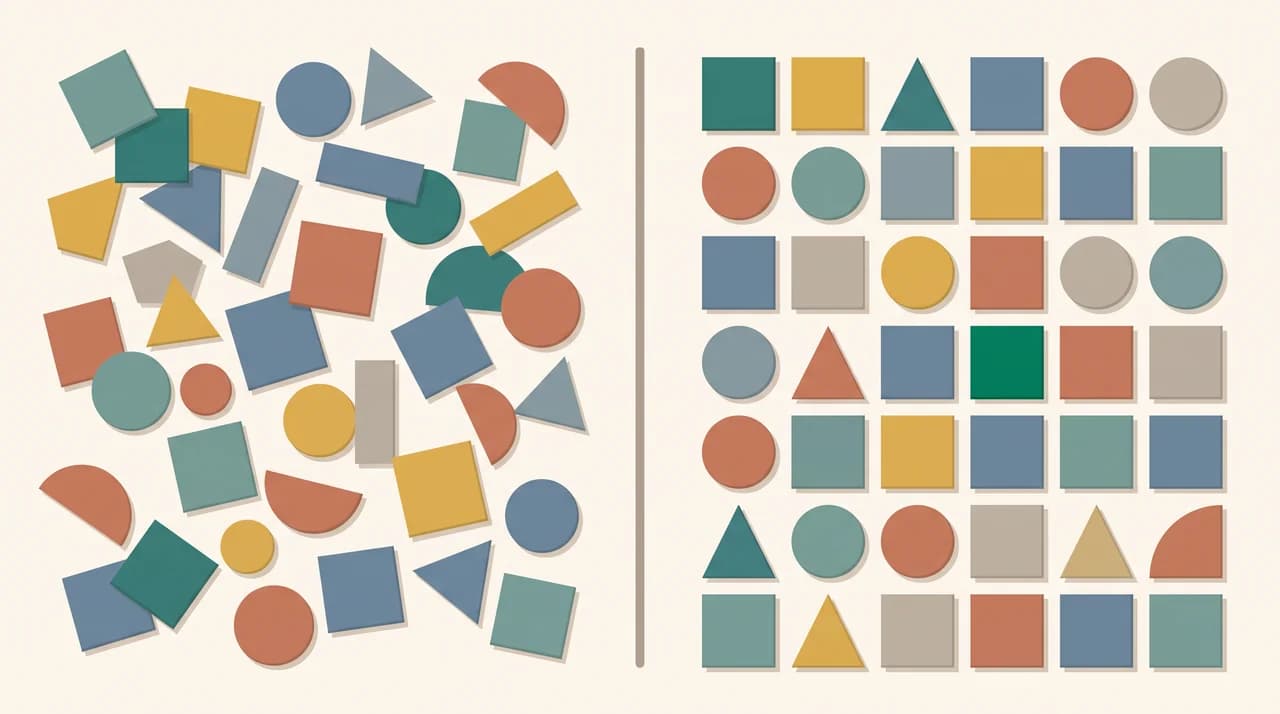
- The email reads as translated, not written. The symptom is awkward word order, redundant hedging, or sentence structure that does not match the target language's natural rhythm. The fix is to delete the draft and recompose from your intent — not the English sentences in your head, but the goal of the email. What outcome do you need? Write toward that in the target language from the start. If you begin with an English mental draft and translate it phrase by phrase, the seams show. If you begin with the purpose and compose directly, they usually do not.
- You are unsure whether the draft sounds too formal or too casual. A useful cross-check is to paste the email into a general-purpose AI model and ask it to judge the register against the standards of that language's business writing — not English norms. Ask for a quoted example of any phrase it would flag, not just a general verdict, which forces precision. If you do not have that available, send it to a trusted native speaker before the first send in a new relationship. One good check pays back across every subsequent email to that contact.
- You cannot find the right sign-off. Uncertainty about the sign-off is almost always a signal that the register of the whole email is uncertain. Go back to the greeting and confirm it. If the greeting is formally correct and consistent, the sign-off follows from the same register. If the greeting shifted partway through from the register you intended, the sign-off is where that inconsistency surfaces.
A faster way to draft professional emails in a second language#
The steps above work and the register knowledge they build applies every time, regardless of what tool you are using. For ongoing correspondence across a language barrier, the manual cycle still adds up: draft, check register, find the right sign-off convention, verify the greeting, then review once more before you send.
AI Emaily is the AI-native email client we build. Its AI drafting reads the open thread on your real mailbox — the actual back-and-forth, not a freshly pasted excerpt — and generates a reply that accounts for the existing register and the relationship context already in the conversation. You set your own Personal Context brain and per-contact profiles to specify how you communicate; it does not learn your style from your mail on its own. Every draft waits for your explicit approval before it sends, with a full audit trail behind each action. That approval step matters more when the email is in a language you cannot verify as quickly as your first. Start a 7-day free trial at aiemaily.com. Plan details are at aiemaily.com/pricing.
Frequently asked
See it in AI Emaily
Keep reading
Sources

Written by
Nafiul HasanNafiul Hasan is an entrepreneur and AI automation system builder with 10+ years of experience turning messy, manual workflows into reliable automated systems. He designs and ships AI enterprise solutions end-to-end — the agent logic, the data plumbing, and the product people actually use — and founded AI Emaily to give busy professionals their attention back. He writes here from the builder's seat: what works, what breaks, and how to put AI to work without giving up control.