Is Self-Hosting Inbox Zero Worth It?

The short answer
Usually not, unless you already run other self-hosted services or have a hard data-residency rule. Self-hosting Inbox Zero costs a small VPS, a model API bill you now own, and a few unschedulable hours a month. It is worth it when your ops habit is real and your organisation sits under the license's five-business-user threshold.
Is self-hosting Inbox Zero worth it? Score it on maintenance hours, model spend, skills and the license threshold — not just the monthly server bill.
On this page
- 01The short answer
- 02Criteria that actually matter
- 03Score your own situation
- 04The license gate most write-ups skip
- 05Does self-hosting give you better privacy for email AI?
- 06Worked example: three readers, three answers
- 07Red flags: when self-hosting is about to go wrong
- 08What we'd pick and why (honest)
Is self-hosting Inbox Zero worth it? For most people, no — and the reason is not the server bill. The open-source Inbox Zero app runs fine on a small VPS. What it costs you is a recurring, unschedulable claim on your attention, a model API bill you now own directly, and a license condition that stops exempting you the moment your company crosses five business users.
Most write-ups answer this question in dollars per month. Dollars are the easy part, and a separate page on this site already prices the self-hosted path line by line. This page answers it in the currency that actually decides it: hours you cannot schedule, skills you either have or do not, and two facts — one legal, one about where your mail really goes — that flip the verdict outright.
We build AI Emaily, a hosted AI email client, and we are one of the options weighed at the end. We are also not self-hostable, so on the literal requirement of code and data on your own hardware we lose to the open-source Inbox Zero app outright.
The short answer#
Self-hosting Inbox Zero is worth it when three things are true at once. You already run other containers, so you are not learning Docker for this. Your maintenance hours are cheap, because you would spend them tinkering anyway. And you have a requirement a hosted product cannot satisfy — usually contractual data residency, or an audit that names the host.
If only one or two of those hold, the trade goes the other way. Self-hosting converts a fixed subscription into a variable claim on the one person who set it up, and email is a dependency where a silent failure is worse than a loud one. A stalled Gmail watch subscription does not page you. It quietly stops triaging, and you notice three days later.
- Solo technical user who already runs a home server — yes, self-host it. Your marginal hours are close to zero.
- Solo non-technical user — no. You will pay in evenings what you thought you were saving in subscription.
- Team of two to four with an engineer to spare — maybe, and read the license terms before you commit.
- Organisation of five or more business users — the appended license terms require an enterprise license, so free-because-open-source is no longer the argument you thought it was.
- Anyone whose real requirement is that no vendor retains their mail, rather than that it runs on their hardware — a zero-retention hosted product answers that without the ops.
The hours are the price, not the servers
Criteria that actually matter#
A self-hosting decision is usually presented as a cost comparison, which is why so many people get it wrong. Cost is one criterion out of six, and the one that varies least between the two paths. The rest are your interrupt tolerance, your skill floor, the upgrade cadence you are signing up to track, where the privacy you want actually comes from, and whether the license covers you at all.
Weight these for your own situation rather than accepting ours. The weights below reflect what breaks self-hosted deployments in practice, not what is easiest to put in a table.
| Criterion | Weight | What a yes looks like | What it costs you if you get it wrong |
|---|---|---|---|
| Interrupt tolerance | High | A broken sync can wait until the weekend | Silent triage failures you notice days late |
| Skill floor and bus factor | High | Two people could redeploy it from the docs, not one | The person who set it up moves on; nobody touches it again |
| Upgrade burden | Medium | You already track upstream releases for something else | You freeze on an old version, then an advisory forces a rush |
| Where privacy comes from | High | You will run a local model, not just a local app | All the ops, and message text still goes to a commercial API |
| License fit | Gating | Personal use, or an organisation under five business users | Out of compliance the day you hire your fifth |
| Direct cost | Low | VPS plus your own model spend beats the subscription | A modest overrun you would not notice on either path |
Score your own situation#
Give yourself the points below, honestly. The scale is deliberately blunt, because the decision is blunt. A scoring system that produces a comfortable tie is one that let you avoid the answer.
- 12 to 15 — self-host it. You are the reader the open-source path was built for.
- 7 to 11 — go hosted, or self-host with a written answer for who covers it while you are away. Most teams in this band self-host anyway and regret it around month four.
- 0 to 6 — do not self-host. Buy a hosted plan, from Inbox Zero or someone else, and spend the hours on work that pays you.

| Question | Yes | Partly | No |
|---|---|---|---|
| Do you already run and maintain other self-hosted services? | 3 | 1 | 0 |
| Could a two-day triage outage pass without real cost? | 3 | 1 | 0 |
| Is there a second person who could redeploy it from the docs? | 2 | 1 | 0 |
| Will you actually run a local model rather than a hosted API key? | 2 | 1 | 0 |
| Are you under the license's five-business-user threshold? | 3 | — | Stop — see the license section |
| Is your rate low enough that three to six hours a month is cheap? | 2 | 1 | 0 |
The license gate most write-ups skip#
The Inbox Zero repository ships the GNU Affero General Public License version 3, with supplemental terms appended by Inbox Zero Inc. Those extra terms are the part that decides things for a business, and they are easy to miss because the badge on the page simply reads open source.
As of August 2026 the appended terms say two things. You may not use the program for commercial purposes that involve monetising the software itself — selling access to it, offering it as a paid service, or building it into a commercial product — without written permission. And if you are an organisation with five or more employees, contractors or users using it for business purposes, you must obtain an enterprise license before using it. Personal use, educational use, research, and organisations with fewer than five business users are exempted.
This is not a criticism of the license — it is a reasonable way for a small company to fund open development, and it is stated openly in the repository. But it changes the shape of the decision. For a business at or above the threshold, self-hosting is not the free option against the paid option. It is the self-operated licensed option against the vendor-operated licensed option, and the operating work is the only thing you are genuinely taking on.
Read the LICENSE file yourself before you deploy. Supplemental terms can change between releases, and a summary on someone else's blog is not a compliance position.
Check the license before you check the price
Does self-hosting give you better privacy for email AI?#
Partly, and less than most people assume. Self-hosting moves the orchestrator. It does not move either of the two endpoints that actually read your mail.
Your mail is still in Gmail or Microsoft 365. Inbox Zero connects through Google or Microsoft OAuth, so the provider that already holds your mailbox holds it exactly as before. Running the app on your own VPS changes nothing about what it can see.
The second endpoint is the model. The self-hosted app supports many providers through environment variables — Anthropic, OpenAI, Google Gemini, Groq, OpenRouter, Azure OpenAI and AWS Bedrock among them. Point it at any of those and your message text leaves your server for a commercial inference API, exactly as with a hosted product. You did the ops and kept the exposure.
One configuration genuinely closes the loop. The app also supports Ollama and OpenAI-compatible local servers, so a local model means message text never leaves your hardware. That is the strongest privacy story of any option on this page, and it is why the honest answer is: only if you go all the way.
Going all the way costs quality and hardware. A model small enough for a modest box will not triage and draft like a frontier model, and one large enough to compete needs a GPU costing more than several years of any subscription in this category. Decide which you want before assuming self-hosting hands you both.
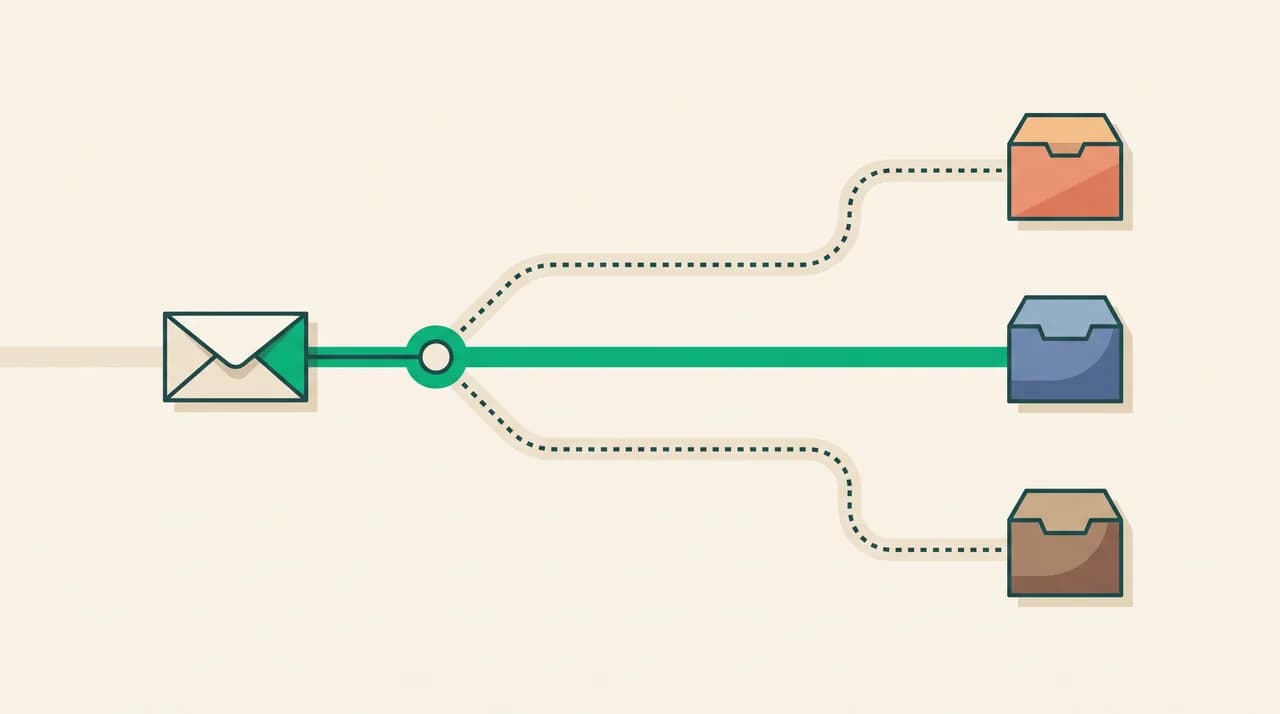
Worked example: three readers, three answers#
Priya is a solo developer already running Postgres, a reverse proxy and four other containers on a VPS she patches monthly. One more service costs her an hour of setup and folds into a routine she already has, and triage stopping for a weekend is an annoyance rather than a cost. She scores 14, self-hosts, and is right to.
Marcus is a solo consultant on Gmail whose inbox is his pipeline. He has followed a Docker tutorial once, he would be running a hosted model key so the privacy gain he imagined is not there, and a two-day silent triage failure means a missed brief. He scores 4. Every hour on OAuth credentials is an hour he did not bill, and the subscription costs less than one of them.
The nine-person agency is the interesting case, because their score is irrelevant. They sit above the five-business-user threshold, so the appended license terms require an enterprise license before they use it at all. Their real choice is between a licensed self-operated deployment and a hosted plan — and once the license is priced into both, the only remaining variable is who does the operating.
Red flags: when self-hosting is about to go wrong#
Deployments almost never fail on day one — the quick start works, the containers come up, the first triage run feels like a win. They fail in month three. Every item below is a month-three failure you can see coming today.
- You are learning Docker for this. The quick start works fine; the third dependency bump at 11pm does not.
- One person owns it, and that person is you. Write down who covers it while you are away, or accept that nobody does.
- You budgeted the VPS and not the model bill. That meter runs per message processed, not per user.
- You skipped the Pub/Sub setup and are relying on polling. It works, it is slower, and it fails differently from what the docs assume.
- You have never tested a restore. An untested Postgres backup is a file, not a backup.
- You are counting the savings against a subscription you would not have bought anyway.
- Your compliance requirement names a hosting location and you have not checked whether an OAuth-connected Gmail mailbox satisfies it. Self-hosting does not relocate the mailbox.
The honest test
What we'd pick and why (honest)#
If your requirement is literally code and data on your own hardware, self-host Inbox Zero and pair it with a local model. That is the only option on this page that satisfies it, we do not compete for it, and no hosted product — ours very much included — is a substitute. Go read their self-hosting docs and skip the rest of this section.
If you scored in the middle, and your actual requirement is that no vendor retains your mail rather than that it runs on your hardware, that is a different question with a much cheaper answer. Zero-retention hosted gets you the guarantee without the pager.
That is where AI Emaily fits, and we build it, so weigh the next few sentences accordingly. It is a hosted AI email client across Gmail, Outlook and generic IMAP, with approve-before-send as the default, undo on agent actions, an audit log of what the agent did, and no training on user mail. Voice matching comes from a Personal Context brain you write and per-client profiles you set, not from anything scraped out of your sent folder.
On Autopilot and Team, bring your own model key if you would rather own the meter directly. Pricing is a 7-day free trial on Pro and Autopilot with a card required, then a subscription — there is no permanent free tier, and if that is your requirement we are not your answer.
Where we lose, plainly: we are not self-hostable, there is no Linux build, and the Mac app is an Electron shell on Apple Silicon rather than a native binary. On data residency we lose to a self-hosted deployment outright. On hours spent per year we win by nearly all of them.
Pick whichever axis actually binds. And if you already enjoy running your own services, none of this applies — go self-host it.
Frequently asked
See it in AI Emaily
Keep reading
Sources

Written by
Nafiul HasanNafiul Hasan is an entrepreneur and AI automation system builder with 10+ years of experience turning messy, manual workflows into reliable automated systems. He designs and ships AI enterprise solutions end-to-end — the agent logic, the data plumbing, and the product people actually use — and founded AI Emaily to give busy professionals their attention back. He writes here from the builder's seat: what works, what breaks, and how to put AI to work without giving up control.