Moving From a Free Email Address to Your Own Domain


The short answer
Buy the domain, set up the mailbox on your chosen host (Google Workspace, Microsoft 365, Fastmail, Proton or Zoho), and turn on auto-forwarding from the old address before you announce anything. Migrate the archive with the host's importer, update the accounts that matter, and only then wind the old address down.
How to move from a free email address to a custom domain: sequence the domain, mailbox, forwarding and archive migration so no mail is lost in the switch.
On this page
- 01What actually moves and what doesn't
- 02Pre-migration checklist
- 03The steps in order
- 04What breaks — and what to do about it
- 05A picture of the overlap that keeps mail from getting lost
- 06Rollback plan
- 07Doing it without downtime
- 08Where an AI email client fits after the move
- 09The bottom line on moving to your own domain
You have decided the [email protected] or [email protected] address has done its job and it is time to send from a domain you own. Good call — a custom address reads as a real business, stays with you when you change providers, and costs about the same as a coffee a month. The dangerous part is not the setup. It is the transition. Change the address on your business card before the forwarding works and clients quietly bounce off a mailbox nobody is reading, and you find out weeks later when someone asks why you never replied.
This is a sequencing guide, not a setup manual. It assumes you have picked a domain and a mail host and covers what to do in what order so nothing lands in a hole between the two addresses. If you have not decided on a host, or you want the DNS reference for MX, SPF, DKIM and DMARC, read the companion setup guide linked below first, then come back here for the switch itself.
The plan is boring on purpose: buy the domain, stand up the mailbox, forward the old address into the new one before you announce anything, migrate the archive so old threads are searchable, update the accounts that actually matter, and only then wind the old address down. Every step overlaps the next by design, so mail sent to either address always reaches a live inbox.
What actually moves and what doesn't#
The move has three separate things people conflate: the address (a domain name you rent), the mailbox (storage plus send/receive on a host), and the archive (years of mail sitting in your old inbox). Each moves differently, and the confusion afterwards usually comes from assuming they move together. They do not.
| What you have on the free address | What happens when you move to a custom domain |
|---|---|
| The address itself ([email protected]) | Stays. Google and Microsoft own the domain, so you cannot take gmail.com or outlook.com with you. You get a new address on your domain and forward the old one. |
| Message archive (years of past mail) | Does not move by default. Import it into the new host through its migration tool, or export via Google Takeout / Outlook export and re-import as .mbox / .pst. |
| Contacts | Export from Google Contacts or Outlook People as vCard / CSV and import into the new host. Most importers pull contacts in the same OAuth flow as mail. |
| Calendar events | Copied over CalDAV or ICS export. Recurring events and attendees come across; permissions on shared calendars usually do not. |
| Filters, labels and rules | Not migrated. Rebuild in the new host's rules screen. Labels usually become folders; nested labels become nested folders. |
| Vacation responder and signature | Not migrated. Recreate manually in the new host's settings. |
| Two-factor codes tied to the old address | Keep working until you change the login email at each service. Do this while you still have full access to the old address, not after. |
| Reputation of the new domain | Does not exist yet. A brand-new domain has zero sending history and filters treat it accordingly for the first couple of weeks. |
You are not moving one thing — you are moving three
Pre-migration checklist#
Do these before you touch a forwarding setting. Each is faster now than at 11pm on the day you realise a client has been mailing a dead address for a week.
- Register the domain at a reputable registrar with WHOIS privacy and auto-renew on. The domain is the one thing in this stack you cannot afford to lose.
- Pick a mail host and finish its DNS setup — MX plus SPF, DKIM and DMARC — before sending anything from the new address. A misconfigured DKIM does not fail loudly; it silently sends your first messages to spam.
- Send a test from the new mailbox to the old one and back, then check the headers on Gmail's Show original for SPF: PASS, DKIM: PASS, DMARC: PASS. Fix any FAIL before day one.
- Run a full backup of the old mailbox. Google Takeout exports Gmail as .mbox; Outlook.com exports as .pst. Save it locally — this backup does not depend on the new host's importer succeeding.
- Make the update-your-address list: banks, brokerage, tax authority, healthcare, employer or clients, password manager, domain registrar, cloud storage, any 2FA-critical service. Ten to twenty entries covers most people.
- Turn on two-factor authentication on both accounts before you start. A migration is a good time for an attacker to notice you and a bad time to be recovering an account.
- Draft the change-of-address note, but do not send it yet. It goes out after the forwarding works, not before.
The steps in order#
The order matters more than any individual step. The rule underneath it: mail sent to either address must always reach a live inbox. Overlap first, cut over last.
- 1
Stand up the new mailbox and prove it works
Finish the host setup. Send a test from [email protected] to a Gmail and an Outlook address you control, reply back, and check headers show SPF, DKIM and DMARC all PASS. Nothing else happens until this passes.
- 2
Turn on forwarding from the old address to the new one
In Gmail: Settings → Forwarding and POP/IMAP → Add a forwarding address, add your new address, confirm the code, then choose 'Forward a copy of incoming mail' and set the Gmail copy to 'keep in the Inbox'. In Outlook.com: Settings → Mail → Forwarding, same idea. Keep the original copy — the old mailbox is your safety net, not your outbox.
- 3
Import the archive into the new host
Use the new host's built-in migration tool. Google Workspace has a data migration service; Microsoft 365 has a Gmail/IMAP migration wizard in the admin centre; Fastmail has a one-click Gmail import over OAuth; Zoho has an IMAP migration console. Point it at the old account, authenticate, and let it run in the background — minutes for a small mailbox, overnight for a heavy one.
- 4
Rebuild filters, labels, aliases and the vacation responder
The importer moves messages, not settings. Recreate the filters you actually use, create any aliases (sales@, support@, hello@) as free routes into your mailbox, copy your signature across, and rewrite the vacation responder.
- 5
Update the accounts that matter
Work through the checklist. Change the login email on each service and confirm from the new address. Password managers first, then banking, then anything with 2FA, then the long tail. Everything you skip keeps arriving via the forward — that is what the forward is for.
- 6
Announce the new address to real people
Send a short note from the new address to contacts, clients and family who need to know. Set the reply-to to your new address. Update your signature everywhere — website, invoices, calendar bookings, social profiles, GitHub, LinkedIn. Announce once, not five times.
- 7
Keep the old address alive on forwarding for at least a month
Do not close the old account. Log in weekly and scan for anything that missed the forward — CAPTCHA-gated senders, DMARC-strict domains, mail sent to a very old alias. When two consecutive weekly checks come up empty, you can stop actively watching it.
What breaks — and what to do about it#
Every free-address-to-custom-domain move hits at least two of these. None are showstoppers; they are the parts where the old and new addresses behave differently and something has to give.
| What breaks | Why | What to do |
|---|---|---|
| Some newsletters and receipts keep arriving at the old address | Auto-forwarding works, but some senders' DMARC-strict domains bounce off forwarded mail, and unsubscribe links stay tied to the original address. | Update your address at the ten or fifteen senders that matter; let the long tail keep arriving via forwarding for the first year. |
| Sent-mail replies go to your old address, not your new one | Recipients hit Reply on threads that originally arrived from [email protected]. | Set 'From' and 'Reply-To' on the new mailbox to your custom address, and start every outbound thread from the new address so replies land in the new inbox natively. |
| The first messages from the new domain land in spam | A brand-new domain has no sending reputation, and receiving servers are cautious with unknown senders for the first couple of weeks. | Warm the domain: send normal one-to-one mail to real people who reply for two weeks before any bulk send. Do not blast a launch newsletter from a fresh domain. |
| Two-factor codes still go to the old address | Most services will not send new codes to the new address until you change the account email and confirm from the old one first. | Change the login email at every 2FA-critical service while you still have full access to the old address, not after. |
| Contacts reply to [email protected] instead of the new address | Muscle memory. They typed the old address for years. | Send a short change-of-address note, then let the forward absorb the stragglers. Do not scold; just answer from the new address every time. |
| Cloud storage links in old mail break later | Attachments were Google Drive or OneDrive links pointing back at the old account. If you close the old account, the links stop resolving. | Export any files you still need out of the old cloud storage before you shut the account down. Copy them into the new host's storage if you use it. |
| Migrated labels appear as duplicate folders | Gmail labels are many-to-one; most other hosts model folders as one-to-one, so a message with three labels lands in three folders. | Accept the duplicates (they do not count against storage) or use a host that supports label-style views, such as Fastmail's Labels display mode. |
A picture of the overlap that keeps mail from getting lost#
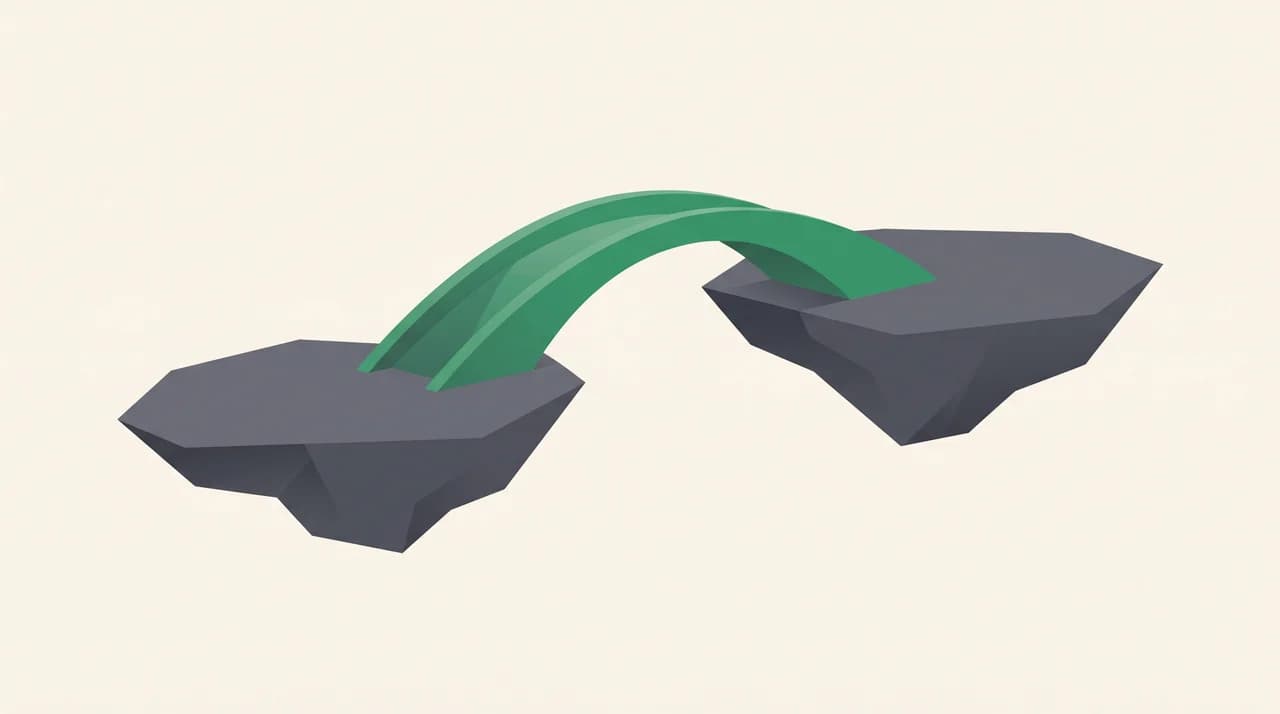
The sequence works because both addresses stay live and both keep receiving mail for the whole transition. The old address forwards to the new mailbox; the new mailbox holds a copy of the archive; you slowly shift the accounts that matter across; and the old address stays as insurance for a month or more. There is no single moment where you flip a switch and the old address goes dark.
Rollback plan#
Every step above is reversible until you delete the old account, close the new host subscription, or destroy the archive backup. If something feels wrong in the first two weeks, back out cleanly like this.
- 1
If the new mailbox is not working as expected
Keep forwarding on the old address off for now; the old mailbox is still fully live and every message is still landing there. Work through what is broken on the new host without pressure.
- 2
If the archive import corrupted folder structure
Stop the import, delete the imported folders on the new host (this does not touch the old mailbox), and restart with clearer choices — one label subtree at a time, or a smaller date range first.
- 3
If you decide against the custom domain entirely
Turn off forwarding, cancel the new host subscription within its refund window, and go back to the free address as primary. You have lost the domain registration fee; nothing else.
- 4
If a change-of-address note went out too early
Send a short correction with the working new address, keep forwarding on both sides for an extra month, and let the network learn the new address once. One clean update is what people will remember.
Do not delete the old address for at least a month
Doing it without downtime#
Zero-downtime is really about ordering. The order that keeps you reachable throughout: stand up the new mailbox → verify authentication → turn on forwarding → import the archive → rebuild filters → update the accounts that matter → announce → wind the old address down. Each step overlaps the next, and mail sent to either address always reaches a live inbox.
The step people get wrong is announcing before forwarding works. Change your business card, invoice footer or LinkedIn contact info before the forward is verified, and the first person to try the new address gets a bounce. Verify the forward with a real test — send from a third address to the old one and confirm it lands in the new inbox — before any external update.
The other silent failure mode is DMARC on the new domain. A domain with no DMARC record sends fine for the first few weeks and then quietly starts failing at strict receivers as the reputation window widens. Publish DMARC from day one at p=none, watch the reports for two weeks to confirm every legitimate sender aligns, then tighten to p=quarantine and eventually p=reject.
Verify the forward with a real message, not the confirmation code
Where an AI email client fits after the move#
The move gives you a professional address; it does not solve the daily reality that you now read mail across the new domain, the old address on forwarding, and probably a personal account too. That is where a client like AI Emaily comes in — after the move, not during it. We build AI Emaily and it is a mail client, not a mail provider or a registrar; our role starts only once the new mailbox is live.
Once the mailboxes exist on any host — Google Workspace, Microsoft 365, Fastmail, Proton or Zoho — you connect them to AI Emaily alongside your other accounts. All addresses land in one inbox, the send-as identity follows the thread automatically, and drafts are written from a Personal Context brain you set up rather than by scraping your sent mail. Packaging is a 7-day free trial on Pro or Autopilot (card required, $0 if cancelled before day seven); current tiers are at aiemaily.com/pricing.
One honest concession: if you land on Fastmail as your host, Fastmail's own web app for daily reading is snappier and more native than any third-party client layered on top of it, ours included. Reach for a client like AI Emaily when the reason is the AI — triage, draft, close routine loops with approve-before-send — rather than the reading experience itself.
The bottom line on moving to your own domain#
The credibility upgrade is worth doing, and the technical part is easier than DNS's reputation makes it sound. The trap is the transition, and the fix is sequencing: register the domain, verify the new mailbox with authentication passing, turn on forwarding before you tell anyone anything, import the archive, update the accounts that matter, announce once, and leave the old address quietly forwarding for a month or a year — whichever costs less than the alternative.
Choose the host that matches how you already work, publish DMARC on day one, keep exactly one SPF record, warm the domain gently, and never let the domain lapse. Those five habits are the difference between a custom address that quietly works for a decade and one that starts in a spam folder and never really escapes.
Frequently asked
See it in AI Emaily
Keep reading

Written by
Nafiul HasanNafiul Hasan is an entrepreneur and AI automation system builder with 10+ years of experience turning messy, manual workflows into reliable automated systems. He designs and ships AI enterprise solutions end-to-end — the agent logic, the data plumbing, and the product people actually use — and founded AI Emaily to give busy professionals their attention back. He writes here from the builder's seat: what works, what breaks, and how to put AI to work without giving up control.