Best Email Tools for Clinical Research Coordinators (2026)


The short answer
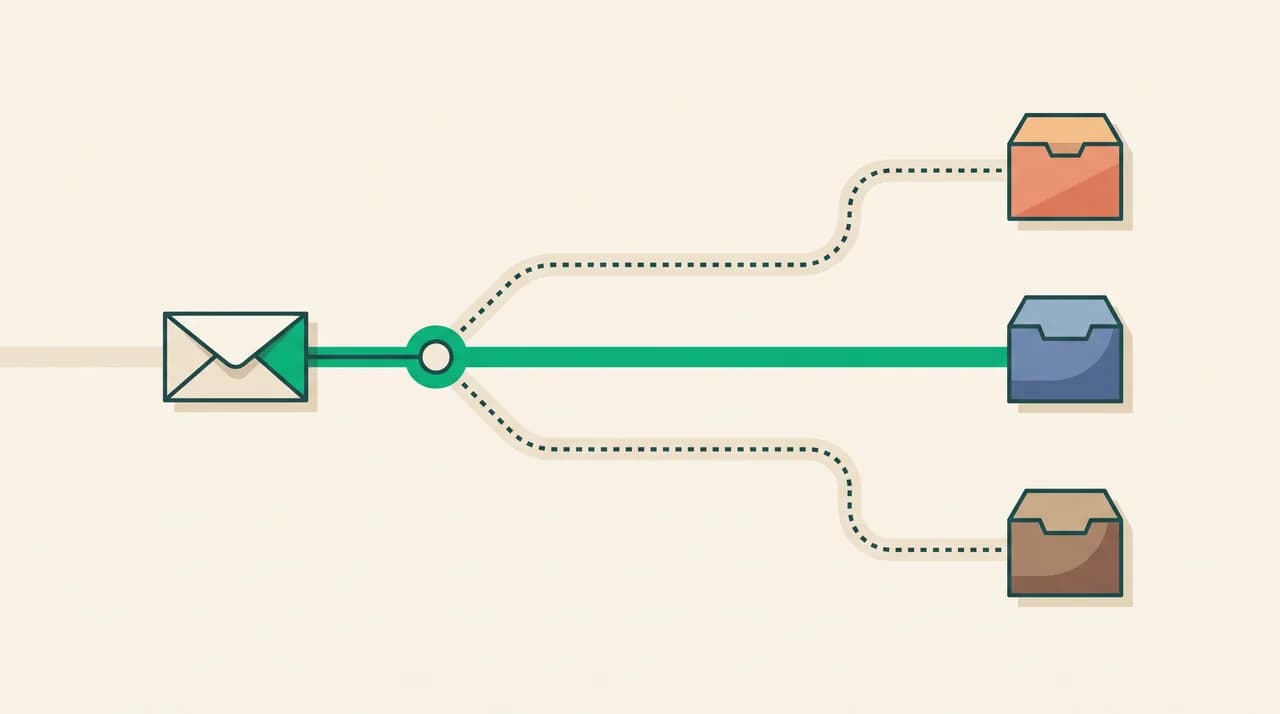
For a clinical research coordinator, the pick is two layers, not one tool. Keep regulated correspondence — sponsor queries logged into the eTMF, IRB submissions, subject-identifiable mail — inside the sponsor's validated system and your BAA-covered platform. Then run AI triage like AI Emaily on the operational site inbox: monitor visit scheduling, site staff coordination, non-regulated logistics.
The best email software for clinical research coordinators splits the work: keep regulated records in the sponsor's system, then triage site mail with AI.
On this page
- 01The short answer: our top pick
- 02How we compared these tools
- 03Comparison at a glance
- 041. AI Emaily — the operational site inbox
- 052. Google Workspace or Microsoft 365 — the platform that holds your record mail
- 063. Front — a shared queue with a published compliance path
- 074. Hiver — shared inboxes inside Gmail
- 085. Missive — shared inbox plus team chat
- 096. Shortwave — where AI-native Gmail actually beats us
- 107. Superhuman Mail — a fast keyboard inbox (mind the name)
- 118. Fyxer — an AI overlay, not a new client
- 12How to choose for your site
- 13A note on AI drafting and the trial record
Choosing the best email software for clinical research coordinators starts with a question every generic buyer guide skips: which of these messages is actually part of the trial record? A coordinator's inbox carries sponsor queries, monitor visit scheduling, IRB continuing review correspondence, safety report acknowledgements, site staff messages and vendor logistics — and some of those threads will be pulled during an FDA inspection or a sponsor audit years later.
That regulatory reality shapes the whole ranking. This guide compares eight tools on the axes that actually decide a study coordinator's day: thread reconstruction across a five-year study timeline, deadline extraction from sponsor queries, shared-queue clarity across research staff, and — most importantly — an honest read of what an AI drafting layer should and should not touch when the email trail can end up in a Trial Master File.
The short answer: our top pick#
For the operational site inbox — monitor visit scheduling, coordinator-to-coordinator handoffs, non-regulated sponsor logistics and internal study team coordination — our pick is AI Emaily, run with approve-before-send and every action written to an in-app audit log. We build AI Emaily, so read the ranking as informed but interested, and verify each vendor's regulatory posture on its own page before you commit.
The scoping matters more than the pick. AI Emaily does not sign a HIPAA BAA, does not carry a 21 CFR Part 11 attestation, and is not a validated system in the sense the FDA and your sponsor's quality team use that word. So the honest use is the operational side of the inbox. Sponsor queries that get logged into the eTMF or EDC, IRB submissions and subject-identifiable correspondence stay in your institution's BAA-covered platform and the sponsor's validated system.
If your site runs a shared study coordinator queue, a shared-inbox platform such as Front, Hiver or Missive is a better centre of gravity than a personal client, and we say where each fits below.
Email is often part of the trial record
How we compared these tools#
We did not run a lab bench test. We compared these products on documented capabilities from each vendor's own pages, plus the axes that a study coordinator actually feels: cross-year thread reconstruction, deadline visibility on sponsor queries, shared-queue clarity, and regulatory posture. Everything below is as of August 2026 and vendors change plans regularly — reconfirm before you buy.
- Regulatory posture — HIPAA BAA availability, 21 CFR Part 11 attestation, and what each vendor is willing to sign for a research site.
- Thread reconstruction across long study timelines — can you find the specific protocol amendment thread from two years ago in seconds?
- Deadline extraction — does the tool surface sponsor query response deadlines and monitor visit dates without you tagging every message?
- Shared-queue clarity — assignments, ownership and audit for a study team, not just a solo coordinator.
- Approve-before-send and undo — AI drafting is fine only if a human signs off before anything leaves the site.
- Packaging shape — free tier, trial or per-seat pricing, priced against your site budget, not ours.
Comparison at a glance#
Eight tools side by side on type, fit, team controls and regulatory posture. Read the regulatory column first — it is the one that decides which side of your inbox each tool can touch.
| Tool | Type | Best fit for a CRC | Team + audit controls | Regulatory posture |
|---|---|---|---|---|
| AI Emaily | AI email client / agent | Operational site inbox, non-regulated | Approve-before-send, undo, in-app audit log | No BAA, no Part 11 attestation |
| Google Workspace / Microsoft 365 | Email platform | The mailbox of record for site correspondence | Native admin, add-on eDiscovery | BAA offered to eligible plans |
| Front | Shared-inbox platform | Multi-coordinator sites on one queue | Assignments, comments, audit | BAA on qualifying plans; scope limited |
| Hiver | Shared inbox inside Gmail | Sites on Google Workspace | Shared queues, notes, SLAs | Confirm BAA directly |
| Missive | Shared inbox + team chat | Small study teams on many channels | Assignments, threaded chat, drafts | Confirm BAA directly |
| Shortwave | AI Gmail client | Solo coordinators on Gmail wanting deep search | Personal AI triage + semantic search | Confirm BAA directly |
| Superhuman Mail | Speed-focused client | High-volume personal triage | Personal workflow | Confirm BAA directly |
| Fyxer | Overlay on Gmail / Outlook | AI without changing client | AI triage and drafts | Confirm BAA directly |
Verify before you buy
1. AI Emaily — the operational site inbox#
AI Emaily is an AI-native email client that behaves like a chief of staff for the inbox. It triages incoming mail, drafts replies, and closes routine loops across Gmail, Outlook and IMAP — so a study coordinator is not the manual router for every monitor visit reschedule, staffing update or site logistics thread. We build AI Emaily, and this is entry number one for a specific reason plus one plain limit.
Three things make it fit the operational side of a CRC's day. It runs in autonomy modes — Manual, Copilot and Autopilot — and in Copilot every send waits for your approval before it goes out, so the AI never surprises a sponsor with an unreviewed reply. Every action is undoable and written to an audit log, which matters when a study team shares triage duties and someone will ask three months later who acknowledged which safety notice. Drafting voice comes from a Personal Context brain and per-client profiles you set — not from scraping your sent mail — so a sponsor tone and a site-staff tone stay distinct.
The hard limits are as important as the features. AI Emaily does not sign a HIPAA BAA, does not carry a 21 CFR Part 11 attestation and is not a validated system for regulated research records. So the honest use is the operational inbox: monitor visit scheduling, coordinator handoffs, site staff logistics and non-regulated sponsor coordination. Anything that belongs in the eTMF or that carries subject identifiers stays on your institutional platform and the sponsor's validated system. Packaging is a 7-day free trial on the Pro and Autopilot plans (card required, $0 if cancelled before day seven); there is no permanent free tier. Confirm the current plans on the pricing page.
2. Google Workspace or Microsoft 365 — the platform that holds your record mail#
This is the entry that decides regulatory posture for everything else, because it is the mailbox that actually stores and transmits the messages. Both major platforms offer a HIPAA BAA to eligible customers, and the BAA is signed with the platform — not with a client or overlay you add on top of it later.
Google Workspace states that customers subject to HIPAA who want to use covered services must enter a BAA, that an administrator has to review and accept it, and that the customer is responsible for deciding whether HIPAA applies and configuring only the covered services accordingly. Microsoft includes its HIPAA BAA by default for covered entities through its Data Protection Addendum on eligible commercial plans. Neither is a 21 CFR Part 11 validated system out of the box — that is a separate qualification your sponsor's quality team will define.
So the practical order for a research site is: get the platform BAA in place, work with your institution's compliance office on retention and eDiscovery configuration, and only then choose the client or shared-inbox layer that sits on top. Verify the current BAA scope on Google's and Microsoft's own compliance pages — both publish exactly which services are in and out of scope.
3. Front — a shared queue with a published compliance path#
Front is a shared-inbox platform rather than a personal client, built for teams working one queue together — assignments, internal comments on a thread, and a written record of who replied. For a site with several coordinators fielding sponsor, IRB and vendor mail into one address, that shared model is the draw.
Front is also one of the few tools here that publishes a HIPAA page. It says customers may enter a BAA, but reserves the right to offer one only where the annual contract price meets a threshold, and that the BAA covers only what it calls Included Functionality. Notably, native email sending through Front and several other features are excluded from that scope — read the list carefully against how your site actually works.
Packaging is three tiers — Starter, Professional and Enterprise — with AI Copilot, QA and CSAT sold as add-ons on the lower tiers. If a BAA is a hard requirement for the way your team uses it, treat Front as worth a direct conversation about which plan and which features it will actually cover for your site.
4. Hiver — shared inboxes inside Gmail#
Hiver turns a Google Workspace mailbox into a shared help-desk queue without leaving Gmail. Coordinators get shared inboxes, notes, assignments and simple SLAs in the interface they already use, which keeps training light on a busy research site where staff turnover is real.
That makes it a natural fit for a site already standardised on Google Workspace. Because it sits inside Gmail, your underlying BAA is the one you hold with Google for Workspace — but Hiver itself is a separate business associate layered on top, so confirm directly with Hiver whether it will sign a BAA for the plan you want before any subject-identifiable correspondence flows through its shared queues.
Packaging runs across Free, Growth, Pro and Elite tiers. Check the current feature split and BAA terms on Hiver's own pages, and match the tier to the number of shared mailboxes and coordinators your site actually needs — the SLA and analytics features tend to sit on the higher plans.
5. Missive — shared inbox plus team chat#
Missive combines a shared inbox with internal chat threaded directly onto the email, and pulls in other channels — SMS and social messaging — so a small research team can run several conversation types from one place. Assignments and shared drafts keep two coordinators from replying to the same sponsor query twice, which is a real risk when a query hits at 4pm on a Friday.
It is actively maintained as of 2026 and packaged as a free plan plus paid per-seat tiers. As with every option here, Missive is a separate business associate if it processes protected health information, so confirm BAA availability directly before routing any subject-identifiable mail through it.
Missive suits a lean, multi-channel site more than a large academic centre with heavy role-based access needs. If your requirements are mostly email in one shared queue, weigh it against Front and Hiver on how each handles permissions and audit — the audit trail is what a monitor will ask about.
6. Shortwave — where AI-native Gmail actually beats us#
Shortwave is an AI-native email client for Gmail, built by former Google engineers, and this is the entry that gets an honest concession. Shortwave has built harder on cross-year Gmail semantic search than we have — if your study started in 2022 and you need to find the exact thread where the sponsor clarified how to handle a specific out-of-window visit, Shortwave's search will beat AI Emaily's on that reconstruction task today. That kind of five-year lookup is one of the harder problems in a CRC's day, and Shortwave is the tool most obviously built for it.
The trade-off is scope. Shortwave is a single-user client on top of Gmail, so the regulatory question again lands on your Google Workspace BAA plus whatever Shortwave itself will sign — confirm that directly before any subject-identifiable mail touches it. It is not a shared queue for a study team, and it does not publish 21 CFR Part 11 attestation.
Packaging is paid tiers with a trial; a free plan has been reported historically but was not present on the pricing page when last checked, so verify the current shape yourself. For a solo coordinator on a small site who lives inside a personal Gmail mailbox and needs deep historical search across long studies, this is the strongest single-user option in the list.
7. Superhuman Mail — a fast keyboard inbox (mind the name)#
Superhuman Mail is a speed-focused email client built around keyboard shortcuts and a minimal interface. For a coordinator who processes a high volume of personal mail and values raw triage speed above features, it is one of the quickest inboxes to work in.
One caution is specific to Superhuman: the name is now ambiguous. Grammarly acquired the Superhuman email client in July 2025 and renamed the parent company to Superhuman in October 2025, so the word can now mean either Superhuman Mail (the client) or the broader Superhuman Suite (the bundle). When you evaluate plans or ask about a BAA, be explicit about which one you are asking about — the answer will differ.
Superhuman Mail is a personal client, not a shared study team queue, and does not advertise a HIPAA BAA on its main pages — confirm directly if any regulated correspondence is in scope. Packaging is paid tiers with a trial; check current plans on the vendor page rather than reading old reviews.
8. Fyxer — an AI overlay, not a new client#
Fyxer is different in kind from most of this list: it is an overlay on your existing Gmail or Outlook rather than a client you switch to. It adds AI triage, drafting and meeting notes on top of the mailbox you already run, which keeps disruption low for a site that cannot afford to retrain staff mid-study.
Because it plugs into your current mailbox, your platform BAA still governs the underlying mail — but Fyxer processes that mail to draft and triage, so it is squarely a business associate if regulated mail is involved. Confirm what it will sign before enabling it on any account that receives subject-identifiable correspondence.
Fyxer suits a site that wants AI assistance without changing the tool coordinators already use. As with any overlay, weigh how much of your mail it reads and where that processing happens, and keep it off accounts that carry regulated mail until the BAA question is settled in writing.
How to choose for your site#
The right answer is rarely one tool. It is a layered stack: the platform that holds your record mail under a BAA, the shared-inbox layer if you have more than one coordinator, and an AI triage layer over the operational side that does not touch regulated content. Sort the queues first, and the shortlist almost picks itself.
- 1
Map your queues before picking a tool
List what actually lands in the site inbox — sponsor queries, IRB continuing review, safety report acknowledgements, monitor visit scheduling, site staff coordination, vendor logistics — and mark which are regulated correspondence that could end up in the eTMF.
- 2
Confirm the platform BAA is in place
Get a HIPAA BAA with Google Workspace or Microsoft 365 through your institution's compliance office, and restrict any subject-identifiable mail to covered services before you add anything on top.
- 3
Pick a shared-inbox layer if the site has multiple coordinators
If several staff work one address, choose Front, Hiver or Missive for assignments and a defensible ownership trail — and confirm each will sign a BAA for the plan you need before regulated mail flows through it.
- 4
Point AI triage only at non-regulated operational mail
Add a tool like AI Emaily to the operational side — monitor visit scheduling, site staff coordination, non-regulated logistics — where approve-before-send and an in-app audit trail speed the work without putting regulated content on a tool without the right compliance posture.
- 5
Log what belongs in the eTMF where it belongs
Sponsor query resolutions, IRB submissions and any decision-of-record correspondence go into the sponsor's validated system or your institution's document management, not into an AI triage layer. Email is fine for the exchange; the record needs its proper home.
A note on AI drafting and the trial record#
AI drafting is a real productivity gain on operational site mail. It is also the exact wrong place to be casual about the audit trail. A reply drafted by AI, approved by a coordinator and sent from the site address is authored by the coordinator for regulatory purposes — but only if the review is real. Autopilot on a sponsor query that gets logged into the eTMF is not a shortcut; it is a data-integrity problem waiting for a Form 483 to notice it.
The rule that has worked for sites we have talked to is simple. Any thread that will end up as an essential record runs on the manual or Copilot side with a human sign-off. AI acts on its own only on operational mail that is not part of the record. That is the same discipline you already apply to source data — apply it to the mail too.
AI drafting is not a substitute for a validated system
Frequently asked
See it in AI Emaily
Keep reading
Sources

Written by
Nafiul HasanNafiul Hasan is an entrepreneur and AI automation system builder with 10+ years of experience turning messy, manual workflows into reliable automated systems. He designs and ships AI enterprise solutions end-to-end — the agent logic, the data plumbing, and the product people actually use — and founded AI Emaily to give busy professionals their attention back. He writes here from the builder's seat: what works, what breaks, and how to put AI to work without giving up control.