Best Email Software for Sales Managers (2026): 7 Compared

The short answer
For a manager overseeing reps, the best email software is whatever gives shared visibility into team threads plus safe delegation. AI Emaily is our pick: shared mailboxes with roles, assignment to a teammate or the AI agent, approval before every send, and drafts written in the mailbox owner's voice rather than the stand-in's.
The best email software for sales managers in 2026: 7 tools compared on team visibility, delegation, absence cover and approval controls.
On this page
- 01The short answer: what a sales manager should pick
- 02What a sales manager's inbox problem actually is
- 03How we compared these tools
- 04Best email software for sales managers at a glance
- 051. AI Emaily — best overall for a sales manager
- 062. Missive — best light shared inbox with real numbers
- 073. Front — best when routing rules decide it
- 084. Hiver — best if the team will not leave Gmail
- 095. Google Workspace — the free baseline, with one catch
- 106. Microsoft 365 — shared mailboxes and delegate access
- 117. Salesloft or Outreach — best when reporting is the purchase
- 12Where each one falls down
- 13How to cover a rep's inbox without handing over a password
- 14How to choose for your situation
- 15The verdict
The best email software for sales managers solves a different problem from the one your reps have. A rep needs their own inbox to move faster. You need to know what is happening inside six other inboxes — which threads went quiet, who has not replied since Tuesday, and what happens to a live negotiation when the rep owning it is on a plane.
That is a visibility and delegation question, not a personal-productivity one. It is also why managers buy a fast personal client, enjoy it for a week, and still have no idea what became of the thread a rep opened with the biggest account in March.
We build AI Emaily, and it is our number one pick here. Read the rest with that disclosed: every entry states its limits, ours in the most detail, and we name the category that beats us on the thing managers ask for most, which is reporting.
The short answer: what a sales manager should pick#
Managers run very different teams, so match the line that describes yours rather than reading all seven entries.
- Best overall, and our pick: AI Emaily — shared mailboxes with roles, thread assignment to a person or the AI agent, and approval before every send.
- Best light shared inbox with real numbers: Missive, which reports reply time, handle time and volume alongside assignment and internal chat.
- Best when routing rules and agent-level reporting decide it: Front, built around workflow, queues and performance analytics.
- Best if the team will not leave Gmail: Hiver, a Gmail-native helpdesk with SLA alerts and reporting inside the Gmail interface.
- Best free baseline in Google: Workspace delegation plus a Groups collaborative inbox — with one catch covered below.
- Best inside a Microsoft shop: Microsoft 365 shared mailboxes with delegate access, subject to some hard limits.
- Best when activity reporting is the actual purchase: a sales-engagement platform such as Salesloft or Outreach. That is a different category and we say so.
What a sales manager's inbox problem actually is#
Your own inbox is the smaller half of the job. The larger half is four failures that only appear across a team, and no personal client is built to catch any of them.
- Cover. A rep is out sick, on holiday or gone, and someone has to work their live threads today without a shared password.
- Silence. A deal stops moving because nobody replied, and you learn about it at the forecast call rather than on day three.
- Consistency. A buyer emails at 4pm on a Friday, and whether that gets answered depends entirely on which rep owns it.
- Onboarding. A new rep inherits thirty threads whose history they never read, then re-asks a question the buyer already answered.
Ask these before you give any tool visibility into rep mail
How we compared these tools#
This is a capability comparison built from vendor documentation and public product pages checked in July 2026. We did not run seven products across a sales team for a quarter, and any roundup claiming that deserves a raised eyebrow.
There are no competitor prices, ratings or review counts here. Tiers and AI packaging in this category moved repeatedly over the past year, so confirm current plans on each vendor's own page.
- Shared visibility — can you see a rep's threads without holding their password?
- Delegation — can a thread be assigned to a named person, with a status you can check later?
- Who presses send — approval, undo and attribution you can read afterwards.
- Reporting depth — does it measure response time and volume, or only show the current queue?
- Provider coverage — Gmail only, Gmail plus Outlook, or standard IMAP as well.
- Cover and onboarding — what happens to live threads when a rep is out or replaced.
Best email software for sales managers at a glance#
Use this to build a shortlist of two. The column that decides most purchases is the third one, because visibility model is what separates these products, not feature count.
| Tool | What it is | How a manager gets visibility | Reporting depth | Best for the manager who… |
|---|---|---|---|---|
| AI Emaily | AI-native email client with a team layer | Admin shares a mailbox; roles plus per-thread assignment and status | Live queue and status, no historical reports | Needs cover and safe delegation across Gmail, Outlook and IMAP |
| Missive | Shared inbox with internal chat | The team works the same threads, with assignment | Reply time, handle time, volume | Wants reply-time numbers without a support platform |
| Front | Shared inbox built on workflow | Rules route inbound to an owner, with queues on top | Team and agent performance analytics | Runs shared aliases that need routing rules |
| Hiver | Gmail-native helpdesk layer | Shared inboxes rendered inside Gmail itself | SLA alerts plus analytics | Cannot move the team off Gmail |
| Google Workspace | The native platform | Mailbox delegation and Groups collaborative inbox | Admin reports, not rep response times | Will configure it by hand for free |
| Microsoft 365 | The native platform | Shared mailboxes and delegate access | Admin and compliance reporting only | Works in a Microsoft-only org |
| Salesloft / Outreach | Sales-engagement platform | Activity captured from cadences, written to the CRM | The deepest reporting here | Buys the tool for reporting, not the inbox |
1. AI Emaily — best overall for a sales manager#
AI Emaily is an AI-native email client with a team layer on top, covering Gmail, Microsoft 365, Outlook and IMAP. We build it, which is why it leads this list and why its limits get the most words. An admin shares a connected mailbox with the team; members then read and reply on its threads, while the owner's credentials and private context stay owner-scoped.
Four roles decide who can do what. Owners and admins share or unshare mailboxes and set per-member access; members read, assign and reply through Copilot; viewers read and comment internally but cannot reply to anyone outside the company. That last role is the one most managers should be using.
Delegation runs through one menu. Assign a thread to a teammate, or to the AI agent with an authority of Manual, Copilot or Autopilot, and attach a one-line handoff note. The thread then moves through open, working, needs review and done, so the list shows what is in flight rather than what someone remembers.
The cover detail matters most. When the agent drafts on a shared mailbox it drafts as the mailbox owner, from that owner's context brain and client profiles, not from whoever is at the keyboard — so a stand-in's replies still read like the rep who owns the account.
The limits: the Team plan starts at three seats, there are no SLA timers, no CSAT and no response-time reports, and on platforms we ship a downloadable macOS app for Apple Silicon, a Windows installer, a native iOS app, Android as a PWA, and no Linux build.
Where another category genuinely beats us
2. Missive — best light shared inbox with real numbers#
Missive puts several people in the same inbox without collisions: assign a conversation to a person or a team, discuss it in a chat attached to the thread, and reply once as the company. It connects Gmail, Outlook and IMAP, plus other channels.
For a manager it earns its place on measurement. Missive documents analytics covering reply time, handle time and messages received — the small set of numbers a sales manager needs and rarely gets from a personal client. That is a genuine advantage over us.
The trade-off is fit. It is a collaboration surface, so if reps mostly own their own named threads and hand one over only occasionally, some of the machinery goes unused. Delegation is also human-to-human: a conversation goes to a person or a team, not to an agent you grant a set authority level.
3. Front — best when routing rules decide it#
Front is the shared inbox that leans hardest into workflow. Rules route inbound to the right owner, queues track what is waiting, and the platform publishes performance analytics across teams plus quality review and inferred satisfaction scoring.
It is also positioned increasingly as a ticketing and customer-service platform rather than a sales tool. That is not a criticism — it is the shape that produces the reporting depth. It does mean a six-rep sales team can end up administering more workflow than the job needs.
Two things to verify rather than assume: which integrations sit on the plan you are buying, and what each one writes to a record versus merely displays beside it. Front bills per seat with annual escalators, so model the renewal, not year one.
4. Hiver — best if the team will not leave Gmail#
Hiver runs shared inboxes inside the Gmail interface itself, which removes the biggest reason team email tools fail: reps quietly drifting back to their old inbox in week two. Nobody learns a new client, because there is no new client.
It documents SLA alerts, routing automation and analytics, and now describes itself as an AI-powered customer service platform spanning several channels. The reporting is there, framed for a support team, so you will be translating queue metrics into sales language.
The constraints are the flip side of the strength. It is anchored to Gmail and Google Workspace, so an Outlook account for a partner org is out of scope, and a helpdesk model brings ticket-shaped concepts to what are, in your world, relationships.
5. Google Workspace — the free baseline, with one catch#
If your team is on Google Workspace you already have two visibility mechanisms. Mailbox delegation lets a delegate read, send and delete in another person's Gmail without their password, and a Groups collaborative inbox lets several people work one address.
Google documents up to 10 delegates on a personal Gmail account and as many as 1,000 on a work or school account, though only around 40 can typically use it at once. Delegates send under their own address, which is the correct behaviour for cover.
The catch, verified on Google's own help page in July 2026, is rarely mentioned: a delegate does not get Gemini, Smart Compose or spelling suggestions in the delegated mailbox. Use delegation for cover and the AI help your team relies on switches off.
6. Microsoft 365 — shared mailboxes and delegate access#
In a Microsoft shop the equivalent is a shared mailbox, and it is capable. Members send as or on behalf of the address, it holds up to 50 GB without a licence assigned to it, and access comes from Exchange admin roles rather than a password.
The documented limits matter for a sales team. A shared mailbox supports a maximum of 25 users before people hit connection failures and duplicated messages. You cannot give anyone outside your organisation access, you cannot stop members deleting messages, and mail sent from it cannot be encrypted.
There is also a transition to plan around. Mail-folder delegate permissions must still be assigned from classic Outlook even though calendar delegation already works in new Outlook, which invalidates most guides written before that split. Confirm the current state in your own admin centre.
7. Salesloft or Outreach — best when reporting is the purchase#
These are sales-engagement platforms, not email clients, and including them honestly is the point. They run multi-touch cadences at volume, capture the activity and write it back to the CRM, so reporting on rep output is the core product rather than an add-on.
If you need a weekly view of touches per rep, reply rates by sequence and pipeline influenced by email, no inbox in this list competes. Buy the category built for it.
What they do not do is be the mailbox. Your reps still read replies, redlines and procurement questions somewhere, and that somewhere is a client. Running an engagement platform alongside a separate inbox is a sane arrangement, not a redundancy.
Where each one falls down#
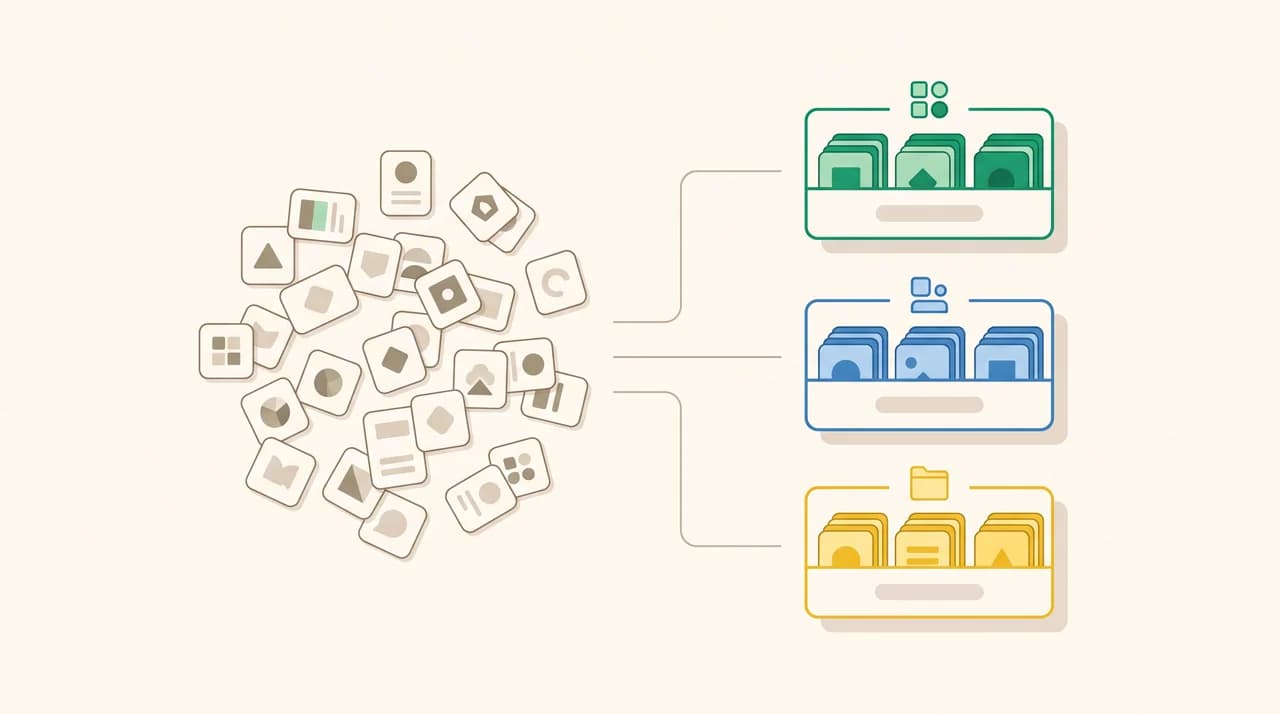
Strengths are easy to list, so here are the limits in one place. This is the table to read twice.
| Tool | The limit worth knowing | Skip it if |
|---|---|---|
| AI Emaily | No SLA timers, no CSAT and no response-time reporting; Team plan starts at three seats | Historical response-time reporting decides the purchase |
| Missive | Collaboration overhead if reps rarely hand threads over; assignment is human-to-human | Your reps own individual named threads almost exclusively |
| Front | Support-platform shape and administration; per seat with annual escalators | You have no shared alias and no appetite for workflow rules |
| Hiver | Anchored to Gmail and Google Workspace; ticket concepts applied to sales threads | Any account on the team is Outlook or IMAP |
| Google Workspace | Delegates lose Gemini, Smart Compose and several integrations in that mailbox | Cover has to include the AI assistance reps use daily |
| Microsoft 365 | 25-user cap per shared mailbox, no external access, no encryption from it | Your team is larger than the cap or works with outside collaborators |
| Salesloft / Outreach | Not an email client — reps still read and answer mail somewhere else | You want one place to work the inbox and see the team |
How to cover a rep's inbox without handing over a password#
Whichever tool you land on, the mechanics of cover are the same, and getting them wrong is how a buyer finds out a rep left.
- 1
Grant access at the mailbox level
Use the tool's own permission model — an admin share in AI Emaily, Gmail delegation, an Exchange shared mailbox. A shared password destroys attribution the moment two people use it, and it is a security incident waiting for a date.
- 2
Choose read-only or reply, per person
Most stand-ins need to answer three threads, not the whole mailbox. In AI Emaily a viewer reads and comments internally but cannot reply externally, while a member replies through Copilot. Pick the narrower role and widen it if the week demands it.
- 3
Assign the live threads explicitly
Do not rely on someone noticing. Assign each open deal thread to a named person or to the agent, with a one-line handoff note that states the constraint, such as do not discuss pricing before Thursday.
- 4
Keep approval on, then revoke on the return date
Cover is exactly when an unapproved reply is most likely to say something the account owner would not. Keep sends behind approval, unshare the mailbox the day the rep is back, and check that the thread history still shows who did what.
Verify seats, roles and tiers on the vendor's own page
How to choose for your situation#
Trial two options at most, and give each a full week with real threads rather than an afternoon of clicking.
| If this is you | Start with | Also look at |
|---|---|---|
| Reps run Gmail, Outlook and IMAP across the same team | AI Emaily | Missive, if you also want reply-time numbers |
| Cover for holidays and departures is the recurring fire | AI Emaily | Google Workspace delegation, if budget is zero |
| You are measured on team response time and must report it | Front | Missive, for a lighter version of the same numbers |
| The team will not accept a new interface | Hiver | An overlay on each rep's existing inbox |
| Your org is Microsoft-only and IT decides | Microsoft 365 shared mailboxes | AI Emaily on the same Microsoft 365 accounts |
| Cadence reporting and CRM write-back decide it | Salesloft or Outreach | Your CRM's own inbox add-in |
The verdict#
AI Emaily is our pick for most front-line sales managers, and the argument is narrow enough to check. It is the option here that gives you shared visibility across Gmail, Outlook and IMAP mailboxes, delegation to either a teammate or an AI agent with a defined authority level, approval before every send, and drafts written in the mailbox owner's voice so cover does not sound like cover.
Where we lose, we have said so. If your job is measured in average first response time and you present that number monthly, Front or Hiver reports on it and we do not. If cadence and CRM activity reporting is the purchase, Salesloft or Outreach wins and no email client is close. Missive sits between the two.
One thing holds whichever you choose: visibility should never mean shared credentials, and cover should never mean an unapproved send. Get those two right and the tool decision matters a lot less.
Frequently asked
See it in AI Emaily
Keep reading
Sources

Written by
Nafiul HasanNafiul Hasan is an entrepreneur and AI automation system builder with 10+ years of experience turning messy, manual workflows into reliable automated systems. He designs and ships AI enterprise solutions end-to-end — the agent logic, the data plumbing, and the product people actually use — and founded AI Emaily to give busy professionals their attention back. He writes here from the builder's seat: what works, what breaks, and how to put AI to work without giving up control.