Performance Improvement Plan Email to an Employee: 7 Templates

The short answer
A performance improvement plan email to an employee should state the specific gap with dated examples, the standard expected, the measures and review dates, and the support you will provide. Send it after a conversation, not instead of one. Keep it factual and free of adjectives, because it may later be read as evidence.
Seven copy-paste templates for a performance improvement plan email to employee: concern note, meeting invite, plan, mid-point review and both outcomes.
On this page
- 01When should you send a PIP email, and when should you not?
- 02What should a performance improvement plan email say?
- 03What does each stage of a PIP email need to do?
- 04The templates: how to use them
- 05Template 1: the concern note before any formal process
- 06Template 2: the meeting invitation
- 07Template 3: the plan-attached email
- 08Template 4: the mid-point review
- 09Template 5: the successful completion note
- 10Template 6: the unsuccessful outcome
- 11What is the hard version of this situation?
- 12Template 7: the behaviour-focused PIP email
- 13What should you do if there is no reply?
- 14Where AI Emaily fits when you write these emails
A performance improvement plan email to an employee is one of the hardest messages a manager writes. It has to be kind enough to be fair, specific enough to be useful, and plain enough to survive being read by someone who was not in the room, such as HR, a union representative, a lawyer or a tribunal.
Below are seven copy-paste emails that cover the whole arc: the concern note before anything formal, the meeting invitation, the plan itself, the mid-point review, and both outcomes. The seventh handles the hardest case, a PIP where the problem is behaviour rather than output. Every template uses four bracketed blocks you fill in: [OBJECTIVES], [MEASURES], [REVIEW DATES] and [SUPPORT PROVIDED].
When should you send a PIP email, and when should you not?#
Send a PIP email to follow a conversation, never to replace one. The person should hear that they are in trouble from you, in a meeting or a call, before they read it in writing. An email that arrives with no warning feels like an ambush, and it usually produces a defensive reply rather than an improvement.
So the sequence is: an informal concern first, then a meeting, then the written plan. Acas, the UK's workplace advice body, says employers should first see whether a performance problem can be resolved informally, for example by talking privately, listening to the employee's view, agreeing improvements and setting up a training or development plan. Its guidance also lists mentoring, coaching and training as things to try before a formal procedure. (As of October 2026, from the Acas disciplinary procedure guidance.)
Can you put someone on a PIP by email alone? You can notify and document by email, and nothing stops you sending the plan that way. But a plan that was only ever delivered by email, with no discussion, is weak on fairness and weak as a management tool. Treat the email as the written record of a conversation that has already happened.
What should a performance improvement plan email say?#
Whatever the stage, a good PIP email has the same five parts. If one is missing, the email will cause a follow-up question that you could have answered up front.
- The gap, stated as facts. What was expected, what happened, and on which dates. Numbers and examples, not impressions.
- The standard. What good looks like in this role, tied to a job description, a target or a written expectation the person already knew about.
- The measures and dates. How progress will be judged and when you will check, using the [MEASURES] and [REVIEW DATES] blocks.
- The support. What you will actually provide, whether that is coaching, training, a reduced scope or weekly one-to-ones. This is the [SUPPORT PROVIDED] block, and it is the part most often skipped.
- The next step. What happens at the end, in neutral terms, and who the person can talk to, such as HR or a representative.
What does each stage of a PIP email need to do?#
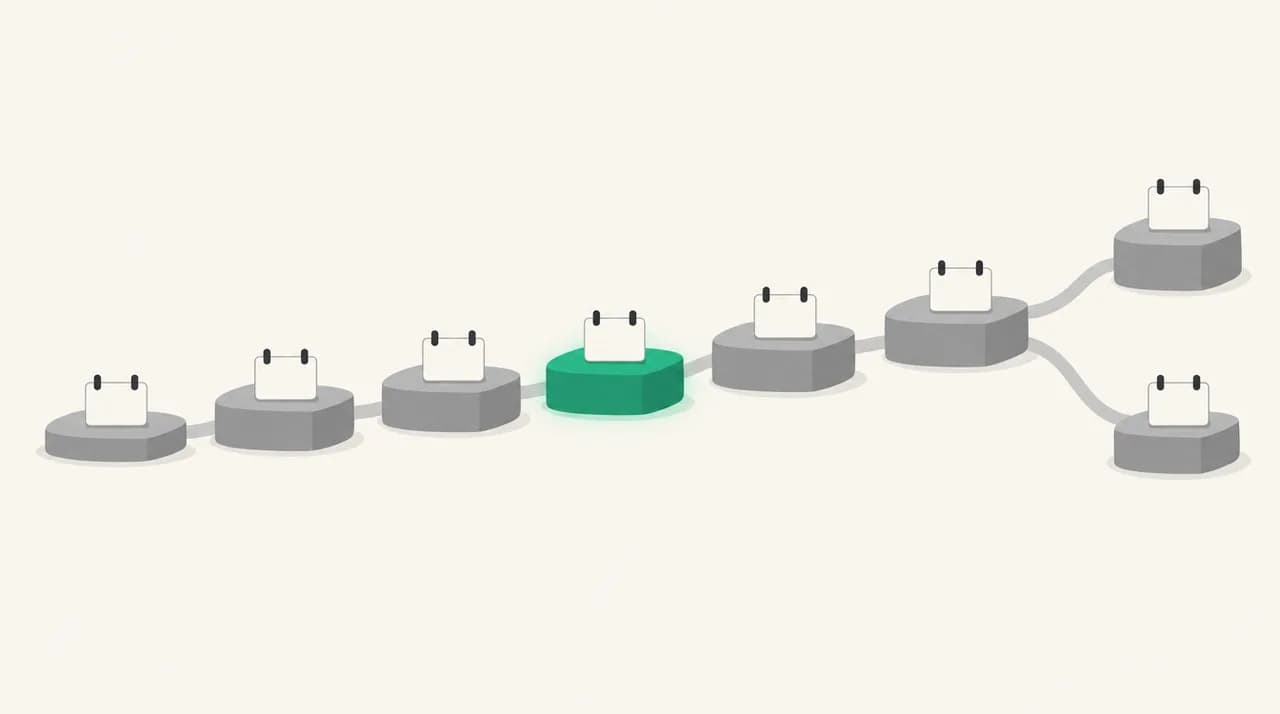
| Stage | Main job | Must include | |
|---|---|---|---|
| Before the process | Template 1: concern note | Raise the issue early and offer help | Dated facts, the standard, an offer of support, a statement that this is informal |
| Invitation | Template 2: meeting invite | Set up the formal conversation fairly | Purpose, date, who attends, the right to bring a companion where it applies |
| Plan | Template 3: plan attached | Record what was agreed or set | [OBJECTIVES], [MEASURES], [REVIEW DATES], [SUPPORT PROVIDED] |
| Mid-point | Template 4: review | Show progress honestly, either way | Evidence against each measure, what changes, the remaining dates |
| Success | Template 5: completion | Close the plan and set the new baseline | What was met, what continues, confirmation that the plan has ended |
| Not met | Template 6: unsuccessful outcome | Report the result and the next step | Evidence, which measures were not met, the process step that follows |
The templates: how to use them#
Each template is shown as labelled blocks so you can see the job each paragraph does. Delete the labels when you paste and replace everything in square brackets. Keep adjectives out: write that a report was due on 3 March and arrived on 11 March, not that it was late and sloppy. This is a drafting guide, not legal advice, and your HR policy comes first.
Template 1: the concern note before any formal process#
Use this after you have noticed a pattern but before you start anything formal. It is the performance concern email before a formal process, and it is often the one that makes a PIP unnecessary.
Template 2: the meeting invitation#
This is how you tell an employee they are going on a PIP without surprising them in the corridor. State the purpose honestly in the subject line. Do not use a vague title like a quick chat, because a person who then walks into a formal meeting has been misled.
The accompaniment line matters. In Great Britain, workers have a statutory right to be accompanied at formal disciplinary and grievance hearings, and a capability process that can lead to a warning or dismissal is usually treated the same way. Check the current Acas guidance and your own policy. Elsewhere the rules differ, and offering a companion is rarely a mistake.
Template 3: the plan-attached email#
Send this the same day as the meeting, so the written record matches what was said. The email is short. The plan itself, attached as a document, carries the detail, using the four bracketed blocks.
Template 4: the mid-point review#
This is the PIP mid-point review email wording that managers most often get wrong, because they soften it. If the person is behind, say so now, with evidence. A surprise at the end of the plan is unfair to them and weakens your position.
Template 5: the successful completion note#
When someone meets the plan, close it explicitly. Many plans simply fade out, which leaves the employee wondering whether they are still being watched. Say that the plan has ended and what the expectations are from here.
Template 6: the unsuccessful outcome#
Do not deliver this news for the first time by email, and do not use it to announce a dismissal that your procedure says needs a meeting first. Its job is to confirm a result already discussed, set out the evidence, and describe the next step in neutral words.
Check protected characteristics before you send
What is the hard version of this situation?#
The hard version is a PIP where the problem is behaviour, not output. Missed targets can be counted. Tone in meetings or poor teamwork cannot, and that is where emails go wrong: the manager writes negative attitude, the person replies that it is subjective, and neither side can prove anything.
The fix is to turn every behavioural concern into something an outside reader could have watched happen. Name the date, the meeting, what was said or done, and who was present. Then state the behaviour you expect instead, and how you will observe it.
Treat this email as evidence. It may be read later by HR, an employment lawyer or a tribunal, so it must be specific, dated and free of adjectives. Compare the two versions below.
| Vague (do not send) | Specific (send) |
|---|---|
| You have been aggressive with colleagues. | On 12 March in the sprint review, you raised your voice and said to [COLLEAGUE], 'this is a waste of my time.' Two people left the room. |
| You must be more of a team player. | Expected: attend the Monday stand-up, share blockers in the channel by 10:00, and respond to teammates' direct requests within one working day. |
Template 7: the behaviour-focused PIP email#
Use this when the plan is about conduct. It lists incidents, states the expected behaviour in observable terms, and says who will record what. Share the record with the employee so nothing is gathered in secret.
What should you do if there is no reply?#
Silence after a PIP email is common. Do not read it as agreement, and do not read it as refusal either. Follow the steps below, and keep a dated note of each one.
- 1
Check delivery and the obvious
Confirm the email reached the right address and that the person is not on leave or off sick. If they are unwell or absent, pause and speak to HR about whether and how to proceed.
- 2
Follow up once, on a different channel
A short call or message: 'I sent you the plan on [DATE]. I want to be sure you have it and that you have a chance to respond before our meeting.' Offer to walk through it.
- 3
Hold the meeting as scheduled
If they attend, the conversation is the response. If they do not and had notice, reschedule once in writing, and say what will happen if they cannot attend.
- 4
Keep every review date
The plan still runs. Send each review summary whether or not they respond, and invite their corrections.
Where AI Emaily fits when you write these emails#
Everything above works in any email client, and the templates are yours to use. The part that takes time is the drafting: pulling the dated examples together, keeping the tone factual, and sending the mid-point and outcome emails on schedule.
We build AI Emaily, so weigh this accordingly. Its drafting agent writes a first version of a reply from the context you set up yourself in Personal Context, and it does not send anything without your approval, so a PIP email always passes through your eyes. Send-later and undo-send help you hold a draft until you have checked it, and the audit log keeps a record of what was drafted and sent. For a message that may be read as evidence, those controls matter more than speed.
The limit is plain: AI Emaily drafts, you decide. It does not know your HR policy or local employment law, and you should never put it on automatic send for a PIP. If you want to try it, there is a 7-day free trial, with details on the pricing page at /pricing, or start from the homepage at /.
Frequently asked
See it in AI Emaily
Sources

Written by
Nafiul HasanNafiul Hasan is an entrepreneur and AI automation system builder with 10+ years of experience turning messy, manual workflows into reliable automated systems. He designs and ships AI enterprise solutions end-to-end — the agent logic, the data plumbing, and the product people actually use — and founded AI Emaily to give busy professionals their attention back. He writes here from the builder's seat: what works, what breaks, and how to put AI to work without giving up control.