Gmail App Using Too Much Storage on Android: Clear It


The short answer
The Gmail app itself is usually small; its cache and offline sync data, both counted as Android app storage, are what's large. Clear the app's cache first — it's safe and rebuilds automatically. Deleting emails barely helps, because that only changes Google account storage, not the space Gmail uses on your phone.
Gmail app taking up too much storage on Android? Clear app cache first, then trim offline sync days. Deleting mail rarely frees phone space.
On this page
Android's storage screen shows Gmail eating gigabytes, but the app itself is a few hundred megabytes at most. The rest is cache and offline data the app builds up so it can show your inbox instantly and keep working when you lose a signal.
Those are two different things, and a third — your Google account storage, the 15 GB shared across Gmail, Drive, and Photos — is a separate number entirely that Android's app storage screen doesn't show at all. Confusing the three is why 'clear storage' advice so often doesn't work: people delete emails hoping to free up phone space, when the emails were never what was taking it.
This post separates the three so you fix the one actually causing your symptom, instead of deleting mail you wanted to keep for a problem it can't solve.
The short answer#
Clear the Gmail app's cache first. Go to Settings > Apps > Gmail > Storage & cache > Clear cache. This deletes downloaded message previews, thumbnails, and local search-index data that Gmail rebuilds on its own the next time it syncs. It is safe, reversible, and usually the fastest fix for a phone-storage warning.
If that doesn't free enough, reduce how many days of mail Gmail keeps available offline — that's the 'Days of mail to sync' or 'Manage storage' setting inside the Gmail app itself, and it controls a genuinely large share of on-device storage on accounts with years of attachments. Deleting emails from your inbox does neither of these things; it only changes your Google account storage quota, which is a cloud number tracked by Google's servers, not a figure Android's storage screen reads from.
Match the fix to the symptom rather than reaching for the first Android setting or Gmail action you recognize — the three bullets below map the three complaints people actually search for to the right one.
- Large Gmail on your phone, or an Android 'storage almost full' warning naming Gmail — usually cache. Clear it from Android settings.
- Gmail slow to open offline, or missing messages older than a few weeks with no connection — usually the sync window. Shorten or extend it inside Gmail's own settings.
- 'Storage full' banner inside Gmail itself, or in Google One — that's account storage. Deleting mail or large attachments does help here, but it's a different problem than phone space and won't move Android's storage number.
Before you start#
Clearing cache is low-risk on stock Android. On some manufacturer skins — notably older Samsung One UI and some MIUI builds — 'Clear storage' (or 'Clear data') and 'Clear cache' sit as two separate buttons on the same screen, and tapping the wrong one signs you out of the account and wipes any offline drafts that hadn't synced yet.
Cache only holds copies of data Gmail already synced from the server, so clearing it never deletes actual mail — it only removes the local shortcuts Gmail keeps so it doesn't have to redownload everything on every open. Storage (data) is different: it can hold local account state and, on some builds, sign-in tokens, so treat that button with more caution and check for unsent drafts first.
If you use more than one Google account in the Gmail app, clearing storage affects all of them at once, since Android tracks app data per app, not per account inside that app.
Cache and Storage are not the same button
Steps: clear Gmail's cache and app data#
Same five steps regardless of manufacturer skin, though the exact menu wording shifts (the platform table below has the specific paths). Do this with Gmail closed, not mid-sync.
- 1
Open Android Settings
Go to Settings > Apps (or Apps & notifications) > See all apps > Gmail.
- 2
Open Storage & cache
Tap Storage & cache (or just Storage, depending on Android version). You'll see two numbers: App size and the much larger Cache figure.
- 3
Tap Clear cache
This is the safe action. It removes downloaded thumbnails, offline message bodies already backed by the server, and local search indexes. Gmail rebuilds what it needs on the next sync.
- 4
Reopen Gmail and let it resync
The app rebuilds a working cache within a few seconds to a couple of minutes depending on inbox size and connection. This is normal and expected.
- 5
Only if still low on space: tap Clear storage
This removes all local Gmail data and signs the app out. Use it only if cache alone didn't free enough space, and only after confirming there are no unsent drafts.
Platform differences: Android skins and Gmail versions#
The mechanism is the same everywhere — Android buckets every app's on-device footprint into App size, Cache, and (on some versions) a combined Data figure — but where the buttons live, and how forgiving they are, varies by manufacturer. A menu screenshot from a Pixel forum post rarely matches what a Samsung or Xiaomi phone shows, which is a common source of 'I don't see that option' comments on troubleshooting threads.
| Platform | Where to find it | Clear cache safe? | Notable behavior |
|---|---|---|---|
| Stock Android (Pixel) | Settings > Apps > Gmail > Storage & cache | Yes | Cache and Storage are clearly separate buttons |
| Samsung One UI | Settings > Apps > Gmail > Storage | Yes, but read the label | Older versions combine 'Clear data' next to 'Clear cache' — easy to tap the wrong one |
| MIUI / Xiaomi | Settings > Apps > Manage apps > Gmail > Clear data | Cache option present, but buried | Some builds show only 'Clear data' by default; cache is a secondary tap |
| Android Go / low-storage devices | Settings > Storage > Gmail | Yes | Smaller default offline sync window already reduces this problem |
What to do when clearing cache doesn't work#
If Gmail's storage number climbs right back up within a day of clearing the cache, the cache isn't the real problem — the offline sync window is. Open Gmail itself (not Android settings), tap your profile photo or the hamburger menu, go to Settings, select the account, and look for 'Days of mail to sync' or 'Manage storage.'
Accounts with years of attachments — PDFs, images, video — can hold a large amount of offline data by design, because Gmail deliberately caches those attachments so they open instantly without a connection. Reducing the sync window from 'All' or '90 days' down to '30 days' typically reclaims more space than any single Android setting.
The third bucket is the one people reach for first and shouldn't: deleting a message removes it from Google's servers after 30 days in Trash and reduces the 15 GB of account storage shared across Gmail, Drive, and Photos. It does not directly shrink the app's local cache — Android reclaims that on its own schedule, not the moment you delete mail.
So route by warning source. A 'Storage full' banner inside Gmail or Google One is an account-storage problem — deleting large attachments and old promotional mail genuinely helps there. A 'phone storage almost full' warning from Android itself is a device problem, and mail deletion barely touches it; go back to clearing cache and shortening the sync window instead.
One more wrinkle: older Android builds that never split the storage screen into separate Cache and Storage buttons treat the single 'Clear data' option like the riskier action above — it signs you out — even though the label doesn't say so. If you only see one button, assume it behaves like Clear storage, not Clear cache.
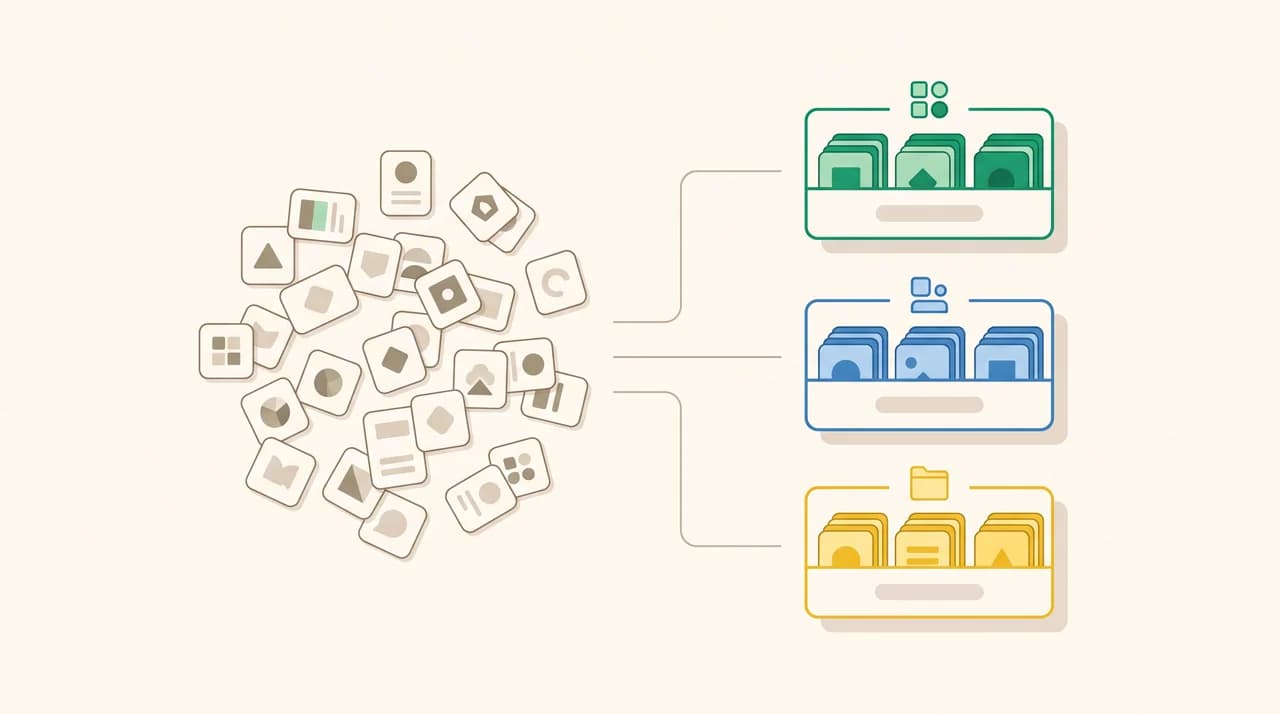
A faster way: stop babysitting sync settings per device#
Clearing cache and trimming sync windows works, but it's a per-phone chore you repeat every few months, and it's easy to forget which button does what on a manufacturer skin you don't use daily. The underlying inbox doesn't change after one cleanup — you're maintaining a cache, not fixing a cause.
AI Emaily connects to your Gmail account and runs triage, drafts, and search from its own lightweight sync layer instead of mirroring your full mailbox to every device. On Android today that's a PWA installed to the home screen, not yet a native app, so it still respects the storage model above — it just doesn't need a large local mail archive to search or draft offline. We build AI Emaily. If the recurring Android cleanup is the actual annoyance, a 7-day trial at app.aiemaily.com shows whether an agent-managed inbox removes it.
Frequently asked
See it in AI Emaily
Keep reading

Written by
Nafiul HasanNafiul Hasan is an entrepreneur and AI automation system builder with 10+ years of experience turning messy, manual workflows into reliable automated systems. He designs and ships AI enterprise solutions end-to-end — the agent logic, the data plumbing, and the product people actually use — and founded AI Emaily to give busy professionals their attention back. He writes here from the builder's seat: what works, what breaks, and how to put AI to work without giving up control.