How to Remove a Label from All Emails in Gmail


The short answer
No. A Gmail label is a tag, not a folder, so removing it from an email or deleting the label entirely only strips the tag — the message stays in your account untouched. To clear a label from every matching email, search label:name, select all conversations matching it, then uncheck the label in the toolbar.
Remove a Gmail label from thousands of emails at once, and delete a label entirely — without losing a single message.
On this page
You have a Gmail label with hundreds or thousands of messages under it, and you want it gone — but not the emails. Maybe the label is a project that wrapped up, a client relationship that ended, or a filter mistake that tagged three years of newsletters as "Urgent." Either way, the question comes before the click: does removing the label take the mail with it?
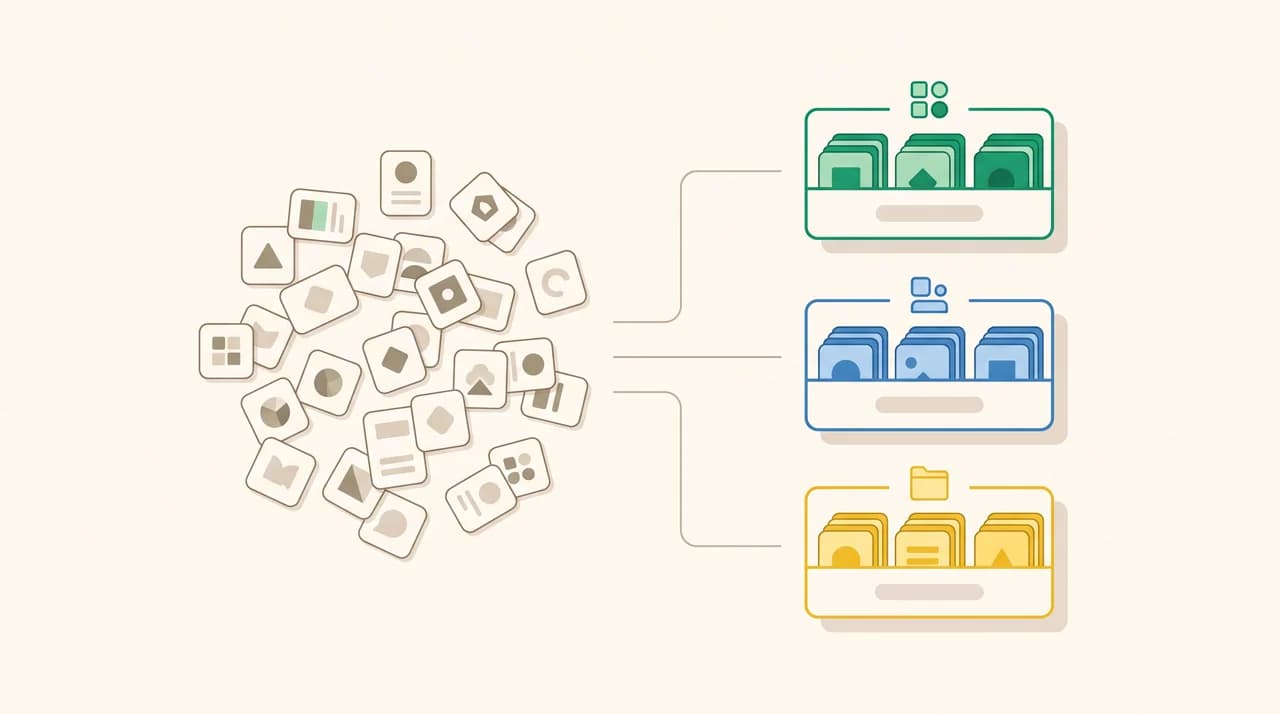
It doesn't. Gmail labels work like sticky notes, not filing cabinets — one email can carry several at once, and pulling one off leaves the message and every other label on it untouched. Below is the exact sequence for stripping a label from everything it's on, the separate step for deleting the label itself, and where each one can go sideways.
The short answer#
Removing a label — from one email or from every email that has it — never deletes the message. The email keeps living in All Mail, your inbox, or wherever it already sits; it just loses that one tag. The only Gmail action that deletes a message is moving it to Trash and letting it age out (or emptying Trash manually).
There are two different jobs people mean when they say "remove a label," and they matter for different reasons:
- Strip the label off every message that has it, but keep the label itself for future use — this is a bulk search-and-remove.
- Delete the label from your account entirely, so it no longer exists to apply — this also happens to untag every message that had it, as a side effect.
Before you start#
Bulk label removal is low-risk — you can't lose mail doing it — but a few minutes of setup saves a repeat trip.
- Get the exact label spelling from the left sidebar. Gmail's label: search operator matches the label as it's named, and a typo just returns zero results rather than an error.
- Decide which of the two jobs above you actually want. If you'll reuse the label later, remove it from messages and leave the label in your list. If it's dead weight, delete the label outright and skip the search step.
- If the label is nested under a parent (e.g., a child label under "Clients"), note that before you search — you'll search the child specifically, not the parent, unless you want every sibling label swept up too.
- Bulk actions in Gmail aren't a single undo-able step the way a normal delete is. Removing a label from 4,000 messages is safe to the mail, but re-adding the label to the same 4,000 later means re-running whatever search or filter originally caught them — so if you might want the label back exactly as it was, jot down the search query first.
How to remove a label from every email that has it#
This is the search-select-remove pattern, and it's the same shape whether the label has 12 messages or 20,000.
- 1
Search for the label
In the Gmail search bar, type label:name (use the exact label spelling, replacing spaces with hyphens or wrapping the whole thing in quotes — label:"Two Words" — and slashes for nested labels, e.g. label:"Clients/Acme"). Press Enter.
- 2
Select the conversations on screen
Click the checkbox at the top of the results list. This selects only the messages currently loaded on the page — Gmail loads a batch at a time, not your whole result set.
- 3
Expand to everything matching the search
A bar appears above the list offering to select every conversation that matches your search, not just the ones on screen. Click it. This is the step that turns a 50-message selection into a 5,000-message one.
- 4
Open the label menu and uncheck the label
Click the label icon (a tag) in the toolbar above the list. Your current labels show with checkmarks. Uncheck the one you're removing and confirm. Gmail applies the change to the full selection.
- 5
Re-run the search to confirm
Search label:name again. A clean result (or a much smaller one, if Gmail processed the removal in batches on a very large label) confirms the label is gone from those messages. Repeat the select-all-and-remove step if any remain — extremely large labels can take more than one pass.
How to delete the label itself#
If you don't want the label to exist at all — not just emptied, but gone from the label list — skip the search step and delete the label directly.
- 1
Find the label in the sidebar
Hover over the label name in the left-hand label list. If it's collapsed under "More," expand that section first.
- 2
Open the label's menu
Click the three-dot (more) icon that appears next to the label name on hover.
- 3
Choose Remove label
Confirm when prompted. Gmail deletes the label from your account immediately and unassigns it from every message that had it.
Deleting a label is immediate and account-wide
Platform differences: web, Android, and iPhone/iPad#
The underlying action — untag a message, or delete a label — is the same everywhere. What differs is how much you can select in one motion, which matters a lot once a label has more than a page's worth of mail.
| Platform | Bulk select across a whole label | Delete the label itself |
|---|---|---|
| Gmail on the web | Yes — "select all conversations that match this search" reaches every message, not just what's loaded. | Sidebar → hover label → more menu → Remove label. |
| Gmail for Android | Selection is limited to what's currently loaded on screen; scroll to load more, then select and remove in batches. | Tap the label in the sidebar drawer → settings gear → Remove. |
| Gmail for iPhone/iPad | Same batch limitation as Android — search the label, select the visible messages, remove, then load and repeat. | Tap the label in the menu → info icon → Remove label. |
When it doesn't work#
A handful of things cause bulk label removal to stall or look like it failed. None of them mean your mail is at risk.
- "Remove" is greyed out or does nothing on a system label. Inbox, Starred, Important, Sent, and Chats behave differently from labels you created — removing "Inbox" from a message is Gmail's definition of archiving it, and removing "Starred" just un-stars it. There's no separate delete step for these; they're built in.
- The search still returns results after you removed the label. Very large labels are processed in batches, and Gmail can take a moment to finish applying the change across all of them. Wait a minute and re-run the search before assuming it failed.
- The label doesn't show up to delete. Check Settings → Labels — a label can be hidden from the sidebar without being deleted, which makes it look gone when it's still tagging mail.
- Your search only checks one folder. If your search doesn't return messages you know have the label, confirm the query isn't scoped away from Archive or Trash — add in:anywhere to the search to check everywhere at once.
- You searched the parent of a nested label. label:clients matches only messages labeled exactly "Clients," not the child labels nested under it. Search the specific nested label if that's the one you meant to clear.
A faster way, if this keeps happening#
The steps above are the right tool for a one-time cleanup. They get old fast if the same label keeps filling back up with the same kind of mail — a filter that's slightly too broad, a newsletter that changed its sending address, a client thread that should route somewhere else. At that point you're running the same search-select-remove sequence every few weeks instead of fixing why the label keeps needing it.
AI Emaily's Rules + Context Brain applies and removes labels based on the same signals you just used manually — sender, subject pattern, thread history — as mail arrives, so the label reflects what's actually current without a recurring cleanup pass. We build AI Emaily. Every automatic label change is logged and reversible, so it's not a black box replacing a habit you trust; it's the same habit running continuously.
Frequently asked
See it in AI Emaily
Keep reading
Sources

Written by
Nafiul HasanNafiul Hasan is an entrepreneur and AI automation system builder with 10+ years of experience turning messy, manual workflows into reliable automated systems. He designs and ships AI enterprise solutions end-to-end — the agent logic, the data plumbing, and the product people actually use — and founded AI Emaily to give busy professionals their attention back. He writes here from the builder's seat: what works, what breaks, and how to put AI to work without giving up control.