How to Show Unread Emails First in Gmail


The short answer
Open Gmail Settings, go to Inbox, and set Inbox type to Unread First. Gmail then splits the list into an Unread section above a Reading Done section, both still ordered newest first. It's a client-side sort, not a filter, so read mail stays visible below the line instead of disappearing.
Switch Gmail to the Unread First inbox type so new mail sorts above what you've already seen.
On this page
- 01Before you start
- 02Steps to turn on Unread First in Gmail
- 03What changes in your inbox once it's on
- 04What happens to a thread with both read and unread messages
- 05Unread First vs an is:unread search
- 06Platform differences: web, mobile, and other mail apps
- 07What to do when Unread First doesn't seem to work
- 08A faster way than resorting your inbox by hand
Gmail's default inbox sorts strictly by date, so a message you already read can sit above three unread ones just because it arrived later in the day. If your eyes keep sliding past new mail because it's buried under stuff you've already dealt with, that's not a you problem — it's the sort order.
The fix isn't a search or a filter. It's a built-in inbox layout called Unread First that Gmail has shipped for years but buries three menus deep in settings. This post covers exactly where to find it, what changes on screen once it's on, how it behaves differently from typing is:unread into search, and where it quietly stops working — including one client where the setting doesn't apply at all.
None of this requires an add-on, a Chrome extension, or a paid tool. It's a native Gmail setting you're allowed to turn on and off as often as you like, and nothing about it touches how your mail actually arrives.
Before you start#
Unread First is a per-account, per-Google-account setting, not a per-device one. You set it once from a browser and it follows that account everywhere Gmail's own clients read it.
It's also personal, not shared. If you use a delegated or shared mailbox, switching your own view to Unread First doesn't change what a teammate sees when they open the same account on their side — each person's inbox type is independent.
It's also worth knowing this setting is invisible to anyone else looking at the same account. There's no shared indicator, no audit trail entry, nothing that shows up in another person's view — it's a pure display preference tied to your own login.
- Takes under a minute to set, on desktop only
- Reorders what's already in the inbox — doesn't delete, archive, or hide anything
- Reversible instantly from the same settings screen, no confirmation needed
- Works alongside labels, filters, and the Categories tabs; it doesn't replace them
- Doesn't require any change to your filters, forwarding, or existing labels
Steps to turn on Unread First in Gmail#
- 1
Open Settings
In Gmail on desktop, click the gear icon in the top right corner, then click "See all settings" at the bottom of the panel that appears.
- 2
Go to the Inbox tab
Across the top of the settings page is a row of tabs — General, Labels, Inbox, Accounts, and more. Click "Inbox."
- 3
Open the Inbox type dropdown
The first setting on this tab is "Inbox type." Click the dropdown and you'll see six options: Default, Important first, Unread first, Starred first, Priority Inbox, and Multiple inboxes.
- 4
Select "Unread first"
Choosing it replaces whichever inbox type was active before — Gmail only applies one at a time, so this switch is exclusive rather than additive. You don't need to touch anything else on the page.
- 5
Save changes
Scroll to the bottom of the settings page and click "Save Changes." Gmail reloads the inbox with the new layout applied immediately, no waiting period and no sign-out required.
What changes in your inbox once it's on#
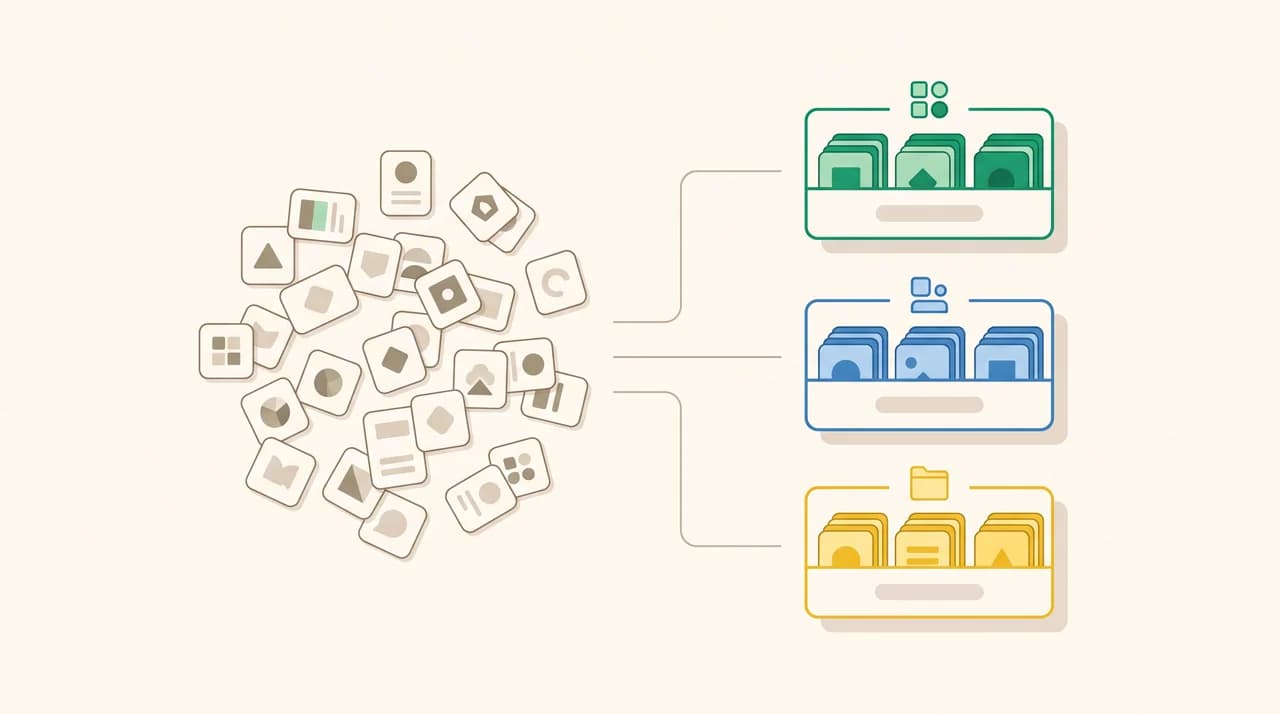
Gmail splits your inbox into two stacked sections. An "Unread" header sits at the top with every unread message underneath it, and a second section holds everything you've already opened. Each section is still sorted newest-first internally — Unread First changes which section a message lands in, not the ordering within it.
A message you open and then deliberately mark unread again jumps back to the top section on its own. Archive a message or move it to a label, and it leaves the inbox list entirely, exactly the same as it would under the Default inbox type. Nothing about threading, search, or the Categories tabs changes underneath this — Unread First only touches the order the Primary list renders in.
What happens to a thread with both read and unread messages#
Gmail groups replies into a single conversation by default, and that grouping matters for how Unread First treats it. If a thread contains even one unread message, buried under three you've already read, the whole conversation still counts as unread and floats up into the top section.
Opening that thread marks the whole thing read at once, so it drops down to the lower section on your next visit — you can't leave just the newest reply unread while marking the rest read from inside the same conversation view. If you want that kind of granular control, turning off conversation view in General settings splits every message into its own row, at the cost of losing the threaded reading experience.
Unread First vs an is:unread search#
These solve different problems, and mixing them up is the most common source of confusion around this feature. Unread First reorders your whole inbox and keeps read mail visible below the line. Typing is:unread into the search bar filters the list down to only unread messages and hides everything else until you clear the search.
Reach for Unread First when you want new mail on top but still want to scroll past it into older, already-read context in the same continuous view. Reach for is:unread when you specifically want the read mail gone from view, even temporarily — for example, to power through a backlog without the finished messages in the way.
| Unread First (inbox type) | is:unread (search) | |
|---|---|---|
| What it does | Reorders the inbox into two sections | Filters the list to unread only |
| Read mail | Stays visible, lower in the list | Hidden until you clear the search |
| Persistence | Stays on until you change it back | Resets when you clear or navigate away |
| Where it's set | Settings, Inbox tab, Inbox type | Typed into the search bar each time |
| Combines with filters/labels | Yes, applies inside label views too | Yes, can be saved as its own filter |
Platform differences: web, mobile, and other mail apps#
The setting itself lives on your Google account, so it carries over automatically to the Gmail app once you've turned it on from a browser. Where things diverge is whether each surface lets you change the setting there, and whether it even recognizes it at all.
The gap that trips people up most is third-party mail apps. Anything that connects to Gmail over plain IMAP — Apple Mail, Outlook for iOS, most desktop clients — reads your Gmail account as a generic mailbox and has no concept of Gmail's inbox type. Those apps fall back to their own sort order regardless of what you've set on gmail.com.
| Where you check mail | Can you set it there? | Does it apply there? |
|---|---|---|
| Gmail on the web (desktop) | Yes, this is where you set it | Yes |
| Gmail app, iOS | No, no Inbox type control in the app | Yes, once set on the web |
| Gmail app, Android | No, no Inbox type control in the app | Yes, once set on the web |
| Apple Mail, Outlook, other IMAP clients | No | No, these ignore Gmail's inbox type entirely |
No desktop browser handy?
What to do when Unread First doesn't seem to work#
The most frequent cause is a mismatch between where you set it and where you're looking. If you set Unread First on the web but you're checking mail through a non-Gmail app on your phone, that app was never told about the change — it doesn't read Gmail's inbox type setting at all.
The second cause is another inbox type quietly winning. Gmail's dropdown is one choice at a time, so if Priority Inbox or Multiple Inboxes was active before, turning on Unread First should have replaced it — but if the save didn't register, the old type stays in effect. Reopen Settings → Inbox and confirm Unread First is the option actually selected, not just the one you clicked.
Third, check what you're viewing. Unread First governs the main inbox view; a specific label or one of the Categories tabs (Social, Promotions) can look unaffected if you rarely have unread mail sitting in them, which reads as "broken" when it's actually just an empty top section.
Fourth, remember this is purely a display setting — it has no effect on notifications, widgets, or the unread count badge on your phone's home screen icon. If those still feel disorganized, that's a separate problem from the inbox list itself, and Unread First was never going to fix it.
- Confirm the change was actually saved — a lost connection mid-save won't apply, and Gmail won't warn you
- Check you're testing the same Google account you changed the setting on
- Clear a lingering search term that might be overriding what the inbox view shows
- Hard-refresh the page once if the layout looks unchanged right after saving
- Rule out a browser extension that reorders or filters the inbox — disable extensions one at a time if the layout looks wrong
A faster way than resorting your inbox by hand#
Unread First helps you see what's new, but it doesn't decide what deserves your attention first — a newsletter and a client reply both just land in the same unread section, in arrival order. AI Emaily reads what actually needs a response and surfaces that ahead of everything else, across every account you connect, not just one Gmail inbox.
It runs in Copilot mode by default: it drafts and prioritizes, but a human still approves before anything sends. We build AI Emaily, and there's a 7-day free trial on the plans that include this if you want to see real triage instead of resorting the list by hand every morning.
Frequently asked
See it in AI Emaily
Keep reading

Written by
Nafiul HasanNafiul Hasan is an entrepreneur and AI automation system builder with 10+ years of experience turning messy, manual workflows into reliable automated systems. He designs and ships AI enterprise solutions end-to-end — the agent logic, the data plumbing, and the product people actually use — and founded AI Emaily to give busy professionals their attention back. He writes here from the builder's seat: what works, what breaks, and how to put AI to work without giving up control.