Gmail Starred vs Important: Which One Should You Use?


The short answer
A star is a manual label you apply yourself; Gmail's important marker is an automatic prediction based on your past behaviour. Stars are deterministic and portable, so they work as a real to-do queue. Importance is a first-pass sort you did not ask for — useful as a filter, unreliable as a list.
Gmail starred vs important: stars are a manual flag you control, importance is an automatic prediction. Which one works as a real to-do queue, and why.
On this page
- 01The verdict: stars are the queue, importance is the filter
- 02Gmail starred vs important at a glance
- 03What Gmail actually does with each one
- 04Does starring an email affect importance in Gmail?
- 05Where stars win
- 06Where important wins — the part stars cannot do
- 07is:starred vs is:important, and the query that tells you which to trust
- 08What each one costs
- 09Who each is genuinely for
- 10A third option, honestly
- 11How to unstar all emails in Gmail
- 12The one-line policy worth adopting
Gmail starred vs important comes down to one difference: you apply the star, and Gmail applies the important marker. One is a switch you control. The other is a prediction built from your past behaviour, applied before you have read anything and recalculated without telling you.
That difference decides which one can hold a to-do list. Most Gmail tip roundups describe both and quietly suggest using both. That is the mistake. Two overlapping priority signals means neither one means anything, and you end up checking both and trusting neither.
The verdict: stars are the queue, importance is the filter#
Use stars as your one work queue. Use importance to shape what the top of your inbox looks like, and never open the Important view as a list of things you owe people.
The reason is the empty state. If nothing is starred, nothing is starred — you know that with certainty, because you are the only thing that puts stars there. There is no equivalent sentence about importance. An empty Important view means Gmail predicted nothing today, which is not the same as you having nothing to do.
Importance still earns its place, and it earns it before you arrive. Its job is the first pass on a heavy inbox: getting the messages most likely to matter to the top of the screen so the first thirty seconds are worth spending. Judge it on that, not on accuracy.
Here is the concession, plainly: on a genuinely heavy inbox — several hundred messages a day — importance beats stars outright at the one job a star cannot do, which is triaging mail you have not looked at yet. A star is a judgement made after reading. Importance is a guess made before it. If your problem is volume at the door rather than follow-through, importance is the more useful of the two, and star discipline will not save you.
So the rule is not "pick one feature and disable the other". It is that exactly one signal is allowed to mean "I owe someone something", and it should be the star.
Gmail starred vs important at a glance#
The two features look similar in the interface — a small marker at the left edge of a row — and behave almost nothing alike underneath.
| Dimension | Starred | Important |
|---|---|---|
| Who applies it | You, by clicking | Gmail, by prediction — you can correct it |
| Predictable | Yes; it is there because you put it there | No; recalculated on new mail, silently |
| Meaningful empty state | Yes — empty means you are clear | No — empty means Gmail predicted nothing |
| Search operator | is:starred, has:yellow-star | is:important, label:important |
| Variants | Up to twelve star and icon types | One marker, on or off |
| Survives to other mail apps | Yes — maps to the IMAP flagged flag | Gmail-only label; a folder at best |
| Can be switched off | Reduce to a single icon in settings | Settings, Inbox, Importance markers, No markers |
| Drives an inbox layout | Starred first | Important first and Priority Inbox |
| Set by a filter on arrival | Yes | Only indirectly, via the filter override setting |
| Good as a to-do queue | Yes | No |
| Good as a first-pass sort | No | Yes |
What Gmail actually does with each one#
A star is a system label. Toggling it adds or removes a label called STARRED and changes nothing else. It syncs to every device, appears in the left nav, and is the same object whether you set it from the web, the mobile app, or a third-party client over IMAP.
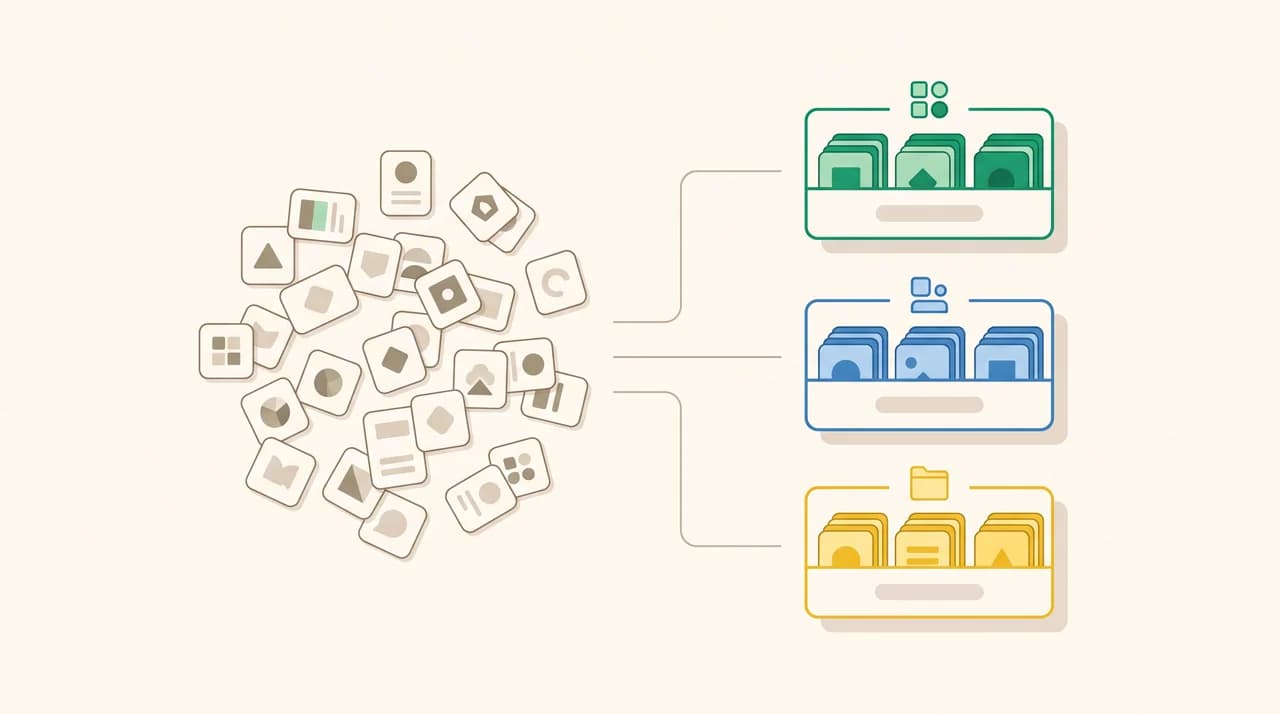
An important marker is a prediction. Gmail Help documents the signals its importance classifier weighs:
- Who you email, and how often you email them
- Which messages you open
- Which messages you reply to
- Which words you search for
- Your recent starring, archiving and deleting
Does starring an email affect importance in Gmail?#
Yes, indirectly. Your recent star, archive and delete actions are on Google's own list of importance signals, so a starring habit does move the classifier over time.
It is not a switch, though. Starring one message will not reliably make that thread important, and it will not make the next message from that sender important either. If you want a specific conversation treated as important, click the importance marker itself — that correction is the direct lever, and it is the one Gmail is explicitly asking you for.
One input, not a control
Where stars win#
They have a definition of done. You unstar it and it leaves the list. Importance has no comparable action: marking something not important teaches the classifier, but the next message on that thread can arrive marked again, and you will not be asked.
They travel. A Gmail star maps to the IMAP flagged flag, which is why a message you star in Gmail shows as flagged in Apple Mail, starred in Thunderbird, and follow-up flagged in Outlook connected over IMAP. Importance does not travel. It is a Gmail label, and the best another client gives you is a folder called Important, and only if you enable it under Settings, Labels, Show in IMAP.
You get twelve of them. Under Settings, General, Stars you can drag extra icons into the in-use row, then click a star repeatedly to cycle through them. Each is separately searchable — has:red-bang, has:green-check, has:purple-question — which gives you several parallel queues without building a label tree to hold them.
And a filter can set them. A rule that stars every message from your top ten clients on arrival is deterministic and inspectable. You can read the filter, predict exactly what it will do, and change it. You cannot read the importance classifier.
A star with no expiry is not a queue
Where important wins — the part stars cannot do#
It works before you read anything. That is the entire advantage and it is a large one. Importance is applied at delivery, so the top of your inbox is already sorted when you open it. No amount of star discipline produces that, because a star requires you to have already opened the message and made a call.
It also scales the right way. Manual signals degrade as volume rises — the busier the week, the less you flag, which is exactly when you most need the flagging. A prediction does not get tired at 4pm.
If your specific complaint is that the top of your inbox is noise, importance solves that and stars do not. Set the inbox type to Important first or Priority Inbox and the classifier does the work. That is a real win and it belongs to importance alone.
It surfaces things you would not have flagged, too — a short reply from someone you always answer quickly, sitting under a subject line that looks routine. You would have scrolled past it. The classifier does not scroll.
What it cannot do is tell you what you owe. It answers "is this likely to matter to you", never "did you promise this person something on Tuesday". Those are different questions, and only one of them is a to-do list.
is:starred vs is:important, and the query that tells you which to trust#
Both signals are searchable, and the search box is where the difference becomes obvious.
| Search | What it returns |
|---|---|
| is:starred | Every starred conversation, any star icon |
| has:yellow-star | One specific icon — swap in red-bang, green-check, purple-question |
| is:important | Everything Gmail predicts is important, plus anything you marked important |
| label:important | The same set — Important is a system label |
| is:starred -is:important | You flagged it; Gmail did not |
| is:important -is:starred | Gmail flagged it; you did not |
| is:starred older_than:30d | Stale stars — the health check on your queue |
| is:important is:unread | The classifier's unread pile |
Run the two disagreement queries
What each one costs#
Neither costs money. Stars, importance markers, multiple stars and Priority Inbox all ship with every Gmail account — personal and Google Workspace, at every tier — as of August 2026. There is no premium classifier and no paid star pack.
Verify the menu paths before you write them into a team process document. Google reorganises Gmail's settings surfaces and inbox types regularly; the underlying mechanics in this post have been stable for years, the labels on the buttons have not. Google's own Help pages are the only source worth trusting on where a setting currently lives.
The real cost is maintenance. A star costs you a decision on every message and a weekly cleanup you will not feel like doing. Importance costs you nothing to run and something to trust — you pay in the occasional message you assumed the classifier would have caught. Pick which currency you would rather spend.
Who each is genuinely for#
The middle row is where most people actually live, and it is the one the either-or framing of this question hides. Importance and stars are not really competing — they are answering different halves of the same morning.

| If this is you | Use | Why |
|---|---|---|
| Under about 100 messages a day, and your problem is follow-through | Stars only | Volume is manageable; what fails is remembering. A deterministic queue fixes that |
| Several hundred a day and the top of the inbox is noise | Importance to sort, stars to queue | The first pass has to happen without you, then you flag what you owe |
| You read Gmail in Apple Mail, Thunderbird or Outlook over IMAP | Stars | Only the star survives the trip as a usable flag |
| You share the mailbox or hand work to someone else | Neither — use a label | Stars and importance are private to one account and invisible to a colleague |
| You want several parallel queues | Multiple stars | Twelve searchable icons, no label tree to maintain |
| You star things and never come back | Snooze instead | A deadline beats a flag when the failure mode is forgetting |
A third option, honestly#
Neither marker is the only tool Gmail gives you, and for some workflows both are the wrong choice.
Snooze is a queue with a deadline instead of a flag. For anything time-bound it beats a star outright, because the message removes itself and comes back when it is actionable. Its weakness is that it hides the thread — you cannot scan your obligations, you can only wait for them to reappear.
A dedicated label applied by filter is the other one. An @Action label has the same determinism as a star, but you get more than one bucket, it survives to other clients as a folder, and a filter can apply it on arrival — which is the one thing stars lack and importance has. The cost is more setup than clicking a star ever needs.
All three still make you the classifier. You open the message, you judge it, you flag it. The star is only as good as the judgement behind it, and the important marker is only as good as a model trained on click patterns rather than on what you actually agreed to do.
That gap is the thing we build. AI Emaily is an AI-native email client — we make it — and its triage runs on a Personal Context brain you write yourself plus per-client profiles, so "important" means what you said it means instead of what a behavioural model inferred. It reads Gmail, Outlook and IMAP accounts in one inbox, a Gmail star arrives as a flag it can act on, every action is reversible and logged, and in Copilot mode nothing sends without your approval.
The honest limits: it does not replace Gmail's importance classifier — Gmail keeps predicting either way, and we run alongside rather than switching it off. And there is no permanent free tier. It is a 7-day free trial on Pro and Autopilot, card required, and $0 if you cancel before day seven.
How to unstar all emails in Gmail#
If you are switching from stars-as-decoration to stars-as-queue, start from zero. Bulk unstarring takes about a minute.
- 1
Search is:starred
This returns every starred conversation across every star icon. If you only want one colour gone, search has:orange-star instead.
- 2
Select every match
The checkbox at the top left selects the visible page only. Gmail then shows a banner offering to select all conversations that match the search — click that link, or you will only clear the first fifty.
- 3
Remove the star
Open the More menu in the toolbar and choose Remove star. Gmail offers this option when the selection contains starred conversations.
- 4
Confirm the bulk action
Gmail asks before applying an action to a large set. The Undo toast that follows is short-lived, so note the count first if you want any record of what you cleared.
- 5
Re-star deliberately, not retroactively
Do not walk back through the old list. Start starring from today, and let the previous pile stay unstarred — it was not a queue anyway.
The one-line policy worth adopting#
Star means "I owe someone something". Nothing else earns a star: not interesting, not read later, not might need this. Importance means "Gmail thinks this is worth the top of the screen", and it is allowed to be wrong without costing you anything, because you were never using it as a list.
Two signals, two jobs, no overlap. That is the whole system, and it survives contact with a bad week better than any settings change.
Frequently asked
See it in AI Emaily
Keep reading
Sources

Written by
Nafiul HasanNafiul Hasan is an entrepreneur and AI automation system builder with 10+ years of experience turning messy, manual workflows into reliable automated systems. He designs and ships AI enterprise solutions end-to-end — the agent logic, the data plumbing, and the product people actually use — and founded AI Emaily to give busy professionals their attention back. He writes here from the builder's seat: what works, what breaks, and how to put AI to work without giving up control.