How to Announce a New AI Tool to Employees Without Panic

The short answer
An AI tool announcement should cover five things: why you're adopting it, exactly what data it can see, what it can't do without a human approving first, what stays the same about people's jobs, and who to ask. Skip any one of the five and fear fills the gap the announcement left.
How to announce a new AI tool to employees: what to say about access, approval and job security, who should send it, and where each channel helps or hurts.
On this page
Your company is rolling out an AI tool that touches email, and the announcement is due before the tool goes live. Get the order of information wrong and the first replies aren't questions — they're guesses: is this reading my mail, is this deciding who gets let go, why did IT decide this without asking anyone. None of that is really about the tool. It's about what the announcement left out.
How to announce a new AI tool to employees comes down to five things, said in a specific order, by the right person, before anyone hears about it from a screenshot instead of from you. The rest of this covers what to prepare, the order that works, and where each channel helps or hurts.
The short answer#
A good announcement answers one question before anyone has to ask it out loud: is this going to hurt me? Cover five things, in this order, and most of the fear resolves before it starts.
- Why now — the specific problem it solves, not a vague claim about efficiency
- What it can see — which mailboxes, calendars or files it touches, and what it doesn't
- What it can't do without a person — every action that needs approval before it happens
- What isn't changing — the parts of the job that stay exactly as they are
- Who to ask — a named person or channel, not a ticket queue
Two sentences carry more weight than the rest of the announcement combined, and they're the two most drafts leave out: a plain statement that no one's job is being cut because of this rollout, and a plain statement that the tool isn't used to monitor or score anyone's work. Neither sentence costs anything if it's true. Leaving it out costs the whole rollout, because the reader fills the silence with the worst version of both.
Before you start#
Write the announcement after you have real answers, not while you're still finding them. Four questions need a real answer, in writing, before a single sentence goes out.
- Exact scope — which mailboxes, calendars or documents it reads, and whether anyone is excluded
- Approval workflow — does it draft only, draft and suggest, or send on its own
- Rollout order — a pilot team first, or everyone on the same day
- Escalation path — who fixes problems and who answers questions once it's live
Get this answer before you draft anything
Steps#
- 1
Get the exact scope of access in writing
Ask IT or the vendor which mailboxes, calendars and attachments the tool reads, for whom, and what's excluded — legal, HR or executive mailboxes, for example. Put the answer in the announcement verbatim. A vague phrase like "some email data" invites people to assume the worst version.
- 2
Name what still needs a human
List the actions the tool takes on its own against the ones that wait for a person to approve. If every outgoing message needs a click before it sends, say that in one plain sentence — it's usually the single biggest fear the announcement can defuse.
- 3
Pick who sends it — and it usually isn't IT
A message that opens "IT is rolling out..." reads like a policy notice. One from the person's actual manager, or a senior leader, with IT copied for the technical questions, reads like something the company decided on purpose. For anything touching how work gets evaluated, a signed message from a name outperforms one from a shared inbox nobody can reply to.
- 4
Write it in this order: why, access, approval, what's not changing
Open with the specific problem it solves. Then say what it can see. Then say what still needs a person. Then say, plainly, what stays the same about the job. Readers who get "why" before "what it can see" spend the rest of the message bracing instead of reading.
- 5
Open one real channel for questions
Name a person or a channel, not a ticket system. The first few questions answered in the open are worth more than the announcement itself — they show everyone else that a real answer is coming and that asking isn't a career risk.
- 6
Follow up in the first week, not only on day one
Send a short update once people have actually used it: what's working, what surprised you, what changed because of the first questions. Silence after day one reads as the announcement being the last honest thing anyone said about the rollout.
Which channel should carry it#
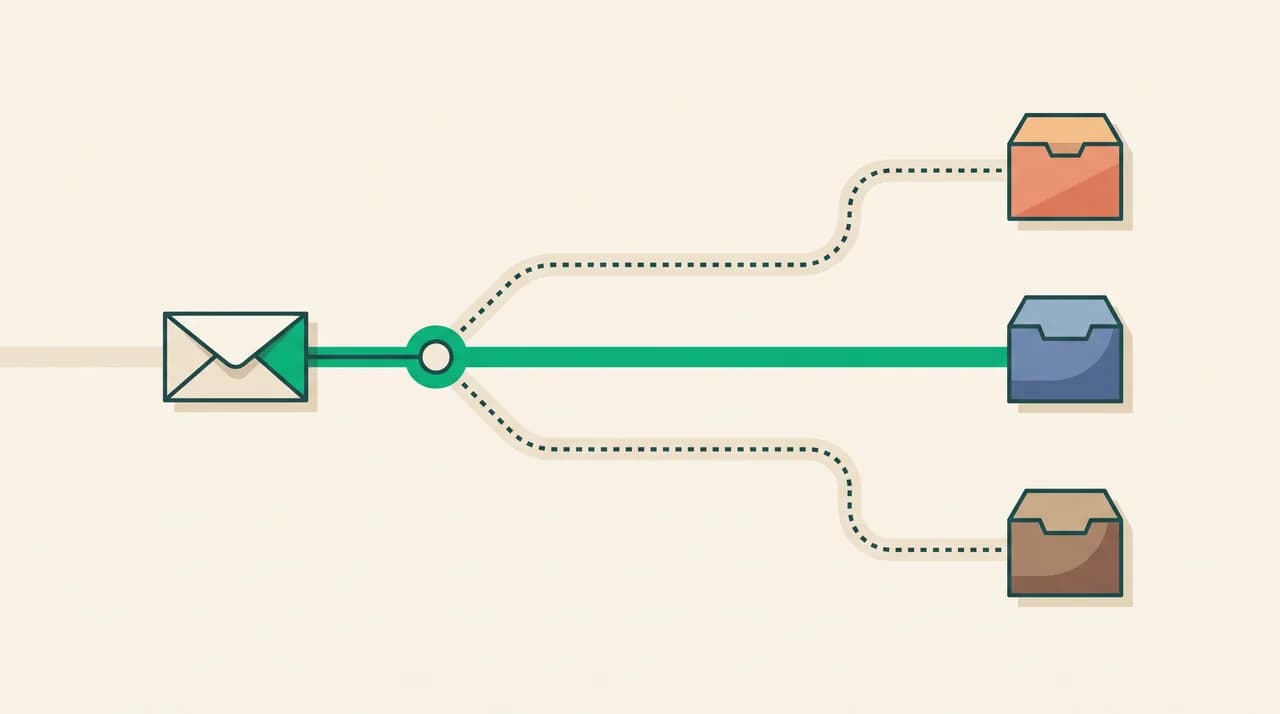
No single channel does the whole job. Pick one as the reference document and one as the live moment, and use both — the launch communication plan for a new tool almost always needs a written record and a real-time one.
| Channel | Best for | What sticks | Watch-out |
|---|---|---|---|
| Company-wide email | The official record people can re-read and forward | The full explanation, verbatim, from a named sender | Gets skimmed if the subject line is generic — name the tool in it |
| Pinned Slack or Teams post | Fast reach and threaded follow-up questions | The one-paragraph summary and a link to the full FAQ | Threads fork into rumor if the first replies sit unanswered for an hour |
| Live all-hands or town hall | Reading the room and taking the hard question in person | Tone — proof that leadership isn't hiding anything | Nothing is captured for anyone who misses it; pair it with the email |
| Intranet or wiki page | The permanent reference version, including the FAQ | The details nobody memorizes: access scope, approval rules, who to ask | Nobody visits it unprompted — it's a companion to the email, not a replacement |
What to do when it doesn't work#
Some rollouts get real pushback even after a good announcement. Three patterns cover most of it.
Silence isn't agreement. If nobody asks a question in the first day, that usually means people are worried and not saying so out loud, not that the announcement landed cleanly. Ask two or three people you trust directly what they actually think.
Pushback about jobs, after you already said the job isn't changing, is often not really about this announcement — it's about a past promise the company didn't keep. Prosci's ADKAR change model separates awareness from desire: someone can understand exactly what the tool does and still not want it, and re-explaining the mechanics won't move that. It takes a manager, a conversation, or time, not a better sentence in the FAQ.
A specific, credible claim that the tool touched something it shouldn't have — read a mailbox it wasn't supposed to, sent something nobody approved — gets treated as an incident, not a rumor. Verify it, then answer the whole group in writing, not just the person who raised it. The gap between what happened and what people were told is exactly the gap a rumor fills next.
Reinforcement is the step most rollouts skip
A faster way to keep the answer accurate#
The hard message isn't the first one — it's the one three weeks later, when someone asks what the tool actually did with their inbox last Tuesday. Most rollouts document the access grant and never track the day-to-day actions, so there's no honest answer to that question by week three.
AI Emaily's Copilot mode drafts and files mail but holds every send for a person to approve, and every action it takes lands in an audit log you can open and read back to whoever asks. That's the same access-and-approval question your announcement answered once, still answerable accurately months later instead of from memory. We build AI Emaily — if your rollout is specifically an AI email assistant, it's worth seeing how the approval step works before you promise one in writing.
Frequently asked
See it in AI Emaily
Keep reading

Written by
Nafiul HasanNafiul Hasan is an entrepreneur and AI automation system builder with 10+ years of experience turning messy, manual workflows into reliable automated systems. He designs and ships AI enterprise solutions end-to-end — the agent logic, the data plumbing, and the product people actually use — and founded AI Emaily to give busy professionals their attention back. He writes here from the builder's seat: what works, what breaks, and how to put AI to work without giving up control.