Can You Run Two Email Clients at the Same Time?


The short answer
Yes. IMAP, Exchange and Microsoft Graph are all designed for concurrent clients — every viewer shares the same server-side folders and flags. The catches are client-side: duplicate notifications, an IMAP Auto-Expunge setting that deletes what the other client can still see, and brief flag-sync races. Silence one client's notifications, disable Auto-Expunge on both, and it works cleanly.
Yes — IMAP lets two email clients share one account at once. Avoid duplicate pings, Auto-Expunge conflicts, and flag race conditions with this setup.
On this page
- 01What actually moves — and what doesn't — between two clients
- 02Pre-flight — ten minutes, saves an evening
- 03The setup, step by step
- 04What breaks when two clients share one mailbox
- 05Two clients, one mailbox, one notifier
- 06Rollback — turning the second client off cleanly
- 07Running two clients continuously, not just during a switch
- 08Where AI Emaily fits in a two-client setup
You can run two email clients on the same account at the same time, and the mailbox itself will be fine. IMAP was designed for this. What is not fine, unless you set it up deliberately, is the human experience of it — two apps ringing for every message, an occasional unread badge that flickers between two numbers, and, if one client has an aggressive expunge setting, mail that vanishes from the other client mid-scroll.
This post is the answer to whether you can run two email clients at the same time, why the answer is yes, and what to configure so the setup is boring instead of noisy. It covers what state actually lives where, a ten-minute pre-flight, the exact steps to add a second client without the two fighting, the specific things that break when they do fight, how to roll one client out, and how to run parallel clients continuously if you have a real reason to — a trial, a work account you access from two devices, or an audit period.
What actually moves — and what doesn't — between two clients#
The reason two clients can share a mailbox at all is that the mailbox does not live in either of them. IMAP (specified in RFC 9051), Microsoft Exchange, and Microsoft Graph all treat the mailbox as a shared server resource: folders, messages, and per-message flags (\Seen, \Flagged, \Deleted, \Answered, plus custom keywords like Gmail labels) all live on the server. Every connected client is a viewer of the same underlying state.
When you mark a message read in one client, the client sends a STORE command that adds the \Seen flag on the server. Any other client that has an IDLE connection open, or that polls next, receives the update and re-renders the unread count. This round-trip is usually a second or two on a fresh connection, longer if a client is asleep or on a cold poll.
What does not travel between the two clients is anything that was never on the server: signatures, keyboard shortcuts, snoozes stored inside a specific app, client-side rules, canned replies, and — critically for this post — notification settings and OS-level Focus integration. Those are per-app and per-device. That is why two clients can happily share a mailbox and still each announce every new message with its own banner: the OS has no way to know the two apps are looking at the same account.
There is one more thing that is not on the server and that matters here: the client's expunge policy. Auto-Expunge (IMAP EXPUNGE-on-close, or the Gmail per-client setting) turns a \Deleted flag into an actual deletion. If one client is set to expunge aggressively and the other is not, the second client can watch a message it was reading disappear.
Pre-flight — ten minutes, saves an evening#
Before you sign the second client in, walk through this list. Each item is a specific way a two-client setup goes wrong, and each takes under a minute to prevent.
- Confirm the account is IMAP, Exchange, or Microsoft Graph — not POP. POP downloads messages into one specific client and (by default) removes them from the server, so a second POP client sees an empty inbox. Convert to IMAP at the provider (Gmail, Outlook.com, iCloud, Fastmail and Yahoo all offer it in account settings) before adding the second client, or none of this post applies.
- Turn Auto-Expunge off in both clients. In Gmail via IMAP, the setting is Gmail Settings → Forwarding and POP/IMAP → Auto-Expunge, and Google's own guidance is to set it to "do not expunge" when using more than one client. In desktop clients, it is usually labelled "expunge on close" or "permanently remove deleted messages when leaving folder." Off in both.
- Pick one client to be the notifier. Two clients on the same device, or one on your laptop and one on your phone, will each independently notify. Decide up front which app is announcing and silence the other's notifications in OS settings — banners, sounds and badges.
- Screenshot your notification settings. iOS Settings → Notifications → [app], macOS System Settings → Notifications, Windows Settings → System → Notifications, Android Settings → Notifications. If the setup does not stick, you want to put them back exactly as they were.
- Note what the two clients each store locally that will not sync: signatures, snippets, per-client rules, snoozed messages, scheduled sends, S/MIME or PGP private keys. None of these travel through the server; each client has its own copy or none.
- Decide the observation window. If this is a trial, a week is usually enough to know. If this is a permanent two-client setup — say, a native desktop client plus a mobile app — no calendar; just set it and go.
- Do not connect a third client at the same time. IMAP allows it, but every extra client is another IDLE connection against the server's per-account limit (Gmail's documented cap is 15) and another notifier to silence. Two is the sweet spot.
The setup, step by step#
The trick is doing this in an order that never has both clients competing to announce or delete the same message. The keyboard time is under fifteen minutes; the calendar time is however long you want to run parallel.
- 1
In the existing client, disable Auto-Expunge and note the current notification setup.
Turn expunge-on-close off. Confirm this app's notification settings match what you want the observer to have — if you plan to keep this as your primary, that stays on; if the new client will be primary, plan to silence this one shortly.
- 2
At the provider, disable Auto-Expunge globally where it is a provider setting.
For Gmail via IMAP, this lives in Gmail Settings → Forwarding and POP/IMAP → Auto-Expunge → "do not auto-expunge messages". This is the single most important setting to change when running two clients — it prevents one client's \Deleted flag from removing mail from under the other one's cursor.
- 3
Install and sign into the second client.
Sign in with OAuth for Gmail or Microsoft 365, or paste an app-specific password for iCloud, Fastmail, Yahoo or Proton Bridge. The client requests the folder list, subscribes to it, and starts back-filling. System folders appear in seconds; a large archive can take hours.
- 4
In the second client, immediately turn Auto-Expunge off before touching anything.
This is a settings-first move. If you delete a message in the new client while its expunge policy is aggressive, it will be gone from the server too, and the other client will see the deletion as well.
- 5
Silence the client you did not choose as notifier.
In OS settings, turn off banners, sounds and badges for the app that will be the observer. Also turn off in-app notification sounds — some clients route audio through their own channel independently of the OS setting. On iOS, remove the silenced app from any Focus filter that allowed it.
- 6
Approve the notifier's permission the first time it asks.
The notifier is now your single source of pings on this device. Approve banners, sounds and badges the way the original had them (that is what the screenshot was for). Configure Focus / Do Not Disturb integration on this app — it is per-app on both iOS and Android, so the second client needs its own filter set up if you want one.
- 7
Do a smoke test with a self-sent message.
Send yourself a test email. It should arrive in both clients within seconds. Read it in the notifier — the observer's unread count should drop to zero within a second or two. Move it to a folder in the observer — the notifier should show the move. Delete it in one — it should disappear from both, and (because Auto-Expunge is off in both) it stays in Trash until you empty it manually.
What breaks when two clients share one mailbox#
The failure modes are specific and small in number. The table separates them by whether they come from the two clients disagreeing about server state, from client-local settings that never sync, or from behaviour at the OS level. If two clients are misbehaving on your account, the row you are hitting is on this table.
| What breaks | Why | The fix |
|---|---|---|
| Mail disappears from one client mid-read | One client has Auto-Expunge on, so a \Deleted flag becomes a real expunge on the server, and the other client sees the removal. | Turn Auto-Expunge off in both clients and at the provider. In Gmail, use "do not auto-expunge messages". |
| Duplicate notifications for every message | Notifications are per-app and per-device. Both clients have push (or IMAP IDLE) permission and each rings independently. | Silence the observer client's notifications in OS settings and inside the app. Only the notifier fires banners and sounds. |
| Unread badge briefly flickers between numbers | Flag-sync race: client A marks \Seen locally and sends STORE; client B has not received the update yet. | None needed — the race window is seconds. If it is chronic, the observer is on a slow poll interval; switch it to IDLE or a shorter poll. |
| One client shows a folder the other does not | IMAP subscription state is per-client. Subscribing to a folder in client A does not subscribe it in client B. | In each client, review its folder subscription list and enable the same folders. Gmail labels appear as folders under [Gmail] or similar. |
| "Message expunged" errors when opening old mail | The mailbox's UIDVALIDITY changed on the server (rare — usually after a provider migration) and one client cached stale UIDs. | Rebuild that client's local index for the account. Every vendor has a different label for this — "rebuild", "reindex", "remove and re-add account". |
| Signature does not appear in one client | Signatures are per-client, not server-side (with a few provider-side exceptions like Gmail web). | Set the signature independently in each client. There is no shared source. |
| Snooze fires on the wrong client, or not at all | Snoozes are usually stored inside a specific app. When the snooze fires, only that app knows. | Snooze in whichever client is your notifier — that is the one you want to surface the message. |
| IDLE connection dropped / "too many connections" | Providers cap simultaneous connections per account (Gmail's documented ceiling is 15). Two well-behaved clients use one or two each; add a third and you can hit it. | Stop at two clients per account, or reduce concurrent devices. Close old sessions in your provider's security panel. |
| Both clients mark a message read for a second time | \Seen is idempotent — setting it again is a no-op. This is a UI artefact, not a bug. | Nothing to fix. Both clients converge on the same state. |
| Focus mode leaks — old app slips a banner through | iOS/Android Focus filters are per-app. The silenced client is still in the Focus allow-list somewhere. | Remove the observer app from every Focus filter, not just from Notifications. On macOS check the Focus panel too. |
Fix Auto-Expunge first, before anything else on this table
Two clients, one mailbox, one notifier#
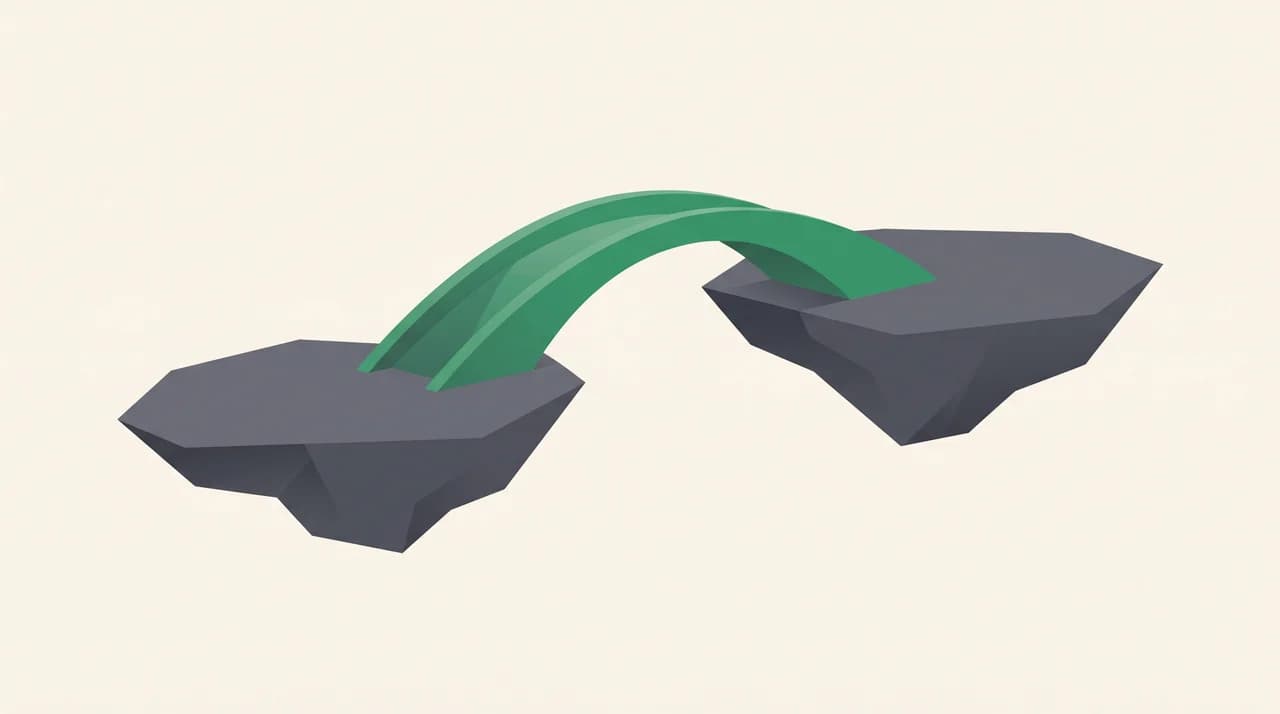
The mental model that keeps two clients from feeling chaotic is simple: one server-side mailbox, two windows onto it, exactly one of the windows is allowed to ring. The illustration below is that shape — both clients connect to the same account and see the same flags, but the notifier bridge is exclusive.
Rollback — turning the second client off cleanly#
Because you never uninstalled the first client and never moved anything on the server, rolling back is a five-minute operation. Sign the second client out of the account (or uninstall it), turn the first client's notifications back on the way the screenshot showed, and open it to let it re-sync. Whatever you read, replied to, archived or filed while the two clients were connected is already on the server, so the first client's next sync reflects the same state. Nothing was lost.
You can also roll back only one client without touching the other — this is the same reason you can add a second client without risk. Each is a window; closing one leaves the mailbox as it was.
The one thing to check on the way out: if you turned Auto-Expunge off at the provider (for Gmail), decide whether you want to leave it off. "Do not auto-expunge" is the correct setting whenever more than one client is in play, and it stays correct if you ever add another one. There is no reason to turn it back on.
Running two clients continuously, not just during a switch#
Most people run two clients only during a trial — old app on one side, new app on the other, decide within a week. But a permanent two-client setup is legitimate too, and IMAP handles it the same way. A common shape is a native desktop client for focused work (Apple Mail on macOS, Outlook on Windows) and a different mobile app for the phone. Another is a personal client on a laptop and a webmail tab kept open at work. Both are fine indefinitely.
The rules do not change with duration. Auto-Expunge off, one client is the notifier per device, and if you go over two clients per account you start paying attention to the provider's connection cap. Gmail's is 15 simultaneous IMAP connections; Microsoft 365 does not publish a hard number but throttles aggressively above roughly 20. Neither is a limit two well-behaved clients ever brush.
The one setup that does not work continuously is two clients on the same device both trying to be the notifier. The OS will faithfully fire two banners for every message forever. That is not a bug in either app — it is exactly what you told the OS to do. Pick one.
Where AI Emaily fits in a two-client setup#
We build AI Emaily. It is worth naming in a post about running two clients because the trial shape most people are in when they land here is "my current app on one side, a candidate on the other." AI Emaily connects Gmail, Outlook or plain IMAP in a three-minute OAuth flow or app-password paste, respects the same Auto-Expunge and folder-subscription rules described above, and can sit alongside Apple Mail, the Gmail app, Outlook or any other IMAP client without interfering with them. Silence one, keep the other as notifier, run the pair for a week.
One honest limit: if you are looking for a fast Gmail-only power-user keyboard workflow with the deepest possible Gmail archive search, Shortwave has built harder on that specific axis than we have. We are broader — Gmail, Outlook and IMAP with an approval-first agent — but that is not the same product. AI Emaily has no permanent free tier; it is a seven-day free trial on Pro or Autopilot, card taken, $0 charged if you cancel before day seven, so a full parallel trial costs nothing. Packaging detail is on the [pricing page](/pricing); the [home page](/) covers what the client does day to day.
Frequently asked
See it in AI Emaily
Keep reading
Sources

Written by
Nafiul HasanNafiul Hasan is an entrepreneur and AI automation system builder with 10+ years of experience turning messy, manual workflows into reliable automated systems. He designs and ships AI enterprise solutions end-to-end — the agent logic, the data plumbing, and the product people actually use — and founded AI Emaily to give busy professionals their attention back. He writes here from the builder's seat: what works, what breaks, and how to put AI to work without giving up control.