What Proton Mail Can and Cannot See in Your Emails

The short answer
Proton Mail's zero-access encryption fully protects message bodies and attachments — Proton cannot read them once stored. Subject lines, sender and recipient addresses, and timestamps get the same zero-access protection, not end-to-end encryption, so Proton's servers process that metadata briefly before locking it away. Mail from non-Proton senders arrives unencrypted first.
What can Proton Mail see in your emails? Bodies get zero-access encryption; subject lines and addresses mostly don't get end-to-end protection.
On this page
- 01Before you start: end-to-end and zero-access are not the same guarantee
- 02How to check what's actually protected for a given email
- 03Where the protection changes depending on the route
- 04What to do if you assumed more protection than a message actually got
- 05A faster way to not re-decide this on every email
If you use Proton Mail because you assume nothing about your inbox is visible to anyone but you, the honest answer is more specific than that. What can Proton Mail see in your emails comes down to two protections that sound similar but aren't: end-to-end encryption, which locks a message before it ever reaches Proton's servers, and zero-access encryption, which locks it once it arrives there.
Proton Mail applies full end-to-end encryption to your message body and attachments only when you're writing to another Proton address, or when you turn on password protection for an external recipient. Subject lines, sender and recipient addresses, and mail from non-Proton senders get the other protection — zero-access encryption, which is real but means Proton's own servers necessarily process that data in the clear for a moment before locking it away.
Here's exactly what's covered by each, why the split exists, and how to check it for any message in your own mailbox.
Before you start: end-to-end and zero-access are not the same guarantee#
End-to-end encryption (E2EE) means a message is encrypted on the sender's device and only decrypted on the recipient's device. It never exists as plaintext anywhere in between, including on Proton's own infrastructure — Proton could hand over the stored file under a court order and it would still be unreadable ciphertext.
Zero-access encryption works differently. Proton's server receives the data, encrypts it immediately using your public key, and keeps only that ciphertext going forward, so Proton can't read it once it's saved, but the server did have the plaintext in memory for the moment it took to encrypt it. Both protections keep Proton locked out of your stored data without your password; they differ in whether Proton's own systems ever touched the readable version at all.
Proton has a stated reason for handling subject lines this way instead of encrypting them end-to-end: doing so would break your ability to search your own mailbox, since a search index needs to read what it's indexing. That trade-off is why a fully protected, password-protected, or Proton-to-Proton message still shows a plain, readable subject line in your inbox list even though its body is locked.
Why the distinction is worth knowing
How to check what's actually protected for a given email#
Run through these in order for any message you're unsure about.
- 1
Check whether both sides are on Proton
Proton-to-Proton mail is end-to-end encrypted by default, and Proton Mail shows a lock icon on these messages. If both people are on Proton, the body and attachments never exist as plaintext on Proton's servers at all.
- 2
For an external recipient, decide if you need password protection
Mail to a Gmail, Outlook, or company address leaves Proton over TLS but isn't end-to-end encrypted unless you send it as a password-protected email or the recipient already has PGP configured. Without one of those, their provider can read the body exactly like any other email it receives.
- 3
Don't count on the subject line being covered
Subject lines, along with sender and recipient addresses, get zero-access encryption on every message, Proton-to-Proton included, but never end-to-end encryption. OpenPGP treats the subject as part of the message header rather than the encrypted payload, and an unreadable subject would also break your own ability to search your inbox.
- 4
Know what already happened to mail from outside senders
An email from a Gmail or Outlook address arrives at Proton as ordinary, unencrypted mail over TLS — the sending provider had full plaintext access before it ever left their own servers. Proton applies zero-access encryption to it at rest after that, which protects it going forward but doesn't undo what the sender's provider already saw.
- 5
Treat attachments as following the body, not their own rule
Attachments don't get a separate encryption tier. One inside a Proton-to-Proton message is end-to-end encrypted; one inside ordinary mail from an external sender is zero-access encrypted at rest, the same as the text around it.
Where the protection changes depending on the route#
Whether a given message is end-to-end encrypted or only zero-access encrypted depends entirely on where it's going or where it came from. It isn't a setting you turn on once for the whole mailbox.
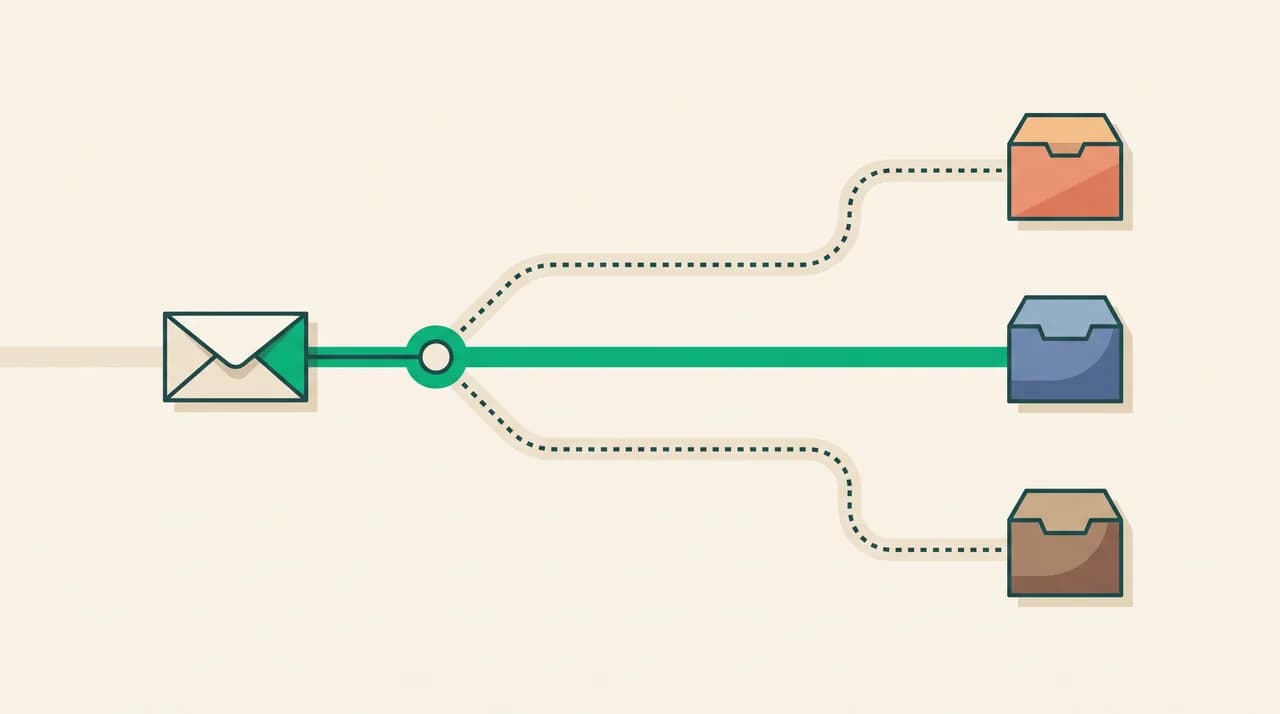
| Mail path | Body & attachments | Subject & addresses | Who could see the plaintext |
|---|---|---|---|
| Proton → Proton | End-to-end encrypted | Zero-access encrypted, not E2EE | No one outside the two mailboxes |
| Proton → non-Proton, no password | TLS in transit; readable by the recipient's provider once delivered | Zero-access encrypted on Proton's side | The recipient's email provider, same as any normal email |
| Proton → non-Proton, password-protected | End-to-end encrypted | Zero-access encrypted | No one outside the two mailboxes |
| non-Proton → Proton, sender has no PGP | TLS in transit, then zero-access encrypted at rest | Zero-access encrypted | The sender's own provider saw it before Proton did |
| non-Proton → Proton, sender uses PGP | End-to-end encrypted | Zero-access encrypted, subject sits outside the PGP payload | No one outside the two mailboxes |
What to do if you assumed more protection than a message actually got#
Two situations account for most of the surprise here, and neither one is a bug.
- You sent something sensitive to a Gmail or Outlook address without turning on password protection. The body left Proton's network over TLS and is sitting in that inbox exactly as readable as any other email they've received. There's no way to recall it; going forward, use Proton's password-protected email option or confirm the recipient has PGP set up before sending anything sensitive.
- You put confidential information in a subject line, assuming the lock icon on the message covered it. It didn't — subject lines are zero-access encrypted, not end-to-end encrypted, on every message including Proton-to-Proton ones. Move anything sensitive into the body instead.
- You're wondering about mail you already received from a non-Proton sender before reading this. Proton can't retroactively change what the sender's own provider already saw in plaintext; zero-access encryption only protects the copy in your mailbox from the moment it arrives forward.
There's no unsend for metadata
A faster way to not re-decide this on every email#
Checking who's on Proton, whether a message needs password protection, and what's safe to put in a subject line is a lot to hold in your head for every single email you send. AI Emaily connects to Proton Mail alongside Gmail and Outlook, and applies one set of filing, triage, and spam rules across all of them from a single inbox.
It doesn't change anything about what Proton encrypts. Email content is treated as untrusted input to the agent, nothing trains on your mail, and model calls run under zero-retention terms with the provider, so triage and drafting don't add a new place your messages sit permanently. Try it free for 7 days on Pro or Autopilot at app.aiemaily.com — card required, $0 if you cancel before day 7. We build AI Emaily.
Frequently asked
See it in AI Emaily
Keep reading

Written by
Nafiul HasanNafiul Hasan is an entrepreneur and AI automation system builder with 10+ years of experience turning messy, manual workflows into reliable automated systems. He designs and ships AI enterprise solutions end-to-end — the agent logic, the data plumbing, and the product people actually use — and founded AI Emaily to give busy professionals their attention back. He writes here from the builder's seat: what works, what breaks, and how to put AI to work without giving up control.