Best Email Software for Home Health Agencies (2026 Guide)

The short answer
Home health agencies handle PHI, so the clinical mailbox needs a vendor with a signed Business Associate Agreement. Google Workspace and Microsoft 365 both offer BAAs. AI Emaily — which we build — does not offer a BAA and is not appropriate for PHI. We recommend it for the non-PHI operational inbox: referral-source relationships, caregiver recruiting, and vendor correspondence.
Best email software for home health agencies: which tools sign a BAA for PHI, and where AI Emaily fits for the operational inbox.
On this page
- 01Two piles, two tools: how home health mail actually splits
- 02What HIPAA requires from any vendor handling patient information
- 03How we evaluated these tools
- 04Best email software for home health agencies at a glance
- 051. Google Workspace — for the BAA-covered clinical mailbox
- 062. Microsoft 365 — for agencies on Microsoft licensing
- 073. AI Emaily — for the non-PHI operational inbox
- 08The operational inbox problems no clinical system reaches
- 09How to choose for your agency
Search for the best email software for home health agencies and most results lead with encrypted email tools and HIPAA-branded messaging platforms. Almost all of them are optimised for clinical communication. None of them addresses the operational inbox.
There are two genuinely different questions here. The first: which vendor can be used for referral packets, payer authorisations with clinical detail, and any other correspondence that names a patient in a medical context? The answer to that question starts and ends with a signed Business Associate Agreement, and only two general-purpose email platforms have their BAA process verified in this post.
The second question: what does the agency use for the rest of the inbox — the relationship emails to referral sources, the caregiver recruiter threads, the supply and vendor correspondence, and the administrative payer letters that carry no clinical detail? That is an inbox management problem, not a compliance one, and it has a different answer.
One disclosure before either list: we build AI Emaily. It appears in this post for the second question only. AI Emaily does not offer a Business Associate Agreement, which means it is not appropriate for any mailbox that carries PHI. We state that plainly in the section below, and we mean it.
Two piles, two tools: how home health mail actually splits#
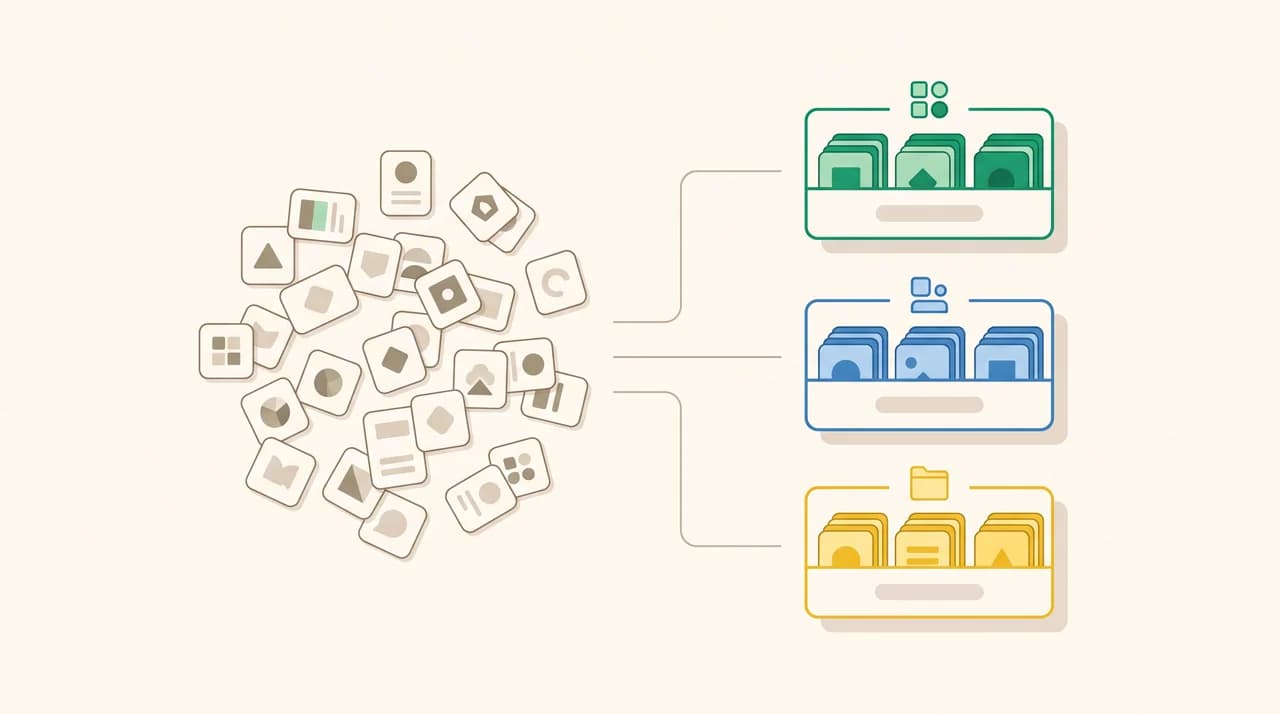
Every home health and hospice agency intake inbox contains both kinds of mail. The problem is that most teams treat them identically — routing everything through the same client with the same retention settings and access controls. That either over-engineers the low-risk operational mail or under-engineers the clinical correspondence.
A referral packet from a hospital discharge planner is PHI by definition: it names the patient, their diagnosis, and their care requirements. The thank-you email the intake coordinator sends back to that same social worker an hour later — thanking her for the referral and checking in on her census — is not. Both live in the same inbox and look identical in a mail client.
Administrative payer correspondence sits in a genuinely ambiguous middle. A status request referencing only a claim number is not PHI. The response that comes back naming a denial reason tied to a specific diagnosis is. Treat that category conservatively until your compliance officer has confirmed what your specific payer correspondence actually contains.
| Mail type | Common examples | Usually carries PHI? | Requires a BAA-covered vendor? |
|---|---|---|---|
| Clinical referrals and intake packets | Discharge summaries, face-to-face requirement documentation, physician orders | Yes | Yes |
| Payer authorisations with clinical detail | Prior auth letters naming diagnosis codes, plan-of-care authorisations | Yes | Yes |
| Care plan and clinical correspondence | Field nurse updates, medication order changes, clinical case notes sent by email | Yes | Yes |
| Administrative payer correspondence | Status inquiry responses, ERA and EOB letters referencing only policy numbers | Not inherently — confirm with your compliance officer | Confirm before assuming no |
| Referral-source relationship mail | Thank-you emails to discharge planners, check-ins to social workers, event invitations to referral contacts | No | No |
| Caregiver recruiting and HR | Job applications, interview scheduling, offer letters, onboarding correspondence | No | No |
| Vendor and supply correspondence | Purchase orders, invoices, equipment vendor newsletters | No | No |
What HIPAA requires from any vendor handling patient information#
Under HIPAA, a home health agency is a covered entity. Any person or organisation that creates, receives, maintains, or transmits protected health information on a covered entity's behalf is a business associate. The Department of Health and Human Services is explicit: a Business Associate Agreement must be in place before any PHI reaches that vendor — a written contract governing how the PHI is handled, disclosed, and safeguarded.
Email software qualifies as a business associate when it processes PHI. A referral packet routed through a vendor's mail infrastructure, a payer authorisation letter stored on a vendor's servers, an intake coordinator's reply to a discharge summary — each puts the vendor in contact with PHI on behalf of the agency. The BAA must exist before that mail arrives, not as an afterthought once the account is set up.
Encryption is not a substitute. Several products dominating this search term lead with encryption: they protect message content in transit with strong algorithms. Encryption without a BAA still leaves the agency without the written agreement HIPAA requires. "Our mail is encrypted" and "our vendor has signed a BAA" are different statements. Only the second satisfies the legal requirement.
AI Emaily does not offer a Business Associate Agreement
How we evaluated these tools#
This is a capability comparison built from vendor documentation and public product pages verified in July 2026. The BAA availability claims for Google Workspace and Microsoft 365 were confirmed directly against each vendor's own published compliance documentation before being stated here. A BAA claim that does not appear on the vendor's own published pages does not appear in this post.
No competitor prices, ratings, or review counts appear. Both platforms reprice and restructure plans frequently, and a figure that looks credible today will be wrong by renewal. Check each vendor's own pricing page on the day you sign.
Best email software for home health agencies at a glance#
The table organises by the mail category each tool is built to handle. The HIPAA column reports what each vendor publishes — verify it against the actual contract you are offered before connecting any mailbox that carries PHI.
| Tool | Mail type it handles | Best for | BAA and HIPAA posture as published (verify before use) |
|---|---|---|---|
| Google Workspace | Clinical and operational | Agencies wanting one governed mailbox tenant with admin controls | BAA available; a super administrator must accept it in the Admin console before any PHI is used; personal Gmail is not covered |
| Microsoft 365 | Clinical and operational | Agencies on Windows infrastructure or existing Microsoft licensing | BAA included through the Microsoft Online Services Data Protection Addendum for eligible commercial plans; consumer subscriptions are not covered |
| AI Emaily | Non-PHI operational only | Referral-source relationships, caregiver recruiting, vendor and supply mail — not clinical correspondence | No BAA. Not for PHI. We build it. |
1. Google Workspace — for the BAA-covered clinical mailbox#
Google offers a Business Associate Amendment for Google Workspace. Before any PHI can be used in a Google service, a super administrator must review and accept it in the Admin console. Once accepted, coverage extends to Gmail and other core Workspace services on Google's published HIPAA Included Functionality list. Third-party add-ons and applications installed inside Workspace are not covered by the BAA, even when they run within the Google environment.
Two details determine whether the compliance posture actually holds. First, personal Gmail accounts — @gmail.com addresses not on an agency-owned domain — fall entirely outside the BAA. An agency where staff use personal accounts for clinical correspondence has no BAA coverage regardless of which Workspace plan the agency pays for. The BAA covers the domain, not Google's consumer service. Second, accepting the BAA is not automatic on account creation. It requires a deliberate action by a super administrator and must happen before any PHI enters the system.
Where Workspace falls short for intake teams is the same place every plain mailbox falls short: it is a filing system, not a triage system. Labels and filters are static rules that nobody maintains under intake volume pressure. It will not tell the coordinator which of the forty referral packets that arrived overnight is most urgent, draft the clinical inquiry response, or track the authorisation that went quiet on day three. The mailbox is the foundation; the triage still needs something built on top of it.
2. Microsoft 365 — for agencies on Microsoft licensing#
Microsoft enters into Business Associate Agreements with covered entity and business associate customers for in-scope commercial services, including Exchange Online and the rest of the Office 365 suite. The BAA is available through Microsoft's Online Services Data Protection Addendum, which applies to eligible commercial customers who identify as subject to HIPAA. Consumer subscriptions — Microsoft 365 Personal and Family — are not covered.
For an agency already on Microsoft licensing, Exchange Online plus Outlook gives a shared mailbox for intake, delegate access for a practice manager, retention policies, and a consistent experience across desktop, web, and mobile. The compliance path is more straightforward than it looks: the BAA is available through the standard data protection addendum rather than requiring a separate negotiation for most commercial plans.
One caution if the agency has classic Outlook dependencies. Microsoft is migrating toward a web-architected new Outlook as the default client. COM and VSTO add-ins, VBA macros, and custom forms do not carry over — which breaks dictation tools, scanner workflows, and document add-ins some clinical teams depend on. Test those before switching rather than after.
3. AI Emaily — for the non-PHI operational inbox#
AI Emaily is an AI email client that brings Gmail and Google Workspace, Microsoft 365 and Outlook, and standard IMAP accounts into one inbox. We build it, which is why it appears third in this roundup rather than first, and why its limits get more space than its features.
The role it fits for a home health agency is the non-PHI operational inbox — the layer that sits outside the clinical system and outside the EMR. Intake coordinators spend real time on follow-up emails to referral sources. A discharge planner who sent a referral two weeks ago and has not heard back is probably sending the next one to a competitor. Caregiver recruiting runs by email: application screening, interview scheduling, reference checks, and onboarding correspondence all arrive in the same inbox as vendor invoices and supply orders. None of that mail carries PHI. All of it requires someone's attention on a same-day or same-hour basis.
AI Emaily brings those threads into one place, triages what arrived overnight, and drafts replies in the agency's own voice — drawn from a Personal Context brain and per-contact profiles that the coordinator writes and edits. Nothing reaches a recipient until a person approves it. Drafts that read wrong for a specific referral source get corrected by updating the contact profile, not by retraining anything. An append-only audit log records every agent action and the reason behind it.
The practical limits: no integration with home health EMR systems such as Kinnser, WellSky, or Homecare Homebase; no native Linux build; the macOS desktop app is Apple Silicon only; Android support is a progressive web app with a native app on the roadmap. None of those limits affect the operational use case, which does not require EMR integration.
What AI Emaily documents and does not document on HIPAA
The operational inbox problems no clinical system reaches#
Home health and hospice agencies carry a large operational email problem that exists entirely outside the clinical system — and almost no product is built to solve it.
Referral-source responsiveness is the most commercially consequential piece. A referral coordinator who sends the discharge planner a warm acknowledgement within an hour of receiving a packet builds the relationship; one who replies two business days later with a form response loses the next referral to whoever picked up faster. The intake inbox is where that race happens, and it is not a clinical problem — it is a volume and response-speed problem the EMR was not designed for.
Caregiver recruiting and scheduling churn generates a sustained email volume of its own. An agency running forty active caregivers may have five open recruiting threads at any given time, with application screening, interview scheduling, reference checks, and onboarding correspondence arriving in the same inbox as clinical queries and purchase orders. None of it carries PHI. All of it has a time expectation attached.
Administrative payer correspondence rounds out the pile. Status inquiry responses, ERA and EOB letters referencing only claim numbers and policy identifiers, billing administrator threads — this mail has deadlines. An authorisation status inquiry sitting unread for three days is a delayed start of care. A billing dispute left unresponded costs the agency real money. The clinical system does not read this mail; the operational inbox has to.
How to choose for your agency#
Most agencies end up running a BAA-covered mailbox for clinical correspondence alongside a separate operational inbox tool — the two categories rarely share a single correct answer. Match the row that describes your situation.
| If this describes your agency | For the clinical side | For the operational inbox |
|---|---|---|
| Referral packets and authorisation letters arrive by email | Google Workspace or Microsoft 365, with the BAA accepted before any PHI arrives | AI Emaily on a separate non-PHI operational address |
| Referral-source responsiveness is costing you admissions | Keep clinical mail on a BAA-covered platform | AI Emaily for the intake coordinator's relationship inbox |
| Caregiver recruiting churn fills the operational inbox | Same BAA-covered clinical platform | AI Emaily with per-recruiter context profiles and approval-gated replies |
| Staff use personal Gmail for clinical correspondence today | Upgrade to Google Workspace and accept the BAA in the Admin console — then confirm whether PHI has flowed through personal accounts | Separate the operational inbox before adding AI Emaily |
| On a Microsoft 365 consumer plan (Personal or Family) | Upgrade to a commercial plan before any clinical mail is connected | AI Emaily for the non-clinical operational inbox once the clinical side is covered |
| An encryption tool is the only email security in place | Confirm whether a BAA exists separately from the encryption — encryption without a BAA does not satisfy the legal requirement | Resolve the compliance layer first, then add operational tooling |
Frequently asked
See it in AI Emaily
Keep reading
Sources

Written by
Nafiul HasanNafiul Hasan is an entrepreneur and AI automation system builder with 10+ years of experience turning messy, manual workflows into reliable automated systems. He designs and ships AI enterprise solutions end-to-end — the agent logic, the data plumbing, and the product people actually use — and founded AI Emaily to give busy professionals their attention back. He writes here from the builder's seat: what works, what breaks, and how to put AI to work without giving up control.