How to Use Zoho Mail Streams as a Shared Team Inbox


The short answer
To use Zoho Mail Streams as a shared team inbox, create an email-enabled Organization Group (like support@), enable Streams on it, and add your team as members. Incoming mail becomes posts your team can comment on and @mention each other inside. Streams does not support formal one-owner assignment — that lives in Zoho's separate Shared Mailbox feature.
How to use Zoho Mail Streams to run a shared team inbox for support@ or sales@ — setup, comments, mentions, and where it falls short.
On this page
- 01Before you start
- 02Setting up Zoho Mail Streams for a group inbox
- 03What happens once a post lands in Streams
- 04A worked example: support@ for a five-person team
- 05Zoho Streams vs Shared Mailbox vs a plain group
- 06When Streams isn't showing what you expect
- 07A faster way to run support@ across more than Zoho
The fastest way to use Zoho Mail Streams as a shared team inbox is to turn a group address like support@ or sales@ into an email-enabled Organization Group, then switch Streams on for that group. Once it's on, mail sent to the address shows up as posts the whole team can see, comment on, and @mention each other inside — instead of forwarding the same thread around individually.
This guide walks through the setup, the day-to-day workflow for a support@ or sales@ address, and the one honest catch: Streams is a discussion layer, not a ticket-assignment tool. If your team needs to hand off ownership of individual emails, that's a different Zoho feature, covered below.
Before you start#
Streams runs on Zoho's Organization Groups, so you need admin (or group-moderator) access in the Zoho Mail Admin Console to create one, plus a Zoho Workplace or Mail plan that includes group email. Have your team's individual Zoho accounts already provisioned before you start — Streams adds collaboration on top of a group, it doesn't create the accounts for you.
Decide up front whether you actually want Streams or Zoho's separate Shared Mailbox feature. They solve different problems, and picking the wrong one means redoing the setup once the gap shows up. The platform-differences table further down spells out which is which.
- Admin or group-moderator access in the Zoho Mail Admin Console
- A Zoho plan that supports Organization Groups with an email address
- Team members already added as users on the domain
- A decision on the group address — support@, sales@, or similar
- A decision on who can send mail to the address — Zoho offers four levels: Everyone, Organization Members, Group Members, or Only Moderators
- At least one moderator assigned, since Zoho requires every group to have one
Setting up Zoho Mail Streams for a group inbox#
The setup happens in one place: the Manage Groups screen. You're creating an ordinary Organization Group with an email address, then turning on the collaboration layer for it.
- 1
Open Manage Groups and add a new group
In Zoho Mail, go to Manage Groups and click to add a new group. Give it a name and a short description so members know what it's for.
- 2
Turn it into an email group
Toggle the option to create it as an email group, then set the address — [email protected] or [email protected]. Choose who is allowed to send mail to it.
- 3
Enable Streams for the group
During creation (or later, in the group's advanced settings), check the option to enable Streams. Zoho calls this making the group "Streamified" — a moderator or admin has to turn it on.
- 4
Add your team as members
Add everyone who needs to see support@ or sales@ traffic as members of the group. Only members see and act on the Streams posts.
- 5
Work the inbox as posts, not just email
Incoming mail appears as a post in the group's Streams feed. Comment on it, @mention a teammate to pull them in, or turn it into a note, task, or calendar event when it needs follow-up.
Comments support more than plain text
What happens once a post lands in Streams#
Once a group is Streamified, every incoming email becomes a post, and Zoho gives your team five ways to work with it: comment, @mention, like, turn it into a note, or turn it into a task. None of these need a second tool — they live in the same panel next to the message.
Comments carry more than plain text. The comment box has a rich text toolbar for bold, italics, underline and font size, plus Markdown and slash-command shortcuts for quick formatting, and you can drag a file straight in from your desktop or a connected cloud drive rather than hunting for an attach button. Editing a comment after you've posted it sends every participant in that thread a notification along with the edit's timestamp, so a correction doesn't slip past the person it mattered to.
@mentioning works in both a comment and a status post itself, which matters for handoffs — you can pull a teammate into a thread they weren't part of by mentioning them directly on the post, not just in a reply below it. The mention only fires a notification if the person is a member of that group; mentioning someone outside it is a no-op.
Notes and tasks turn a thread into something more durable than a comment chain. A note is a shared reference document members can attach images and files to; only the person who created it can edit the original text, though everyone else can comment on it and like it, and any edit notifies the whole group. A task adds priority, an assignee, a due date, reminders, and subtasks, and only the task's owner can mark it complete or push the due date — useful for turning a support@ post into a tracked follow-up without leaving Streams.
- Comment — rich text, Markdown, slash commands, drag-and-drop attachments
- @mention — works inside a comment or directly on a post, notifies group members only
- Like — a heart icon read as agreement, no comment required
- Note — a shared reference doc; only the owner edits it, everyone can comment
- Task — priority, assignee, due date, reminders and subtasks; owner marks it done
A worked example: support@ for a five-person team#
Say a five-person support team Streamifies support@. A customer email about a billing error lands as a post. The first teammate to see it comments a quick acknowledgment, then @mentions a colleague on the billing side directly on the post to pull them in without forwarding anything. The billing teammate replies in the comment thread with the fix, drags in a screenshot from their desktop, and the original teammate sends the customer a reply from the same context.
A second email that same afternoon needs follow-up next week rather than an immediate reply, so the team turns it into a task: assignee set, due date set five days out, a reminder attached. Nobody has to remember it lives in their personal inbox — it shows up wherever the group tracks open tasks.
Where this breaks down is ownership. Nothing in Streams marks either email as belonging to one person the way a ticket system would — if a third teammate opens the same post, there's no assignee field telling them it's already being handled, only whatever the comments happen to say. That's the point at which this team's honest next question is whether they actually need Shared Mailbox's Assigned tab instead of, or alongside, Streams.
Zoho Streams vs Shared Mailbox vs a plain group#
This is the table that saves a redo. Zoho ships three different things that all look like "a shared support@ address" from the outside, and they don't overlap the way you'd expect — a Shared Mailbox, specifically, does not support Streams at all.
| Feature | Streams-enabled group | Shared Mailbox | Plain group / distribution list |
|---|---|---|---|
| Comments and @mentions | Yes | Yes | No |
| Assign an email to one owner | No | Yes — Assigned tab | No |
| Tags and categories | No | Yes, moderator-managed | No |
| Turn a message into a task or note | Yes | Limited | No |
| Guest invites on a single email | No | Yes | No |
| Requires a paid Zoho Mail plan | Depends on org plan | Yes | Usually no |
When Streams isn't showing what you expect#
Most Streams problems trace back to one of a handful of causes, and they're each a single setting rather than a bug to work around.
- The Streams toggle is missing or greyed out — you need moderator or admin permission on that group, or the group was created without email enabled in the first place.
- A member isn't seeing posts — check that they're actually a member of the group, not just a recipient on the group address. Streams visibility follows group membership.
- @mentions aren't notifying anyone — the person you're mentioning has to be a group member too; mentioning someone outside the group does nothing.
- No notifications on new comments — Zoho sends a notification to the post or comment owner when someone likes or comments, and to all participants when a comment is edited. Check each member's individual notification settings if those aren't arriving.
- You expected to assign an email to a person and can't find the option — that's the giveaway you actually want Shared Mailbox, not Streams. See the table above.
- You can't find the toggle to turn Streams off again once your team decides it's too noisy — that control lives in the same Manage Group screen you used to enable it, under the group's advanced settings, and only a moderator or admin can flip it.
- A new hire can't post or comment at all — they need to be added as a group member first; being added to the domain or given the mailing address isn't the same as group membership, and Streams checks membership for every action.
A faster way to run support@ across more than Zoho#
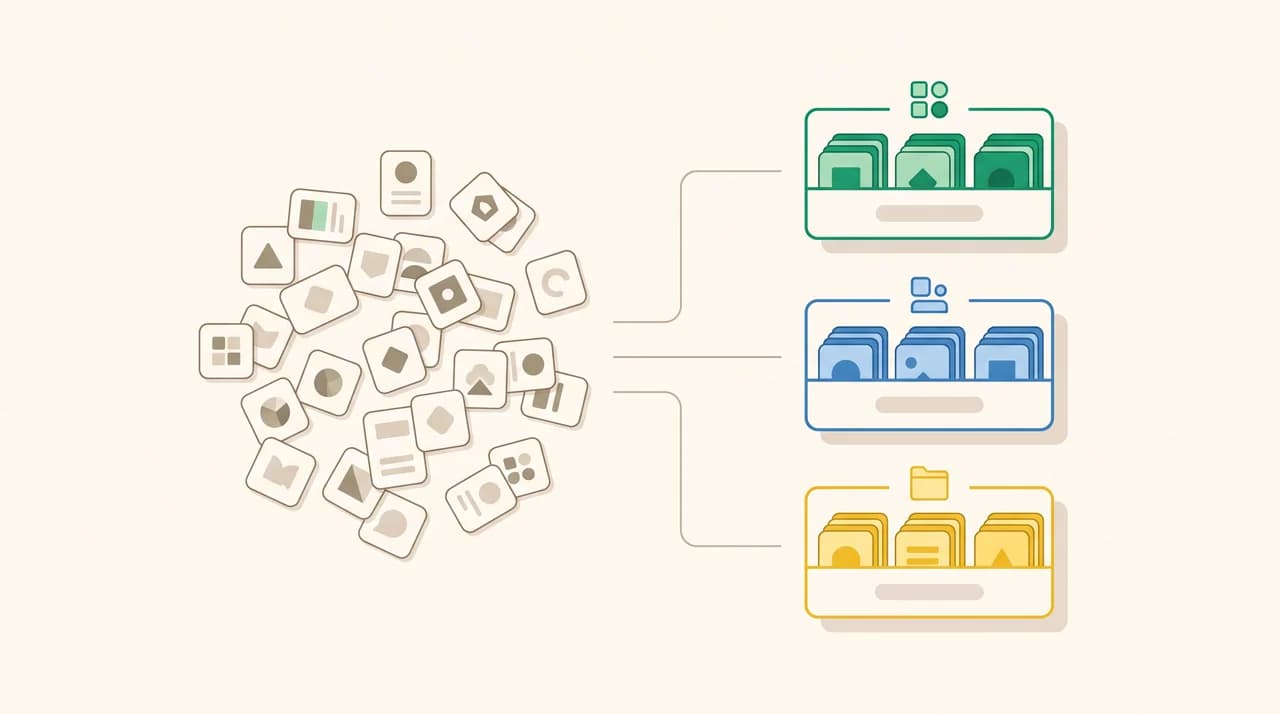
Streams keeps a support or sales address collaborative as long as everyone lives inside Zoho Mail. The moment a teammate needs to see that inbox from Gmail, Outlook, or a second account, the posts and @mentions stop reaching them — the usual workaround is a second login nobody remembers to check.
AI Emaily's Team plan gives a mailbox a shared inbox with comments, @mentions, and one-click assignment built the same way Streams does it, except the underlying mailbox can be on Zoho, Gmail, Outlook, or any IMAP account, and everyone on the team sees the same thread no matter which provider they're logged into. Copilot mode drafts the reply from context you've set, so a teammate is approving text rather than writing it from scratch, with an audit trail on what the agent touched. We build AI Emaily.
Frequently asked
See it in AI Emaily
Keep reading
Sources

Written by
Nafiul HasanNafiul Hasan is an entrepreneur and AI automation system builder with 10+ years of experience turning messy, manual workflows into reliable automated systems. He designs and ships AI enterprise solutions end-to-end — the agent logic, the data plumbing, and the product people actually use — and founded AI Emaily to give busy professionals their attention back. He writes here from the builder's seat: what works, what breaks, and how to put AI to work without giving up control.