Best Email Software for Dental Practices (2026 Buyer Guide)

The short answer
For the mail arriving in a practice inbox — patient enquiries, specialist referrals, lab cases and supplier invoices — our pick is AI Emaily, which triages and drafts across Gmail, Outlook and IMAP with approval before send. We build it. Anything carrying protected health information belongs on a channel covered by a signed BAA. Email-marketing platforms are a separate category.
Best email software for dental practices in 2026: inbox tools for patient, referral, lab and insurance mail — plus the HIPAA questions to ask any vendor.
On this page
- 01Three different products answer to "dental email software"
- 02What actually lands in a dental practice inbox
- 03The compliance line: what to demand from any vendor
- 04How this roundup was compared
- 05Best email software for dental practices at a glance
- 061. AI Emaily — best for the practice inbox itself
- 072. Google Workspace — best if you want one governed mailbox tenant
- 083. Microsoft 365 — best if the practice runs on Windows and Microsoft licensing
- 094. Weave — best all-in-one for patient messaging in a small practice
- 105. NexHealth — best if online booking has to write back to the schedule
- 116. Solutionreach — best for multi-location groups with mature recall programmes
- 127. Email marketing platforms — the category that ranks for this query and should not
- 13Where each option falls down
- 14How to choose for your practice
- 15The verdict
Search for the best email software for dental practices and most of what comes back is email-marketing software: newsletter tools built to send a recall campaign out to a patient list. That is a real job, but it is rarely the one the practice is asking about.
The question behind the query is narrower. What do we use to handle the mail arriving at the practice address — patient enquiries, referral letters from specialists, lab cases, supplier invoices and insurance correspondence?
So this guide covers inbound tooling, not outbound campaigns, and it is deliberate about the compliance line running through the middle. One disclosure: we build AI Emaily, and it is our top pick here. That is why our limits get the longest paragraph in the post, why a competitor beats us outright on a dimension we name plainly, and why the HIPAA section states what we do not document rather than letting you assume.
Three different products answer to "dental email software"#
This search is confusing because three unrelated categories claim the same words. They solve different problems and none substitutes for another. Most practices need two of the three and have bought only one.
| Category | What it does | Typical products | Handles the mail arriving in your inbox? |
|---|---|---|---|
| Email marketing platform | Sends recall, newsletter and promotional campaigns outwards to a patient list | Mailchimp, Constant Contact and similar | No. Outbound only — it has no inbox. |
| Patient-communication platform | Two-way SMS, reminders, recall, online booking and forms, wired into your practice-management system | Weave, NexHealth, Solutionreach and similar | Partly. It owns patient messaging, not the practice mailbox. |
| Email client for the practice inbox | Reads, triages, drafts and files everything that arrives at the practice address | AI Emaily, Gmail, Outlook and other clients | Yes. This is the category ranked below. |
What actually lands in a dental practice inbox#
Before comparing tools, look at a real week of mail. A general practice front desk handles a mix no single category was designed for, and almost every sender expects a same-day answer.
Writing it out shows how much of the load is not clinical. Lab logistics, supplier mail and insurance admin dominate by volume, while the slice carrying protected health information is smaller and needs a different channel.
| What arrives | Who sends it | Usually carries PHI? | What good inbox software does with it |
|---|---|---|---|
| New-patient enquiries | Website forms, your Google listing, direct email | Often, once the sender describes a symptom | Acknowledge within minutes, route into booking |
| Specialist referral correspondence | Endodontists, oral surgeons, orthodontists | Yes, almost always | File to the patient thread, flag for clinical review |
| Lab cases and case queries | Dental labs and milling centres | Sometimes, when the case names the patient | Track the due date, chase the case that went quiet |
| Supplier and consumables mail | Distributors, equipment vendors, reps | No | Triage, summarise, draft the reorder or the decline |
| Insurance and claims correspondence | Payers, clearing houses, plan administrators | Yes | Route to whoever handles claims, keep an audit trail |
| Recruitment and locum cover | Applicants and dental agencies | No | Sort, shortlist, send the templated reply |
| Software and regulatory notices | Practice-management vendor, imaging vendor, regulators | No | Summarise, surface only what carries a deadline |
The compliance line: what to demand from any vendor#
In the United States, a dental practice that transmits certain transactions electronically — a claim, an eligibility check — is a HIPAA covered entity, and the patient information it holds is protected health information. HHS publishes the definitions and enforces the rules; your compliance officer or health-care attorney decides how they apply to you. This is general guidance, not legal advice.
The part that decides your shortlist is simple. If a vendor creates, receives, maintains or transmits PHI on your behalf, it is a business associate, and HIPAA requires a signed Business Associate Agreement before any PHI reaches it. Strong encryption with no BAA in place is still a compliance failure.
Ask that question first and evaluate features second. Here is what a serious vendor answer contains.
- A signed BAA, executed before any PHI moves. If a vendor will not sign one, keep PHI out of the product rather than hoping settings are enough.
- Encryption in transit and at rest, described specifically: accepted TLS versions, the at-rest algorithm, and where the keys are held.
- Access controls: least-privilege staff access on the vendor side, per-account authorisation on every read and write, two-factor on your own logins.
- Audit logging you can read — who or what did each action, when, and against which record.
- Breach notification written into the contract with a stated timeframe, not a promise to notify promptly.
- A published sub-processor list, plus a written answer on whether your content trains models and whether prompts are retained.
No BAA, no PHI — that test comes before features
How this roundup was compared#
This is a capability comparison built from vendor documentation and public product pages checked in July 2026. We did not install seven systems in a working surgery for a month, and any roundup claiming it did deserves a second look.
There are no competitor prices, ratings or review counts here on purpose. Both categories repriced repeatedly in the past year, and per-location and per-provider models make a printed figure meaningless for your practice. Check each vendor's own page on the day you buy.
- Does it own the practice inbox, or something adjacent to it? Biggest fork, and most lists skip it.
- Provider coverage: Gmail and Google Workspace, Microsoft 365 and Outlook, or plain IMAP for an older address.
- Practice-management integration: does it read and write to Dentrix, Eaglesoft or Open Dental?
- Who presses send, and whether a human approves before anything reaches a patient or a referrer.
- Recoverability, and the compliance posture the vendor actually publishes — including who has to accept the BAA.
Best email software for dental practices at a glance#
The compliance column reports what each vendor publishes, not a verdict on your practice. Verify it in the contract you are offered.
| Tool | Category | Best for | Works with | HIPAA posture as published (verify) |
|---|---|---|---|---|
| AI Emaily | AI email client | The whole practice inbox: triage, drafting and filing across every address you own | Gmail and Google Workspace, Microsoft 365 and Outlook, IMAP | No BAA published. Ask us for written terms before connecting a mailbox that carries PHI. |
| Google Workspace (Gmail) | Business mailbox and client | Practices that want one governed tenant with admin controls | Gmail on your own practice domain | Google offers a BAA a super administrator must accept in the Admin console; personal Gmail is not covered. |
| Microsoft 365 (Outlook) | Business mailbox and client | Practices standardised on Windows and Microsoft licensing | Exchange Online, Outlook desktop, new Outlook, web | A BAA is included via Microsoft's data protection addendum for eligible commercial plans; Family and Personal are not. |
| Weave | Patient-communication platform | Solo and small practices wanting phone, SMS, reminders and payments in one place | Dentrix, Eaglesoft and other practice-management systems | States a BAA is included for healthcare customers; confirm it in your own contract. |
| NexHealth | Patient communication and scheduling | Practices that want online booking written back into the practice-management system | Dentrix, Open Dental, Eaglesoft and others via its sync layer | Markets as HIPAA-compliant patient communication; request the BAA in writing before go-live. |
| Solutionreach | Patient engagement platform | Multi-location groups running mature recall and campaign programmes | A long list of practice-management systems | Markets as HIPAA-compliant patient communication; request the BAA in writing before go-live. |
| Email marketing platforms | Outbound campaign tool | Newsletters and general promotions to a consented list | Your contact list, not your inbox | Mailchimp does not enter into BAAs. Keep PHI out of this category entirely. |
1. AI Emaily — best for the practice inbox itself#
AI Emaily is an AI email client that brings Gmail and Google Workspace, Microsoft 365 and Outlook, and standard IMAP accounts into one inbox. We build it, which is why it is first here and why its limits get the longest paragraph in this post. Nothing migrates: mail stays with your provider and the practice address does not change.
It runs at three authority levels, set per account. Manual is a fast plain client. Copilot is the default: the agent triages what arrived overnight, files it and drafts replies, but nothing reaches a recipient until a person approves it. Autopilot is gated, with an undo window and an audit log recording every action and the reason behind it.
Drafting voice comes from a Personal Context brain and per-contact profiles that you write and edit — the practice tone, the booking policy, the standard answer on fees. We do not train on your mail. If a draft reads wrong for a referring specialist, you edit a context entry.
For a dental front desk the fit is the non-clinical bulk: lab logistics, supplier mail, insurance admin, recruitment, and the first response to a new-patient enquiry. Nobody has built a dental-specific product for that mail.
The limits, plainly: downloadable desktop apps for macOS (Apple Silicon only) and Windows, built as an Electron shell around the web app rather than a native binary; a native iOS app; Android as a PWA with a native app on the roadmap; no Linux build; no watchOS app; offline support partial by design. We do not integrate with Dentrix, Eaglesoft or Open Dental.
What AI Emaily does and does not document on HIPAA
2. Google Workspace — best if you want one governed mailbox tenant#
Many practices are already here without treating it as a decision. Workspace gives you mail on your own domain, shared aliases for the front desk and accounts, admin control over users and devices, and a client most staff already know.
On compliance it is straightforward provided you follow the process instead of assuming it. Google offers a Business Associate Amendment, but a super administrator has to review and accept it in the Admin console, and only products on Google's HIPAA Included Functionality list are covered. Personal Gmail accounts sit outside it entirely — the most common mistake in a small practice.
Where it falls short is the work. Gmail is an excellent mailbox and an indifferent triage system: labels and filters are static rules nobody at a busy front desk maintains, and it will not draft the reply to a lab query or tell you which of yesterday's forty messages needs a person today.
3. Microsoft 365 — best if the practice runs on Windows and Microsoft licensing#
For practices already paying for Microsoft licensing, Exchange Online plus Outlook is the path of least resistance: shared mailboxes, delegate access for a practice manager, retention policies, and desktop, web and mobile under one tenant.
The compliance route differs in shape from Google's. Microsoft includes a HIPAA business associate agreement through its data protection addendum for eligible commercial and enterprise plans once the customer identifies as subject to HIPAA. Consumer subscriptions are not covered, so a practice on a Family or Personal plan should treat that as an open item.
One practical caveat if you are moving between Outlook versions. New Outlook is web-architected, so older COM and VSTO add-ins, VBA macros and custom forms do not carry over. Practices with a dictation tool, a scanner workflow or a document add-in bolted into classic Outlook should test those before switching.
4. Weave — best all-in-one for patient messaging in a small practice#
Weave is a patient-communication platform, not an email client. It bundles the practice phone system, two-way SMS, appointment reminders, payments and review requests, and integrates with Dentrix, Eaglesoft and other practice-management systems so that patient records surface when someone calls.
That integration is the point, and it is a genuine capability we do not have. A reminder that knows the appointment, a recall firing from the schedule, a text thread attached to the right chart: none of it is possible from a client that cannot see your practice-management system.
It is not the answer to a practice inbox, though. Weave is built around the patient relationship, so the supplier invoice, the lab query, the CV and the referral letter still land in a mailbox someone has to work. Weave states a BAA is included for healthcare customers — confirm it in the contract you sign rather than trusting a comparison table, this one included.
Where a patient-communication platform beats us outright
5. NexHealth — best if online booking has to write back to the schedule#
NexHealth sits in the same category as Weave but leads with scheduling. Its sync layer runs bidirectionally against Dentrix, Open Dental, Eaglesoft and others, so a patient booking online lands in the practice book rather than in a queue somebody retypes.
For a practice losing new patients to a booking form that takes a day to process, that write-back is worth more than any amount of inbox automation. It removes a manual step and the errors that come with it.
The same boundary applies: it is a patient-facing scheduling and messaging layer, not a mailbox, so referral, lab, insurance and supplier mail stay untouched. Ask for the BAA in writing before go-live, and ask which modules it covers.
6. Solutionreach — best for multi-location groups with mature recall programmes#
Solutionreach is one of the longer-established names in dental patient engagement, and its strength is breadth of integration across a wide list of practice-management systems — which matters when a group has grown by acquisition and inherited three of them.
The fit is a multi-site group running structured recall and campaign programmes where consistency and reporting matter more than any single feature. A solo practice will find more of it than it needs, and none of it replaces an inbox: groups accumulate shared addresses for accounts, referrals and careers, and each still needs a client and an owner.
7. Email marketing platforms — the category that ranks for this query and should not#
Mailchimp, Constant Contact and their peers are what you get when you search for dental email software, and they are good at the job they do: sending a newsletter or seasonal promotion to a list that opted in, with templates, scheduling and unsubscribe handling.
They have no inbox. Replies land back in whatever mailbox you set as the reply-to address, so a campaign platform can generate front-desk work without helping anyone do it.
The compliance point is sharper. As of July 2026, Mailchimp's terms place the regulatory determination on you and it does not enter into BAAs, so PHI should never be loaded into it. That rules out any campaign built from treatment history and leaves general, non-identifying promotions to a consented list — a legitimate use, just a narrower one than the category implies.
Where each option falls down#
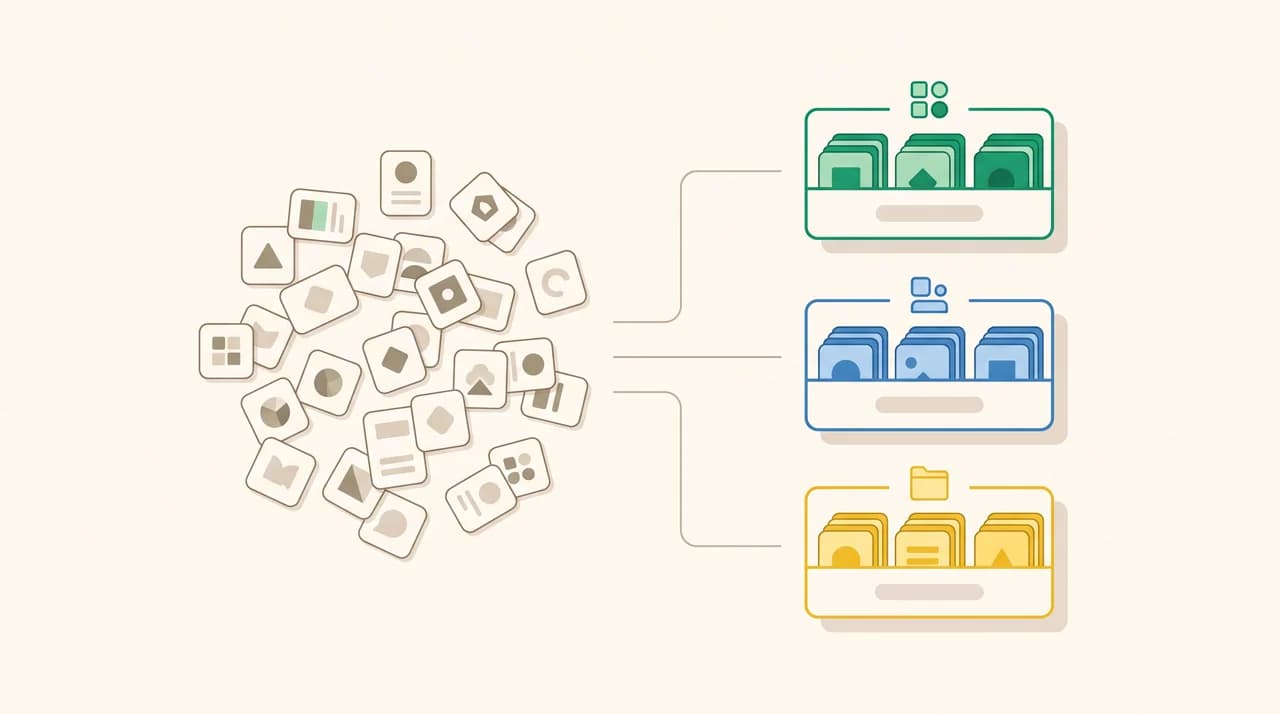
Strengths sell; limits decide whether you are still using the tool at renewal.
| Tool | The limit worth knowing | Skip it if |
|---|---|---|
| AI Emaily | No practice-management integration, and no published HIPAA BAA as of July 2026 | You need recall driven from the appointment book, or a BAA on day one |
| Google Workspace | Filters and labels are static rules nobody maintains; the BAA needs admin acceptance and excludes personal accounts | Your problem is triage volume rather than mail hosting |
| Microsoft 365 | Older add-ins, macros and custom forms do not carry into new Outlook; consumer plans fall outside the BAA | The front desk depends on an add-in you have not tested on new Outlook |
| Weave | Built around the patient relationship, so general practice mail is out of scope | Your backlog is referral, lab, insurance and supplier mail |
| NexHealth | Scheduling-led; no inbox and no handling of non-patient correspondence | Online booking is already solved in your practice-management system |
| Solutionreach | Breadth aimed at multi-location groups; heavier than one site needs | You run a single location with a simple recall list |
| Email marketing platforms | Outbound only, and PHI must stay out of them | You wanted help with the mail arriving, not the mail leaving |
How to choose for your practice#
Match the row that describes your week, then trial two options at most.
| If this is you | Start with | Pair it with |
|---|---|---|
| The front desk drowns in referral, lab, insurance and supplier mail | AI Emaily | Whatever patient-communication platform you already run |
| No-shows and recall are the bleeding wound | A patient-communication platform integrated with your practice-management system | An inbox client for everything it does not touch |
| New patients enquire online and nobody replies until tomorrow | NexHealth, so booking writes back to the schedule | AI Emaily for enquiries that arrive as plain email |
| You are on personal Gmail accounts with no domain mail | Google Workspace, with the BAA accepted in the Admin console | AI Emaily on top, once mail hosting is settled |
| A group with several sites and inherited systems | Solutionreach for recall breadth across locations | One inbox client across every shared address the group owns |
| You only ever wanted to send a monthly newsletter | An email marketing platform with no PHI in it | Nothing else — do not buy an inbox tool for this |
The verdict#
AI Emaily is our pick for the practice inbox, and the reason is narrow enough to check. It is the option here that puts every address the practice owns — Gmail, Microsoft 365, an older IMAP account if one survives — into a single inbox, triages and drafts across all of them, and keeps approval, undo and an audit trail between the agent and anyone receiving a message. Practice-management platforms were never built for that mail; marketing platforms cannot see it.
The concession stands. If the pain is no-shows, recall and booking, a platform wired into Dentrix, Eaglesoft or Open Dental is the better purchase and we do not compete with it. The practices that get this right buy both and stop expecting either to do the other's job.
On compliance, hold everyone to the same line, us included. Get your covered-entity status determined in writing, insist on a BAA before PHI reaches any vendor, and keep clinical detail on a covered channel. We do not publish a HIPAA BAA, so if PHI will flow through the mailbox you plan to connect, ask us for written terms before connecting it. A vendor that answers that question clearly is telling you something useful; one that answers with a compliance badge is not.
Frequently asked
See it in AI Emaily
Keep reading
Sources

Written by
Nafiul HasanNafiul Hasan is an entrepreneur and AI automation system builder with 10+ years of experience turning messy, manual workflows into reliable automated systems. He designs and ships AI enterprise solutions end-to-end — the agent logic, the data plumbing, and the product people actually use — and founded AI Emaily to give busy professionals their attention back. He writes here from the builder's seat: what works, what breaks, and how to put AI to work without giving up control.