Gmail Is Rejecting Non-Compliant Bulk Email: What Changed

The short answer
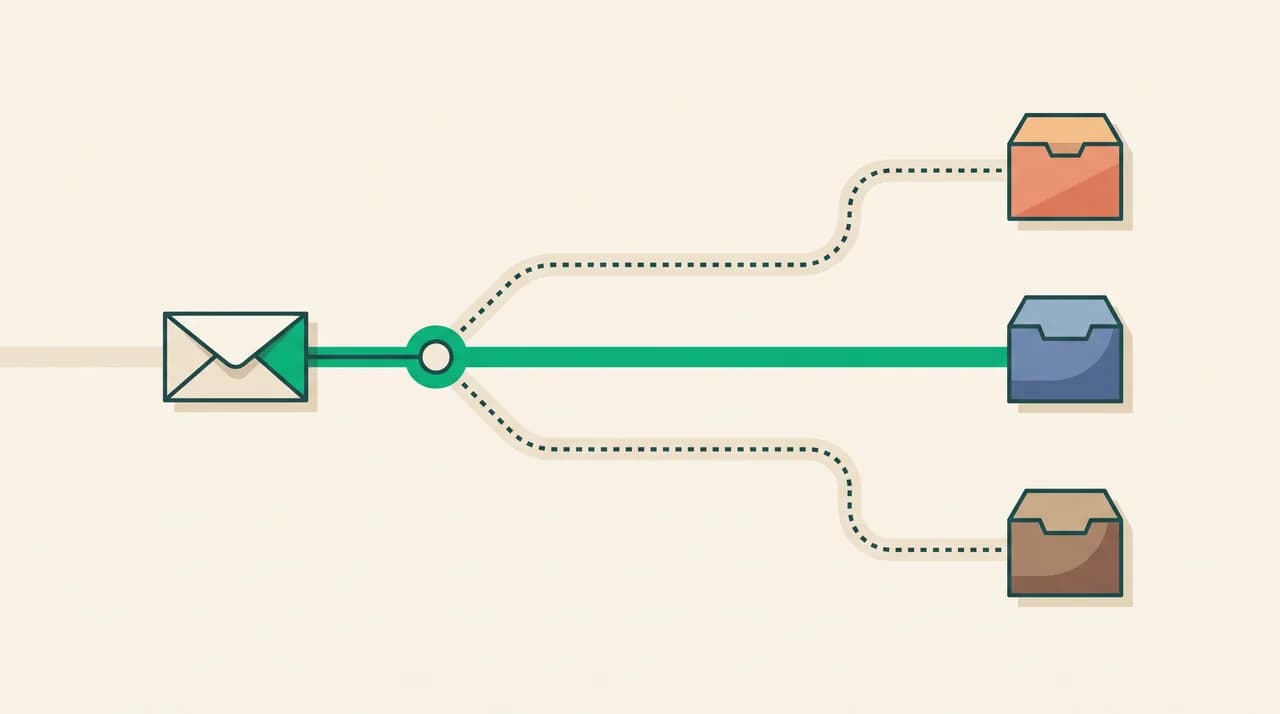
Yes. Since November 2025, Gmail no longer just spam-folders non-compliant bulk mail — it issues temporary and permanent rejections. If you send over 5,000 messages a day to personal Gmail accounts, you must pass SPF, DKIM, and DMARC, keep your spam rate under 0.1%, and offer one-click unsubscribe. Fix authentication first.
Gmail rejecting non-compliant bulk email: since November 2025 it issues temporary and permanent bounces, not just spam-foldering. Which record to fix first.
On this page
Gmail is rejecting non-compliant bulk email that fails its sender requirements — and since November 2025 that rejection is real, not just a quiet trip to the spam folder. If your marketing or transactional mail to Gmail addresses started bouncing this year, this is almost certainly why. Google escalated enforcement, and a lot of published advice still describes the older, gentler behaviour.
This guide gives you the short answer first, then the exact fix order, how each mailbox provider differs, and what to do when your mail still bounces after you have done everything right. Every requirement and date below is checked against Google's own sender guidelines, which are the only source that matters when your delivery is on the line.
The short answer: has Gmail started rejecting bulk email?#
Yes. Google says that starting November 2025 it is ramping up enforcement on non-compliant traffic, and that messages which fail the email sender requirements will experience disruptions including temporary and permanent rejections. Before that, most non-compliant mail was simply filed as spam. Now it can bounce outright.
You are treated as a bulk sender if you send roughly 5,000 messages or more per day to personal Gmail accounts. Google counts every message from the same primary domain, adding subdomains together, so mail from news.yourbrand.com and yourbrand.com lands in the same bucket. Cross that line and three things become mandatory.
- Authenticate every message. Set up SPF and DKIM, and publish a DMARC record. DMARC can be as light as p=none — Google does not require p=quarantine or p=reject, only that a valid policy exists and that SPF or DKIM aligns with your From domain.
- Keep your spam rate low. Aim to stay below 0.1% in Google Postmaster Tools, and never let it reach 0.3%.
- Add one-click unsubscribe. Marketing and promotional mail must support one-click unsubscribe — the List-Unsubscribe and List-Unsubscribe-Post headers defined in RFC 8058 — and honour requests promptly. Transactional mail like receipts is exempt.
Bulk-sender status is permanent
Before you start#
Fixing this touches DNS, not your inbox, so gather three things before you change anything. First, access to your domain's DNS records — that is where SPF, DKIM, and DMARC live. Second, a Google Postmaster Tools account for the sending domain, which is the only place you can see your real spam rate and authentication results the way Gmail measures them. Third, a list of every service that sends mail as your domain — your ESP, your CRM, your invoicing tool — because each one has to be authorised or it will fail authentication.
Confirm you are actually a bulk sender before you panic. If you send a few hundred messages a day, these rules do not gate you the same way, though authentication is still worth having. If you run marketing campaigns, product notifications, or receipts at scale, assume you are in scope — and remember that subdomains count toward the same 5,000-message line.
The DMARC standard itself changed in 2026
Fix your records in this order#
Work in this order. Authentication is what turns temporary and permanent rejections back into delivered mail, so it comes first; the spam rate and unsubscribe requirements matter but rarely cause an outright bounce on their own.
- 1
Publish and repair SPF
Create or correct the SPF TXT record for your sending domain so it lists every service allowed to send as you. A missing or broken SPF record is a common cause of a temporary 4.7.27 deferral from Gmail. Keep it under the 10-DNS-lookup limit, and make sure your ESP's include entry is present.
- 2
Set up DKIM signing
Turn on DKIM in every sending platform and publish the public key your provider gives you. DKIM lets Gmail confirm the message was not altered in transit. A DKIM failure earns a permanent 5.7.30 rejection, so confirm the signature actually validates — not just that the record exists.
- 3
Publish a DMARC record
Add a DMARC TXT record at _dmarc.yourdomain.com. p=none is enough to satisfy Gmail, and it lets you collect aggregate reports before you tighten to quarantine or reject. The one hard requirement is alignment: SPF or DKIM must pass and match the domain in your visible From address.
- 4
Add one-click unsubscribe to marketing mail
For promotional and marketing messages, include the List-Unsubscribe and List-Unsubscribe-Post: List-Unsubscribe=One-Click headers so recipients can leave in a single tap. Google recommends honouring those requests within 48 hours. Receipts, password resets, and other transactional mail are exempt.
- 5
Watch your spam rate in Postmaster Tools
Once authenticated, monitor the spam rate. Keep it under 0.1% and never let it touch 0.3%. Prune unengaged addresses, make unsubscribing easy, and send only to people who asked — a high complaint rate is the other way compliant mail still lands in spam or gets deferred.
How the mailbox providers differ#
Gmail is not alone, and the rules are not identical. Yahoo moved in lockstep with Google; Microsoft runs its own separate regime for consumer Outlook.com, Hotmail, and Live accounts; Apple's iCloud Mail publishes its own guidance. If you send bulk mail you have to satisfy all of them, not just Gmail. Dates below are current as of August 2026 — verify each on the provider's own page before you rely on it.
| Provider | Bulk threshold | Auth required | Result if non-compliant |
|---|---|---|---|
| Gmail (personal accounts) | ~5,000/day per primary domain, subdomains aggregated | SPF + DKIM + DMARC (p=none minimum) | Temporary and permanent rejections since November 2025; unauthenticated mail can return 550 5.7.26 |
| Yahoo / AOL | ~5,000/day | SPF + DKIM + DMARC | Bulk-sender requirements enforced; check the Yahoo Sender Hub for current handling |
| Microsoft Outlook.com / Hotmail / Live | 5,000+/day to consumer accounts | SPF + DKIM + DMARC alignment | Routed to Junk since 5 May 2025; outright rejection (550 5.7.515) signalled as the next phase |
| Apple iCloud Mail | Bulk senders | SPF + DKIM + DMARC | Follows shared bulk-sender guidance; one-click unsubscribe expected — verify on Apple's page |
The practical takeaway is that SPF, DKIM, and DMARC are now the price of entry everywhere, so fixing them for Gmail fixes most of the others at the same time. The differences are in the edges. Microsoft's rejection code is 550 5.7.515 rather than Gmail's 5.7.26, and Microsoft is a phase behind Gmail — junk-foldering today, with rejection announced as coming. One-click unsubscribe is required by Google and Yahoo, called for by Apple, and recommended by Microsoft.
What to do when it still bounces#
You authenticated everything and mail is still failing. The bounce message tells you which layer is broken, so read the enhanced status code, not just the leading 550. Temporary failures start with 4 and mean Gmail is deferring; permanent failures start with 5 and mean it rejected the message outright. The table maps the codes you are most likely to see to the fix.
| Response code | What it means | What to fix |
|---|---|---|
| 550 5.7.26 | Unauthenticated email — the message did not pass SPF or DKIM aligned with your From domain, so Gmail rejected it | Fix authentication so at least one of SPF or DKIM passes and aligns with the From domain |
| 4.7.27 (temporary) | SPF failure — Gmail is deferring while your SPF record is missing or broken | Publish or repair your SPF record and confirm your ESP is included |
| 5.7.30 (permanent) | DKIM failure — the signature did not validate, so Gmail rejected the message | Re-check DKIM signing; confirm the published key matches what your platform signs with |
| 550 5.7.515 (Outlook.com) | Microsoft: the sending domain does not meet the required authentication level | Add SPF, DKIM, and DMARC alignment for Outlook.com, Hotmail, and Live recipients |
If your authentication is clean but mail is deferred or filed as spam, the problem is usually reputation, not records. Check your spam rate in Postmaster Tools. Google stops offering mitigation to bulk senders whose user-reported spam rate goes above 0.3%, and you become eligible again only once the rate stays below 0.3% for seven consecutive days. There is no way to speed that clock up — the fix is to stop sending mail people mark as spam.
Honour unsubscribes within 48 hours
A faster way — where AI Emaily fits, and where it does not#
There is no mail-client shortcut for any of this. Getting bulk mail authenticated lives in your DNS, in whatever platform sends your campaigns, and in a DMARC reporting service that reads the aggregate reports your record collects. AI Emaily is none of those: it is a mail client for your own inbox, not a sending platform, an ESP, a DMARC monitor, or a deliverability tester. If you send bulk mail, keep using your ESP and a dedicated DMARC tool — that is the right stack, and we are not a substitute for it.
Where it is adjacent is the receiving side of these exact standards. SPF, DKIM, and DMARC exist so the mailbox on the other end can tell authentic mail from forged mail, and AI Emaily reads those same signals to decide what belongs in your inbox — its spam and cold-email filtering keeps unauthenticated and unsolicited messages out of the way. That is the recipient end of the rules this post is about, not the sender end. We build AI Emaily, and its spam-protection feature covers how it treats authentication results.
The bottom line#
The change is real and it is worth taking seriously: since November 2025, non-compliant bulk mail to Gmail can bounce, and bulk-sender status is permanent once assigned. The good news is that the fix is well-defined and mostly one-time. Authenticate with SPF and DKIM, publish a DMARC record — p=none clears the bar — add one-click unsubscribe to marketing mail, and keep your spam rate under 0.1%.
Do those in order, fix authentication first, and check your work against Google Postmaster Tools rather than a third-party guide. The requirements are stable; the enforcement is what got stricter.
Frequently asked
See it in AI Emaily
Keep reading
Sources
- Google — Email sender guidelines FAQ
- Google — Email sender guidelines
- Microsoft — Outlook's new requirements for high-volume senders
- RFC 8058 — Signaling One-Click Functionality for List Email Headers
- RFC 9989 — Domain-based Message Authentication, Reporting, and Conformance (DMARC)
- Yahoo — Sender Hub best practices

Written by
Nafiul HasanNafiul Hasan is an entrepreneur and AI automation system builder with 10+ years of experience turning messy, manual workflows into reliable automated systems. He designs and ships AI enterprise solutions end-to-end — the agent logic, the data plumbing, and the product people actually use — and founded AI Emaily to give busy professionals their attention back. He writes here from the builder's seat: what works, what breaks, and how to put AI to work without giving up control.