How to Auto-Assign Categories With Outlook Rules


The short answer
Build a rule with a condition — sender, sender domain, or a keyword — and set its action to "assign it to the category" (classic Outlook) or "Categorize" (new Outlook, Outlook on the web), then pick a colour. Outlook applies that category the moment a matching message arrives, with no manual tagging and no folder move required.
Automatically categorize emails in Outlook with a rule that assigns a colour category by sender, domain, or keyword — plus the mailbox gotcha to check first.
On this page
The fastest way to automatically categorize emails in Outlook is with a rule: pick a condition — the sender, the sender's domain, or a keyword in the subject or body — and set the rule's action to assign a colour category. Outlook applies that category the instant a matching message lands.
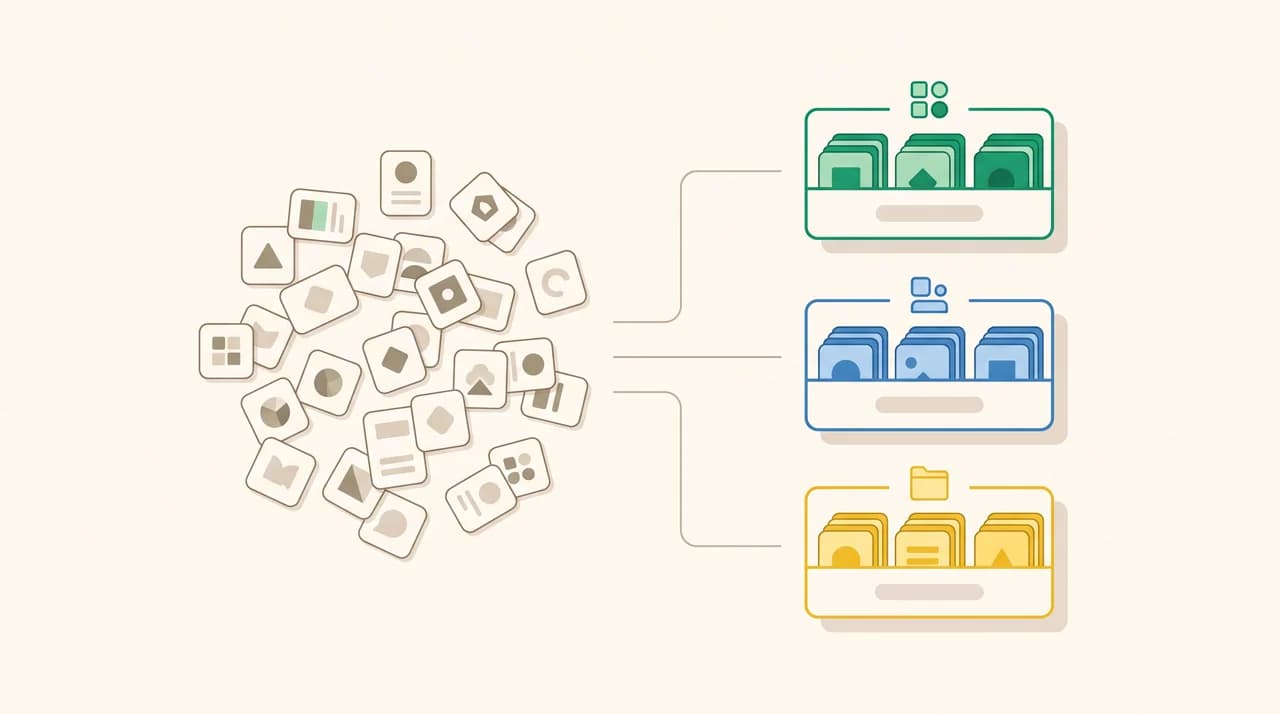
This is different from moving mail into a folder. A category is a tag, so the same message can carry a colour and still sit wherever your other rules or Focused Inbox put it. The one catch, covered below, is that categories belong to the mailbox that created them — not to every mailbox or account that happens to be open in the same Outlook window.
That's also the practical reason to use categories instead of folders for this specific job. A rule that moves mail to a folder makes a decision — the message is either in that folder or it isn't. A rule that assigns a category adds information without removing the message from wherever it already lives, so you can stack a client colour on top of whatever your inbox, Focused view, or another rule already did with it.
Before you start#
Decide what you're actually sorting by before you open the rule builder, because the condition you pick determines how much maintenance the rule needs later. A sender-based rule works for a handful of named VIPs — a manager, a board member, an assistant. A domain-based rule works better for a client or vendor that emails you from several different people at the same company, since one condition covers all of them.
Keyword rules catch a recurring pattern in the subject or body — an invoice number format, a project code, a support-ticket prefix — rather than a person. They're the least stable of the three, because a slightly reworded subject line slips past a keyword rule that would have caught it under a sender or domain condition.
Rules only match mail as it arrives from the moment you save them. Anything already sitting in your inbox keeps its current category, or none, until you run the rule manually against existing mail. Most Outlook rule builders have a run-now option for exactly this, and it's the step people forget, then conclude the rule doesn't work.
Create the colour category before you build the rule, or at least decide its name. Outlook ships a default set — Red Category, Blue Category, and so on — and most people rename one to match the sender or client it's meant to represent, which is easier to do once, up front, than mid-way through the rule wizard.
- A sender condition matches one address; a sender-domain condition matches everyone at a company
- Categories are extra tags, not a replacement for folders, Focused Inbox, or your existing filing
- The colour category has to exist, or be created inline, before the rule can assign it
Categories don't travel with the message
Set up the rule#
- 1
Open the rule builder
In classic Outlook for Windows, go to File > Manage Rules & Alerts > New Rule and start from a blank rule rather than a template. In new Outlook or Outlook on the web, go to Settings > Mail > Rules > Add new rule.
- 2
Name the rule and set the condition
Give it a name specific enough to recognise in a list of twenty rules later — "Acme Corp domain" beats "Rule 1." For a single sender, use the From condition. For an entire company, classic Outlook lists this as "with specific words in the sender's address" — click the underlined text and type @clientdomain.com. New Outlook and Outlook on the web offer the same idea under Add a condition as "Sender address includes."
- 3
Set the action to assign a category
In classic Outlook's action list, check "assign it to the category," then click the underlined category link and pick a colour, or create a new category on the spot. New Outlook and Outlook on the web call the same action "Categorize," with a category picker in place of the underlined link.
- 4
Add an exception if the rule is too broad
A domain condition also matches an internal alias, a distribution list, or a shared-inbox forward if the address technically ends in that domain. If any of those apply, add an exception — except if sent to a specific recipient, or except if the subject contains a specific word — before you save.
- 5
Save, then run it against existing mail
Save the rule. New rules only fire on mail that arrives after they're saved, so use Run Rules Now (classic Outlook) or apply the rule to the folder manually to back-tag anything already sitting in the inbox.
Platform differences#
The category action itself reads almost the same everywhere Outlook lets you build a rule. What actually differs is where the rule lives, whether it keeps running once you close the app, and whether it can even see the account you're trying to categorize.
| Platform | Where to build it | Category action | Runs with the app closed? | Third-party accounts (Gmail, Yahoo, iCloud) |
|---|---|---|---|---|
| Classic Outlook (Windows) | File > Manage Rules & Alerts | "assign it to the category" | Exchange account: yes, if the rule avoids client-only actions. IMAP/POP account: never — always client-only | Yes, over IMAP or POP, but always client-only |
| New Outlook (Windows) | Settings > Mail > Rules | "Categorize" | Yes — rules are always server-side | No — rules only run on Microsoft accounts |
| Outlook on the web | Settings > Mail > Rules | "Categorize" | Yes — server-side | No — same restriction as new Outlook |
| Outlook mobile (iOS/Android) | No rule builder | Manual tagging only | N/A | N/A |
In practice, that table decides where you build the rule. If most of what you're categorizing arrives through a Microsoft 365 or Outlook.com account, build it in new Outlook or on the web — it runs whether or not the app is open, and there's nothing client-side left to break. If you're routing mail through a Gmail or Yahoo account added to classic Outlook instead, the rule is IMAP-based and always client-only, so the categorization only happens while that specific installation of classic Outlook is open and running — not a small thing to depend on if the machine it's on goes offline or gets replaced.
What to do when it doesn't work#
Most reports of a category rule that "isn't working" trace back to one of a handful of causes, and none of them mean the rule is broken.
- The message arrived before you saved the rule — rules don't run retroactively; use Run Rules Now to catch up on what's already in the inbox
- An earlier rule has "stop processing more rules" checked, so your category rule never gets evaluated — open the rule list and check the order they run in
- The domain match is too literal — @acmeco.com won't catch a message routed through a marketing platform where the real domain sits in a plus-tag rather than the visible From address
- In new Outlook or Outlook on the web, the target account is Gmail, Yahoo, or iCloud — those accounts don't support server-side rules there at all, so nothing happens; build the rule in classic Outlook, or in the provider's own filters, instead
- The category was deleted or the colour picker shows blank — someone (possibly you, in a cleanup) removed the category the rule points to, and the rule silently stops assigning anything
- The account is IMAP or POP in classic Outlook, and the machine it's on was asleep, offline, or not running Outlook when the mail arrived — IMAP and POP rules are always client-only, so there's no server-side fallback to catch what the client missed
A client-only action can disable the rule without an error
A faster way to keep categories accurate#
A rule is only as good as the list of senders and domains you remember to add to it. A new hire at a client company, a vendor that quietly changes its sending domain, a VIP writing from a personal address instead of their work one — none of that matches your existing conditions, so the mail lands uncategorized until you notice and go rebuild the rule by hand.
AI Emaily's inbox rules and Context Brain apply the same kind of filing continuously, across every connected account — Gmail, Outlook, and IMAP — and adjust as senders and patterns shift, instead of needing a new condition typed in every time something changes. We build AI Emaily, and it's worth pointing at your own inbox before you write the next exception into a rule that's already getting long.
Frequently asked
See it in AI Emaily
Keep reading
Sources

Written by
Nafiul HasanNafiul Hasan is an entrepreneur and AI automation system builder with 10+ years of experience turning messy, manual workflows into reliable automated systems. He designs and ships AI enterprise solutions end-to-end — the agent logic, the data plumbing, and the product people actually use — and founded AI Emaily to give busy professionals their attention back. He writes here from the builder's seat: what works, what breaks, and how to put AI to work without giving up control.