AI Email Credits Explained: What They Actually Cost

The short answer
An AI credit is a flat unit of AI work inside an email tool — spend one when the agent drafts, summarizes, or classifies. Lighter tasks cost half a credit; fully autonomous sent replies cost two. Monthly pools run from hundreds to thousands. Unused credits typically do not roll over.
An AI credit is a flat unit of AI work. Learn what each action costs, how monthly allowances are sized, and how to spot a generous plan.
On this page
- 01How does an AI credit system work?
- 02What does each AI action actually cost?
- 03Why do credit costs vary by action?
- 04Credits, tokens, and per-seat: how the metering models compare
- 05What happens when you run out of AI credits?
- 06Are monthly credit allowances actually generous?
- 07How AI Emaily uses this credit model
AI email credits explained, briefly: a credit is a flat unit of AI work. You spend one when the agent does something real on your behalf — drafting a reply, summarizing a thread, classifying an incoming message. Reading mail, syncing, keyword search, and navigating the inbox cost nothing. Credits give you a predictable, per-action price instead of a variable per-token bill that swings with email length and model choice.
Credit systems have become the dominant metering model for AI-native email tools. Almost every tool that adds an AI layer to a mailbox now meters it this way, and the reason is practical: per-token billing is opaque and unpredictable; flat per-seat pricing lets heavy usage go unaccounted. Credits sit between the two — the price is fixed per action, so you know what an operation costs before the agent acts.
What that means in practice is that a vendor's credit pricing table is the most important thing to read before buying. The table tells you what one credit buys, the plan tells you how many you get each month, and a short calculation tells you whether the allowance fits your actual inbox. This guide walks through all three steps, using real published credit figures as a worked example. Pricing changes — always verify on the vendor's own docs or pricing page before committing.
How does an AI credit system work?#
Every AI credit system has four moving parts: the action list, the cost per action, the monthly pool, and the reset mechanism.
The action list is everything the AI can do on your behalf. Each action carries a fixed credit cost, set by the vendor and published in their docs or pricing page. The cost does not change based on which model runs, how long the email is, or how many tokens the model consumed underneath. A reply draft costs the same credit amount whether the message is two sentences or two pages.
The monthly pool is how many credits your plan includes. It refills at the start of each billing cycle. On almost every tool that uses this model, unused credits do not carry over — the pool resets regardless of what you spent. That means the allowance is sized to match a typical month of that plan's target user, not to build a reserve you can draw on later.
When the pool hits zero, AI actions pause. Nothing else breaks: the email client keeps working, mail syncs normally, search runs, and you can read and send manually. Only the AI layer pauses until credits refresh or you add more. There is typically no overage charge — actions stop rather than running up a surprise bill.
Credits are only for AI work
What does each AI action actually cost?#
Credit costs scale with the complexity of the task. Light, read-only operations cost a fraction of a credit. A full personalized reply draft costs one. Autonomous sends — where the agent both composes and dispatches the message without your click — cost two, because the extra credit reflects the send responsibility the agent takes on your behalf.
The table below uses AI Emaily's published credit prices as a concrete reference. Verify current figures against the vendor's own pricing or docs page before relying on them for purchasing decisions — these values change as features move from early access to general availability.
| Action | Credits (AI Emaily, as of August 2026) |
|---|---|
| Triage / auto-classify an incoming email | 0.10 |
| Summarize a thread | 0.5 |
| Rewrite, shorten, lengthen, or translate | 0.5 |
| Extract a calendar event | 0.5 |
| Team handoff summary | 0.5 |
| Draft a reply (Copilot, voice-matched) | 1 |
| Ask — Q&A over your inbox | 1 |
| Autopilot reply — drafted, held for review | 1 |
| Living Brief — per email summarized | 1 |
| Autopilot reply — auto-sent | 2 |
| Living Brief — delivery to Slack, Telegram, or Discord | 3 |
| Build a rule from plain English | Free for now |
| AI rule condition (matches AI) | Free for now |
| Generate an email signature | Free for now |
| Team assignment draft | Free for now |
| Spam and phishing AI second opinion | Free for now |
Several actions are currently free as a temporary promotion. Free for now means the vendor reserves the right to assign a credit cost in the future, typically when the feature moves out of early access. When budgeting, count only the clearly priced actions and treat the free rows as a bonus rather than a guaranteed permanent state.
Verify before you buy
Why do credit costs vary by action?#
The cost reflects how much the agent is doing, not how long the email is.
A triage pass reads an incoming message and outputs a priority score, an intent classification, and a one-line summary. That is lightweight work designed to run on every new message automatically, which is why it needs to be cheap. At 0.10 credits per message, triaging 100 incoming emails costs 10 credits — a number most plans absorb in a quiet morning.
A reply draft is heavier. The agent reads the full thread, grounds the response in your voice settings and context, and produces a complete, ready-to-send message. One credit for a genuinely personalized draft is the benchmark against which most users measure whether a plan's allowance is adequate.
An autonomous sent reply costs two credits. The extra credit reflects that the agent is not just drafting — it is composing and dispatching. That decision to send without a click from you is what separates an assistant from an agent, and the price is a deliberate signal that autonomous sends should be reserved for the threads that justify the reduced oversight.
The tiered pricing also creates a useful operational signal. Because triage is inexpensive, you can classify everything — you are not forced to triage selectively to protect your pool. Because autonomous sends are more expensive, you naturally reserve them for high-trust senders rather than applying Autopilot to every incoming message. The pricing structure encourages the right behavior: broad light use, selective heavy use.
Credits, tokens, and per-seat: how the metering models compare#
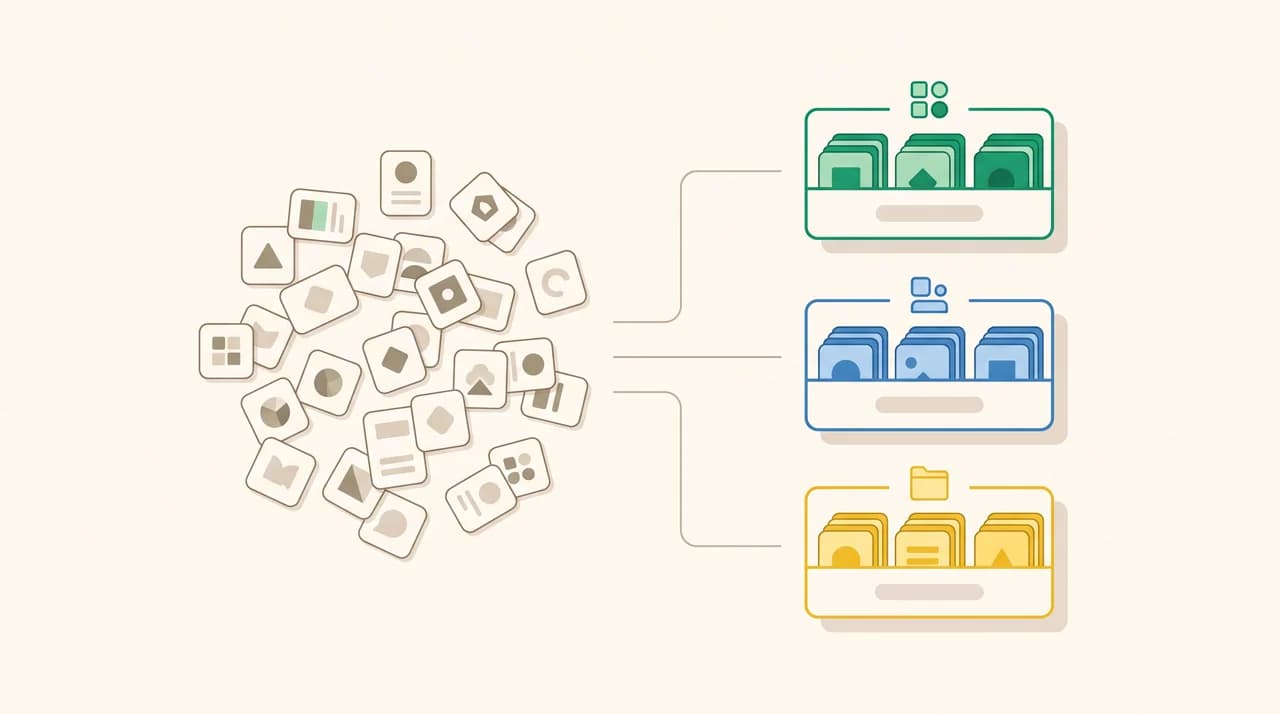
Credits are not the only way to meter AI usage, and understanding the alternatives helps you decide which pricing model fits your situation. The three most common approaches differ significantly on predictability, flexibility, and what happens when usage spikes.
| Metering model | Unit of cost | Cost predictable before acting? | Works best for |
|---|---|---|---|
| Per-action credits | Flat per action, regardless of model or email length | Yes — fixed price visible before you click | Users who want predictable per-action pricing and a clear monthly budget |
| Per-token billing | Tokens consumed by the underlying model | No — varies with email length and model choice | Heavy users on BYOK who pay their provider directly and want no monthly cap |
| Per-seat flat rate | Nothing — unlimited AI per seat in the tier | Yes — zero marginal cost per action once the seat is paid | Teams with constant, high-volume AI use across every seat throughout the month |
| Per-resolution | Each conversation the AI resolves end to end | Partially — depends on conversation volume and routing logic | Support desks replacing a human agent shift rather than augmenting a personal inbox |
Credits are the middle ground. They are more predictable than per-token billing because the cost does not swing with email length or model choice. They are less certain than flat per-seat pricing, because heavy use still burns through the pool mid-month. But they let a solo user or a small team pay for exactly the AI work they actually do rather than subsidizing unused capacity in a seat they are not fully filling.
BYOK — bring your own key — sidesteps credits entirely. When you connect your own provider key, the monthly credit pool is bypassed and you pay your model provider directly for token usage. That is the right path for power users who consistently hit monthly caps or who want no ceiling on AI actions. The trade-off is that per-token billing is less predictable per action, since cost varies with email length and model selection.
What happens when you run out of AI credits?#
Running out of credits does not break the email client. The full application keeps working: mail syncs, search runs, and you can read and compose replies yourself. Only the AI layer pauses. When you trigger an action that would cost a credit, you see a clear message that the pool is empty and the action does not run. Nothing is charged for overuse.
To keep using AI features before the cycle resets, you have three options. A one-time top-up pack is the fastest path — packs stack on top of the monthly allowance, and on AI Emaily purchased top-up credits never expire, so whatever you don't use carries forward until you do. Packs run 500 credits for $9.99, 1,000 for $19.99, or 2,000 for $29.99, which works out to roughly 1.5–2 cents a credit — less per credit than the monthly allowance bundled into a plan. Upgrading to a larger plan makes sense when you also want what it adds, such as Autopilot or more connected accounts. Switching on BYOK removes the monthly cap entirely and lets you pay your model provider directly.
The key thing to internalize is that running out is a pause, not an emergency. Because non-AI usage — reading, syncing, search, sending manually — is always free, the email client never stops working. The AI layer is an add-on on top of a fully functional mail client, and the credit model reflects that separation.
Top-up credits never expire — only the monthly allowance resets
Are monthly credit allowances actually generous?#
The honest answer: it depends on how you use the AI and how busy your inbox is. The best way to evaluate any vendor's allowance is to run the arithmetic against your own inbox before you sign up.
Start with your inbox volume. Estimate how many new emails arrive per working day, how many you typically reply to, and whether you plan to use Copilot drafts (you review and click send) or Autopilot auto-sends (the agent sends within rules you set). Triage runs on every incoming email at 0.10 credits each. Copilot drafts cost 1 credit each. Autopilot auto-sends cost 2 credits each. The math then follows.
A worked example for a moderate inbox on Copilot: 60 new emails per day across 20 working days means 1,200 incoming messages — 120 triage credits per month. If you send 10 Copilot drafts per day, that adds 200 credits. Add 30 thread summaries at 0.5 each: 15 credits. Total: 335 credits per month. That fits comfortably within a 500-credit Pro plan with room to spare.
The same inbox shifted to Autopilot auto-sends changes the picture. Those same 10 daily auto-sends cost 2 credits each: 400 credits per month, plus 120 on triage, plus 15 on summaries — 535 credits total. That exceeds the Pro plan (500) and fits the Autopilot plan (1,000) with substantial headroom.
For a high-volume inbox — 200 new emails per day — triage alone costs 400 credits per month. Add 20 Copilot drafts per day and the monthly total climbs above 800 credits, which fits the Autopilot plan but would exhaust Pro before the end of the month. Inbox volume is the variable most people underestimate when choosing a plan.
The figures above are based on AI Emaily's published credit prices as of August 2026. Verify current plan sizes and credit costs at AI Emaily pricing before using them to make a purchasing decision — both change as the product evolves.
How AI Emaily uses this credit model#
We build AI Emaily, the AI-native email client whose credit table this post has drawn from throughout. The credit system is designed around the three authority modes that run through the whole product — Manual, Copilot, and Autopilot — and the cost structure reflects exactly where responsibility shifts from you to the agent. Copilot drafts cost 1 credit because the agent does the work but you authorize the send. Autopilot auto-sends cost 2 because the agent takes both steps.
Triage runs at 0.10 credits per incoming message, which keeps constant background classification cheap enough to run on everything rather than requiring you to be selective. Reading, syncing, search, and sending manually cost zero. Every autonomous action is logged in an audit trail and reversible within a configurable undo window, so the credit is not the only safeguard — the architecture is.
A 7-day free trial is available on both the Pro and Autopilot plans, with a card taken and nothing charged if you cancel before day seven. That is enough time to run Copilot across a real week of mail, see which actions your inbox actually reaches for, and measure your credit usage before the first charge. See AI Emaily pricing for current plan details.
Frequently asked
See it in AI Emaily
Keep reading

Written by
Nafiul HasanNafiul Hasan is an entrepreneur and AI automation system builder with 10+ years of experience turning messy, manual workflows into reliable automated systems. He designs and ships AI enterprise solutions end-to-end — the agent logic, the data plumbing, and the product people actually use — and founded AI Emaily to give busy professionals their attention back. He writes here from the builder's seat: what works, what breaks, and how to put AI to work without giving up control.