Does AI Train on Your Emails? What the Policies Actually Say

The short answer
Usually not - most business and API tiers state they do not use your email to train their models. But 'no training' is only one of four separate promises. It does not by itself mean your mail is not stored, not seen by a human, or not shared with a subprocessor. Verify each on the vendor's own page.
Does AI train on your emails? Usually not on business tiers, but 'no training' hides four separate claims. Here is what each means and how to check.
On this page
Does AI train on your emails? For most paid business and API products, the vendor's own answer is no - your email is not used to train the underlying model. But that single phrase, 'we don't train on your data,' does a lot of quiet work. It bundles together four different promises that are easy to confuse, and a vendor can honestly make one of them while staying silent on the others.
If you have handed an AI email assistant access to your inbox, this is the question that should decide whether you trust it. This guide separates the four claims, shows the exact clause to look for, and links each major provider's own policy page - so the answer stays true as the terms change, which they do.
What does 'we don't train on your data' actually mean?#
Almost every AI vendor now says some version of 'we don't train on your data.' It sounds like a complete privacy guarantee. It is not. It is a claim about one specific thing - model training - and on its own it says nothing about three other things you probably also care about.
There are four distinct promises hiding inside the general idea that 'AI doesn't use your emails.' Read them as separate claims, because a vendor can truthfully make one and never address the rest:
- Not used for model training. Your emails are not added to the dataset that builds or fine-tunes the model, so nothing you write can resurface later in someone else's answer.
- Not retained after inference. Your email is not stored once the model finishes replying. This is often called zero retention or zero data retention, and it is a different question from training.
- Not reviewed by a human. No employee or contractor reads your content to label it, debug a failure, or check for abuse. Some 'no training' policies still allow limited human review.
- Not shared with a subprocessor. Your content is not passed to a third party the vendor relies on - another model provider, a logging service, a moderation tool - without that being disclosed.
How the four claims actually work#
Training and retention are the two people confuse most. Training is about the future: whether your words become part of the model's learned parameters, where they could shape answers given to other people. Retention is about the present: whether your words sit on a server after the reply is generated. A model can be trained on nothing you send and still keep a short-lived copy of your prompt for abuse monitoring. Both facts can be true at the same time.
Human review is a third, separate question. Many providers reserve the right to have staff or contractors look at a small sample of content - to investigate abuse, improve safety systems, or debug a failure - even when they do not train on it. If it matters to you that no person ever sees a given email, 'we don't train on your data' does not answer that. Look for the specific words 'human review' or 'no human access.'
The fourth claim is about where your data travels. Under data-protection law, a subprocessor is a third party a vendor hands your data to in order to run its service. A privacy-conscious vendor publishes a list of its subprocessors and a data processing agreement (DPA) that binds them. 'We don't train on your data' tells you nothing about that chain; the subprocessor list and the DPA do.
Zero retention is not the same as no training
Why the difference matters#
Collapsing these claims into one is how people end up surprised. Someone reads 'we don't train on your data,' assumes it means 'nothing and no one ever touches my email,' and is then unsettled to learn that content is retained for a few weeks or sampled for abuse review - even though the vendor never claimed otherwise. The gap is not deception. It is four claims folded into one sentence.
The distinction gets sharper across product tiers. As a general pattern, the free consumer version of an AI product and its paid business or API version run on different terms, and the consumer version is the one more likely to permit training - often with an opt-out you have to find and switch off yourself. Never assume the business terms apply to the consumer app, or the reverse. Read the tier you actually use.
These terms also move. A provider that did not train on consumer chats one year may add an opt-in - or an opt-out-by-default - the next, usually announced on a policy page rather than in your inbox. Every specific claim in this article is accurate as of August 2026 and worth re-checking against the vendor's live page before you rely on it.
Training, retention, review and sharing: what each claim covers#
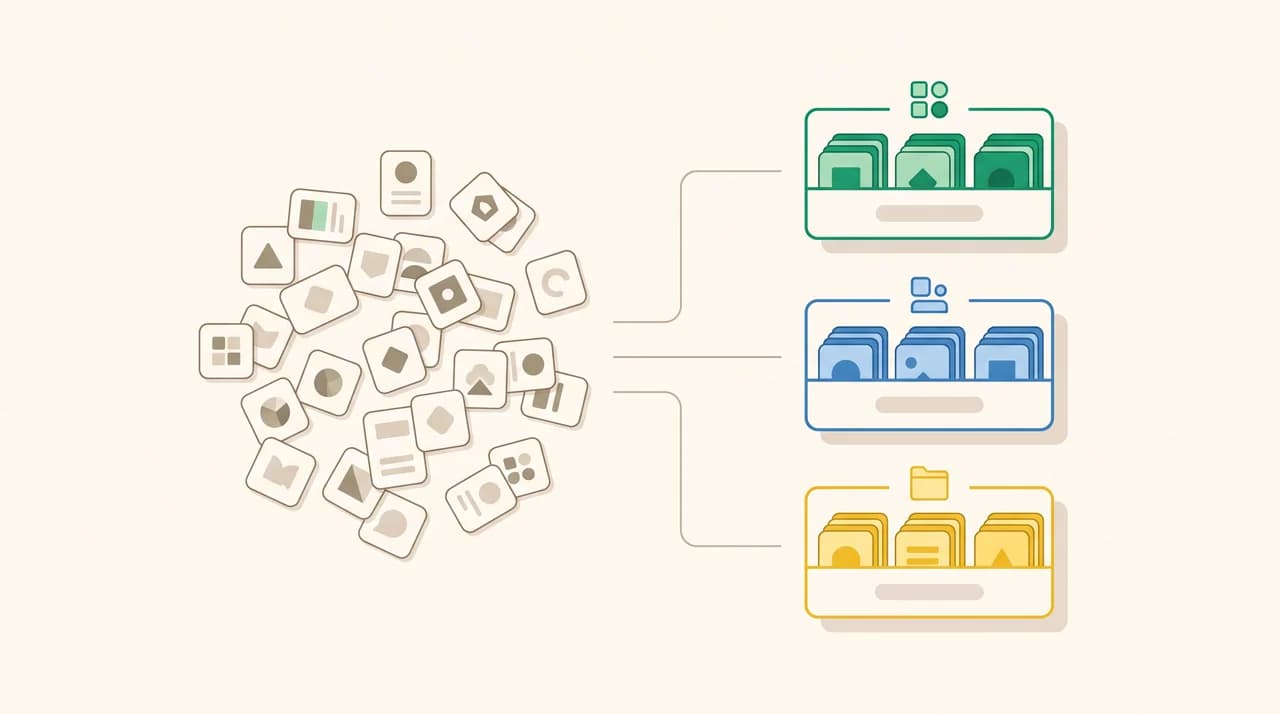
The table below lays the four claims side by side: what a 'no' actually promises, what it leaves untouched, and the exact document where you confirm it. Read across a row before you accept the headline.
| The claim | What a 'no' actually promises | What it does NOT cover | Where to verify it |
|---|---|---|---|
| No training on your data | Your email is not added to the dataset that builds or fine-tunes the model | Storage, human review, and third-party sharing | The model-training or data-usage clause |
| Zero retention | Your email is deleted right after the reply is generated, not stored | Whether it was seen while processing or during a default retention window | The retention or data-deletion clause |
| No human review | No employee or contractor reads your content | Whether the content is stored or later used to train | The human-access and abuse-monitoring terms |
| No subprocessor sharing | Your content is not passed to undisclosed third parties | Training and retention by the primary vendor itself | The subprocessor list and the DPA |
How do you check an AI vendor's data policy?#
You do not need a lawyer to read the clauses that matter. Every serious vendor publishes them, and the same five checks work across almost all of them. Do these in order and you will know exactly which of the four claims the vendor makes.
- 1
Find the document that governs your tier
Look for the page named data usage, privacy, or trust. For an API or business product it is often a dedicated enterprise-privacy or data-controls page, not the consumer privacy policy. OpenAI, for example, publishes its business and API terms on its enterprise privacy page; Anthropic keeps a Privacy Center that splits Commercial articles from Consumer articles. Open the one that matches what you pay for.
- 2
Search for the training clause
Use your browser's find (Ctrl-F) for 'train.' You want an explicit sentence that inputs and outputs are not used to train or improve models. As of August 2026, OpenAI states that data sent through its API and business products is not used to train its models by default. Confirm the current wording on its page rather than trusting a summary - including this one.
- 3
Search for retention and deletion
Find 'retain,' 'retention,' or 'delete.' A default retention window - often measured in days, for abuse monitoring - is common even when training is switched off. Check whether a zero data retention option exists and whether your account qualifies for it, since it is frequently gated behind approval.
- 4
Search for human review and abuse monitoring
Find 'human' and 'abuse.' Many providers reserve limited human access to investigate abuse or debug safety systems. Decide whether that is acceptable for your content, and check whether it can be turned off for eligible accounts. This is the claim 'no training' most often leaves unanswered.
- 5
Read the subprocessor list and the DPA
A vendor that takes this seriously publishes a subprocessor list and offers a data processing agreement. Skim the list for names you did not expect - a second model provider, an analytics tool - and confirm the DPA binds them to the same terms. If a vendor cannot produce either, treat the 'no training' claim as unverified.
A framework is a signal, not a guarantee
Common misconceptions#
Most confusion about AI and email comes down to a handful of assumptions that sound right and are not. Here are the ones worth un-learning.
- 'No training' means no one can ever see my email. It does not. Training, storage, and human review are separate; a 'no training' policy can still allow limited retention and abuse review.
- The AI reads my whole mailbox to answer one question. Most assistants send only the specific message or thread you act on to the model, not your entire archive. What is actually sent is described in the vendor's data-flow docs - read them rather than guessing.
- If it's encrypted, it can't be used for anything. Encryption protects data in transit and at rest. Once the content is decrypted so the model can read it, the training, retention, and review terms are what govern it. Encryption and those terms are different protections.
- Consumer and business versions have identical privacy terms. They usually do not. The consumer tier is the one more likely to permit training, often with an opt-out you have to find.
- A data policy is permanent. Terms change, sometimes quietly. Re-check the page before any decision that depends on it.
How this shows up in AI Emaily#
Everything above is the standard we hold ourselves to. AI Emaily is an AI-native email client, and on the four claims its posture is specific. It does not train any model on your email, and the model providers it sends your content to run under zero retention terms, so your message content is not kept after a reply is generated. We build AI Emaily, so treat that as an interested party talking - and check our security page and privacy model rather than taking the sentence on faith.
Because we do not train on your mail, a fair question is how the assistant writes in your voice. It does not learn your tone from your sent mail. Voice comes from a Context brain you set and per-client profiles you control, so the personalization lives in settings you can read and edit, not in a model quietly trained on your history. If you would rather the model calls run on your own provider account under your own terms, you can bring your own key.
None of that is a reason to trust us more than the primary sources. The whole point of this article is that you verify every vendor, ourselves included, against its own policy page. If you want to weigh what each plan includes, AI Emaily pricing lists them, and there is a 7-day free trial on the Pro or Autopilot plan; it is a paid product after that.
Frequently asked
See it in AI Emaily
Keep reading
Sources

Written by
Nafiul HasanNafiul Hasan is an entrepreneur and AI automation system builder with 10+ years of experience turning messy, manual workflows into reliable automated systems. He designs and ships AI enterprise solutions end-to-end — the agent logic, the data plumbing, and the product people actually use — and founded AI Emaily to give busy professionals their attention back. He writes here from the builder's seat: what works, what breaks, and how to put AI to work without giving up control.