Topic
Email glossary & concepts
Plain-English answers to how email actually works.
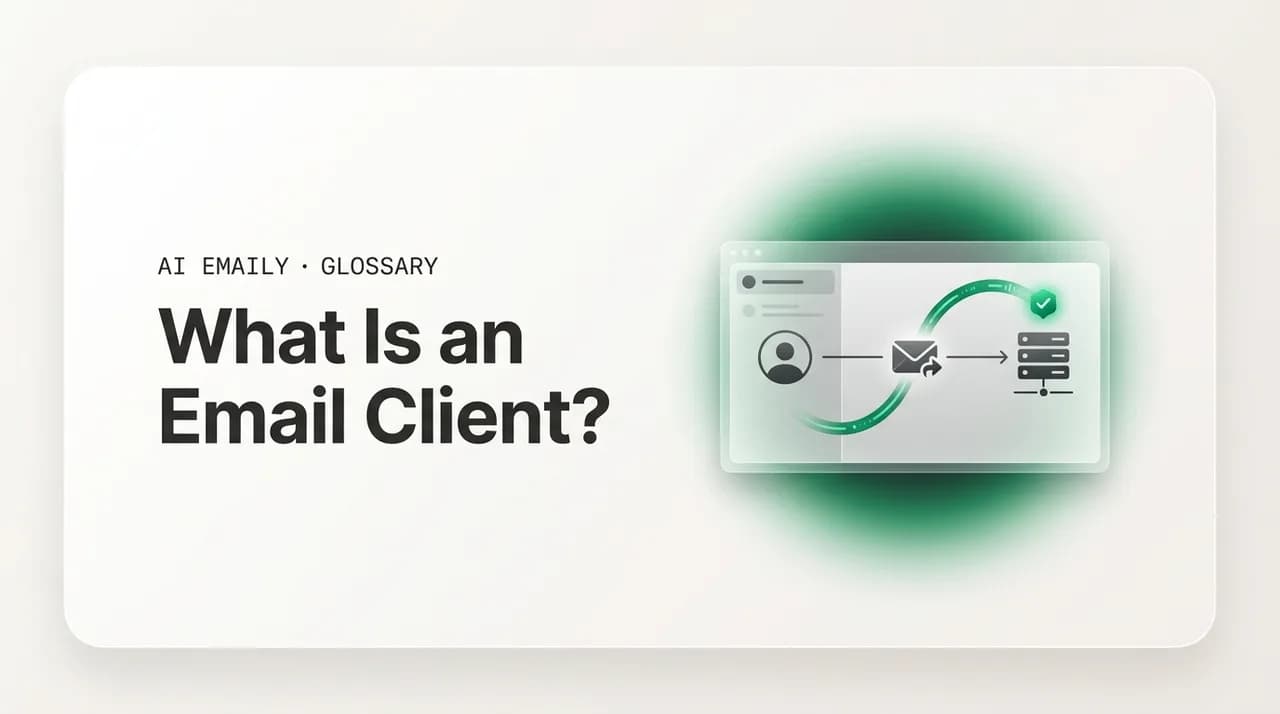
What Is an Email Client? Definition, Examples, and How It Works
An email client is the program you use to read, write, and manage email. This guide defines it, explains how it works with IMAP and SMTP, covers desktop, mobile, web, and AI clients, gives examples, and shows how to choose one.
 Nafiul Hasan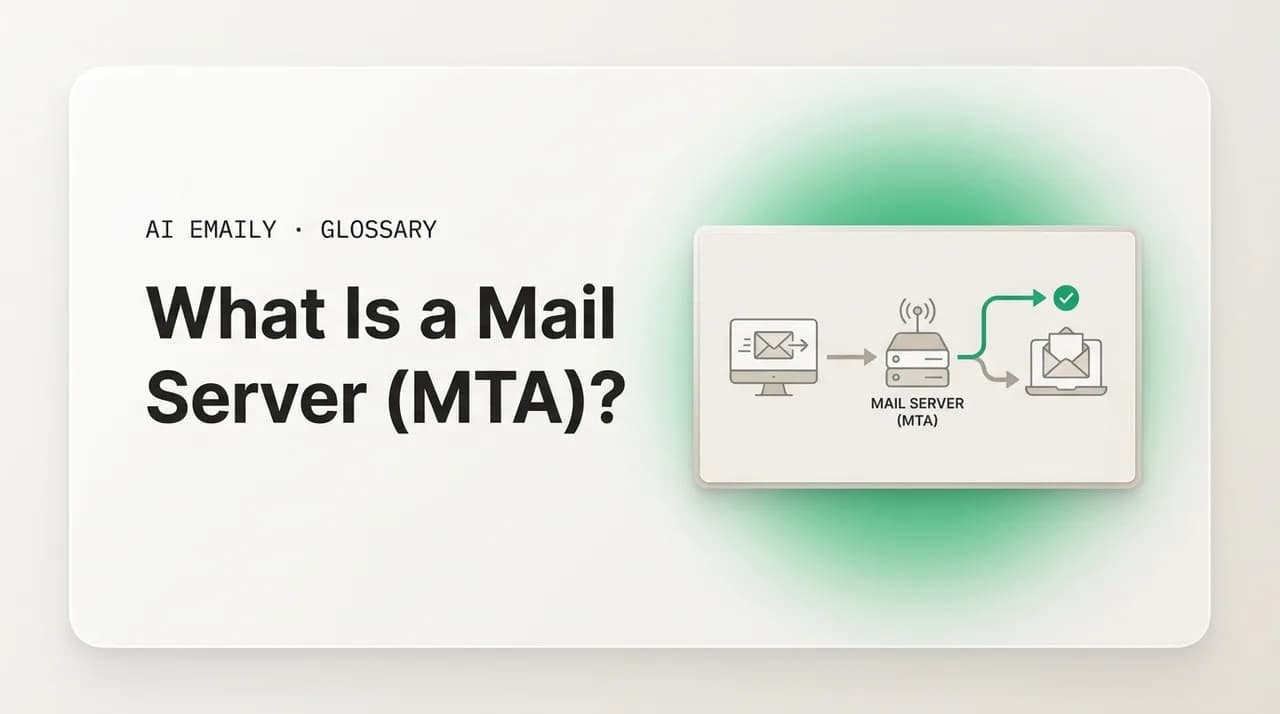
What Is a Mail Server (MTA)? How Email Servers Actually Work
A mail server is the computer that accepts, routes, stores, and delivers email. This guide explains the MTA, MDA, MSA, and MUA, incoming vs outgoing, how a message travels server to server, and why hosting your own is hard.
Nafiul Hasan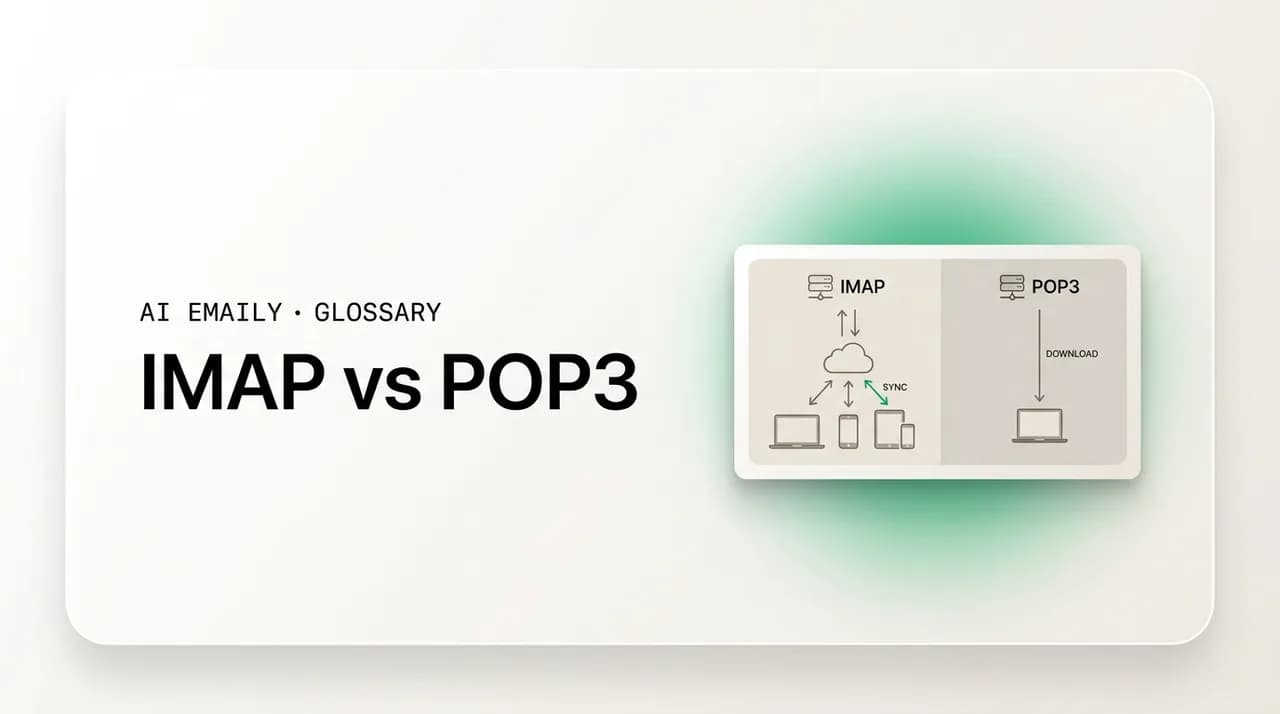
IMAP vs POP3: What's the Difference? (Plain-English Guide)
IMAP vs POP3 explained in plain English: IMAP keeps your mail on the server and syncs it across every device, while POP3 downloads it to one device. Which to choose, the ports each uses, and why IMAP is the modern default.
Nafiul Hasan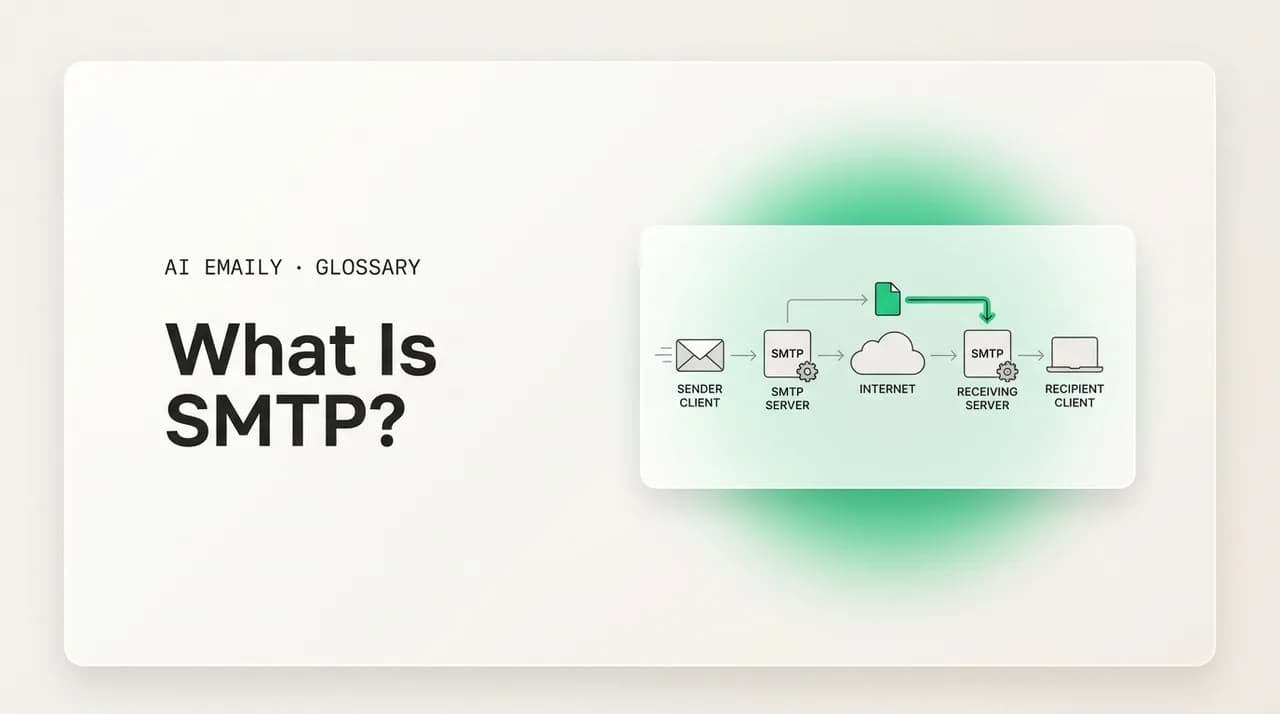
What Is SMTP? How the Email Sending Protocol Works
What SMTP is, how the email sending protocol works end to end — envelope, handshake, relays, MTA-to-MTA hops — plus SMTP vs IMAP/POP3, the ports (587, 465, 25), authentication, security, and common error codes.
Nafiul Hasan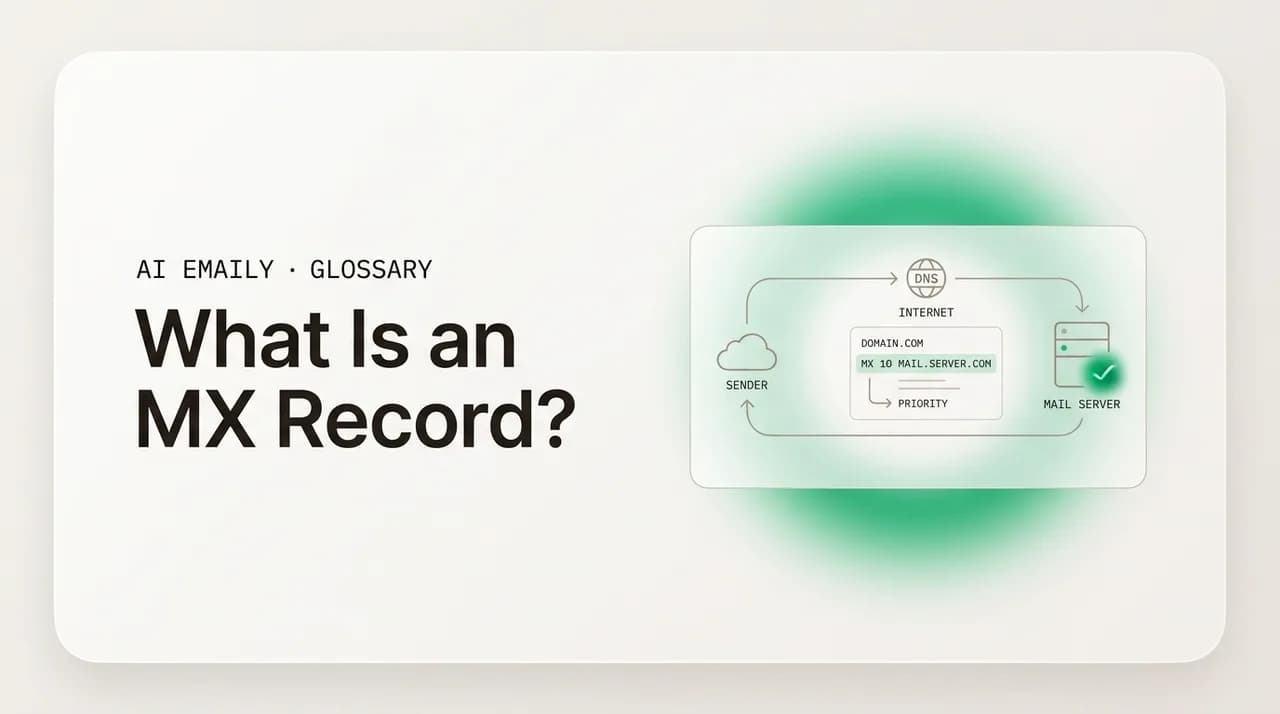
What Is an MX Record? How Email Finds Your Mail Server
An MX record is the DNS entry that tells the internet which mail server receives email for your domain. Here is what it does, how priority values work, how to check yours, and how to set one up.
Nafiul Hasan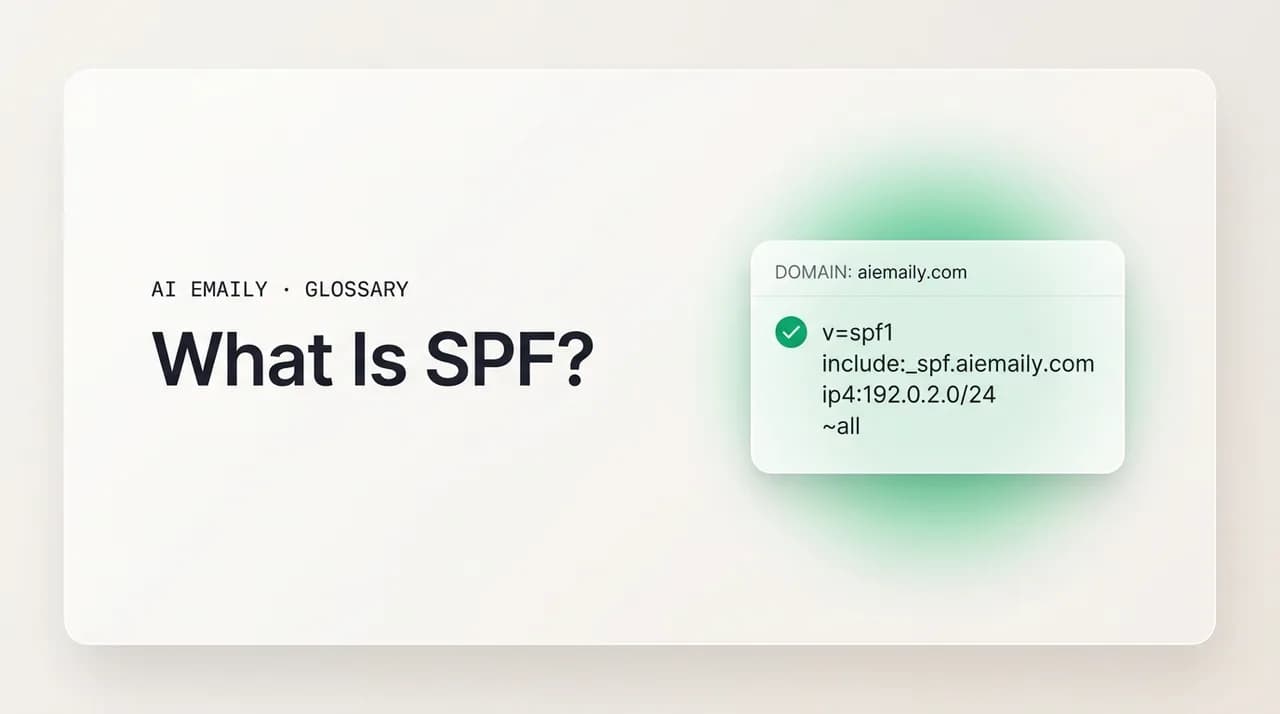
What Is SPF? How the Sender Policy Framework Works
SPF is an email authentication standard: a DNS TXT record listing which servers may send mail for your domain. Syntax, the 10-lookup limit, DKIM and DMARC.
Nafiul Hasan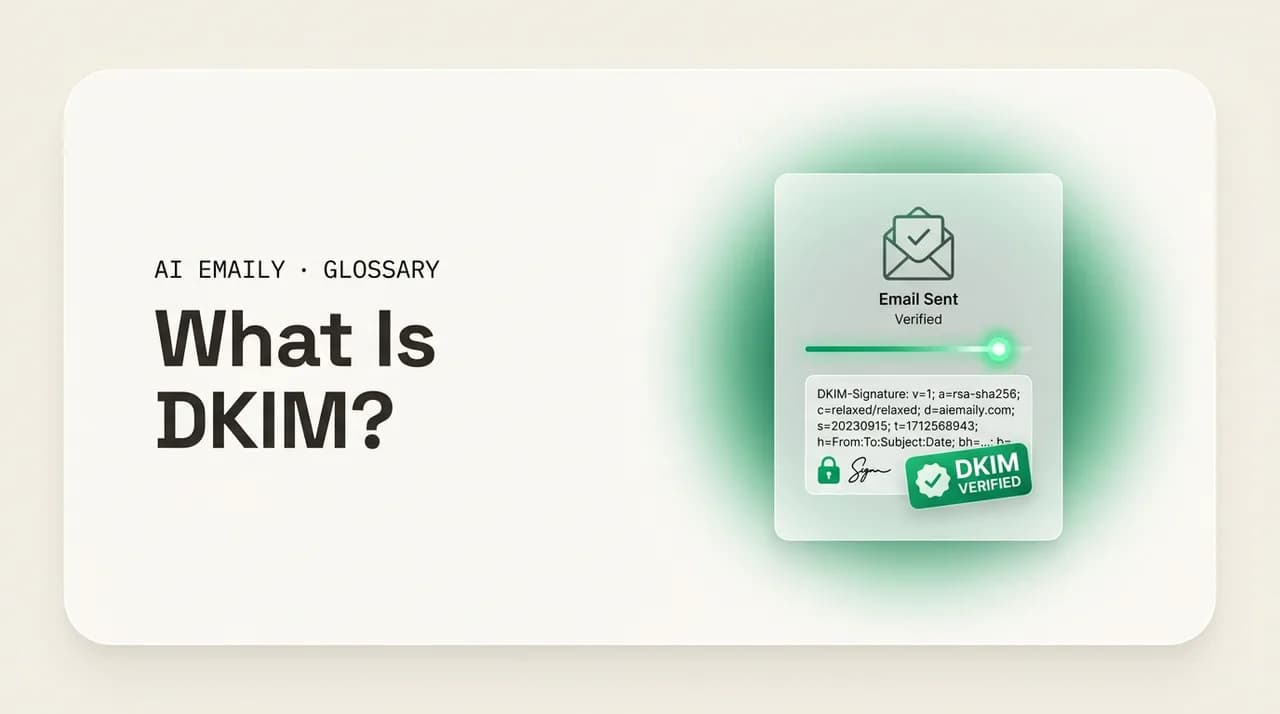
What Is DKIM? How It Works (Plain-English Guide)
What is DKIM? DomainKeys Identified Mail is an email authentication standard that signs messages with a private key so receivers can verify them via a public key in DNS — explained in plain English.
Nafiul Hasan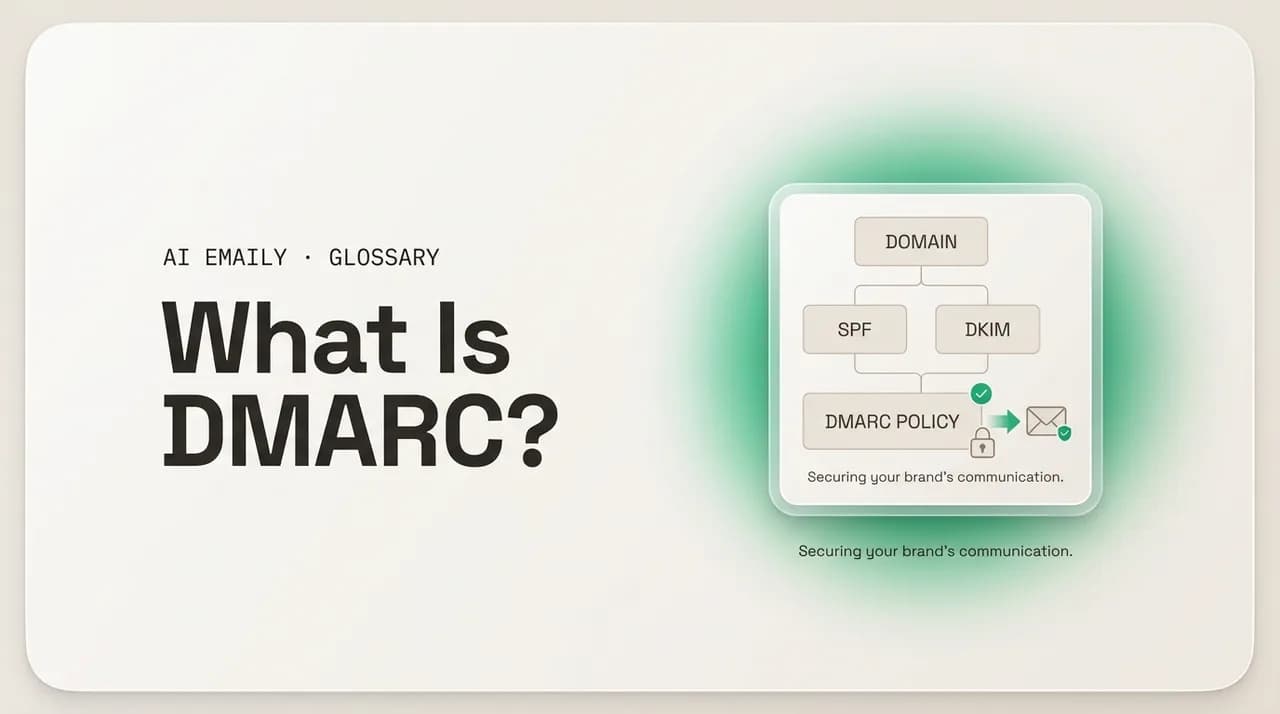
What Is DMARC? How It Ties SPF and DKIM Together
DMARC is the email standard that ties SPF and DKIM together with a published policy and reports, telling receivers what to do with mail that fails authentication. Here's how it works, the records, and the 2024 sender rules.
Nafiul Hasan
What Is BIMI? How Your Brand Logo Shows Up in the Inbox
BIMI lets a verified brand logo appear next to its messages in the inbox. Learn what BIMI is, the DMARC, SVG, and VMC prerequisites, which providers support it, and how to set up a BIMI DNS record.
Nafiul Hasan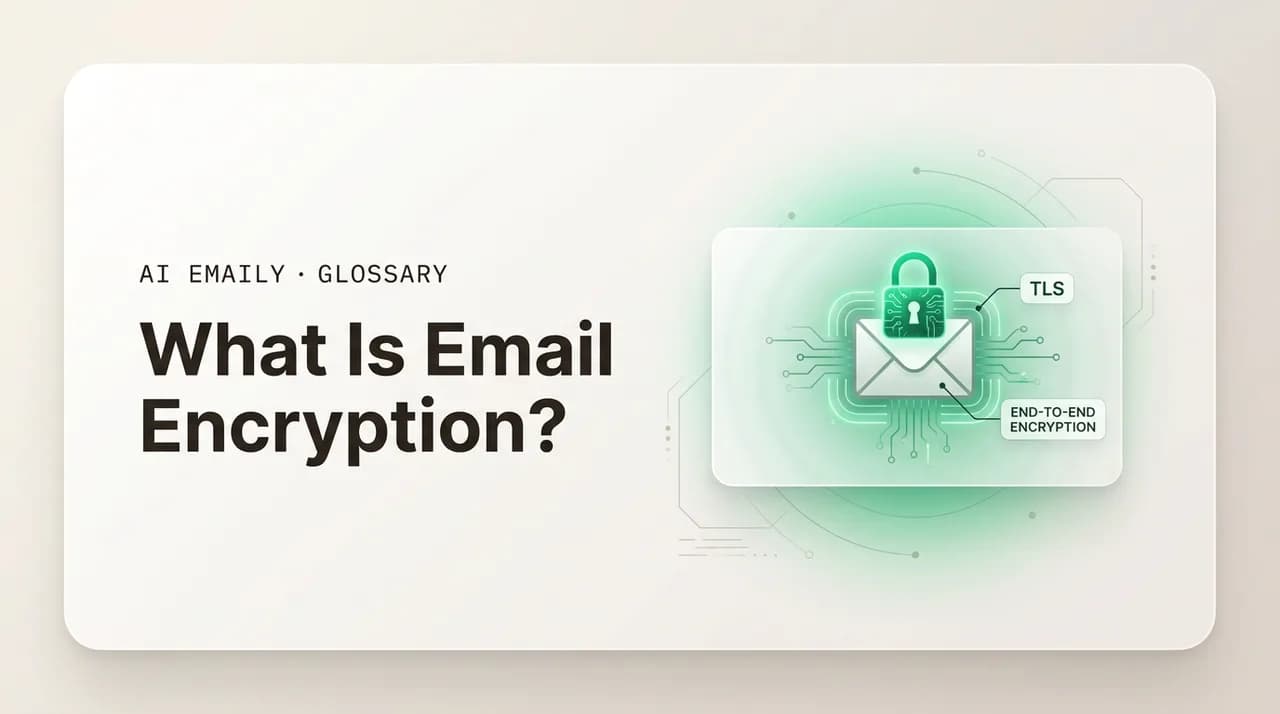
What Is Email Encryption? TLS, PGP, S/MIME, and End-to-End Explained
Email encryption protects mail in transit (TLS), at rest, and end-to-end (PGP, S/MIME). Why standard email is not private by default, and what helps.
Nafiul Hasan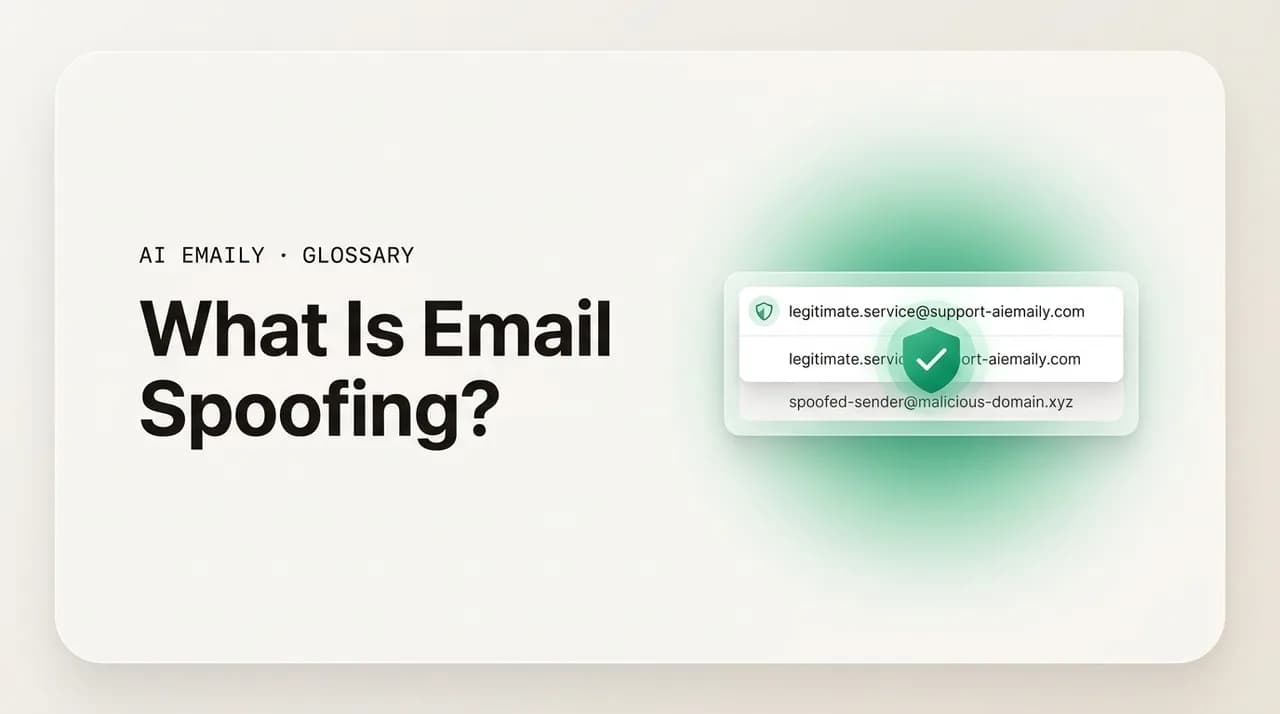
What Is Email Spoofing? How Forged Sender Addresses Work
Email spoofing is forging the sender address on a message so it looks like it came from someone it did not. Learn how it works, how it differs from phishing, how SPF, DKIM, and DMARC stop it, and how to spot a spoofed email.
Nafiul Hasan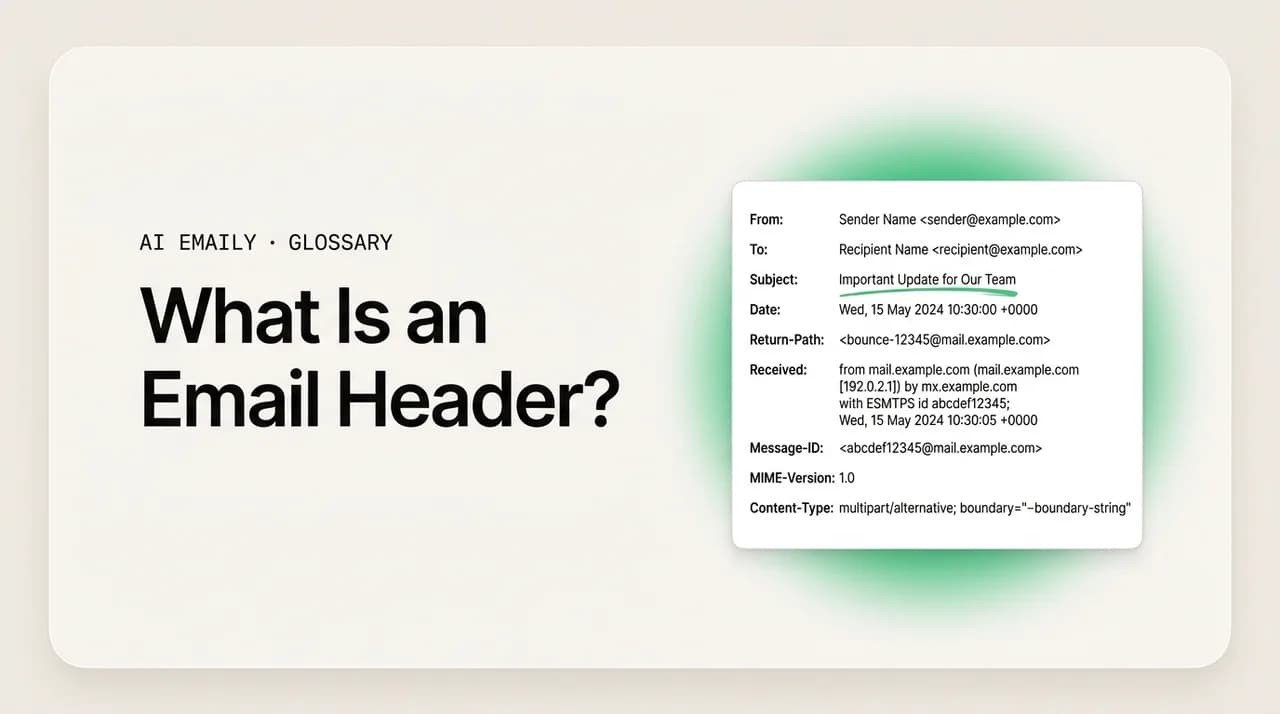
What Is an Email Header? Every Field Explained in Plain English
An email header is the metadata block atop every message - From, To, Subject, Date, routing trail and auth results. Every field, in plain English.
Nafiul HasanEverything else in email glossary & concepts
- What Is a Read Receipt? How Email Open Confirmations Work27m
- What Is Email Deliverability? How Email Reaches the Inbox31m
- What Is an Email Bounce? Hard vs Soft Bounce Explained31m
- What Is an Email Alias? Aliases vs Distribution Lists Explained32m
- What Is BCC in Email? Blind Carbon Copy Explained31m
- What Is Webmail? Definition, Examples, and How It Works27m
- What Is an Autoresponder? How Automatic Email Replies Work30m
- What Is Email Threading? How Conversation View Works27m
- What Is the DMARC DNS Tree Walk? (RFC 9989 Explained)10m
- What Is MCP (Model Context Protocol) for Email?10m
- Bulk Folder vs Spam Folder: What Is the Difference?13m
- Does AI Train on Your Emails? What the Policies Actually Say11m
- MCP Server vs API Integration: What Is Actually Different?14m
- Semantic Search vs Keyword Search in Email: The Difference16m
- Shared Mailbox vs Distribution List vs Group: Which to Use17m
- What Is MTA-STS? Enforced TLS for Inbound Email Explained9m
- SMTP Port 587 vs 465 vs 25: Which One Should You Use?9m
- What Is Plus Addressing? Email Subaddressing Explained8m
- Why no-reply Email Addresses Are a Bad Idea (And the Fix)9m
- What Is DMARC Alignment? Relaxed vs Strict Explained10m
- SPF 10 DNS Lookup Limit: Why SPF Breaks and How to Fix It9m
- What Is RAG for Email? Retrieval-Augmented Generation Explained10m
- What Is an LLM Context Window? Why Long Threads Get Cut10m
- What Is BYOK (Bring Your Own Key) and Why Does It Matter?8m
- What Is Zero-Retention AI Inference? Definition and Proof11m
- What Is an AI Audit Log and What Should It Record?12m
- What Is an AI Email Client? (Definition and How It Differs From Gmail)13m
- Mailbox Management Software: What It Is and What It Can Do13m
- What Is an Email Management App? A Plain-English Guide14m
- Email Sender Software vs Email Client: Which Do You Actually Need?10m
- What Is Email Client Software? A Plain-English Guide for 202612m
- What Is a Unified Inbox? How It Works and Why Professionals Use It12m
- What Is an Action Allowlist for AI Agents?12m
- What Is Indirect Prompt Injection? Attacks Hidden in Email13m
- What Is MIME in Email? Multipart Messages Explained7m
- What Is JMAP? The Modern Email Protocol Compared to IMAP7m
- What Is EWS? Exchange Web Services and Its Retirement7m
- What Is Exchange ActiveSync (EAS) and Who Still Uses It?11m
- What Is the Microsoft Graph Mail API? A Plain Explanation11m
- STARTTLS vs Implicit TLS: How Email Encrypts in Transit11m
- What Is ARC? Authenticated Received Chain Explained7m
- What Is SMTP AUTH? Authenticated Email Submission Explained11m
- Envelope Sender vs Header From: Email's Two From Addresses10m
- What Is a Message-ID Header and Why Does It Matter?7m
- What Is a Received Header? Reading an Email Delivery Path10m
- What Is a Catch-All Email Address? Uses, Risks, Alternatives19m
- What Is a Disposable Email Address? How Burner Inboxes Work9m
- Email Alias vs Forwarder: What Is Actually Different?11m
- What Are Mail Routing Rules? Server-Side Mail Flow Explained13m
- What Is a Secondary MX Record? Backup MX Myths Debunked7m
- What Is Split-Domain Email Routing and When Do You Need It?9m
- What Is Base64 Encoding in Email? Why Attachments Grow9m
- What Is a Mail Queue? Why Email Sometimes Sits Waiting9m
- What Is Dual Delivery in Email? Definition and Trade-Offs9m
- What Is Sender Reputation? How Mailbox Providers Score You9m
- What Is an Email Blocklist (RBL) and How Do You Get Delisted?10m
- What Is URL Rewriting in Email? Safe Links Explained12m
- What Is Attachment Sandboxing (Detonation) in Email Security?8m
- What Is Email Backscatter? Misdirected Bounce Spam Explained11m
- What Is a Safe Senders List? How to Use It Properly12m
- What Is Email Content Scanning and What Do Filters Read?7m
- multipart/alternative vs multipart/mixed: The Difference15m
- What Is TLS-RPT? Email TLS Reporting Explained Simply9m
- What Is DANE for Email? DNSSEC-Backed SMTP Security10m
- What Is Store-and-Forward Email? The Model Behind SMTP8m
- What Is a Delivery Status Notification (DSN) in Email?10m
- What Are Internationalized Email Addresses (EAI)?7m
- What Is a Role-Based Email Address? info@, sales@, abuse@11m
- What Is the List-Unsubscribe Header? One-Click Opt-Out9m
- What Is a VMC? BIMI Verified Mark Certificates Explained11m
- Domain Reputation vs IP Reputation: What Filters Really Use13m
- What Is an Email Feedback Loop (FBL) and How Do You Join?12m
- What Is a Spam Trap? Pristine vs Recycled Addresses14m
- What Is Greylisting in Email and Why Does Mail Get Delayed?9m
- What Are Engagement Signals in Email Filtering?10m
- What Is Email Quarantine and How Do You Release a Message?9m
- What Is DLP in Email? Data Loss Prevention Explained11m
- Allowlist vs Blocklist in Email: When Each One Backfires16m
- What Is Bayesian Spam Filtering and Does It Still Work?9m
- What Is a Spam Score and How Is It Calculated?10m
- What Are AI Guardrails? Constraints on an Email Agent12m
- What Are IMAP Message Flags? Seen, Answered, Flagged9m
- What Is Offline Email Caching and How Much Should You Sync?10m
- How Is Mailbox Quota Calculated? What Counts Toward Storage9m
- What Are Vector Embeddings? Semantic Email Search Explained10m
- What Is AI Hallucination in Email Drafts and How to Prevent It10m
- What Is Tool Calling? How an AI Agent Acts on Your Mailbox12m
- How to Measure AI Email Triage Accuracy: Precision and Recall12m
- What Is Undo Send and How Does It Actually Work?10m
- In-Reply-To vs References: How Email Replies Link Together11m
- What Is the Reply-To Header and When Should You Set It?12m
- What Is a DKIM Selector? How Signature Keys Are Found11m
- Heuristic vs Machine Learning Spam Filters: The Difference15m
- mbox vs Maildir: Mailbox Storage Formats Explained16m
- PST vs OST Files in Outlook: What Is the Difference?14m
- EML vs MSG Files: Which Email Format Should You Export?15m
- What Are IMAP Special-Use Folders and Why Do They Matter?8m
- What Is IMAP IDLE? How Push Email Works Over IMAP10m
- Server-Side vs Client-Side Email Search: Why Results Differ17m
- How Email Threading Algorithms Work: References vs Subject13m
- What Does Archive Mean in Email? Gmail vs Outlook vs IMAP15m
- MUA vs MTA vs MDA vs MSA: Email's Four Server Roles12m
- On-Device vs Cloud AI for Email: Privacy and Trade-Offs15m
- Human-in-the-Loop vs Human-on-the-Loop AI: The Difference11m
Email, finally worthy of your attention.
Start your 7-day free trial. Cancel anytime.
- 7-day free trial
- Cancel anytime
- Every provider