What Is a Role-Based Email Address? info@, sales@, abuse@


The short answer
A role-based email address names a function, not a person — info@, support@, sales@, abuse@, postmaster@ — and is usually read by a team or a rota. RFC 5321 requires every domain running SMTP to accept mail at postmaster@; RFC 2142 defines the rest. Most domains need postmaster@ and abuse@, plus the customer-facing ones they can actually staff.
What is a role-based email address? info@ and abuse@ name a function, not a person. Which ones your domain must run, and why senders and verifiers flag them.
On this page
A role-based email address is a mailbox named after a job rather than a person: info@, support@, sales@, abuse@, postmaster@. Anyone on the team can read it, and the name says what it is for, not who sits behind it. That is the whole point — the address outlives whoever answers it this week.
Two standards decide which ones you actually need. RFC 5321, the SMTP specification, requires every domain that runs a mail server to accept mail at postmaster@. RFC 2142 defines the wider set — abuse@, info@, support@, security@ and more — that the internet expects a well-run domain to answer. The rest is judgment: run the addresses you can staff, and do not open a black hole you never read.
This guide covers which role addresses you are obliged to run, which ones earn their keep, why marketing platforms and email-verification tools treat them differently from a personal address, and how certificate authorities have leaned on them for decades — and where that last practice is now being retired.
How role-based email addresses work#
The convention is old and deliberate. In May 1997, RFC 2142 set out a registry of mailbox names for common services, roles and functions, so that anyone could reach the right desk at any organisation without knowing a single employee's name. Write to abuse@ to report a problem, security@ for a vulnerability, postmaster@ for a mail fault — the same address at every domain that follows the convention.
Some of these are obligations, not suggestions. RFC 5321 reserves the name postmaster and requires an SMTP server to accept mail sent to it — the name may even be used in a RCPT command without a domain qualifier and must still be accepted. RFC 2142 traces the underlying rule back to RFC 822: every host that runs an SMTP server is expected to answer at postmaster@. abuse@ carries similar weight by convention — it is where the outside world reports spam, compromised accounts, and other misbehaviour coming from your domain.
| Address | What it is for | Standing |
|---|---|---|
| postmaster@ | Mail delivery problems and bounce reports | Required by RFC 5321 for any domain running SMTP |
| abuse@ | Reports of spam, phishing or misuse from your domain | Defined by RFC 2142; expected by mail operators |
| security@ | Security bulletins and vulnerability reports | Defined by RFC 2142 |
| info@ | General enquiries and packaged company information | Defined by RFC 2142 (a marketing role) |
| support@ | Problems with a product or service | Defined by RFC 2142 |
| sales@ | Product purchase enquiries | Defined by RFC 2142 |
| hostmaster@ | DNS and domain administration | Defined by RFC 2142 |
| webmaster@ | Website problems | Defined by RFC 2142 |
The pattern the registry shows is that role addresses split into two kinds. Some are network-facing plumbing the wider internet expects to reach — postmaster@, abuse@, security@, hostmaster@ — and some are business-facing front doors you choose to open, like info@, support@ and sales@. Both are addresses; the difference is who relies on them and what happens if they go unread.
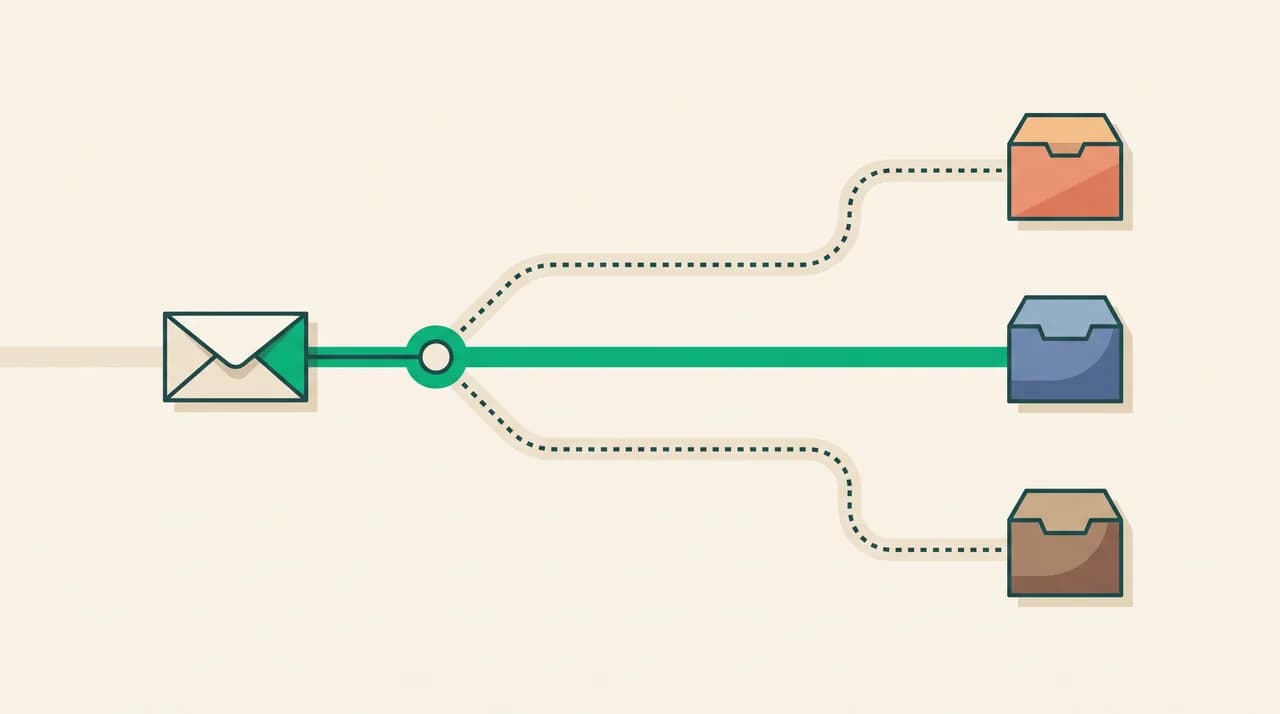
postmaster@ is not optional
Which role addresses does a domain actually need?#
Start with the two the outside world may need to reach you at: postmaster@ and abuse@. If you send or receive mail on your own domain, these should exist and be read, because they carry bounce reports, feedback-loop messages and abuse complaints — the signals that tell you when your own mail is going wrong. security@ is a close third for any organisation that runs a website or handles customer data, since it is where a researcher will send a vulnerability report.
The customer-facing addresses — info@, support@, sales@ — are a judgment call. Each one sets a clear expectation with the person writing to you, and that is their value. The rule is simple: only open a role address you can genuinely staff. An unstaffed support@ that swallows real questions for a week is worse than no support@ at all, because the sender assumed a person was there.
Why senders filter role addresses and verifiers flag them#
Send a marketing email to info@ and you may find it never arrives — or that your list-cleaning tool flagged the address before you sent. That is not a bug. A role-based address belongs to a function, so nobody in particular consented to your mail, and whoever reads it this week is not necessarily the person who signed up. Shared, functional mailboxes report unwanted mail at higher rates, and a single complaint from one can dent the reputation you send everything else on.
Email-verification and list-hygiene services score addresses partly on this. They match the local part against the RFC 2142 roles plus a broader industry list — admin, office, contact, hello, billing and dozens more — and return a role-based or role-account flag. The flag does not mean invalid; the mailbox usually works. It means the address is a poor fit for bulk or cold outreach, because consent is ambiguous and the complaint risk is high. Many bulk-sending platforms act on that by discouraging, suppressing or refusing these addresses, though behaviour varies by vendor and changes often — confirm the current policy on the platform's own documentation before you rely on it.
There is a twist that cuts the other way for the network addresses. postmaster@ and abuse@ exist precisely to receive unwanted mail — bounce reports, spam complaints, feedback-loop messages. Filtering those into a folder nobody opens defeats their purpose. The addresses senders avoid are the customer-facing ones; the addresses operators need you to watch are the network ones.
What certificate authorities use role addresses for#
Certificate authorities have relied on role addresses for a different reason: proving you control a domain. Under the CA/Browser Forum Baseline Requirements, a CA could confirm domain control by emailing a challenge to a fixed set of role addresses — admin@, administrator@, webmaster@, hostmaster@ or postmaster@ at the domain — on the logic that only the domain's operator can read them. Whoever answers one of those mailboxes can, in effect, obtain a TLS certificate for the domain.
That power is exactly why the method is being retired. Under CA/Browser Forum ballot SC-090, this Constructed Email to Domain Contact method has been discouraged since 15 March 2026 and is scheduled to be removed on 15 March 2028, alongside the other email- and phone-based validation methods. Until then it is still permitted, which means an unmonitored admin@ or hostmaster@ mailbox is a live security exposure, not merely an untidy one. The dates and method here are drawn from the CA/Browser Forum's own ballot record; the schedule is still moving, so verify the current text there before you plan around it.
Guard the validation mailboxes
Role-based address vs personal address#
The practical question most teams ask is whether to hand out info@ or a named person's address. The honest answer is both, for different jobs. Here is the trade-off on the dimensions that actually differ.
| Dimension | Role-based address (info@) | Personal address (jordan@) |
|---|---|---|
| Who reads it | A team or rota; the readers change over time | One named individual |
| Continuity | Survives staff turnover — outlives the person | Breaks when the person leaves the company |
| Marketing / cold-outreach fit | Flagged by verifiers; weak consent signal | Stronger consent signal, if the person opted in |
| Personal touch | Impersonal by design | Warmer, one-to-one relationship |
| Best for | Shared functions: support@, sales@, abuse@ | Relationships one person owns |
The takeaway is that role addresses and personal addresses are not competitors — they answer different needs. Use a role address where a function has to survive turnover and be reachable by anyone; use a personal address where a relationship depends on a specific person answering.
Common misconceptions#
A few beliefs about role addresses lead teams astray. Each one is common, and each one is wrong in a way that costs either mail or reputation.
- A role address is the same thing as a shared mailbox. Not quite — the address is the name; the shared mailbox is how a team reads it. You can point a role address at a shared mailbox, at a distribution list that fans out to individuals, or at one person's inbox.
- Role addresses look unprofessional, so avoid them. The opposite is true for functions: abuse@ and postmaster@ are required or expected, and support@ and sales@ set clear expectations. The mistake is using a role address where a person's name would build the relationship.
- If I never create postmaster@, mail to it just bounces harmlessly. Your mail server is still expected to accept it, and operators and anti-spam systems that probe postmaster@ or abuse@ read a rejection as a sign of a poorly run domain.
- A verifier flagging info@ as role-based means the address is invalid. It usually means the mailbox is real but a poor fit for bulk mail. Stripping valid role addresses out of a transactional or reply-based list can lose you legitimate contacts.
How this shows up in AI Emaily#
The hard part of a role address is not creating it — it is staffing it without letting it become a black hole. info@ and support@ collect everything, from real customers to the cold pitches and abuse reports the address invites, and the person on rota this week has to separate real work from noise quickly and consistently.
That triage is the job we built for. We build AI Emaily, an AI email assistant that connects to a shared role inbox on Gmail, Outlook or standard IMAP and sorts it as mail arrives — routing an abuse@ report one way and a sales enquiry another, and drafting replies your team approves before they send, with an undo and an audit trail on every action. It does not decide what your domain accepts; that is the standards work above. It handles the mail once it lands.
See what it does on our homepage and what each plan includes on our pricing page before you rely on any figure. AI Emaily runs a 7-day free trial on Pro — card required, $0 if you cancel before day seven — and there is no permanent free tier. For how a whole team shares one role inbox, see our teams use case.
Frequently asked
See it in AI Emaily
Keep reading
Sources

Written by
Nafiul HasanNafiul Hasan is an entrepreneur and AI automation system builder with 10+ years of experience turning messy, manual workflows into reliable automated systems. He designs and ships AI enterprise solutions end-to-end — the agent logic, the data plumbing, and the product people actually use — and founded AI Emaily to give busy professionals their attention back. He writes here from the builder's seat: what works, what breaks, and how to put AI to work without giving up control.