What Is a Message-ID Header and Why Does It Matter?

The short answer
The Message-ID header is a globally unique identifier that the sending mail system stamps on every email, written as <local-part@domain> inside angle brackets. Defined in RFC 5322, it lets mail clients thread replies into conversations, drop duplicate copies of the same message, and trace one email across server logs.
What is a Message-ID header? The globally unique ID every email carries, how it threads and dedupes messages, and whether it can be forged.
On this page
Every email carries a Message-ID header — a short line of text that names that one message and nothing else. You never see it in a normal inbox view, but it is doing quiet, essential work behind the scenes.
So what is a Message-ID header? In short, it is the email's fingerprint: a globally unique label the sending system stamps on the message when it is created. This guide covers its format, the three jobs it does — threading, deduplication and tracing — and the misconceptions worth clearing up.
What a Message-ID header is#
RFC 5322, the standard that defines email format, calls the Message-ID field a unique message identifier that refers to a particular version of a particular message. The standard is strict about it: the identifier must be a globally unique identifier, and the system that generates it must guarantee that the value is unique.
In plain terms, no two different emails should ever share the same Message-ID. The header is generated once — by the software that first creates the message, which is your mail client or your provider's outgoing server — and then it travels with the email unchanged, from the sender to every recipient.
RFC 5322 lists the field as optional in its header table, but immediately adds that every message SHOULD have a Message-ID field. In practice, effectively all mail does: if your client leaves it out, the first server to handle the message usually adds one before delivery.
A new version means a new ID
How the Message-ID is built#
A Message-ID follows a fixed shape defined by RFC 5322. It is a value inside angle brackets, split by an @ sign into a left part and a right part — the same local-part@domain pattern as an email address, though it is an identifier, not a mailbox you can write to.
What the parts mean#
- In RFC 5322 the formal syntax is msg-id = [CFWS] "<" id-left "@" id-right ">" [CFWS] — the angle brackets and the @ are literal and required.
- The left part (id-left) is a dot-atom the generator picks to be unique. The RFC suggests combining the current date and time with something like a process ID on the system.
- The right part (id-right) is normally the domain name of the machine or service that created the message — which is why many real Message-IDs end in a domain such as mail.gmail.com.
- Everything sits on one line and does not change in transit, so the same string appears in the sender's copy and in every recipient's copy.
The three jobs a Message-ID does#
Threading. When you reply, your mail client copies the original message's ID into two other headers — In-Reply-To and References. A receiving client reads those, matches them against the Message-IDs it already holds, and stacks the messages into one conversation. Without a stable Message-ID, threading falls back to guessing by subject line, which breaks the moment someone edits the subject.
Deduplication. If the same message reaches you twice — say you are on both the To and Cc lines, or you get a mailing-list copy and a direct copy — many clients notice the identical Message-ID and show it once. Gmail is a well-known example: it collapses messages that share a Message-ID into a single entry.
Forensic tracing. Every mail server that handles a message records its Message-ID in the logs. When a message goes missing or a delivery fails, an administrator can search for that one ID and follow the message hop by hop — which server accepted it, which one delayed it, where it stopped. Bounce notifications quote it for the same reason.
Message-ID vs In-Reply-To vs References#
The Message-ID rarely works alone. It is the anchor for two companion headers, all three defined in the same section of RFC 5322. The Message-ID names the current message; the other two point back at earlier ones to rebuild the thread.
| Header | What it holds | Who sets it | Its job |
|---|---|---|---|
| Message-ID | One globally unique ID for this message | The sender's mail system, once | Names this message |
| In-Reply-To | The Message-ID of the message being replied to | The replying client | Points at the direct parent |
| References | The Message-IDs of the whole ancestor chain | The replying client, appended each reply | Rebuilds the full thread |
Seeing the three jobs at once#
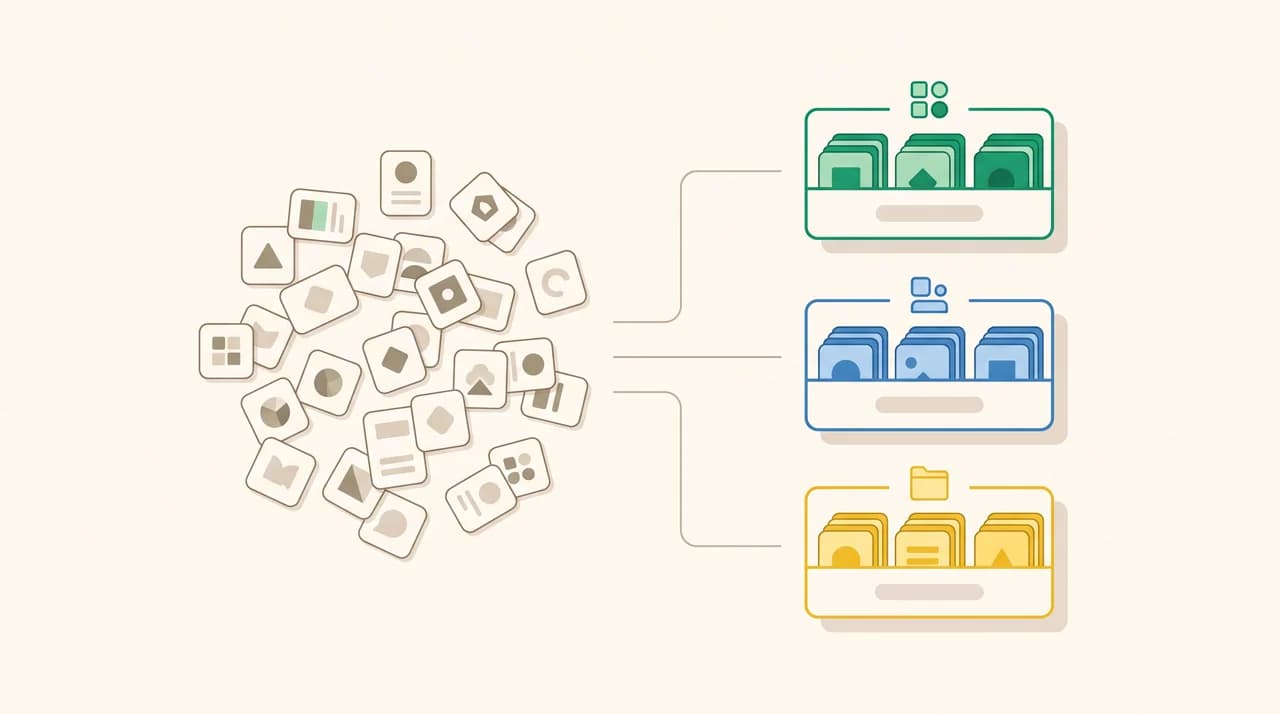
The same identifier does all three jobs from one place. A client reads the Message-ID and its companion headers, then groups replies, drops repeats and keeps a searchable handle for tracing — no extra bookkeeping required.
Common misconceptions about the Message-ID#
"Unique" is a rule, not a guarantee. RFC 5322 requires the generator to make each Message-ID globally unique, but nothing in the mail network enforces it. A misconfigured sender can produce duplicates, and some bulk systems have reused IDs by mistake — which is one way identical-looking emails end up merged or hidden.
It is not a tracking pixel. A Message-ID does not report when you open an email or click a link — that is what tracking pixels and wrapped links do. It is a diagnostic label that appears in headers and server logs. A sender who keeps their own logs can correlate a Message-ID with a bounce or a reply, but it tells them nothing about your reading behaviour.
It can be set to anything. Because the sending system writes the Message-ID, a sender can put any value there, including one copied from another email. The header is not authenticated on its own.
A Message-ID is a label, not proof
How Message-IDs show up in AI Emaily#
You almost never touch a Message-ID by hand, but it quietly shapes what your inbox looks like. AI Emaily reads the Message-ID, In-Reply-To and References headers on every message to build clean conversation threads across Gmail, Outlook and IMAP accounts in one place, and to drop the duplicate copies that a unified inbox is prone to.
When our AI email assistant triages a thread or drafts a reply, it works on that reconstructed conversation rather than a pile of loose messages — so a reply lands in the right thread and the quoting stays intact. We build AI Emaily; if you want the mechanics, our threading documentation walks through exactly which headers we read and how.
Frequently asked
See it in AI Emaily
Keep reading
Sources

Written by
Nafiul HasanNafiul Hasan is an entrepreneur and AI automation system builder with 10+ years of experience turning messy, manual workflows into reliable automated systems. He designs and ships AI enterprise solutions end-to-end — the agent logic, the data plumbing, and the product people actually use — and founded AI Emaily to give busy professionals their attention back. He writes here from the builder's seat: what works, what breaks, and how to put AI to work without giving up control.