Gmail 'High Priority Only' Notifications: Worth Using?


The short answer
Gmail's High priority only setting on Android silences notifications for anything the app's importance model doesn't score as high priority — the same signal that powers the yellow importance marker, not a separate spam filter. It's worth using if you get real notification overload and can tolerate occasional misses; skip it if you need certainty for specific senders.
Gmail's High priority only on Android isn't a rule — it uses the same importance model as the yellow marker. Good for reducing noise, unreliable if you can't miss specific senders.
On this page
Gmail high priority only notifications on Android mute every alert except the mail Gmail's own model scores as important. That sounds like a smart filter for urgent mail, and sometimes it is. But "important" here means Gmail's importance-prediction system — the same signal behind the yellow marker in Priority Inbox — not a rule you wrote or a sender list you control.
That distinction is the whole story. A model trained on your opens, replies, and starred messages is good at recognizing the sender you email every week. It's worse at a one-off: the contractor who emails twice a year, the school with a sudden schedule change. Want fewer interruptions and can tolerate an occasional silent miss? High priority only is a reasonable trade. Can't afford to miss a specific sender or subject? An explicit rule beats a prediction every time — more on that below.
The rest of this guide covers what the setting actually reads, how to turn it on and off, how it compares across Android, iOS, and the web, and what to do the first time it lets you down.
Before you start: what "high priority only" is actually reading#
Android's Gmail app doesn't run a separate "important mail" detector just for notifications. It reuses the importance-prediction system that already powers Priority Inbox and the yellow importance marker on individual messages. Turn on High priority only, and Gmail sends a phone notification only for mail that clears the same threshold used everywhere else in the product.
That score isn't permanent. It moves as your habits change, which is why a sender can be "important" this month and silent by next quarter without you touching a single setting. Gmail does expose a small window into its reasoning — hovering the importance marker on the web shows a short explanation — but there's no equivalent explanation on Android when a notification does, or doesn't, arrive.
Google's own help documentation lists the signals the score is built on, and all four are behavioral, not structural. None of them look at a sender's domain, a keyword you chose, or a label you built:
- Whom you email, and how often you email them
- Which messages you open and reply to
- Keywords that show up in emails you usually read
- Actions like starring, archiving, or deleting a message
Muted labels don't fully mute high-priority mail
Who this setting actually fits#
High priority only works best for a narrow situation: your phone buzzes constantly, most of it doesn't matter, and the senders you actually care about are people you already email back and forth with regularly — a manager, a co-founder, a recurring client.
It works badly for the opposite situation: you're waiting on a message from someone new, or from an account you rarely interact with, and a missed notification has a real cost.
- Good fit: heavy email volume, most senders you care about are people you already talk to often, an occasional missed newsletter or CC is fine
- Bad fit: you're expecting a first-time or infrequent sender, the message is time-sensitive (appointments, one-time codes, legal notices), or you manage several unrelated inboxes from one phone
- Middle ground: you mostly want quiet, but there are two or three specific senders you can never miss — in that case, All Gmail notifications plus per-label muting for the noisy stuff usually beats High priority only, because it doesn't depend on Gmail having already learned who those senders are
How to turn it on#
The setting lives in the same place for every Google account you've added to the app, and you set it per account, not once for the whole app. It takes under a minute, and nothing about it is destructive — switching back to All Gmail notifications restores the previous behavior immediately.
- 1
Open the menu
In the Gmail app, tap the menu icon — three horizontal lines, top left — then tap Settings.
- 2
Pick the account
Tap the Google account whose notifications you want to change. Each connected account has its own setting, so a phone with three inboxes needs this done three times.
- 3
Open Email notifications
Tap Notifications, then tap Email notifications.
- 4
Choose High priority only
Select High priority only from the list. The other two choices are All Gmail notifications, which is the default for your Primary label, and None.
- 5
Leave the model itself on the web
There's no screen in the Android or iOS app for tuning the importance model. To turn off past-action prediction or hide importance markers entirely, do that from Gmail in a browser — the change reaches the app automatically.
All vs. High priority only vs. None, on every surface#
The three-way choice — everything, high priority only, or nothing — shows up in more places than the Android app, and each surface implements the same underlying model under a slightly different label.
Tune the importance model itself in one place, and it changes everywhere your account is signed in. The setting names differ by surface; there's only one score behind all of them. That also means a fix applied on the web — correcting an importance marker, disabling past-action prediction — is the only way to change how the Android and iOS versions of this setting behave, since neither mobile app exposes that control directly.
| Surface | Where to find it | What it filters on |
|---|---|---|
| Android app | Menu > Settings > account > Notifications > Email notifications | Gmail's importance model — same signal as Priority Inbox |
| iOS app | Menu > Settings > account > Notifications > Email notifications | Same model; Google's own docs note the exact options can vary by device |
| Gmail on the web | Settings gear > See all settings > Desktop notifications | "Important mail notifications on" — same signal, different label |
| The model itself | Settings (web only) > Inbox > Importance markers | Can't be adjusted in the Android or iOS app; a change made on the web applies to every device |
When it misses a message, or fires for the wrong one#
Two complaints show up constantly in Gmail's own community forums: an email everyone would call urgent that never notified, and a newsletter that somehow did. Both trace back to the same root cause. The model scores behavior, not urgency, and behavior is a lagging indicator.
A brand-new sender is invisible to it. You haven't opened, replied to, or starred anything from them yet, so there's no history to score — which means the first email from a new client, a one-time vendor, or a school you've never dealt with before is exactly the kind of message most likely to get buried.
- Correct it instead of just noticing the miss. Open the message on the web, click its importance marker, and mark it important — this both surfaces the message and trains the model your way, per Google's own documentation.
- If your inbox mixes high-open-rate newsletters with mail you actually need, the signal gets noisy fast, since opens and replies are exactly what the model watches.
- Multiple accounts compound the problem, since each Google account scores independently — a sender who's "important" on your work account starts from zero on a personal one.
- If none of that holds up reliably, switch back to All Gmail notifications and manage noise a different way — a mute, a filter, or a rule tied to a specific label — rather than trusting a score you can't inspect for the mail that actually matters.
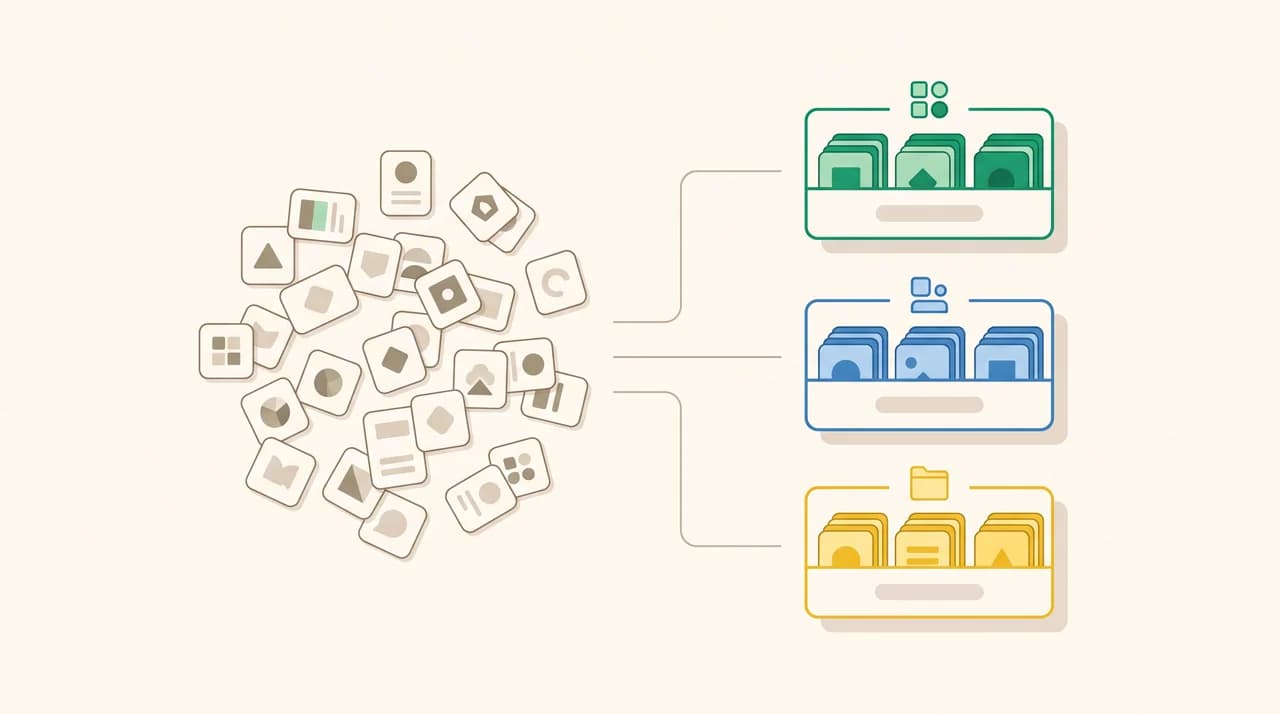
A faster way: a rule you can read, instead of a score you can't#
The alternative to guessing at a black-box score is writing the rule yourself. If you already know you never want to miss your accountant, your landlord, or anything with "invoice" in the subject line, that's an explicit condition — not a behavioral pattern Gmail has to learn from your history first.
AI Emaily's Rules + Context Brain does exactly that: a rule fires the moment a message matches — sender, domain, subject, or label — the first time, not after enough interactions to train a model. It runs alongside the AI triage the app already does, so you're not trading automation for control. We build AI Emaily, and this is one of the concrete reasons the rules layer is kept separate from the AI: some notifications shouldn't depend on your inbox habits from last month.
Frequently asked
See it in AI Emaily
Keep reading
Sources

Written by
Nafiul HasanNafiul Hasan is an entrepreneur and AI automation system builder with 10+ years of experience turning messy, manual workflows into reliable automated systems. He designs and ships AI enterprise solutions end-to-end — the agent logic, the data plumbing, and the product people actually use — and founded AI Emaily to give busy professionals their attention back. He writes here from the builder's seat: what works, what breaks, and how to put AI to work without giving up control.