Apple Mail Taking Up Space on Mac: How to Reclaim It

The short answer
Apple Mail stores three kinds of data locally: cached message bodies, downloaded attachments opened inside the app, and a separate Mail Downloads folder for previewed files. Cached message bodies are safe to remove for IMAP and iCloud accounts — the server holds the original. Attachments can be stripped from messages without deleting the message itself.
Apple Mail stores three separate caches. IMAP and iCloud message bodies are safe to clear — the server has the original. POP3 and On My Mac mailboxes are the only copy.
On this page
If you have ever opened System Settings, clicked through to Storage, and found Mail listed with 10, 20, or even 50 gigabytes used, you are not alone. Knowing how to free up space taken by Apple Mail on Mac is one of the more confusing storage problems on macOS — because the Mail app stores data in several separate places at once, and not all of it is obvious or easy to reach.
The number you see in Storage is a composite: cached message bodies, attachments Mail has downloaded to your drive, and a separate folder for files you have opened from Mail in other apps. Each category has a different cleanup path, and only some of it is safe to delete without affecting your messages. This guide explains what each category is, how to clear it, and what to leave alone.
Before you start: what Apple Mail is actually storing#
Apple Mail keeps a local copy of your messages so that opening your inbox does not require a server round-trip every time. For IMAP, iCloud Mail, and Exchange accounts, this local store is a cache — the server holds the authoritative copy, and Mail can re-download anything it needs. That makes the cached message bodies safe to clear. For POP3 accounts and On My Mac local mailboxes, the local store is not a cache; it is the only copy. Deleting it means deleting the mail permanently.
Attachments add a second layer. When Apple Mail downloads an attachment — either automatically on sync or because you clicked it inside the app — it saves a copy to disk inside the Mail app's data folder. These copies persist long after the email is no longer relevant, and on active accounts they accumulate quickly. You can remove the local attachment copy from a message while keeping the message itself; the attachment remains on the mail server and can be re-downloaded if needed.
The third category is the Mail Downloads folder. When you open an attachment in a third-party app by clicking Open With or dragging it out of Mail, macOS saves a copy in a dedicated folder separate from Mail's own data. This folder lives inside your user Library and is invisible to the Mail app itself. Files in this folder are orphaned copies — deleting them does not affect the message or the attachment on the server.
POP3 and On My Mac mailboxes are a different case
How to free up space taken by Apple Mail on Mac, step by step#
Work through these steps in order. Steps 1 through 3 address the Mail Downloads folder and attachment copies — the safest and fastest things to remove. Step 4 adjusts Mail's download behavior to stop future accumulation. Step 5 clears the message cache itself, which is a heavier operation but safe for IMAP accounts. Step 6 empties the Trash mailbox, which many people forget counts toward their storage total.
- 1
Check how much space Mail is actually using
Open System Settings > General > Storage and wait for the categories to populate. Click the information icon next to Mail to see a breakdown. On macOS Sequoia the breakdown separates message data from attachments; on Ventura and Sonoma it typically shows a combined figure. Note the total before you start so you can confirm the cleanup worked once you are done.
- 2
Clear the Mail Downloads folder
Open Finder, hold the Option key, and click the Go menu in the menu bar. Select Library from the list. Open Containers, then com.apple.mail, then Data, then Library, then Mail Downloads. Everything in this folder is an orphaned preview copy — select all and move to Trash, then empty the Trash. On some macOS versions the folder is also accessible directly at ~/Library/Mail Downloads without the Containers path. Either route reaches the same files.
- 3
Remove attachments from messages inside Apple Mail
Open a message that contains an attachment you want to remove. With the message open, choose Message > Remove Attachments from the menu bar. This strips the local attachment copy from the message while leaving the message text and headers intact. The attachment remains on the mail server for IMAP and Exchange accounts and can be re-downloaded by opening the message and clicking the download icon. Repeat for individual messages, or use a search filter — search for Has: Attachments in the Mail search bar — to find the largest offenders first.
- 4
Adjust Mail to stop downloading attachments automatically
Open Mail > Settings (or Preferences on macOS Ventura and earlier). Go to the Accounts tab, select your account, and click the Account Information tab. Find the Download Attachments dropdown menu and change it from All to Recent or None. With None selected, Mail downloads the message body text but not attached files unless you explicitly click to fetch them. This prevents future accumulation without affecting any existing messages.
- 5
Clear cached message bodies with Mailbox > Rebuild
In Mail, select the mailbox in the sidebar whose cache you want to clear — Inbox, Sent, or a folder you have created. From the menu bar, choose Mailbox > Rebuild. Mail discards the local message cache for that mailbox and re-downloads from the server. The mailbox may appear empty during the process; this is normal and the messages return as the download completes. Run this only for IMAP, iCloud, or Exchange accounts, never for On My Mac local folders.
- 6
Empty the Trash mailbox and erase deleted messages
Deleted messages in Apple Mail move to a Trash mailbox and remain there — still counted toward your storage — until you explicitly empty it. Choose Mailbox > Erase Deleted Items from the menu bar and select the accounts you want to clear. For IMAP accounts this also removes the messages from the server's Trash folder. Give Mail a few minutes to sync with the server before re-checking your storage total in System Settings, because the count updates in the background.
Storage cleanup options across macOS, iOS, and iPadOS#
The steps above apply to Apple Mail on macOS. The iOS and iPadOS versions have fewer controls for managing stored data — there is no Remove Attachments command and no Rebuild option. The table below maps what each platform can actually do.
| Platform | Remove individual attachments | Clear message cache | Stop auto-downloading attachments |
|---|---|---|---|
| macOS Ventura, Sonoma, Sequoia | Yes — Message > Remove Attachments from the menu bar | Yes — Mailbox > Rebuild, one mailbox at a time | Yes — Settings > Accounts > Account Information > Download Attachments |
| iOS 17 / iPadOS 17 and later | No — must delete the entire message to remove the attachment | No direct option; delete and re-add the account in Settings > Mail > Accounts forces a full re-download | No per-account attachment control; Mail for iOS fetches attachments on demand by default |
| iCloud.com (web) | No attachment management interface | Not applicable — iCloud.com reads directly from the server with no local cache | Not applicable |
What to do when the storage total does not drop after cleanup#
After clearing the Mail Downloads folder, removing attachments, and running Rebuild, the storage total in System Settings should fall. If it does not — or does not fall as far as you expect — one of these is usually the explanation.
- macOS updates the Storage panel slowly: The count in System Settings is calculated in the background and can lag several minutes after you empty the Trash or clear cached data. Quit Mail, wait two to three minutes, and reopen System Settings before concluding the cleanup did not work.
- Deleted messages are still occupying iCloud storage: If your account is iCloud Mail and iCloud Drive is enabled, deleted messages may count against your iCloud quota rather than local Mac storage. Check iCloud storage in System Settings > Apple ID > iCloud, and empty the Deleted Items folder on iCloud.com to clear them from the iCloud total.
- The Mail container folder has grown beyond message data: Inside ~/Library/Containers/com.apple.mail, Mail stores metadata, indexes, and temporary files in addition to messages. If Rebuild has run many times, the envelope index can grow unexpectedly large. Quit Mail completely, wait a full minute, and reopen it to allow the index to compact before measuring again.
- A large On My Mac mailbox is the real culprit: If your sidebar shows an On My Mac section, those local folders add to your total and are not cleared by Rebuild. Export any On My Mac mailboxes you no longer need via Mailbox > Export Mailbox, verify the export is readable in a text editor or by re-importing into Mail, then delete the mailbox from the sidebar.
- Spotlight is indexing the Mail folder in the background: A simultaneous Spotlight reindex can cause System Settings to report a temporarily inflated figure. Open Activity Monitor and check whether mdworker or mds are running at high CPU. Wait for the index to complete before re-measuring.
A faster way to keep attachment clutter under control#
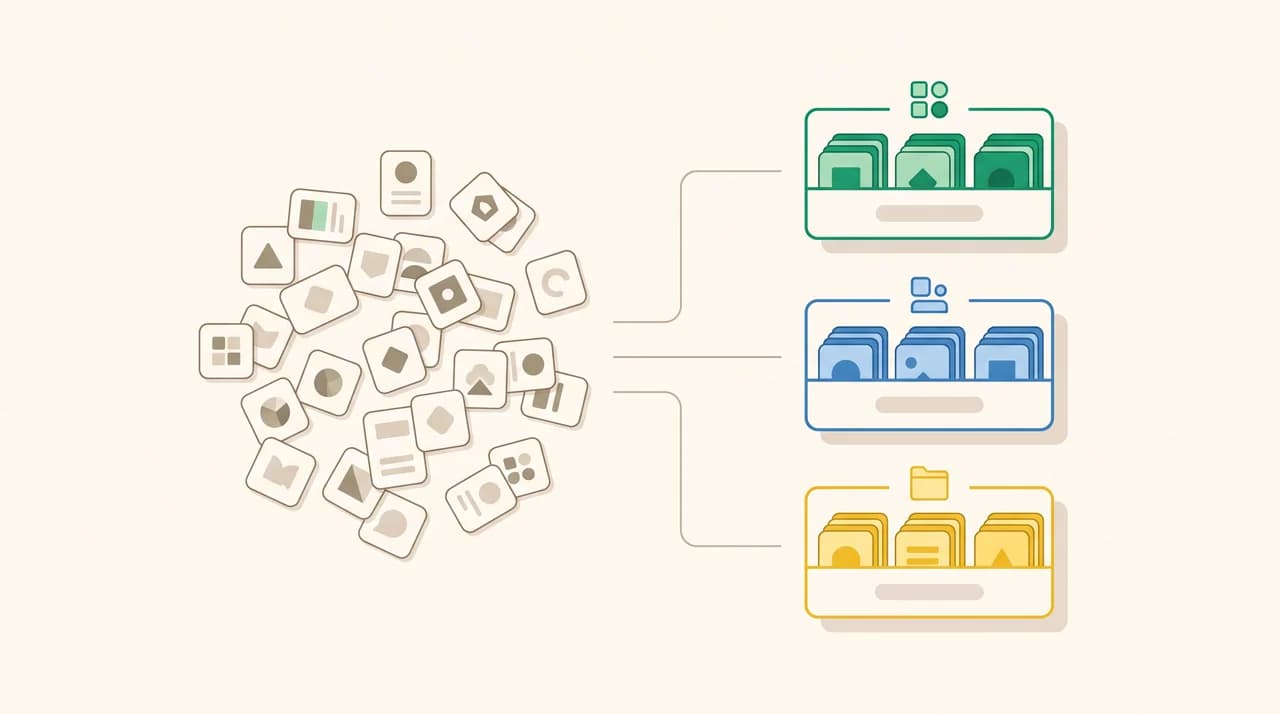
The steps above work, but they are manual and need repeating every few months as new attachments accumulate. The underlying reason is structural: Apple Mail is a client-side app that maintains a local message database, and that database grows continuously as long as you receive mail with attachments.
We build AI Emaily, an AI-native email client that connects Gmail, Outlook, iCloud, and standard IMAP accounts through server-side sync. Because it does not maintain a local attachment archive, you do not end up with gigabytes of downloaded files building up on your Mac. Attachments are fetched on demand rather than cached automatically. If recurring storage pressure from mail is part of what you are trying to solve, the 7-day free trial at aiemaily.com/pricing gives you a real look at whether a different approach makes sense for your workflow.
Frequently asked
See it in AI Emaily
Keep reading

Written by
Nafiul HasanNafiul Hasan is an entrepreneur and AI automation system builder with 10+ years of experience turning messy, manual workflows into reliable automated systems. He designs and ships AI enterprise solutions end-to-end — the agent logic, the data plumbing, and the product people actually use — and founded AI Emaily to give busy professionals their attention back. He writes here from the builder's seat: what works, what breaks, and how to put AI to work without giving up control.