Best Email Tools for Supply Chain Managers (2026): 8 Picks


The short answer
For a supply chain manager spotting shipment exceptions in a flood of routine notifications, AI Emaily is our pick: rules split inbound by carrier and event, the agent surfaces the delay email and drafts the coordination reply for your approval, and every action lands in an audit log. Shortwave is sharper on Gmail archive search.
The best email tool for supply chain managers, ranked by exception triage, carrier/3PL threading, cross-border coordination and approve-before-send AI.
On this page
- 01The short answer, and the top pick
- 02How we compared them
- 03Comparison at a glance
- 04What the exception triage actually looks like
- 05The tools, one by one
- 061. AI Emaily — exception triage, drafted coordination, audited AI action
- 072. Missive — shared logistics@ with internal chat on every thread
- 083. Front — multi-channel carrier and supplier communication
- 094. Shortwave — sharper on Gmail archive search than we are
- 105. Fyxer — an overlay for teams that will not leave Gmail or Outlook
- 116. Superhuman Mail — the keyboard-first personal client
- 127. Hiver — shared logistics@ inside Google Workspace
- 138. Microsoft 365 native — the Outlook stack you already pay for
- 14How to choose for your situation
- 15Where AI Emaily fits, and where it does not
The best email tool for a supply chain manager is not the one with the most AI features. It is the one that finds the delay hiding in two hundred routine notifications, links the exception to the PO and customer order it affects, and drafts the coordination reply — to the 3PL, the customs broker, the account owner — without you retyping the same paragraph every week.
This roundup ranks eight tools against that reality. The axis most listicles skip is what decides the purchase for a supply chain team: not shortcut speed or a nicer sidebar, but whether the tool surfaces the exception fast enough and keeps a defensible trail of what was said afterwards. We build one of the tools, AI Emaily, and are explicit below about the reader we are right for.
The short answer, and the top pick#
For a supply chain manager whose week runs on shipment status, carrier delays and cross-border coordination, AI Emaily is our top pick. Rules split inbound into per-event queues (Exceptions, ETAs, ASNs, Customs Holds, PODs, Invoicing) and per-carrier lanes, so the one email saying a container is stuck in Rotterdam surfaces on top instead of drowning under two hundred ASN acknowledgements. The agent drafts the coordination reply — to the 3PL, the customs broker, the account owner — using a Personal Context brain, and every reply waits on your approval. Runs on Gmail, Outlook and IMAP with no migration.
If supply chain is a cross-functional queue — a planner plus a coordinator plus a customer service lead touching the same thread — a shared-inbox tool is the honest shape. Missive and Front are the shortlist. And if almost all your carrier mail lives in Gmail and your real pain is finding one ETA change from three years of thread history, Shortwave has built harder on Gmail-native semantic search than we have, and we say so plainly below.
Verify packaging on the vendor page before you commit
How we compared them#
A generic mail-client roundup compares features every tool ships — search, snooze, shortcuts, threading. Those are table stakes. What decides the supply chain purchase is how each tool behaves against the shape of the mailbox: high volume, low signal-to-noise, mixed languages, time-critical exceptions buried in routine notifications, and a requirement that any AI action be reviewable after the fact.
- Exception surfacing — can the tool distinguish a delay notice, customs hold, ASN discrepancy or OS&D report from the routine confirmations they arrive alongside, and push the exception to the top of the queue?
- Carrier and lane grouping — can inbound be sorted so all messages on the Shanghai-to-Long Beach lane, or all mail from one 3PL across three business units, land together for the two minutes a week you need to reason about them?
- Attachment fidelity — booking confirmations, BOLs, commercial invoices and PODs arrive as PDFs, scanned images and occasionally spreadsheets. Does the client index attachment content in search, keep every version, and let you compare a revised booking to the original six weeks later?
- Auditable AI action — when the agent drafts a chase to a forwarder or acknowledges an ETA change, is there a per-action log with the exact draft, timestamp, the rule that fired and an undo window? Or does the AI act silently?
- Approve-before-send by default — a tool that auto-sends to a carrier the first time it thinks it understands a delay is the wrong shape. Copilot with approval, not autopilot, is the safe default; autonomy escalates rule-by-rule once you trust each pattern.
- Provider coverage and archive search — supply chain runs on Microsoft 365 (heavily), Google Workspace and a long tail of IMAP for carrier portals and TMS-generated mail. A single-provider tool with weak historical search fails both tests once your archive crosses two years.
Where these criteria come from
Comparison at a glance#
Categories are named honestly. An AI email client, a shared inbox, an overlay on Gmail and the native Outlook stack you already pay for are different tools doing different jobs. Pick the row that matches your team shape before you weigh the price.
| Tool | Category | Best for the supply chain manager who… | Packaging shape | Where it does not fit |
|---|---|---|---|---|
| AI Emaily | AI email client | Wants exception triage, approve-before-send carrier drafts and a per-action audit log across Gmail, Outlook and IMAP | 7-day free trial on Pro/Autopilot (card required, $0 if cancelled before day 7); per-user paid; AI credits with a BYOK option | Not a shared-inbox platform for a five-person logistics team; not a TMS; no native Linux build |
| Missive | Shared inbox with team chat | Runs logistics@ or ops@ with a planner plus a coordinator and wants internal chat beside every shipment thread | Per-user tiers with a trial; AI is off by default — BYOK or Missive credits | AI is not the default posture; you make a BYOK-or-credits decision before you have seen it draft anything |
| Front | Multi-channel shared inbox | Handles carrier and supplier communication across email, SMS, chat and WhatsApp with real assignment and reporting | Starter / Professional / Enterprise, per-seat, seat caps on lower tiers; AI Copilot, QA and CSAT are add-ons except on Enterprise | Add-on structure bites once you turn on the AI; Starter is single-channel and capped |
| Shortwave | AI-native Gmail client | Lives entirely in Gmail and needs semantic search across years of carrier and supplier archive | Paid tiers with a trial — verify current free / paid mix on the live page | Gmail only; single-user client, not a shared logistics@ queue |
| Fyxer | Overlay on Gmail and Outlook | Wants triage and drafted replies without leaving the stock Gmail or Outlook client the rest of the team uses | Per-user paid with a trial — verify packaging on the vendor page | Overlay, not a client — no separate app to switch to; no shared-inbox model |
| Superhuman Mail | Individual keyboard-first client | Is a senior logistics lead who wants a fast personal client separate from the shared exception queue | Per-user paid tiers with an annual discount; enterprise is a custom contract | Individual client only; disambiguate from the Superhuman Suite bundle |
| Hiver | Gmail-based shared inbox | Runs a shared logistics@ on Google Workspace and wants assignment, notes and SLAs without leaving Gmail | Free / Growth / Pro / Elite tiers, per-user; verify seat and feature caps on the live page | Google Workspace only; no equivalent product for a Microsoft 365 tenant |
| Microsoft 365 native (Outlook + Exchange) | The mail stack most supply chain teams already pay for | Has no budget and can spend a Friday on rules, folders, Quick Steps and a shared mailbox | Included with the 365 tenant; no incremental cost | No AI exception surfacing; rules are condition-based, not intent-based; search struggles at years of carrier PDFs |
What the exception triage actually looks like#
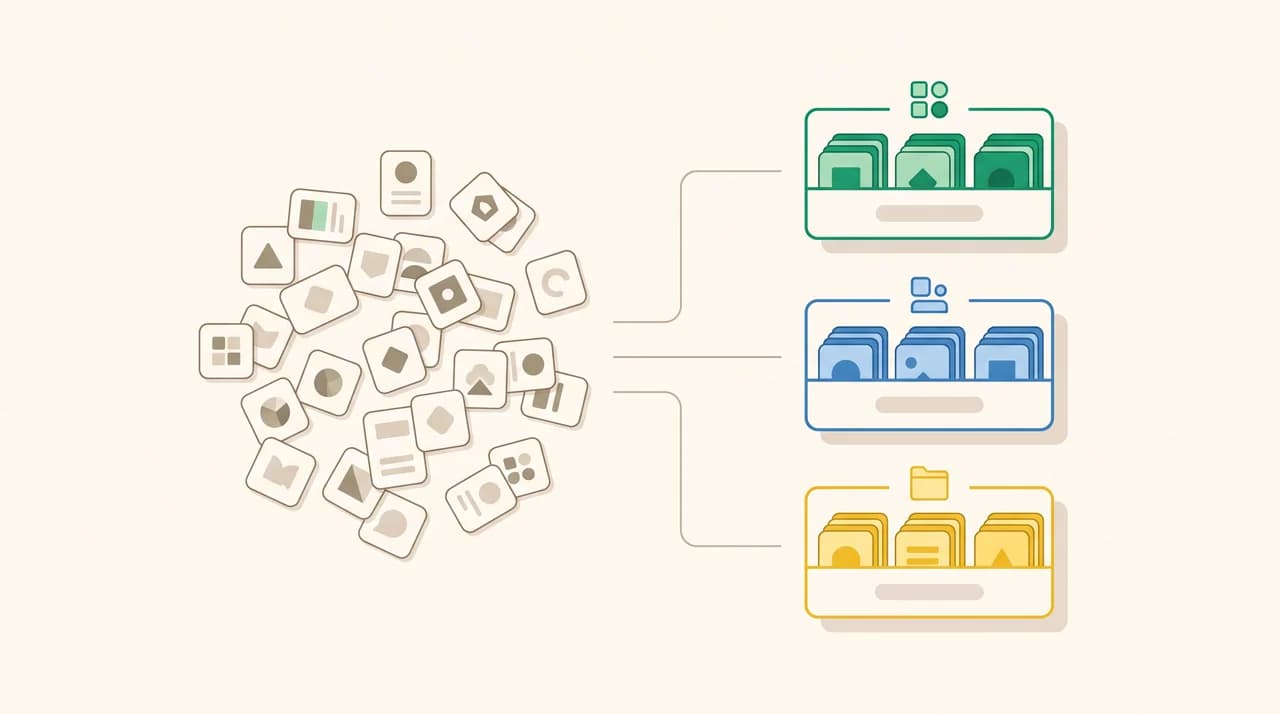
The mental model that separates a supply chain inbox from a normal one is not filtering, it is prioritisation of the anomaly. On a normal day nine out of ten carrier emails are confirmations you do not need to read. On the day that matters, one is a stuck container and the other nine are cover. The tool has to move that one to the top.
That is the axis the shortlist above compares on. Everything else — shortcuts, threading, snooze — matters only if the exception is already in front of you.
The tools, one by one#
Ordered by fit for the archetypal supply chain manager surfacing exceptions and coordinating with carriers, 3PLs and internal stakeholders from one mailbox. Where a tool fits a different reader better, we say so in that section.
1. AI Emaily — exception triage, drafted coordination, audited AI action#
We build AI Emaily. On this page it is the top pick for a specific reader: a supply chain manager whose real problem is finding the ten emails that matter inside two hundred routine notifications, drafting the coordination reply without retyping, and rereading who was told about the disruption and when.
AI Emaily is a real email client — Gmail, Outlook and IMAP, on the web plus a downloadable desktop app on macOS (Apple Silicon) and Windows, a native iOS app and a PWA on Android — with an agent layered on top. The rules brain sorts inbound into per-event queues you name (Exceptions, ETAs Changed, Customs Holds, ASNs, PODs, Rate Requests) and per-lane or per-carrier groupings, keyed on domain, subject tokens or content intent, so a new forwarder's first delay notice lands in Exceptions without a rule for that sender. The agent drafts replies — the 3PL escalation, customer notification, internal note to Planning — using a user-set Personal Context brain and per-carrier profiles. It is not trained on your past sent mail.
Four properties matter for supply chain specifically. Copilot is the default autonomy mode, so no reply to a carrier or customer leaves without your eye on it; Autopilot escalates rule-by-rule once you trust each pattern (auto-acknowledging routine ASN receipts is a natural first step, drafting a delay notice to a customer is not). Every agent action lands in a per-account audit log with the exact draft, timestamp, rule that fired and an undo window — reconstructing when a disruption was first flagged is a filter click. Attachments are indexed in Smart Search, so "revised booking Long Beach August" surfaces the PDF body rather than just the subject. And BYOK lets you route through your own OpenRouter, OpenAI or Anthropic key, so usage lands on your bill under your provider's zero-retention terms.
Where AI Emaily is the wrong pick, plainly. If a planner, a logistics coordinator and a customer service lead share one logistics@ inbox with real per-thread assignment, collision detection and internal chat on every thread, we are not a shared-inbox platform — Missive, Front or Hiver is the honest shortlist. We are also not a TMS, visibility platform or WMS. The tool routes and drafts; it does not track a container against a booking or push status into your ERP.
- Category: AI email client — a real mail client that acts, not a plugin or overlay
- Providers: Gmail, Outlook, IMAP — no migration required to trial it
- Autonomy: Manual / Copilot / Autopilot per rule, with undo and per-action audit log
- Drafting voice: user-set Personal Context plus per-carrier profiles, not scraped from sent mail
- Where we lose: no shared-inbox model for a five-person team; no native Linux build; not a TMS, WMS or visibility platform
2. Missive — shared logistics@ with internal chat on every thread#
Missive's differentiator for supply chain is that every shipment thread has an internal chat channel attached. The deliberation about how to answer — accept the revised ETA, loop the account owner, tell Planning about the new pickup window — lives with the message rather than sprawling into Slack where nobody can find it during the post-mortem. For a two-to-six-person team, that is unusually valuable when a bad week gets debriefed.
Packaging is per-user across Starter, Productive and Business tiers with an annual discount and a trial. AI is off by default; you either bring your own API key from Anthropic, OpenAI or Gemini, or buy Missive credits. Missive fits a small logistics team that already deliberates before replying. It is weaker for a supply chain manager of one who wants AI exception surfacing as the default posture, and for teams that do not want a BYOK-or-credits decision on day one before seeing the tool draft anything.
3. Front — multi-channel carrier and supplier communication#
Front's move is genuine multi-channel: email plus SMS, chat, WhatsApp and social in one queue, with the same assignment, rules and reporting. Verified on the current pricing page, it packages as Starter, Professional and Enterprise — all per-seat, with seat caps at lower tiers. Starter is one channel type only and capped at ten seats; Professional is omnichannel with more automation and a fifty-seat cap; Enterprise removes the caps. AI Copilot, Smart QA and Smart CSAT are bundled at Enterprise but sold as add-ons below. Annual sits roughly a quarter below monthly, and contracts above roughly twenty-five thousand dollars require a mandatory onboarding package.
The right reader for Front is a team whose carriers, 3PLs and factories actually reach them across channels — a driver texting about a delivery window, a factory confirming a revised ship date on WhatsApp, an ocean forwarder calling the shared line. The wrong reader is one for whom ninety-plus per cent of the queue is still email: you pay for channels you never enable, and the add-on structure bites the day you turn on the AI features you assumed were included.
4. Shortwave — sharper on Gmail archive search than we are#
Shortwave has built harder on Gmail-native semantic search across long thread histories than we have. For a supply chain manager who lives entirely in Gmail and whose real pain is finding one mail in a three or four-year carrier archive — the revised booking from an ocean forwarder on a lane you only use in peak, the rate letter countersigned last winter, the customs email you half-remember — Shortwave is the sharper answer. That is a real capability gap on our side, and it is why we recommend Shortwave for that reader rather than pretending otherwise.
Shortwave's packaging is paid tiers with a trial; the free/paid mix on the live page has shifted more than once, so check it at write time. Where Shortwave is the wrong pick: it is Gmail only, so a Microsoft 365 or mixed tenant is out; and it is a single-user client rather than a shared logistics@ queue with assignment and internal notes on a live disruption.
5. Fyxer — an overlay for teams that will not leave Gmail or Outlook#
Fyxer is not a client. It is an overlay that layers triage and drafted replies on top of the Gmail or Outlook your team already uses. For a supply chain function embedded in a larger organisation with a locked email client, that is the shape you have to live with — you cannot install a new app on every machine, and Fyxer does not ask you to.
Where Fyxer fits is a small logistics team on stock Gmail or Outlook, whose IT will approve a permission but not a client swap. Where it does not fit is a supply chain manager who wants a real audit log of every AI action, a per-account approve-before-send policy that survives account changes, or a shared-inbox model with assignment. Verify current AI drafting posture and pricing on Fyxer's live page — packaging here has shifted for every vendor at least once this year.
6. Superhuman Mail — the keyboard-first personal client#
Superhuman is worth naming carefully because the brand now refers to two things. Grammarly acquired Superhuman, the email client, in July 2025, then renamed the parent company Superhuman in October 2025. Today Superhuman Mail is the client; the Superhuman Suite is the wider bundle. Any 2024 article treating Superhuman as an independent startup is out of date and should not decide budget.
As an email tool, Superhuman Mail is a keyboard-first individual client on Gmail and Outlook with strong shortcut discipline, a split inbox and AI drafting. Packaging is per-user paid tiers (Mail Starter, Business and a custom Enterprise contract) with an annual discount. The fit test is narrow: it suits a senior logistics lead whose personal inbox is the bottleneck and whose role is escalation management more than shared-queue operations. It does not model logistics@ as a shared inbox, and it does not aim at approve-before-send with an audit log; those are AI Emaily's shape.
7. Hiver — shared logistics@ inside Google Workspace#
Hiver is the Gmail-native answer to Missive and Front for a supply chain team on Google Workspace. It stays inside Gmail — no separate client to open — and layers assignment, internal notes, statuses, SLAs and shared views on mailboxes like logistics@ or shipping@. Packaging is Free, Growth, Pro and Elite tiers, per user; verify seat caps and which SLA or reporting features sit at which tier on the live page.
The right reader for Hiver is a small-to-mid logistics or customer-service team already on Google Workspace that wants the shared-inbox pattern without users learning a new client. The wrong reader is a mixed Microsoft 365 tenant (no equivalent product), or a manager of one for whom shared-inbox scaffolding is overkill and the actual need is exception triage.
8. Microsoft 365 native — the Outlook stack you already pay for#
For many supply chain teams the honest first answer is not a new tool — it is the Microsoft 365 tenant you already have, configured properly. Outlook rules can route by carrier domain and subject tokens into per-lane folders. Quick Steps can turn a two-click follow-up (categorise, move, reply with a canned response) into one keystroke. A shared mailbox with delegated Full Access and Send As permissions lets a planner and coordinator work the same logistics@ queue without an add-on. Gmail Help documents the equivalent filter and label pattern for Google Workspace.
Where the native stack stops being enough: rules are condition-based ("from this address, apply this label"), not intent-based ("this is a delay notice regardless of sender"). Native drafting is not AI drafting. Search struggles across three years of carrier PDFs, ASN attachments and BOL scans. And nothing gives you an audit log of automated actions, because the native stack does not take automated actions on your behalf.
When you hit any of those ceilings, an AI layer on top of the same account — AI Emaily, or a shared-inbox platform for a team — is the natural next step. Nothing has to move off Outlook or Exchange; the tenant, addresses and archive stay put.
The zero-budget week-one setup
How to choose for your situation#
Match the shape of your function to a tool category first, then compare inside the shortlist. Four questions sort most supply chain inboxes in a couple of minutes.
- 1
Are you the only person on the logistics mailbox, or is it shared?
Solo — an AI email client (AI Emaily, or Shortwave if you live in Gmail and archive search is the real pain). Two to six sharing logistics@ — Missive, Front or Hiver depending on provider. Larger cross-regional team — Front, or split into per-region queues each owned by one coordinator.
- 2
Which mail provider does the company actually use?
Microsoft 365 only — AI Emaily, Front, Missive or Superhuman Mail all work; skip Shortwave and Hiver. Google Workspace only — AI Emaily, Shortwave and Hiver all fit; Missive or Front for the shared shape. Mixed or long-tail IMAP for carrier portals and TMS mail — AI Emaily and Missive both handle it.
- 3
What is the biggest single time sink in your week?
Finding the exception inside routine noise — AI Emaily's rules plus intent-based triage. Finding one old ETA change or rate letter — Shortwave or an AI client with strong attachment search. Coordinating with a planner and customer service lead on the same disruption — Missive, Front or Hiver. Personal inbox overload for a senior lead — Superhuman Mail.
- 4
How much can you spend without a purchase order?
Nothing — start with Outlook or Gmail rules, folders and a shared mailbox. Small monthly — AI Emaily's 7-day free trial on Pro/Autopilot (card required, $0 if cancelled before day 7), then a per-user plan. Team seat budget — Missive, Front, Hiver or Superhuman Mail. Verify current pricing at purchase time.
An email tool is not a TMS or a visibility platform
Where AI Emaily fits, and where it does not#
AI Emaily fits the supply chain manager whose day is triage plus reply plus follow-up. If most of your week is sorting carrier and 3PL responses, spotting the delay hidden in routine notifications, typing variants of "please confirm the revised ETA" and "customer notified, awaiting new pickup window", and reconstructing when a disruption was first flagged, an AI client with rules, per-event queues, approve-before-send drafts and a per-action audit log does that work continuously. Where a cross-functional team shares the mailbox with assignment and internal chat, Missive, Front or Hiver is the right shape. AI Emaily is not a TMS, visibility platform or WMS. We build AI Emaily.
Frequently asked
See it in AI Emaily
Keep reading

Written by
Nafiul HasanNafiul Hasan is an entrepreneur and AI automation system builder with 10+ years of experience turning messy, manual workflows into reliable automated systems. He designs and ships AI enterprise solutions end-to-end — the agent logic, the data plumbing, and the product people actually use — and founded AI Emaily to give busy professionals their attention back. He writes here from the builder's seat: what works, what breaks, and how to put AI to work without giving up control.