Best Help Scout Alternatives in 2026: 8 Options Compared

The short answer
The best Help Scout alternatives in 2026 are AI Emaily for AI on the mailbox you already own, Front, Hiver and Missive for shared inboxes, Zendesk, Freshdesk and Zoho Desk for full ticketing, and Intercom for chat-led support. Pick by whether you need a real helpdesk, a collaborative inbox, or an AI layer on your existing email.
Best Help Scout alternatives in 2026: eight helpdesks, shared inboxes and AI-on-mailbox tools compared on reporting, AI and mixed sales-support queues.
On this page
- 01Who should go straight to a real helpdesk (and skip half this post)
- 02How we compared these eight tools
- 03Eight Help Scout alternatives at a glance
- 041. AI Emaily — best if your 'support inbox' is really a personal mailbox
- 052. Front — best for teams that outgrew Help Scout's workflow
- 063. Hiver — best if you live in Gmail and want to stay there
- 074. Missive — best for teams that discuss threads before replying
- 085. Zendesk — best when the reporting is the whole point
- 096. Freshdesk — best for growing teams graduating from a shared inbox
- 107. Intercom — best when chat is the primary channel and email is secondary
- 118. Zoho Desk — best if you are already in the Zoho stack
- 12How to choose for your situation
- 13The verdict
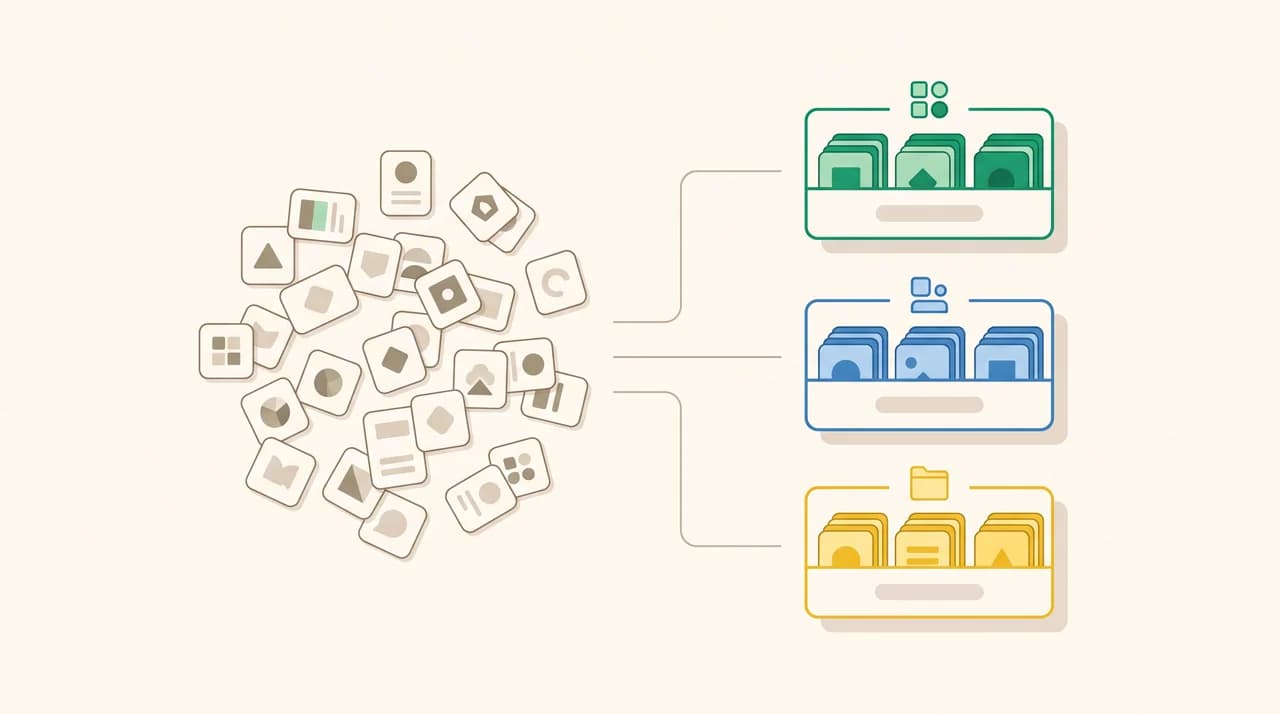
Most Help Scout roundups list ten tools that all do the same job and let the reader work out the categories. The categories are the whole decision. Before you compare features, decide which of three things you are actually buying: a full helpdesk with tickets, SLAs and CSAT reporting; a shared inbox that lets a few people answer one address without stepping on each other; or an AI layer on the personal mailbox you already have.
Help Scout sits in the middle lane and reaches into both — a shared inbox that added AI drafts and an add-on AI Answers bot, with lighter reporting than a full ticketing platform. That is a real position. It is also why people leave it: some outgrow the reporting, some want the AI to actually resolve rather than assist, and some realise their support workflow was never really a helpdesk problem in the first place.
One disclosure before the list. We build AI Emaily. It appears first because this is our site and because it is the honest answer for one specific reader — the founder or small team whose 'support inbox' is a busy email address rather than a ticket queue. It is not the answer for a team of 25 running SLAs, and this post says so plainly in the verdict.
Who should go straight to a real helpdesk (and skip half this post)#
If you have five or more people answering support, need SLA timers, CSAT surveys, a customer portal with self-serve status pages, or Salesforce-grade reporting, the shared-inbox and AI-on-mailbox lanes are not for you. Skip to the Zendesk, Freshdesk and Zoho Desk sections and treat the rest as context.
If your 'support' is a shared address that two or three people answer between other work — leases, refunds, order questions, contractor scheduling — a shared inbox or an AI-on-mailbox tool almost certainly fits better than a ticketing platform. A helpdesk is heavier than the problem, and the retraining cost swamps whatever it gives you.
If you are one person handling everything, you do not need collaboration features at all. You need triage and drafts. That is the narrow lane AI Emaily is built for.
How we compared these eight tools#
This is a documentation-and-vendor-page comparison read in August 2026. We did not run eight platforms in parallel for a month, and any roundup that says it did is stretching. What we can compare honestly is architecture, packaging shape and stated scope — which is also more durable than a speed test that ages the moment either vendor ships a redesign.
The five dimensions that actually decide the fit:
- Category — full helpdesk with ticketing and SLAs, shared inbox that keeps email as email, or an AI layer on your existing mailbox.
- Reporting depth — do you get CSAT, SLA breach reports, agent utilisation and volume trends, or a lighter dashboard aimed at inbox hygiene?
- AI shape — is AI a drafting assistant, an autonomous resolver billed per interaction, or a suggestion layer over a human queue?
- Provider and channel coverage — Gmail-native, Outlook-native, IMAP, plus chat, SMS, WhatsApp and social where relevant.
- Mixed queue handling — how well the tool works when the same address takes both a sales lead and a support question, which is the real shape of most small-team inboxes.
Eight Help Scout alternatives at a glance#
Use this table to narrow to two options, then read the two sections in full. Verify each vendor's current plans on their own pricing page before committing — this category has repriced itself several times in the past year and any figure printed here would be stale by the time you read it.
| Tool | Category | Reporting depth | AI shape | Best for |
|---|---|---|---|---|
| AI Emaily | AI on your existing mailbox | Inbox and agent-run audit, not helpdesk analytics | Agent that triages, drafts and (with approval) sends | Solo or 1–3 person teams whose support runs through email |
| Front | Shared inbox platform, omnichannel | Rules, macros, workflow analytics | Copilot and Autopilot as add-ons on lower tiers | Teams that need heavier workflow than Help Scout gives |
| Hiver | Shared inbox, Gmail-native | SLA, CSAT and volume reports on higher tiers | AI Copilot and Agents on paid tiers | Teams that live inside Gmail and want to stay there |
| Missive | Collaborative inbox and chat, multi-provider | Light — inbox and rules, not CSAT | BYOK AI drafts, rules and summarisation | Small teams that also do internal chat on threads |
| Zendesk | Enterprise helpdesk suite | Deep — SLAs, CSAT, custom dashboards | Copilot add-on plus Automated Resolutions billed per outcome | Larger support orgs that need reporting and governance |
| Freshdesk | Full helpdesk with a free tier | SLA, CSAT and analytics on paid tiers | Freddy AI split across Copilot and Agent add-ons | Growing teams graduating from a shared inbox |
| Intercom | Messaging-led support with email | Fin resolution reports and conversation analytics | Fin agent billed per resolution | Product-led teams where chat is the primary channel |
| Zoho Desk | Ticketing, budget-friendly | SLA and CSAT on paid tiers | Zia assist across tiers | Teams already inside the Zoho stack |
1. AI Emaily — best if your 'support inbox' is really a personal mailbox#
AI Emaily is an AI email client that connects Gmail, Microsoft 365 and Outlook, and standard IMAP accounts into a single inbox. It sits in a different lane from Help Scout: not a ticketing platform and not a team helpdesk, but an AI layer on the personal mailbox that already handles your work. We build it — so read this as the informed pitch it is, and weigh it against the concession section at the bottom.
It runs at three authority levels, set per account. Manual is a fast plain client. Copilot is the default — the agent triages, files and drafts, and nothing reaches a recipient until you approve it. Autopilot is gated, with an undo window and an audit log that records every action and the reason for it. For someone whose support work is 'answer emails from the same address, mostly in the same shapes, with the same context every time,' those three modes cover the load without a ticketing layer sitting between the mail and the reply.
Voice matching comes from a Personal Context brain and per-client profiles you write and edit directly. We do not train on your mail and we do not read your archive to build a writing style. Model providers run under zero-retention terms.
Where AI Emaily does not compete: SLAs, CSAT surveys, ticket status pages, agent utilisation reports, customer portals — none of that exists here, and it is not on the roadmap. If a support manager needs to prove that 92% of tickets were answered within four hours last quarter, we are the wrong tool and you want Zendesk, Freshdesk or Help Scout itself. The desktop is a real downloadable app but Apple Silicon only and Electron-shell, Windows ships an installer, iOS is native, Android is a PWA, there is no Linux build, and packaging is a 7-day free trial on Pro or Autopilot with the card charged at day 7 if not cancelled — no permanent free plan. Current details are on our pricing page.
2. Front — best for teams that outgrew Help Scout's workflow#
Front is a shared inbox platform for teams that need more workflow than Help Scout provides but do not want to move to full ticketing. It consolidates email, SMS, WhatsApp, chat and social into one queue that a team works together, with assignment, internal comments beside each thread and macros for repeatable replies.
Front is the natural landing point when Help Scout's reporting or automation stops keeping up but a full helpdesk feels like the wrong shape. Rules, macros and SLA workflows are more configurable than Help Scout's, and the omnichannel handling is stronger — Help Scout is still email-first even after channel additions.
Two facts to check on front.com/pricing before you commit. Verified August 2026: three tiers — Starter, Professional, Enterprise — with per-seat pricing. Starter is one channel type only and capped at 10 seats. AI Copilot, QA and CSAT are add-ons on Starter and Professional and included only on Enterprise; Autopilot, their per-conversation AI agent, is an add-on on every tier. The onboarding package is mandatory over a stated contract threshold. Confirm the current numbers on their own page.
3. Hiver — best if you live in Gmail and want to stay there#
Hiver runs shared inboxes inside Gmail. There is no separate app to open and no context switch — the shared address, assignments, notes and SLA timers all live in the Gmail interface your team already uses. If half the reason you are leaving Help Scout is 'we have to open another tool,' this removes that problem entirely.
It is the closest match on packaging shape to Help Scout: a permanently free tier for very small teams, then per-seat plans with SLA and CSAT reporting appearing on the higher paid tiers, and AI Copilot plus AI Agents on paid tiers. The trade-off is that the Growth tier caps seat count, so a team that grows past it is pushed onto Pro whether or not they need Pro's other features. Verify the current tier structure on hiverhq.com/pricing.
The narrow limit: Hiver is Gmail-only. If your organisation is on Microsoft 365 or a mixed provider setup, this one is a hard no — and Front or Zendesk are the honest choices instead.
4. Missive — best for teams that discuss threads before replying#
Missive is the shared inbox for teams whose real workflow is 'we talk about this internally, then one person replies.' Every thread has a chat panel beside it — the discussion sits with the message rather than in a separate Slack channel that loses context two days later. It connects to Gmail, Outlook, IMAP and other channels alongside email.
It fits Help Scout users who cared less about SLA metrics and more about collaboration — the ones who kept using internal notes on every thread and forwarding emails to teammates for a second opinion. Missive makes that the primary workflow rather than a bolt-on.
AI is present but shaped as automation rather than an autonomous resolver: drafts, summarisation, translation and rule-driven actions, with the choice to bring your own API key or use Missive AI credits. Verified on missiveapp.com/pricing August 2026: three tiers (Starter, Productive, Business), per-seat with an annual discount, and a 30-day trial with no card required. Reporting is lighter than a true helpdesk; do not pick Missive if CSAT dashboards are why you are leaving Help Scout.
5. Zendesk — best when the reporting is the whole point#
Zendesk is the mature enterprise helpdesk. It handles ticketing, SLAs, CSAT, custom dashboards, workforce management and multi-channel intake at a depth no shared inbox matches. For a support organisation of any real size, this is the default and Help Scout is the lightweight alternative you outgrow.
The packaging is layered per seat: Support Team through Suite Enterprise, with a Support-only ticketing tier at the bottom and Suite tiers stacking channels and features upward. AI is priced separately in 2026 — Copilot is a per-seat add-on that requires Suite Professional or higher, and Automated Resolutions from the AI Agents product bill per verified resolution above a committed pack. Third-party breakdowns describe a fully-loaded Suite Professional seat with Copilot roughly double the base price. Check zendesk.com/pricing for current tiers before committing.
The honest reason to pick Zendesk over Help Scout: your reporting needs are past what Help Scout's dashboard shows, or your compliance and governance requirements (audit trails, SSO across every tier, granular roles) exceed Help Scout's model. The honest reason to skip it: if none of that applies, Zendesk is heavier than the problem and the seat maths will bite.
6. Freshdesk — best for growing teams graduating from a shared inbox#
Freshdesk is the middle option between a shared inbox and full Zendesk-grade helpdesk. It has a free tier for a small team, then paid tiers layering in SLA management, CSAT surveys, custom reporting, a customer portal and multichannel intake. Feature by feature it covers most of what Help Scout does, plus a fuller ticket workflow.
Freddy AI is Freshworks' AI layer and it splits across Copilot (agent assist) and Agent (autonomous resolutions), both sold as add-ons on top of seat pricing. Verify the current split on freshworks.com/freshdesk/pricing, because Freshworks reorganises the Freddy packaging every few quarters and any secondhand description ages quickly.
Freshdesk fits the team that started on Help Scout, is now handling more volume than the reporting can visualise, but does not need Zendesk's governance model. It is the natural next stop rather than the aspirational one. Where it stops fitting: if you need Zendesk-grade workforce management or if you are deeply invested in the Zendesk Sunshine data model, Freshdesk will not replace those.
7. Intercom — best when chat is the primary channel and email is secondary#
Intercom is a messaging-first support platform. Fin, its AI agent, resolves customer conversations autonomously and is billed per resolution rather than per seat. If your product has an in-app chat widget and email support is a smaller share of your volume, Intercom is likely a better fit than any inbox-shaped tool including Help Scout.
It belongs on this list because a real slice of Help Scout users were using Beacon (the Help Scout chat widget) alongside the inbox and slowly realising that chat was becoming the bigger surface. When that inverts, the correct move is to a chat-native platform, not to a heavier email tool.
The trade-off is directional. Intercom is not primarily an email inbox and treating it as one is fighting the product. If email is still your main channel, Intercom is the wrong optimisation and Front or Freshdesk are the better fits. Verify current Fin resolution pricing and seat tiers on intercom.com/pricing — this one moves.
8. Zoho Desk — best if you are already in the Zoho stack#
Zoho Desk is a full-featured ticketing platform with a free tier and per-seat paid plans that layer in SLA, CSAT, multichannel intake and a customer portal. Feature parity with Freshdesk is closer than most reviews acknowledge; where Zoho stands out is integration with the rest of the Zoho suite — Zoho CRM, Books, Assist, Analytics.
If your organisation already runs Zoho CRM and Zoho Books, Zoho Desk collapses to a natural extension rather than a new vendor with a new bill and a new SSO integration. Zia, Zoho's AI layer, is available across tiers as an assist rather than an autonomous resolver — closer to Help Scout's original AI Assist than to Intercom's Fin or Zendesk's Automated Resolutions.
Where Zoho Desk is not the pick: if you are not already in the Zoho stack, the pull is weaker, and Freshdesk or Help Scout itself will feel more polished on the standalone experience. Verify plan structure on zoho.com/desk/pricing.
How to choose for your situation#
Match your row, then try one option before adding a second. Trialling eight support platforms simultaneously is how teams end up still on the one they set out to leave.
| If this is you | Start with | Second look |
|---|---|---|
| One person answering support from a personal or shared inbox | AI Emaily | Missive, if a second person joins later |
| 2–4 people sharing one address, discussing before replying | Missive | Hiver, if you are all in Gmail |
| Small team, Gmail-native, wants to stay in Gmail | Hiver | Missive, if internal chat matters more than SLAs |
| Team that outgrew Help Scout's workflow but not its category | Front | Freshdesk, if you need CSAT and SLA reporting |
| Growing team that needs full ticketing without enterprise cost | Freshdesk | Zoho Desk, if you already use Zoho |
| Larger support org, deep reporting and governance mandated | Zendesk | Freshdesk, if the seat maths do not work |
| In-app chat is your dominant channel, email is secondary | Intercom | Front, if email volume grows back |
| Already inside the Zoho suite for CRM and finance | Zoho Desk | Freshdesk, if the standalone polish matters |
Three questions to ask any AI that resolves or replies on your behalf
The verdict#
There is no universal winner in this roundup because there is no universal reader. Help Scout occupies a real middle position, and the honest replacement depends on which side of that middle you are actually falling off.
AI Emaily is our pick for the solo operator or 1–3 person team whose 'support inbox' is really a busy email address — a founder, a contractor's admin, a small agency, a solo consultant. We are the AI-on-mailbox lane, and for that reader we are the best fit here. We build it. If you need SLA reports, CSAT surveys or a customer portal, we are the wrong tool and this post says so plainly.
For a team of five to twenty-five that has outgrown Help Scout on workflow but not on category, Front is the strongest shared-inbox platform. For Gmail-native teams that want to stay in Gmail, Hiver is the natural next step. For teams whose real workflow is internal discussion before reply, Missive is built around that.
For any organisation that genuinely needs ticketing depth, Zendesk is the mature choice and Freshdesk is the pragmatic mid-market alternative; Zoho Desk earns its place if you are already inside the Zoho stack. If chat is the dominant channel, Intercom is a different product category and the right one for that shape.
Whichever you pick, verify the current pricing structure on the vendor's own page on the day you commit. This category has repriced itself too often for any figure in a comparison to stay reliable.
Frequently asked
See it in AI Emaily
Keep reading
Sources

Written by
Nafiul HasanNafiul Hasan is an entrepreneur and AI automation system builder with 10+ years of experience turning messy, manual workflows into reliable automated systems. He designs and ships AI enterprise solutions end-to-end — the agent logic, the data plumbing, and the product people actually use — and founded AI Emaily to give busy professionals their attention back. He writes here from the builder's seat: what works, what breaks, and how to put AI to work without giving up control.