Email List Hygiene: A Practical Cleaning Checklist

The short answer
Remove hard bounces and confirmed spam complaints straight away, and suppress role addresses like info@ by policy. For quiet subscribers, don't judge on opens alone — Apple's privacy pre-fetch made them unreliable. Send a re-engagement email first, and delete only those who ignore it and show no clicks, replies, or purchases.
How to clean an email list safely: what to remove and in what order, and how to keep subscribers who read in the preview pane.
On this page
- 01Clean in order of certainty, not effort
- 02Criteria that actually matter
- 03A scoring table: what to remove and when
- 04Worked example: cleaning a 20,000-address list
- 05How often should you clean your email list?
- 06Why stale lists are the riskiest sends
- 07Is an email verification service worth it?
- 08Red flags that you're cleaning wrong
- 09What we'd actually use — and where AI Emaily fits
Learning how to clean an email list safely is mostly a lesson in restraint. The dangerous move is not keeping a few dead addresses — it is deleting people who are still reading. A good clean removes what is provably bad and then slows down before it touches anyone who might still want your mail.
This is an operating checklist, not a pitch for a validation vendor. It covers what to remove and in what order — hard bounces first, role addresses by policy, long-term non-openers on a schedule — and how to avoid cutting subscribers who simply read in the preview pane.
Clean in order of certainty, not effort#
Sort every removal decision by how sure you are. Some addresses are provably bad and can go today. Some are risky by category and should be suppressed by policy. And some are only quiet — which is not the same as gone.
- Remove now: hard bounces and confirmed spam complaints. These are settled facts, not judgment calls.
- Suppress by policy: role addresses, unverifiable imports, and anyone who never confirmed consent.
- Remove on a schedule: long-term non-engagers, but only after a genuine last-chance email.
Criteria that actually matter#
The signal most lists still lean on — the open — is the one you can trust least. Since Apple's Mail Privacy Protection shipped in 2021, Apple Mail pre-loads images for a large share of recipients, so an open can register without anyone reading the message. A subscriber can also read your whole email in the preview pane with images turned off and never trip the tracking pixel.
So judge engagement on actions that take a human, and weigh them roughly in this order:
- Replies and direct responses — the strongest sign a real person is there.
- Link clicks, especially to your own site, plus any purchase, login, or account activity.
- Recent explicit consent — a signup, a preference update, a form fill.
- Opens — useful only in aggregate, and never the sole reason to delete anyone.
Do not delete on opens alone
A scoring table: what to remove and when#
Use this to set the action and the urgency for each category. Removal risk is the chance you cut someone who was still worth keeping — the whole reason to slow down as it climbs.
| Address category | Signal | Action | Timing | Risk of removing a good subscriber |
|---|---|---|---|---|
| Hard bounce | Mailbox does not exist / permanent reject | Suppress and remove | Immediately, ideally automated | None |
| Confirmed spam complaint | Marked as spam / feedback-loop report | Suppress permanently | Immediately | None |
| Repeated soft bounces | Mailbox full or temporary rejects over weeks | Suppress after a set number of tries | After about 5 to 7 failures | Very low |
| Role / functional address | info@, sales@, support@, postmaster@ | Suppress by policy unless individually opted in | At import and on review | Low |
| Unverifiable import | Old, purchased-risk, or no consent record | Verify or suppress before sending | Before the next send | Low to medium |
| Long-term non-engager | No open, click, reply, or visit in your window | Re-engagement email, then remove | On a schedule, after the flow | Medium to high |
| Recently quiet | Was engaged, now cooling off | Keep; reduce frequency | Watch, don't cut | High |
Worked example: cleaning a 20,000-address list#
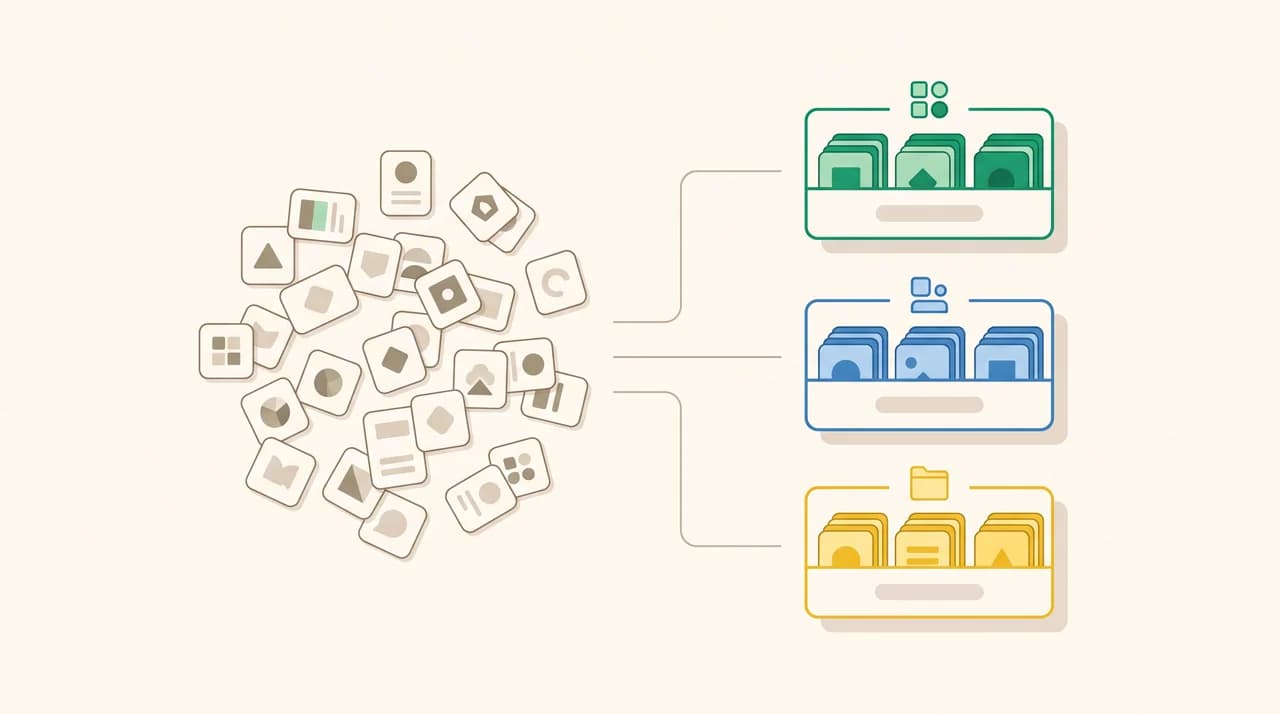
Say you have 20,000 subscribers and a rising spam-complaint rate. Work top-down through the categories, and suppress rather than delete so nothing is lost if you re-import later.
- 1
Pull the provable removals
Export hard bounces and complaint records from your sending platform. On this list that might be roughly 900 addresses. Move them to a suppression list — do not just delete the rows.
- 2
Apply the role-address policy
Filter for info@, sales@, support@, admin@ and the like. Suppress any without an individual opt-in — perhaps 300 more. One person on a shared box can flag your mail for everyone, so this lowers complaint exposure too.
- 3
Segment the quiet, don't delete them
Everyone with no click, reply, or visit in the last 90 days goes into a re-engagement segment — say 4,000 people. They are not removed yet.
- 4
Send one genuine last-chance email
Ask plainly whether they still want to hear from you, with a clear stay-subscribed action. Anyone who clicks or replies is kept and moved back to your active list.
- 5
Remove only the true non-responders
After the flow closes, suppress the part of the segment that showed no signal at all — maybe 2,500 addresses. That is a cut made with evidence, not a guess.
Suppress, don't destroy
How often should you clean your email list?#
Some hygiene should run continuously; some belongs on a calendar. Automate the parts that are settled facts, and reserve human review for the judgment calls.
- Every send: your platform should suppress hard bounces and complaints automatically. This is table stakes, not a monthly chore.
- Monthly: review soft-bounce build-up and engagement trends.
- Quarterly: run a role-address and consent audit, and start a re-engagement flow for the quiet segment.
- Before any large or reactivation send: verify a list that has been sitting unused, because dead addresses turn into spam traps over time.
Why stale lists are the riskiest sends#
The interval matters most for old or dormant lists. A recycled spam trap is often a real address that went dead and was later repurposed to catch senders who never clean — which is why a long-unmailed list is the riskiest thing you can send to.
The stakes are concrete now. As of 2026, Google asks bulk senders to keep their reported spam-complaint rate under 0.1% and never let it reach 0.3%, and a dirty list is the fastest way to blow past that. A one-click unsubscribe (RFC 8058) is also required by Google, Yahoo and Apple for marketing mail, so making it easy to leave is part of hygiene, not the opposite of it. Check the current thresholds on each provider's own sender guidelines before a big campaign — they tighten over time.
Is an email verification service worth it?#
Sometimes — for a specific job, and not as a substitute for permission. A verification service checks address syntax, whether the domain and mailbox can receive mail, and flags disposable or known-problem addresses. That is genuinely useful before you send to a list you have not mailed in a while.
What it cannot tell you is whether someone consented or still cares. Verification proves an address is deliverable; it says nothing about whether the person wants your mail. So it earns its place before a risky import or a reactivation, and matters much less if you clean bounces continuously and mail only engaged people.
These services are usually usage-metered — you pay per address checked — so the cost scales with how big and how dirty the list is. Verify current pricing and limits on the provider's own site before you commit; this category changes often.
Red flags that you're cleaning wrong#
A few patterns almost always mean the clean is doing more harm than good:
- Your list shrinks fast on opens alone while replies stay flat — you are cutting Apple Mail readers, not dead weight.
- You buy or scrape addresses to replace the ones you removed, which puts back the exact trap and complaint risk you just cleared.
- You hard-delete instead of suppressing, so bounced addresses creep back on the next import.
- You send to a list untouched for a year with no verification and no re-permission — the shortest path to a spam trap.
Buying a list undoes the whole clean
What we'd actually use — and where AI Emaily fits#
List cleaning is a sending-side job, so the tools that do the real work sit with your outbound stack. For most senders that is two things: your email service provider's own suppression and sunset tools — automatic bounce and complaint suppression, engagement segments, and a re-permission flow, which handle the bulk of ongoing hygiene — and a dedicated email verification service for the narrow case of a risky import or a long-dormant list, priced per address checked.
AI Emaily is not one of those. We are an AI email client for the inbox you receive in — not an email service provider, not a bulk sender, and not a list-validation tool. We do not clean your outbound sending list, and any page that told you we did would be pointing you at the wrong thing. We build AI Emaily, so we will say plainly where the line is.
Where we are the adjacent tool is the receiving side of all this. If you run a role address like info@ or support@ as a shared team inbox, AI Emaily triages and drafts across it, so a do-not-mail policy does not have to mean a do-not-staff one. The bounce-backs, unsubscribe confirmations, and complaint notices your cleaning generates all arrive as ordinary mail — AI Emaily sorts that noise out of your way and keeps unsolicited cold outreach and phishing filtered, with approve-before-send and an audit trail on anything it does for you.
So: clean your list in your sending platform, verify risky imports, and let a client like AI Emaily handle the inbox those campaigns talk back to. The receiving side runs on a 7-day free trial (card required, and $0 if you cancel before day 7) — never a free-forever plan.
Frequently asked
See it in AI Emaily
Keep reading
Sources

Written by
Nafiul HasanNafiul Hasan is an entrepreneur and AI automation system builder with 10+ years of experience turning messy, manual workflows into reliable automated systems. He designs and ships AI enterprise solutions end-to-end — the agent logic, the data plumbing, and the product people actually use — and founded AI Emaily to give busy professionals their attention back. He writes here from the builder's seat: what works, what breaks, and how to put AI to work without giving up control.