What to Do With a Departing Employee's Email in Google Workspace

The short answer
Suspend the account immediately — do not delete. Set a mail forward or auto-reply, transfer ownership of any shared documents, and export the mailbox if you need an offline archive. Delete the account only after your legal retention window closes. This sequence preserves data, satisfies retention obligations, and frees the licence without risking irreversible data loss.
Suspend first — deleting a Workspace account starts permanent data removal and there's no retrieval path after 20 days. Forward mail, transfer Drive files, export the mailbox, then delete.
On this page
When an employee leaves, the instinct is to act quickly — disable the account, reclaim the licence, move on. The problem is that disable and delete are not the same thing in Google Workspace, and treating them interchangeably risks data loss that becomes permanent within 20 days of the deletion confirmation. A deleted Gmail account takes its entire mailbox, calendar history, and Drive files with it unless explicit steps were taken first.
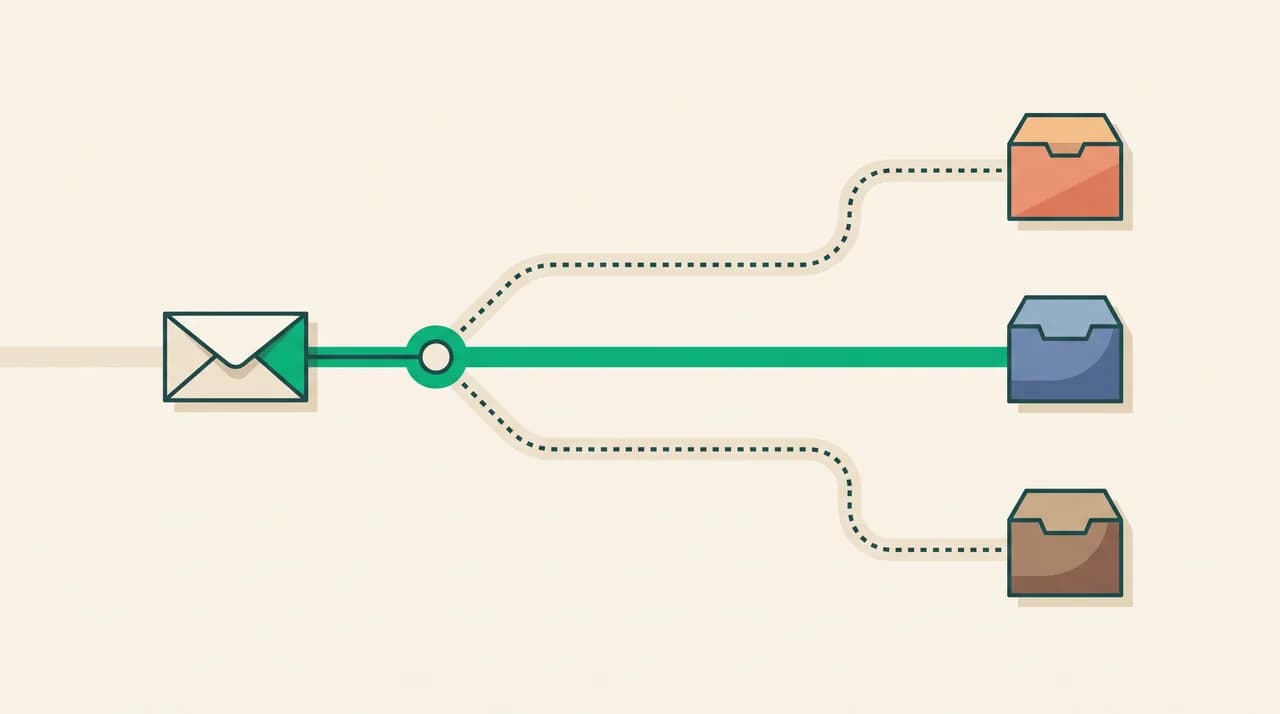
The right sequence has four stages: suspend the account to cut access without destroying data, set up forwarding or an auto-reply so incoming mail reaches the right person, transfer any files or calendars that need a new owner, and delete only after your legal or operational retention window has closed. How those stages work — and where they can silently fail — is what this guide covers.
The short answer: suspend, preserve, then reclaim#
Suspension is the correct first move. A suspended Google Workspace account retains all data — mail, Drive files, Calendar entries, Contacts — while blocking the user from logging in. The admin can forward incoming mail to a manager, set a custom auto-reply, and retrieve files at any time without risk of data loss.
Deletion is fast and final. Google begins removing data immediately after account deletion. Outside of a 20-day admin-initiated restore window or a prior Google Vault export, there is no retrieval path. Most organisations discover this gap when a legal or HR request arrives weeks after the account was cleaned up.
The licence question should sit at the end of the sequence, not the beginning. Admins often delete accounts early because of the monthly licence bill. The safer approach is to suspend first — which preserves the seat but cuts access — and then decide between deleting the account outright or moving it to an archived-user status once the retention question is settled.
Before you start#
Four things to confirm before you touch the account:
- Admin console access: Suspending, forwarding, deleting, and transferring data all require access to admin.google.com with the User Management privilege. Confirm your admin role before you start.
- Google Vault availability: Vault — the primary tool for litigation holds and full mailbox export — is included in Business Plus and Enterprise editions. Business Starter and Business Standard users do not have Vault, which affects the export options available.
- Retention obligation: Many industries define minimum retention periods for business email, commonly three to seven years. Some privacy regulations require deletion on request. Know which obligation applies to this person's role and jurisdiction before making a decision that cannot be undone.
- Who receives forwarded mail: Identify the manager or team inbox that should receive the departing employee's incoming messages. Forwarding is set in the Admin console and applies to all inbound mail for as long as the account exists.
Suspension does not free the licence
Steps: the full offboarding sequence for email#
- 1
Step 1: Suspend the account immediately
In the Admin console at admin.google.com, go to Directory, then Users. Locate the account and click the user's name to open their profile. Select the three-dot menu in the top right and choose Suspend user, then confirm. The user loses access to all Workspace services immediately. Mail addressed to them continues to deliver and is held in the mailbox — it does not bounce — until you configure forwarding or an auto-reply.
- 2
Step 2: Set up mail forwarding and an auto-reply
With the account suspended, open the user's profile in the Admin console, navigate to Gmail settings for that user, and enter a forwarding address — typically the departing employee's manager or a shared team inbox. Save the setting. Forwarding propagates within 24 hours. To set an auto-reply so external contacts know the person has left, use admin impersonation: open the user's Gmail account from the Admin console using the Sign in as this user option, configure the out-of-office reply in Gmail Settings, then re-suspend. Forwarding and auto-reply can run simultaneously — inbound mail is both forwarded and answered with the responder.
- 3
Step 3: Transfer Drive files and calendar ownership
Open the user's profile in the Admin console and select Transfer app data. Enter the email address of the new owner and confirm. Google reassigns all Drive items the user owned — Docs, Sheets, Slides, Folders — to the new owner. The transfer is asynchronous; Google sends an email to the admin when it completes, and the job can take several hours for large accounts. Only items the user owned are transferred — files the user had edit access to but did not own remain unchanged. If the transfer fails, check whether the receiving account is over its Drive storage quota. Calendar events where the user is the organiser are handled separately: use the Admin console's calendar tools to release any room or resource bookings and reassign upcoming events to a new organiser.
- 4
Step 4: Export the mailbox if required
If you have Google Vault, open vault.google.com, create a matter for this offboarding case, and run an export for the user's account. The export produces a ZIP archive in MBOX format, suitable for long-term offline storage. If you are on an edition without Vault, you can use admin impersonation to access the account and run a Google Takeout export at takeout.google.com — the Gmail export is also in MBOX format and can be opened in most email clients. Store the archive per your data retention policy before proceeding to deletion.
- 5
Step 5: Delete the account after the retention window closes
When the applicable retention period has elapsed, return to the user's profile in the Admin console and select Delete user. You will be prompted to transfer any remaining Drive files — confirm this is done before proceeding. After deletion, the account enters a 20-day recovery window during which an admin can restore it via Directory, Users, Recently deleted. After 20 days, the data is permanently gone and the licence seat is freed. Do not skip the export in Step 4 and rely on this recovery window as a substitute — it is an emergency fallback, not a backup strategy.
How the options compare: suspend, archived user, and delete#
Three account states are relevant during offboarding. Suspension is the holding state. Deletion is the terminal state. Archived user — a reduced-cost seat status available on Business Starter, Standard, and Plus editions — is the middle path: the mailbox is preserved read-only, incoming mail bounces, and the seat costs less than a full active licence. The right choice depends on how long you need the data and whether you need to forward or search it.
| State | Data preserved | User can log in | Mail delivered | Admin can search mailbox | Licence cost | Reversible |
|---|---|---|---|---|---|---|
| Suspended | Yes — full mailbox intact | No | Yes — held in mailbox | Yes, via Vault or admin impersonation | Full active seat rate | Yes — reactivate anytime |
| Archived user | Yes — read-only mailbox | No | No — incoming mail bounces | Yes, via Vault if the edition includes it | Reduced archived-user rate | Yes — reactivate to active |
| Deleted | No — purged after 20-day restore window | No | No — address ceases to exist | No, after restore window closes | None — seat freed immediately | Partial — 20-day window only |
What to do when it does not work#
Forwarding does not activate. The rule is saved in the Admin console but messages are not arriving at the destination. The most likely cause is that the setting has not yet propagated — changes can take up to 24 hours to apply to all incoming mail paths. If mail is still going to the suspended mailbox a full day after setup, re-open the Gmail settings for the user in the Admin console, verify the forwarding address is correct and saved, and allow another 24 hours before escalating.
The Drive transfer fails or does not complete. The app data transfer job is asynchronous, and failure is often silent in the UI — Google emails the admin when the job errors. The most common cause is a storage quota overage on the receiving account. Check the receiving user's Drive allocation in the Admin console and either increase their storage or choose a different transfer recipient with sufficient headroom.
The mailbox cannot be exported after the account was deleted. There is a 20-day window after deletion during which an admin can restore the account from Directory, Users, Recently deleted. After that window, the data is permanently removed with no exception or appeal process. If that deadline has passed and the data is needed for a legal matter, there is no internal recovery path — which is why the Vault or Takeout export in Step 4 is not optional for any account with a retention obligation.
The auto-reply does not send to external contacts. Admin impersonation on a suspended account can behave inconsistently depending on the Admin console configuration. If impersonation is blocked while the account is suspended, temporarily reactivate the account, sign in as the user to set the out-of-office reply, then re-suspend. Also verify in the Gmail settings that the out-of-office scope is set to send to people outside the organisation — the default is often domain-only.
Do not treat the 20-day restore window as a backup
A faster way: AI Emaily for the inbox absorbing forwarded mail#
The five steps above handle offboarding correctly. The friction point comes afterward: the manager or team inbox that receives the departed employee's forwarded mail now has higher volume, a mix of existing client threads and new contacts who do not know anything has changed, and no obvious way to triage the load faster.
We build AI Emaily — an AI-native email client that connects to any Google Workspace address, including an inbox absorbing forwarded mail. The assistant categorises incoming threads automatically, surfaces the ones that need a reply, and can draft responses using the receiving person's user-set Personal Context brain and client profiles. It does not read through the departed employee's sent history to do this. Every draft goes through a Copilot approval gate before it sends, and all activity is recorded in an audit log.
If your team is taking on a former colleague's client relationships through a forwarded inbox and the volume is immediately higher than expected, a 7-day free trial is available at aiemaily.com/pricing.
Frequently asked
See it in AI Emaily
Keep reading

Written by
Nafiul HasanNafiul Hasan is an entrepreneur and AI automation system builder with 10+ years of experience turning messy, manual workflows into reliable automated systems. He designs and ships AI enterprise solutions end-to-end — the agent logic, the data plumbing, and the product people actually use — and founded AI Emaily to give busy professionals their attention back. He writes here from the builder's seat: what works, what breaks, and how to put AI to work without giving up control.