How to Fire a Client Politely by Email: 9 Templates


The short answer
To end a client relationship by email, state clearly that you are ending the engagement, give a notice period and a specific end date, say what work will and will not be completed, and offer a handover. Keep it factual and professional — no blame, no lengthy explanation. The nine templates below cover every common exit situation.
9 templates for firing a client by email: capacity, non-payment, scope problems, values mismatch, referral, and the hard abusive-client variant.
On this page
- 01When should you fire a client by email?
- 02What every polite termination email should include
- 03Nine templates for ending a client relationship
- 04The hard version — ending with a client whose behaviour is unacceptable
- 05What to do if the client does not reply
- 06Draft client exit emails faster with AI Emaily
Knowing how to fire a client politely by email is a skill every professional services provider needs and few enjoy using. You might have a client who does not pay on time, one whose project has grown well beyond its original scope, one whose communication style creates problems for your team, or simply one whose needs no longer match what you do. The end result is the same: the relationship has to close, and it has to close in writing.
The nine templates below cover the most common exits in professional services — a neutral no-longer-a-fit notice, a capacity or practice-pivot explanation, two versions for non-payment (an initial exit notice and a final one after a prior warning), scope and boundary problems, a values or working-style mismatch, a warm referral to a better-suited provider, a phased wind-down with a transition plan, and the hardest version — ending with a client whose behaviour toward your team has crossed a line, while keeping the email factual enough to hold up if a dispute follows. Every template brackets the parts you need to fill in with [PLACEHOLDERS] so you can copy, personalise, and send.
When should you fire a client by email?#
Email is the right medium when the decision is final, the relationship is professional rather than close, and you want a written record of the notice. If the relationship is long, the client is likely to be distressed, or there is an active dispute that requires negotiation, a call first is usually better — email follows to confirm what was agreed in writing. For most professional service terminations, however, email is appropriate from the start.
The trigger matters less than the pattern. Almost every exit falls into one of these situations:
- Non-payment that has continued past a second or third reminder
- Scope that keeps expanding without formal agreement or additional fees
- Communication that is disrespectful to you or your team
- Chronically late responses that make the work impossible to schedule
- A practice pivot meaning you no longer serve their category or business size
- Capacity pressure that makes the account unprofitable to serve well
- A values or working-style mismatch that makes the work feel misaligned
Check your contract before you send
What every polite termination email should include#
The best client exit email is short. The reader should not have to hunt for the point. Long explanations invite negotiation; a clear, brief message that covers the essentials invites acceptance. Every effective termination email contains five elements, in roughly this order.
| Element | Why it matters | Common mistake |
|---|---|---|
| A clear statement that the engagement is ending | No room for the client to interpret it as a pause or a negotiating move | Burying the news in a paragraph of context |
| The notice period and a specific end date | Meets your contractual obligations; gives the client time to arrange a replacement | Stating a period but no actual calendar date |
| What will be completed before the end date | Prevents disputes about unfinished work and sets both parties' expectations | Leaving this vague or omitting it entirely |
| What will not continue past the end date | Equally important — avoids scope creep into the final period | Omitting it, then being surprised when new requests arrive |
| A handover plan or offer of transition support | Keeps the client operationally whole; protects your professional reputation | Refusing to hand over work product the client has already paid for |
Nine templates for ending a client relationship#
The table below maps each of the nine templates to the situation it is designed for. Pick the one that matches your context, then adapt the bracketed sections to your specifics. The templates are written to be direct without being cold, and honest without providing enough detail to invite a lengthy counter-argument.
| Situation | Use this template |
|---|---|
| The relationship has run its course, no one's fault | Template 1: Neutral exit |
| Your practice has changed direction or you are at capacity | Template 2: Capacity or pivot exit |
| Payment is overdue and work will stop | Template 3: Non-payment — first exit notice |
| You already warned about non-payment and it continued | Template 4: Non-payment — final notice |
| Scope keeps expanding without agreement | Template 5: Scope and boundary exit |
| The working style or values are fundamentally misaligned | Template 6: Values-mismatch exit |
| You want to end it but help them land somewhere better | Template 7: Warm referral exit |
| You need a clean handover before closing | Template 8: Phased wind-down exit |
| Behaviour toward your team is unacceptable | Template 9: Hard exit — see separate section below |
The templates follow in order. The wording is not interchangeable between situations — a non-payment exit has to name the specific obligation that went unmet, while a values-mismatch exit should avoid anything that sounds like a personal critique. Choose accordingly.
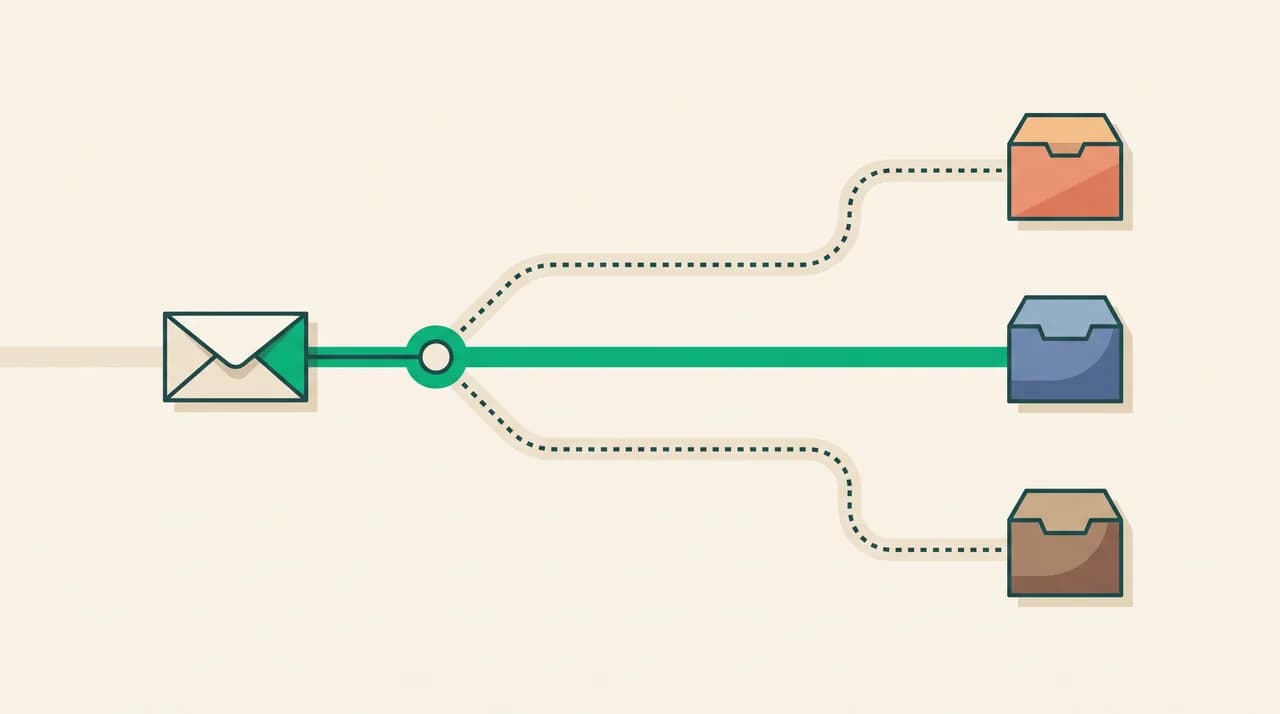
Template 1 is for the neutral exit: the client is fine, the work was fine, but the fit is no longer right. This might be because your practice has evolved, the project scope was a one-off, or the relationship has reached a natural end. Keep the explanation brief and non-specific. The less detail you give, the less there is to negotiate.
Template 2 is for a capacity change or a genuine pivot in your practice. Maybe you are moving upmarket, specialising in a different sector, or simply fully booked. The message here is that the decision is about your business, not a judgement of the client. Offering a referral, even a general one, turns a potentially difficult message into a professional courtesy.
Template 3 is for a non-payment exit where the outstanding balance has been chased at least once. It states the unpaid obligation, gives a short window for payment, and makes clear that work stops at the end of the notice period regardless. Keep the tone firm and factual, not aggressive. If you are concerned about invoice details going to multiple parties, keep specific amounts and reference numbers in your billing system and reference the invoice by number only.
Template 4 is a final exit notice, for use when you have already sent a prior warning and payment still has not arrived. It is shorter, states the facts plainly, and removes the conditional — there is no longer a payment window that can extend the engagement. Work has stopped.
Template 5 is for scope and boundary problems: deliverables that keep expanding without agreement, requests that go well beyond the original brief, or a pattern of last-minute additions the client treats as included. Name the pattern specifically, but describe it in terms of the project boundary rather than the client's character. The goal is to make the structural problem clear without turning the email into a grievance.
Template 6 is for a values or working-style mismatch — those harder-to-name situations where the relationship is straining because of how the client approaches the work, not a specific breach. The wording here is deliberately general. You do not owe a client a detailed critique of their working style, and providing one usually makes the exit harder rather than easier.
Template 7 is for the situation where you genuinely want to help the client land somewhere better. A specific referral turns a potentially uncomfortable message into an act of service and leaves the client with a better impression of you than if they had simply been let go. This template works best when the exit is about fit or capacity, not a problem with the client.
Template 8 is for a complex engagement where you need a structured handover before you can close cleanly — an ongoing retainer, a project mid-delivery, or a relationship that has run long enough to carry institutional knowledge. The exit itself follows the same logic as the others; what changes is how much space you give to the transition logistics.
The hard version — ending with a client whose behaviour is unacceptable#
This is the template writers reach for last and use least, but it is the one most worth getting right. Ending a relationship because a client has been disrespectful, demeaning, or hostile toward you or your team is entirely legitimate. The email needs to be factual, non-accusatory, and brief. The goal is not to deliver a verdict — it is to close the engagement cleanly and stop further exposure.
A few things to be careful about with this email. Do not list every incident; a long catalogue of grievances reads as anger and invites a point-by-point rebuttal. Do not use loaded language in the email itself — words like 'abusive' or 'hostile' escalate rather than close. Describe the pattern factually: 'communications that are not in keeping with the professional standard I require' names the problem without turning the email into an accusation. If the situation involves a formal dispute or legal exposure, have a solicitor or attorney review the message before you send it.
This template is for the situation where the client's behaviour has made the relationship untenable but where there is no outstanding payment dispute. If there is also an unpaid balance, combine elements of Template 4 with this one and have a professional review the result before sending.
Document before you send
What to do if the client does not reply#
Silence after a termination notice is more common than a clean acknowledgement, and it does not change the outcome. Your notice is valid from the moment it was sent. The following sequence keeps you protected and the transition on track.
- 1
Let the notice period run from the send date
The notice period starts when you sent the email, not when the client responds. If your contract specifies ten business days, you are counting from the send date. Do not restart the clock because of silence.
- 2
Send one short follow-up before the end date
Three to four days before the end date, send a brief note: 'This is to confirm that [DATE] is our last day of active work. Please let me know if there are any handover items you would like prioritised.' This creates a second written record and gives the client a final prompt.
- 3
Deliver the handover on schedule regardless
Send the handover document on the agreed date whether or not the client has responded. Document that you sent it. Your obligation is to make the materials available; their obligation is to receive them. Delivering on schedule means you have met yours.
- 4
Stop work on the stated end date
Do not let silence extend the engagement. If you continue working past the end date without a new written agreement in place, you may be treated as having rescinded the termination. On the stated date, stop.
- 5
Issue the final invoice and keep the full thread
Issue your final invoice for any remaining balance and keep the complete email thread — the initial notice, the follow-up, and the handover delivery — in a place you can retrieve it. If a dispute arises, that record is your evidence that the process was handled correctly.
Draft client exit emails faster with AI Emaily#
Writing a client exit email is one of those tasks that sits in drafts for days. You know roughly what to say, but every version sounds either too harsh or too apologetic, and you rewrite the same paragraph several times before giving up and leaving it until tomorrow. The templates above solve the blank-page problem; what they do not solve is the effort of personalising the wording to a specific client, situation, and professional voice.
AI Emaily is an AI-native email client that drafts messages in your own voice, guided by the Personal Context and client profiles you set — not by analysis of your past mail. Give it the situation and the key facts (end date, what will be completed, handover timing) and it returns a draft you review before anything sends. Copilot mode keeps every draft in your approval queue; nothing goes out without your sign-off. We build AI Emaily, and a 7-day free trial is available at aiemaily.com/pricing.
Frequently asked
See it in AI Emaily
Sources

Written by
Nafiul HasanNafiul Hasan is an entrepreneur and AI automation system builder with 10+ years of experience turning messy, manual workflows into reliable automated systems. He designs and ships AI enterprise solutions end-to-end — the agent logic, the data plumbing, and the product people actually use — and founded AI Emaily to give busy professionals their attention back. He writes here from the builder's seat: what works, what breaks, and how to put AI to work without giving up control.