Partnership Proposal Email to Another Company: 10 Templates

The short answer
A good partnership proposal email names a customer you share, says what you bring, makes one specific ask and proposes the smallest first step, such as a single webinar or a test referral, instead of a full agreement. Keep it short, send it to the person who owns the outcome, and follow up once or twice.
Partnership proposal email templates: 10 copy-paste pitches for integrations, co-marketing, referrals and bigger companies, each ending in one small first step.
On this page
- 01When should you send a partnership proposal email?
- 02Which partnership type fits your situation?
- 03What should a partnership pitch include?
- 04How do you use these templates?
- 05Template 1: Integration partnership email
- 06Template 2: Co-marketing proposal email
- 07Template 3: Reseller partnership email
- 08Template 4: Referral partnership email
- 09Template 5: Content swap email
- 10Template 6: Joint webinar email
- 11Template 7: Newsletter cross-promotion email
- 12Template 8: Complementary services partnership email
- 13Template 9: Event or community partnership email
- 14How do you approach a bigger company for a partnership?
- 15Template 10: Pitch to a much larger company
- 16What should you do if there is no reply?
- 17Where does AI Emaily fit in partnership outreach?
A partnership proposal email is a short message from one company to another that proposes working together on something specific: an integration, a joint campaign, referrals, a resale arrangement. Most fail for the same reason. They ask for a partnership when the reader has no idea what that means.
The ten templates below fix that by asking for something small and testable. Each one uses four brackets you fill in: [SHARED CUSTOMER PROFILE], [WHAT YOU BRING], [WHAT YOU WANT] and [SMALLEST FIRST STEP]. Swap in your own details, cut anything that is not true of your situation, and send.
When should you send a partnership proposal email?#
Send one when you can name a specific customer that both companies serve, and a specific thing each side gets. If you cannot finish the sentence, our shared customer is [X] and the thing we do together is [Y], you are not ready. A vague pitch gets a vague no, or more often no reply.
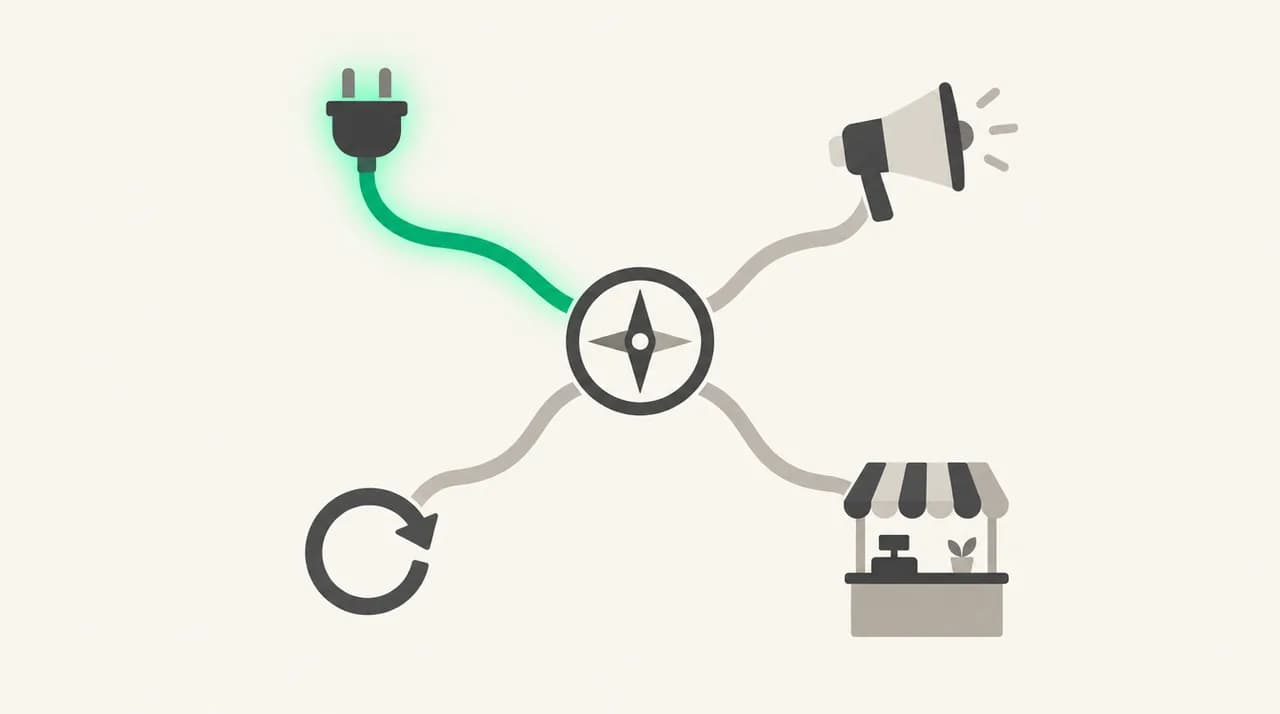
It also helps to have something to show. A working prototype, a draft outline, a short list of the customers you share: any of these turns the email from a request for attention into an offer. The table below maps ten common partnership types to what you bring, what you ask for and a realistic first step.
Decide up front what result would make the test worth continuing. The U.S. Small Business Administration advises small businesses to compare marketing costs with the revenue they generate and to keep measuring, and the same habit applies here. A partnership with no agreed measure drifts until someone stops answering.
Which partnership type fits your situation?#
| Partnership type | What you bring | What you ask for | Smallest first step |
|---|---|---|---|
| Integration | A built connector or prototype | Listing in their app directory | Share a working prototype |
| Co-marketing | Data, audience or design for a joint asset | Co-authorship and shared promotion | One joint guide or checklist |
| Reseller | Qualified leads and sales effort | A discounted partner rate | A pilot with a few accounts |
| Referral | Introductions to your customers | Introductions back, or a referral fee | Trade three warm intros each |
| Content swap | A guest article on your blog | A guest article on theirs | One article each |
| Joint webinar | A topic and your audience | Their audience and a co-host | One 30-minute session |
| Newsletter cross-promotion | A short placement in your issue | A short placement in theirs | One issue each, same week |
| Complementary services | Overflow work in your area | Overflow work in theirs | Refer one client each way |
| Event or community | Speakers, space or attendees | Co-hosting and shared promotion | One small meetup |
| Much larger company | A low-risk, self-contained test | Twenty minutes or one named contact | A pilot that costs them almost nothing |
What should a partnership pitch include?#
A pitch that gets read has five parts, in this order. Keep the whole email to the length of a phone screen or two, because the reader is deciding in seconds whether this is for them.
- A subject line that names both companies and the idea, not the word partnership on its own.
- One sentence on the customer you share, so the reader sees why you picked them.
- What you bring, stated as something they can verify.
- One specific ask, and one small first step that does not need a contract.
- A way out: permission to say no, or to point you to the right person.
An email is not an agreement, and it may count as marketing
How do you use these templates?#
Each template is written to be edited, not pasted. Keep the structure, replace the brackets, and cut any sentence you cannot back up. If a template says we would build the connector and you would not, delete that line.
Write in plain language and put your own name on it. Do not use your product name where a bracket tells you to use your company name, and do not claim customers, numbers or results you do not have. A partner will check, and one wrong claim ends the conversation.
Template 1: Integration partnership email#
Use this when customers already move data between your product and theirs by hand.
Subject: Integration idea: [Your Company] and [Their Company]
Hi [First name],
Many [SHARED CUSTOMER PROFILE] use both [Their Company] and [Your Company], and today they connect the two manually. I think a native integration would save them that work and make both products stickier.
What I bring: [WHAT YOU BRING, for example: we build and maintain the connector using your public API]. What I would like from you: [WHAT YOU WANT, for example: a listing in your integrations directory once it is live].
Smallest first step: [SMALLEST FIRST STEP, for example: I send you a working prototype in two weeks and you tell me whether it deserves a listing]. Are you the right person for this, or should I talk to someone on your partnerships or platform team?
[Your name]
Template 2: Co-marketing proposal email#
Use this when you have an audience overlap and a topic neither of you can cover alone.
Subject: A joint [guide or report] for [SHARED CUSTOMER PROFILE]?
Hi [First name],
Our customers overlap: both of us serve [SHARED CUSTOMER PROFILE]. I would like to propose one joint piece, a [guide, checklist or short report] on [TOPIC], that we each publish and promote to our own list.
What I bring: [WHAT YOU BRING, for example: the research and the design]. What I would like: [WHAT YOU WANT, for example: your input on section X and a send to your newsletter].
Smallest first step: [SMALLEST FIRST STEP, for example: a one-page outline you can approve or change]. If the outline is not right, no harm done. Would you like me to send it over?
[Your name]
Template 3: Reseller partnership email#
Use this when you sell a product that fits inside their service offering.
Subject: Offering [Your Company] to your [SHARED CUSTOMER PROFILE] clients
Hi [First name],
Your clients are [SHARED CUSTOMER PROFILE], and several of them probably ask about [PROBLEM YOUR PRODUCT SOLVES]. Rather than build it yourselves, you could offer [Your Company] under your own engagement.
What I bring: [WHAT YOU BRING, for example: onboarding help, sales material and a named contact for your team]. What I would like: [WHAT YOU WANT, for example: the chance to equip you to recommend us to clients who ask].
Smallest first step: [SMALLEST FIRST STEP, for example: a pilot with two or three of your accounts, on standard terms, so you can see how it goes before committing]. Would you be open to a short call about it?
[Your name]
Template 4: Referral partnership email#
Use this when your customers regularly need the other company, and the reverse is also true.
Subject: Sending each other clients, [Your Company] and [Their Company]
Hi [First name],
I keep meeting [SHARED CUSTOMER PROFILE] who need what you do, and I suspect you meet some who need what we do. A simple referral arrangement could help both sides.
What I bring: [WHAT YOU BRING, for example: warm introductions to customers who are asking for exactly your service]. What I would like: [WHAT YOU WANT, for example: introductions back when your customers ask about our area].
Smallest first step: [SMALLEST FIRST STEP, for example: we each make three introductions and compare notes after a month]. If either side pays a referral fee later, we can write that down properly then.
[Your name]
If money changes hands, disclose it
Template 5: Content swap email#
Use this when both companies publish regularly for the same reader.
Subject: Guest post swap with [Their Company]?
Hi [First name],
I read your piece on [SPECIFIC ARTICLE] and thought our readers would get a lot from it. We both write for [SHARED CUSTOMER PROFILE], and I would like to propose a swap.
What I bring: [WHAT YOU BRING, for example: a guest article on a topic you choose from a short list]. What I would like: [WHAT YOU WANT, for example: one article from you on [TOPIC] for our blog].
Smallest first step: [SMALLEST FIRST STEP, for example: I send three headline ideas and you pick the one you like]. We would each link to the other company once, with the same visibility on both sides.
[Your name]
Template 6: Joint webinar email#
Use this when you can host the logistics and they can bring a credible voice.
Subject: Joint webinar on [TOPIC] for [SHARED CUSTOMER PROFILE]
Hi [First name],
Both of our audiences are [SHARED CUSTOMER PROFILE], and I think a 30-minute session on [TOPIC] would be useful to them. I would like to propose we host it together.
What I bring: [WHAT YOU BRING, for example: the platform, the moderation and the promotion to my list]. What I would like: [WHAT YOU WANT, for example: you as co-presenter and a send to your list].
Smallest first step: [SMALLEST FIRST STEP, for example: a 15-minute call to agree the outline]. We would each keep our own registrations and share the recording. Does this look worthwhile?
[Your name]
Template 7: Newsletter cross-promotion email#
Use this when you each have a list and the audiences are alike but do not overlap much.
Subject: Newsletter swap, [Your Company] and [Their Company]
Hi [First name],
I enjoy your newsletter, and I think our subscribers are alike: [SHARED CUSTOMER PROFILE]. I would like to propose a simple swap.
What I bring: [WHAT YOU BRING, for example: a short, clearly labelled recommendation of your newsletter in our next issue]. What I would like: [WHAT YOU WANT, for example: the same in yours].
Smallest first step: [SMALLEST FIRST STEP, for example: one issue each, in the same week, and we share the results afterwards]. I will write both blurbs if that makes it easier.
[Your name]
Template 8: Complementary services partnership email#
Use this between agencies or consultancies that do different work for the same clients.
Subject: Passing work between [Your Company] and [Their Company]
Hi [First name],
We do [YOUR SERVICE] and you do [THEIR SERVICE], and many of the [SHARED CUSTOMER PROFILE] we work with need both. I would like to set up a simple way to pass work to each other.
What I bring: [WHAT YOU BRING, for example: overflow projects that fit your team and a clear brief each time]. What I would like: [WHAT YOU WANT, for example: the same when your clients ask for what we do].
Smallest first step: [SMALLEST FIRST STEP, for example: we refer one client each way and review how it went]. No exclusivity, no contract yet.
[Your name]
Template 9: Event or community partnership email#
Use this when you want to co-host something small, in person or online.
Subject: Co-hosting a [meetup or workshop] for [SHARED CUSTOMER PROFILE]
Hi [First name],
I am planning a small [meetup or workshop] on [TOPIC] for [SHARED CUSTOMER PROFILE], and your company is the first one I thought of as a co-host.
What I bring: [WHAT YOU BRING, for example: the venue or platform, the attendee list and the logistics]. What I would like: [WHAT YOU WANT, for example: one speaker from your team and a mention to your community].
Smallest first step: [SMALLEST FIRST STEP, for example: one session on [DATE], with both logos on the invitation]. If it goes well we can talk about a series.
[Your name]
How do you approach a bigger company for a partnership?#
A much larger company gets many proposals and has no reason to read yours. Their partnerships team owns a process, and your email has to fit inside it. Start by checking whether they publish a partner program page or an application form. If they do, use it, and send a short email as well that points to your submission.
Then shrink the ask. Do not propose a partnership agreement. Propose something self-contained that costs them almost nothing and that they can say yes to without asking three other teams: twenty minutes, one named contact, or a pilot you run entirely yourself. Say exactly what you will do and what you will not ask of them.
Be specific about evidence, and only use evidence you really have. A customer you share, a result you can verify, a public integration you already built: any of these beats adjectives. Write to the person who owns the outcome, such as a partner manager, ecosystem lead or product marketing owner, not a general inbox.
Template 10: Pitch to a much larger company#
Use this when you are much smaller than the company you are writing to.
Subject: Small test: [Your Company] with [Their Company] for [SHARED CUSTOMER PROFILE]
Hi [First name],
I run [Your Company]. We work with [SHARED CUSTOMER PROFILE], and [EVIDENCE YOU CAN VERIFY, for example: N of them already use your product]. I am not proposing a partnership agreement, just a small test.
What I bring: [WHAT YOU BRING, for example: I run the whole pilot myself, with a short write-up of the results for you]. What I would like: [WHAT YOU WANT, for example: your review of the pilot plan, or the name of the person who owns this area].
Smallest first step: [SMALLEST FIRST STEP, for example: a 20-minute call, or I send a one-page plan you can read in two minutes]. If this is not your area, I would be grateful to be pointed to whoever owns it.
[Your name]
Make the test small enough to approve without a committee
What should you do if there is no reply?#
Silence usually means busy or wrong person, not no. Follow up once after about five business days, with something new rather than a nudge. A second follow-up a week or so later is fine if you add information. After that, stop and try another route.
A good follow-up is shorter than the original, and adds one useful thing: a draft outline, a screenshot of the prototype, the name of a customer you both serve. Here is a template.
Subject: Re: Integration idea: [Your Company] and [Their Company]
Hi [First name], one quick addition to my note last week. [NEW THING, for example: I have put the prototype on a test account, here is a two-minute look]. If this is not your area, who would be the right person? Either way, thanks for your time. [Your name]
If you still hear nothing, try a different person on the same team, apply through the company's partner program if one exists, or ask a mutual contact for a warm introduction. You can also simply publish the joint asset yourself and share it with them afterwards. Closing the loop politely leaves the door open.
Where does AI Emaily fit in partnership outreach?#
Partnership outreach is mostly a thread: the first pitch, a follow-up, a warm reply, a scheduling email, a second round with someone new. Most deals die in that thread because the follow-up never got sent. We build AI Emaily, and it helps with that part.
It drafts replies and follow-ups from the Personal Context you set and a profile you keep for each contact, so each partner gets a message that fits their situation. You approve before anything is sent, and autonomous sends can be cancelled within an undo window. See AI Emaily pricing for the 7-day free trial.
What it does not do: it will not find partners, judge whether a deal is worth doing, or negotiate terms. Those parts stay with you. If you track dozens of partner conversations, a CRM is the right tool for the pipeline itself.
Frequently asked
See it in AI Emaily
Keep reading
Sources

Written by
Nafiul HasanNafiul Hasan is an entrepreneur and AI automation system builder with 10+ years of experience turning messy, manual workflows into reliable automated systems. He designs and ships AI enterprise solutions end-to-end — the agent logic, the data plumbing, and the product people actually use — and founded AI Emaily to give busy professionals their attention back. He writes here from the builder's seat: what works, what breaks, and how to put AI to work without giving up control.