AI Emaily vs Yesware: Email Tracking or AI Assistant?

The short answer
Buy Yesware if your team's main job is outbound: it tracks opens and clicks, stores templates, and runs sequences inside Gmail and Outlook. Choose an AI assistant like AI Emaily if the bottleneck is inbound — triaging and drafting replies for approval. Many teams run one for each side.
AI Emaily vs Yesware for email tracking: Yesware tracks outbound opens and clicks; AI Emaily triages inbound and drafts replies. Which your team needs.
On this page
If you are weighing AI Emaily vs Yesware for email tracking, the honest answer is that the two are built for opposite ends of the same conversation. Yesware is a sales-engagement layer that lives inside Gmail and Outlook: it tracks when a prospect opens your email or clicks a link, stores templates, and runs multi-step campaigns. AI Emaily is a full AI email client that works the inbound side — triaging what lands in your inbox and drafting replies for you to approve. We build AI Emaily, and we will be plain about where Yesware is the better buy.
The short verdict: if your bottleneck is outbound — knowing whether pitches get opened and keeping cadences running — Yesware is the tool, and AI Emaily is not trying to be. If the bottleneck is the flood of replies coming back, AI Emaily triages and drafts them, and Yesware does not. Plenty of teams run one tool for each side of the funnel.
One thing to know before you choose: AI Emaily blocks tracking pixels by default. That is almost the exact opposite of Yesware's core value, and it is worth understanding why, because open tracking itself has changed a lot since 2021.
AI Emaily vs Yesware at a glance#
Here is the shape of the two tools side by side. AI Emaily is listed first because you are on our site; the Yesware column is drawn from its own product pages, which you should check at the link below, since sales tools change fast.
| Dimension | AI Emaily | Yesware |
|---|---|---|
| What it is | AI-native email client that triages inbound mail and drafts replies | Sales-engagement add-on inside the inbox you already use |
| Form factor | Standalone client: web, macOS and Windows desktop apps, an iOS app, and an Android PWA | Chrome extension for Gmail and an add-in for Outlook |
| Provider coverage | Gmail, Outlook and Microsoft 365, iCloud, IMAP and more | Gmail and Outlook |
| Open and click tracking | Blocks tracking pixels by default on inbound mail | Core feature for your outbound mail |
| Templates and campaigns | Not a sequencing tool — drafts individual replies | Templates, multi-step campaigns, and a meeting scheduler |
| Reply drafting | Drafts inbound replies for approval, with undo and an audit trail | Reusable templates for outbound; inbound triage is not its job |
| Approval, undo, audit | Yes — approve before send, undo window, full audit log | Not applicable — it is a sending and tracking layer |
| Training on your mail | No training on user mail | See Yesware's own privacy policy and data agreement |
| Packaging shape | Free tier plus paid plans; verify current tiers on our pricing page | 14-day free trial with no card, then per-seat plans and an enterprise pilot |
Where AI Emaily wins#
AI Emaily starts where Yesware stops — with the mail coming back at you. It reads your inbox, sorts what matters from what does not, and drafts replies you can approve, edit, or send. We build AI Emaily, so treat this section as the case for our own product; the trade-offs are on the record in the next one.
The drafting does not copy a generic template. It writes from a Personal Context brain you set up and from per-client profiles, so a reply to a long-standing customer reads differently from a first response to a stranger. It does not train on your mail to do this.
Every action is gated. In Copilot mode nothing sends until you approve it, there is an undo window, and an audit log records what the agent did and why. The agent only acts on its own above a confidence threshold; below it, you get a draft to review rather than a message that already left.
It is a full client, not an overlay bolted onto Gmail. That means it covers more than two providers, and it runs as real software on the desktop and phone rather than a browser extension.
- Inbound triage and reply drafting across Gmail, Outlook and Microsoft 365, iCloud, and IMAP accounts
- Approve-before-send, undo, and a full audit trail on every agent action
- Drafts written from a Personal Context brain and client profiles, not scraped from your sent mail
- No training on user mail
- Blocks tracking pixels by default, so senders cannot log when you open their mail
- Real desktop apps for macOS and Windows, an iOS app, and an Android PWA
Where Yesware wins#
Yesware is purpose-built for one job AI Emaily does not do: outbound sales. If your day is sending pitches and follow-ups, it earns its place, and this is a genuine gap in what we offer.
It tells you, in real time, when a prospect opens your email, clicks a link, or downloads an attachment. It stores templates so a rep is not rewriting the same message, and it runs multi-step campaigns that keep sending on a schedule and stop the moment someone replies. A built-in meeting scheduler removes the back-and-forth of booking a call, and reporting rolls engagement up so a manager can see which messages and which reps are landing.
Just as important, it lives inside the inbox your team already uses. There is no new client to learn — it installs as a Chrome extension in Gmail and an add-in in Outlook, and it is running in about a minute.
AI Emaily does none of this. We do not track opens, we do not run sequences, and we do not report on outbound campaigns. If that is the job in front of you, Yesware wins outright.
Does email open tracking still work in 2026?#
Before you buy any tool for open tracking, understand what has happened to open tracking itself. It no longer measures what it used to.
Open tracking works by embedding a tiny invisible image — a pixel — in your email. When the recipient's mail app loads that image, the sender's server logs a hit and calls it an open. That mechanism now runs into two large walls.
The first is Apple. With Mail Privacy Protection turned on, Apple Mail hides the reader's IP address and downloads remote content — including tracking pixels — privately in the background when the message arrives, not when it is read. Apple's own documentation states this stops senders learning when or how many times you opened a message, or your location. A pixel can fire for someone who never opened the mail at all.
The second is Google. Gmail scans and serves images so that senders cannot use image loading to learn about your computer or location, and Gmail's help centre notes a sender may only sometimes know whether a message was opened. The signal is muddied at the source.
The practical result for 2026: open rates are inflated and unreliable for a large share of recipients, especially Apple Mail users. Click tracking and reply rates hold up far better, because a click and a reply take a deliberate human action. This is not a Yesware flaw — it hits every tracker equally, and it is a reason to weigh outbound tools on clicks and replies rather than raw opens.
AI Emaily sits on the other side of this exchange. It blocks these pixels by default on your inbound mail, so a sender cannot quietly log when you read theirs. Same technology, opposite intent.
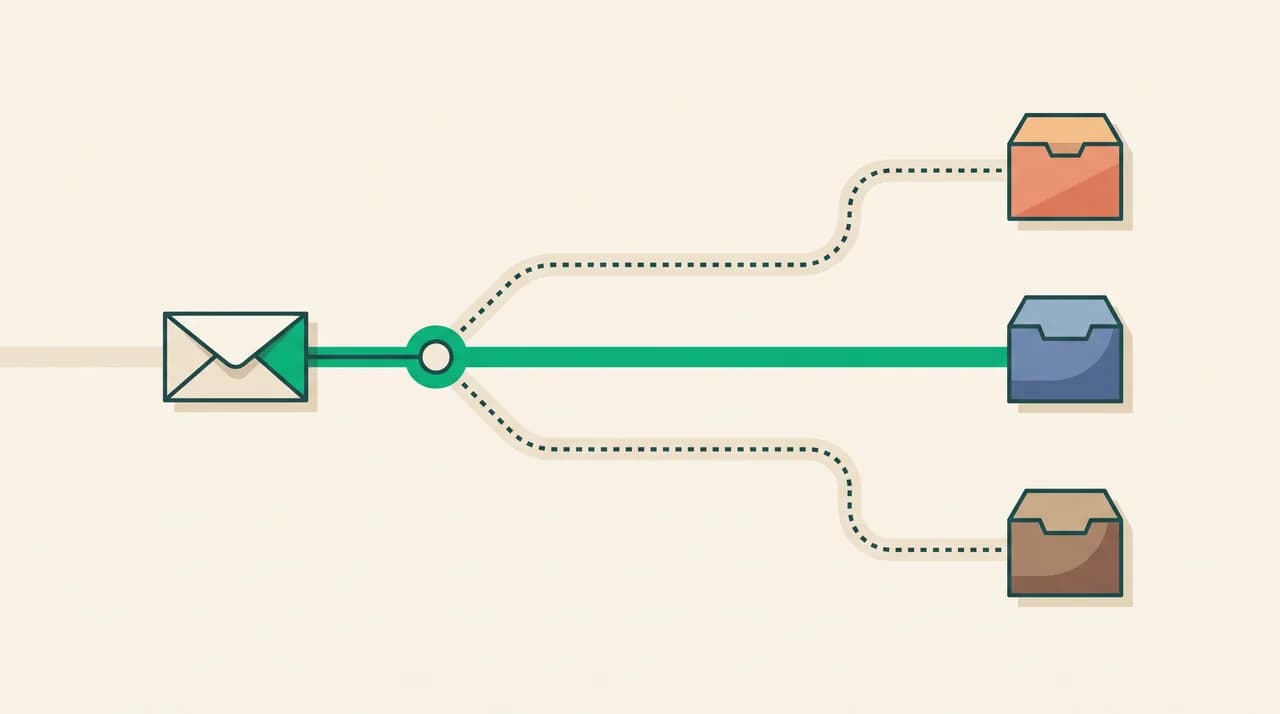
Judge trackers on clicks, not opens
Pricing: two different models#
The two tools price on different models, and both change often, so verify the current details on each vendor's own page before you decide.
Yesware offers a 14-day free trial with no credit card, then charges per seat on a subscription, with an enterprise pilot that adds onboarding and dedicated support for larger rollouts. Because it is a per-seat sales tool, cost scales with the number of reps you put on it.
AI Emaily runs on paid plans with a 7-day free trial; check our pricing page for the current tiers. It is a client rather than a per-seat sales add-on, so the math works differently.
We are not printing figures here on purpose. Sales tools reprice and rename tiers frequently, and a number copied into a blog post ages badly. The vendor's live page is the only source worth trusting on price.
Verify pricing at write time
Who each tool is genuinely for#
Pick the tool that matches your bottleneck, not the one with the longer feature list.
Yesware is for outbound-first teams — people whose day is sending, not sorting:
- SDRs and account executives whose day is pitches and follow-ups
- Small sales teams on Gmail or Outlook who want tracking without switching clients
- Managers who need campaign-level and rep-level engagement reporting
And AI Emaily is for inbound-first people#
AI Emaily fits the other reader — the one drowning in replies rather than trying to start conversations:
- Founders, operators and client-facing staff buried in inbound, not running campaigns
- Anyone who wants triage plus drafted replies with approval, undo and an audit trail
- Teams on more than just Gmail and Outlook — iCloud, IMAP and mixed providers
A third option, honestly#
If neither fits cleanly, a couple of alternatives are worth naming plainly.
Mixmax is the closest like-for-like alternative to Yesware: a Gmail-native sales-engagement tool that bundles tracking, sequences, scheduling and templates, with Outlook support too. If you want Yesware's shape from a different vendor, start there — we compare the two in our AI Emaily vs Mixmax post.
For outbound cadence at real scale with tight CRM sync, dedicated sales-engagement platforms go further than either Yesware or Mixmax, at a higher price and with more setup. That is a different weight class and usually a different buyer.
And if the outbound side is already handled but replies are piling up, that is the gap an AI client fills — pair one with whatever tracker you already run. No single tool today does both outbound cadence and inbound AI triage well, so the honest answer for many teams is two tools, each doing the half it is good at.
Frequently asked
See it in AI Emaily
Keep reading
Sources

Written by
Nafiul HasanNafiul Hasan is an entrepreneur and AI automation system builder with 10+ years of experience turning messy, manual workflows into reliable automated systems. He designs and ships AI enterprise solutions end-to-end — the agent logic, the data plumbing, and the product people actually use — and founded AI Emaily to give busy professionals their attention back. He writes here from the builder's seat: what works, what breaks, and how to put AI to work without giving up control.