Best Collaborative Email Drafting Tools for Teams (2026)


The short answer
For a team that must approve an email before it sends, three shapes work: live co-editing tools like Missive, moderated mail flow inside Google Workspace or Exchange, and AI drafts routed for human approval like AI Emaily's Copilot mode. Sign-off is recorded in the app's audit log, message headers, or an activity feed on the draft.
Compare the best collaborative email drafting tools for teams: live co-editing, approve-before-send, and audit trails, from AI Emaily to Exchange.
On this page
- 01The short answer: who wins by scenario
- 02How we compared
- 03Comparison table: how each tool records approval
- 041. AI Emaily — AI draft, human approval, full audit trail
- 052. Missive — real-time co-editing of a single draft
- 063. Front — shared inbox with configurable approval workflows
- 074. Hiver — collaborative drafts inside Gmail itself
- 085. Superhuman Mail — fast team client with AI, thin approval story
- 096. Fyxer — AI drafts that always wait for you
- 107. Microsoft Exchange moderated recipients
- 118. Google Groups moderation
- 12How to choose for your situation
Some emails should not leave the building without a second pair of eyes. A client apology, a legal reply, a fundraising update, a message from an intern's account to a regulator — the risk of sending the wrong draft is bigger than the friction of getting sign-off. The best collaborative email drafting tools for teams answer three questions at once: can two people work on the same draft, does the message wait for approval before it sends, and does the tool record who signed off.
This is a roundup of eight tools that solve some version of that problem. They fall into three shapes: shared-inbox clients that let teammates co-edit and comment on drafts (Missive, Front, Hiver, Superhuman Mail), AI overlays that draft on your behalf and pause for human approval (AI Emaily, Fyxer), and mail-server moderation that intercepts messages in transit and holds them for review (Microsoft Exchange, Google Groups). Each shape records sign-off differently, and the right pick depends on which shape fits how your team already works.
Full disclosure up front: we build AI Emaily, so it is entry number one on this list, and we say plainly where competitors do a specific job better than we do. The point of a roundup that recommends the site's own product is only worth reading if the concessions are named. There is one here, and it is a real one.
The short answer: who wins by scenario#
If your team already lives in a shared inbox and wants two people editing one draft at the same time, Missive is the strongest fit. It built harder on real-time, Google-Docs-style co-editing of a single draft than any other tool on this list, including us — that is the concession, and it is important to name it before anything else.
If your team wants AI to write most of the draft and a human to approve every send, AI Emaily's Copilot mode is what we built. Every reply is generated, then queued for a human tap before it goes; every action is written to an audit log; every send has undo. There is no public free plan — a 7-day free trial on Pro or Autopilot covers the workflow, with the card taken and $0 charged if you cancel before day seven.
If your team has to prove sign-off happened for compliance rather than convenience — messages to external counsel, disclosures, regulated communications — the record you want is on the mail server, not inside a client. Exchange moderated recipients and Google Groups moderation both hold the message in transit and require an approver to release it. That is the tightest audit trail, and the least pleasant day-to-day experience.
How we compared#
This roundup does not compare feature count. It compares the four things that actually decide whether a team can safely co-write and approve email, based on each vendor's own live documentation as of August 2026:
- Where the draft lives. In the sender's private drafts folder, in a shared workspace, in a separate app entirely, or in an overlay on Gmail or Outlook. The location decides who can even see the draft to review it.
- How co-editing happens. Real-time cursors on one document, sequential handoff (I finish, you take it), comments and inline @mentions, or none of the above.
- How the approval gate works. Explicit approve-before-send with a queue, mail-flow rules that hold the message on the server, AI drafts routed for a human tap, or no built-in gate at all.
- Where the sign-off is recorded. An audit log inside the app, an activity feed on the draft itself, message headers on the sent email, a group moderation log, or nowhere.
We deliberately do not quote competitor prices, ratings or review counts. Packaging shape (free tier, paid trial, per-seat, per-workspace, add-on) matters because it decides who on the team has to be licensed to approve a send — the number attached to it changes often enough that you should read it on the vendor's own page the day you buy. Every product below was checked against the vendor's live site the week this post was written.
One naming trap: there are now two Superhumans
Comparison table: how each tool records approval#
| Tool | Shape | Co-edit a draft? | Approve-before-send | Where sign-off is recorded |
|---|---|---|---|---|
| AI Emaily | AI email client with Copilot / Autopilot modes | Sequential handoff via shared drafts and comments | Yes — Copilot queues every AI draft for a human tap; Autopilot only within rules you set | In-app audit log on every action, plus undo on every send |
| Missive | Shared-inbox client | Yes — real-time cursors on the same draft, chat inside the thread | Not a built-in gate; teams enforce it with rules and comments | Activity feed on the draft and conversation history |
| Front | Shared-inbox and multi-channel platform | Sequential handoff, comments, and workflow rules for review | Configurable via workflow rules; not a one-click toggle | Activity log per conversation, workflow-rule audit |
| Hiver | Shared-inbox layer on top of Gmail | Notes and @mentions on the draft, no real-time cursors | Manual — draft is assigned, discussed, then sent | Conversation activity feed inside Gmail |
| Superhuman Mail | Team email client with AI | Split assign and share; not multi-cursor co-editing | None as a formal gate; team AI helps rewrite | Not a compliance-grade record |
| Fyxer | AI overlay on Gmail and Outlook | No — a personal drafting assistant, not a co-edit surface | AI drafts always wait in your drafts folder for a human send | The draft itself is the record; no team audit log |
| Exchange moderated recipients | Server-side mail flow rule in Microsoft 365 | No — moderation happens after the sender clicks send | Yes — message held in transit until moderator approves | Message headers and Exchange message trace |
| Google Groups moderation | Group-level approval in Google Workspace | No — the message is written normally, then approved for the group | Yes — pending queue for group owners and managers | Group moderation log in the Admin console |
The table hides the axis that actually decides the buy: whether the tool sits inside the sender's own client or in front of it. Missive, Front, Hiver and Superhuman are places you go to write; Fyxer and AI Emaily sit next to the writing; Exchange and Google Groups moderate after send. Read the profiles below with that in mind — a team that already lives in Outlook cannot really adopt a shared-inbox client without moving, and a team that has never used server-side moderation will find its user experience distinctly 2005.
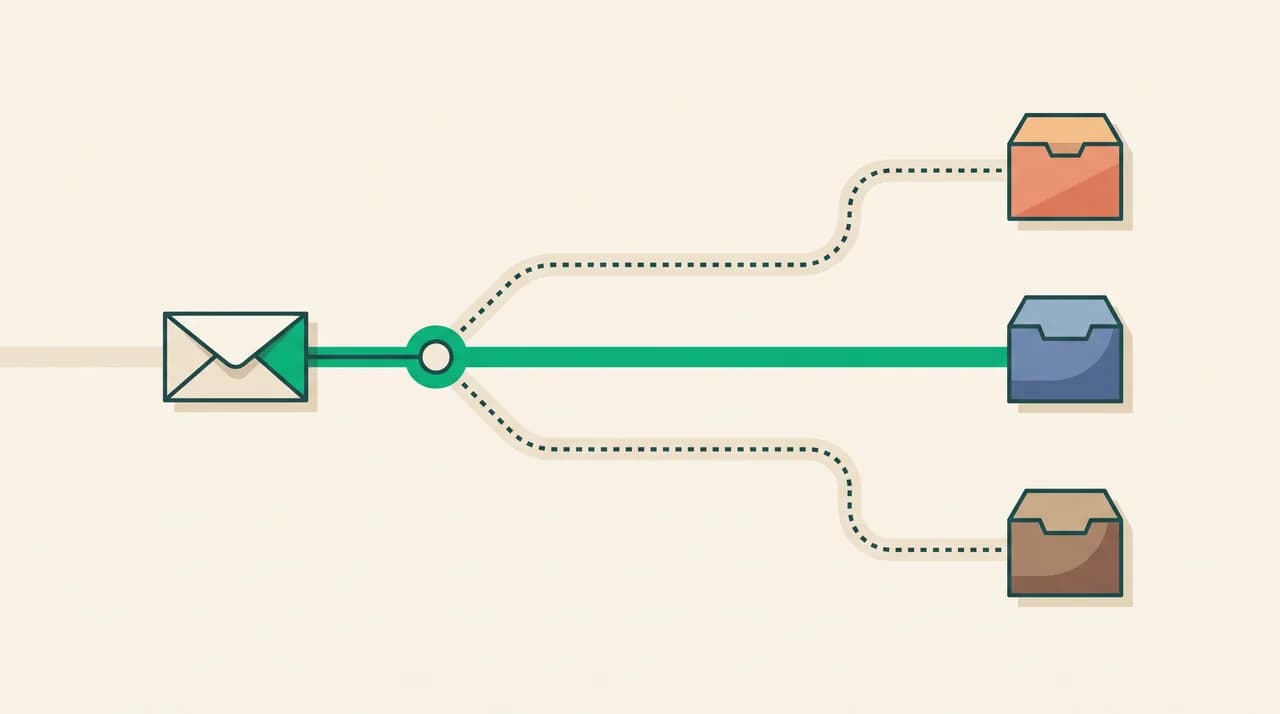
1. AI Emaily — AI draft, human approval, full audit trail#
AI Emaily is an AI-native email client that connects to Gmail, Outlook and any IMAP account. For collaborative drafting the piece that matters is Copilot mode: the agent triages the inbox, drafts a reply in the sender's voice using a user-set Personal Context brain and per-client profiles, and then waits. Nothing sends until a human taps approve. Autopilot mode does exist for teams that want to trust some categories to send on their own, but the trust is bounded — only within rules you set, everything is written to the audit log, and undo is available on every send. That combination is what makes it safe to let the machine touch outgoing mail at all.
The collaboration story for a small team is sequential rather than simultaneous. Two people cannot drop cursors on the same draft the way they can in Missive, and we are honest about that. What we do give a team is a shared surface for the draft, comments on the reply before it goes, an audit log that shows who approved which message, and — because approval is the default — a clear line about who is on the hook for what got sent.
Packaging shape: 7-day free trial on Pro or Autopilot, card taken, $0 charged if you cancel before day seven. There is no public free plan. Check AI Emaily pricing for the current numbers and what each plan includes. Disclosure: we build AI Emaily, which is why it leads this roundup — with the concession to Missive on live co-editing stated in the section above, not buried.
2. Missive — real-time co-editing of a single draft#
Missive is the tool most other roundups skip past too quickly, and it is the one that most fully answers the literal question "can two people edit the same email draft at the same time." Yes, they can — live cursors on one draft, the way you would expect a document to work in 2026. Alongside the draft you get a chat channel on every conversation, so the discussion about the wording lives next to the wording rather than in Slack. Shared inboxes, assignment, and internal comments round it out.
Where Missive is honestly weaker is the formal approval gate. There is no built-in "this draft cannot be sent until an approver clicks yes." Teams enforce approval through comments, assignment rules, and process rather than a hard interlock, and the record is the activity feed on the conversation rather than a compliance-grade log. For most agencies and client-services teams that is enough; for regulated communications it is not.
Packaging shape: paid tiers per user, with a free-trial window. Check the live pricing page for the current plan mix. Best for: agencies, PR, and client-services teams where two humans genuinely need to co-write a reply in real time.
3. Front — shared inbox with configurable approval workflows#
Front is a shared-inbox and multi-channel platform: email plus chat, SMS and other channels arrive in one workspace with assignment, comments, and workflow rules. For collaborative drafting the pattern is sequential handoff — one teammate drafts, others comment, someone else can take over and send — with workflow rules that can route a draft to a reviewer before it goes. The rules engine is the reason Front comes up whenever anyone says "approval workflow."
The catch is that the approval gate is not a one-click toggle. It is something you configure in the rules, and how tightly it holds depends on how the rules are written. There is a per-conversation activity log and a workflow-rule audit, which is what a compliance reviewer will look at.
Packaging shape: three tiers — Starter (channel-limited, capped seats), Professional (omnichannel, more seats and rules), Enterprise (uncapped, includes AI Copilot / QA / CSAT). AI Copilot, QA and CSAT are paid add-ons on Starter and Professional. Annual billing sits meaningfully below monthly. Check the live plan matrix. Best for: teams already running multi-channel support who want approval routing alongside everything else.
4. Hiver — collaborative drafts inside Gmail itself#
Hiver is worth listing separately because it does not ask the team to leave Gmail. It layers shared inboxes, collision alerts, notes and @mentions directly on top of the Gmail UI, which means the drafting surface every teammate already knows is the drafting surface for the review too. Someone drafts a reply, teammates comment inline, the draft is assigned to a sender, and it goes when that person clicks send.
What Hiver does not offer is real-time multi-cursor editing of a single draft. Co-editing is sequential: I draft, you leave a note, I edit, I send. For teams whose only obstacle to today's workflow is "we all use Gmail and we cannot see each other's drafts," that gap is exactly the gap Hiver closes.
Packaging shape: free, Growth, Pro, and Elite tiers per user. The specific limits move — check the live pricing page. Best for: teams already committed to Gmail who want shared inboxes and drafts without a new client.
5. Superhuman Mail — fast team client with AI, thin approval story#
Superhuman Mail — now part of the Grammarly-turned-Superhuman parent, distinct from the Superhuman Suite bundle — is a keyboard-first email client that has added team features over the last few releases. Split lets you hand a message to a teammate; share puts a message in front of them for input; team AI helps rewrite and reply. It is fast, and if a team already uses it individually the collaboration adds up.
As a collaborative-drafting-and-approval tool it is the weakest fit on this list, and we are naming that plainly. There is no formal "this draft cannot leave without approval" gate, there is no audit log built for compliance, and co-editing is closer to "pass me the ball" than to a shared document. For a founder-and-EA pair who already trust the send, that is fine and probably enough. For a legal or medical team, it is not.
Packaging shape: Mail Starter and Mail Business per-seat monthly or annual, Enterprise custom. Verify the current numbers on the vendor page — the reference points shift. Best for: fast-moving founder teams who want a shared inbox aesthetic without moving to a shared-inbox app.
6. Fyxer — AI drafts that always wait for you#
Fyxer is an overlay, not a client. It sits on top of Gmail and Outlook, categorises the inbox, drafts replies in your voice, and takes meeting notes. For collaborative drafting the relevant piece is that its AI drafts always land in your drafts folder rather than sending on their own — the approval-before-send behaviour is the default because the tool has no autopilot to speak of.
That default is also the limit. There is no team co-edit surface: Fyxer is a personal assistant that happens to be very good at drafting, not a place two people work on one message together. If the team's model is "the AI drafts, one human sends, and we all use the same overlay," Fyxer works well; if the model is "two humans review one message before it goes," you need something else on this list.
Packaging shape: per-user monthly with a trial. Best for: individuals inside a team who want the drafting speed of an AI overlay while keeping every send manual.
7. Microsoft Exchange moderated recipients#
For teams already in Microsoft 365, the tightest approval-before-send option is not a client at all. It is a mail flow rule. Exchange lets you designate a recipient — a mailbox, a distribution group, or a specific address — as moderated. When anyone sends to that recipient, the message is intercepted, held in transit, and pushed to a moderator's inbox with approve or reject buttons. Only after the moderator approves does the message actually deliver.
The pattern most teams use is not to moderate every outgoing email — that is unusable — but to require an internal review address on messages to external counsel, regulators or specific clients. The sender writes normally, addresses a review inbox, and the sign-off is recorded in the message trace and headers.
Packaging shape: included in Microsoft 365 business plans; no per-approver cost. Best for: regulated communications where an auditor will ask for a message trace, not a screenshot of an activity feed. See Microsoft Learn's Exchange mail flow rules and moderation documentation for setup.
8. Google Groups moderation#
The Google Workspace equivalent for the same job runs through Google Groups. A group can be configured so that messages posted to it are held pending moderation, and owners or managers approve them from a queue in the group's web view. The Admin console records the moderation events, which is the compliance record.
The limit is that Groups moderation gates messages sent to the group, not messages sent from an individual mailbox to arbitrary recipients. To use it for external-review workflows, teams route sensitive outbound through a group address that the reviewer moderates, then the reviewer forwards the approved message on. That is clunky, and it is honest to say so. For a team that wants the same behaviour on individual mailboxes, Google's content compliance rules can quarantine matching messages for admin review, which is closer to Exchange moderation in shape.
Packaging shape: included in Google Workspace business plans. Best for: teams already in Workspace that want a lightweight approval gate on group communications. Google's Workspace Admin help pages cover the setup.
How to choose for your situation#
The eight options collapse into a few honest recommendations once you know which of the four constraints matters most to you.
- 1
If two humans genuinely need to co-write the same draft, pick Missive
Real-time cursors on one draft is a specific product decision, and it is Missive's. Teams that adopt any of the other tools and then try to co-write end up passing the draft back and forth in Slack, which is exactly the workflow they were trying to escape.
- 2
If you want the AI to draft and a human to approve every send, use AI Emaily's Copilot mode
This is the workflow we built. The agent drafts using a Personal Context brain and per-client profiles, the human taps approve, and every action lands in the audit log. Autopilot exists for the categories you trust, and stays inside rules you set. Start on the free trial and see how it fits your inbox.
- 3
If you need a compliance-grade record, go to the mail server
Exchange moderated recipients or Google Groups moderation give you an audit trail the regulator will accept, because the record lives on the server and the message headers, not inside a client. The user experience is worse than a modern client's activity feed — that is the trade.
- 4
If your team already lives in Gmail and just needs shared drafts, add Hiver on top
The lowest-friction move is not a new client. Hiver keeps the Gmail interface every teammate already knows and adds notes, mentions, assignment and collision alerts to the drafting surface. Sequential co-edit, not real-time.
- 5
If the ask is 'like Gmail but faster with light team features', Superhuman Mail is the fit
Named honestly, this is the weakest option on the approval-and-audit axis on this list — no formal gate, no compliance-grade log. On speed and keyboard workflow inside a mail client it is still the strongest, which is why some teams pick it anyway.
- 6
If you want approval routing bolted onto multi-channel support, Front is the platform
Email plus chat plus SMS in one workspace, with a workflow rules engine that can route drafts to reviewers before send. Not a one-click toggle — you build the rules — but the rules cover more than email, which is often the actual reason a team wants Front.
The wrong reason to pick any of these is feature count. All eight ship enough features to look impressive on a comparison grid, and half of them will remain unused three months in. The right reason to pick one is that the shape of its approval gate — where the draft lives, how it moves, who releases it, how the sign-off is recorded — matches the shape of the review you actually need to do. Read that answer off your own workflow before you read it off a landing page.
Human approval belongs in front of any AI-drafted send
Frequently asked
See it in AI Emaily
Keep reading
Sources

Written by
Nafiul HasanNafiul Hasan is an entrepreneur and AI automation system builder with 10+ years of experience turning messy, manual workflows into reliable automated systems. He designs and ships AI enterprise solutions end-to-end — the agent logic, the data plumbing, and the product people actually use — and founded AI Emaily to give busy professionals their attention back. He writes here from the builder's seat: what works, what breaks, and how to put AI to work without giving up control.