Best Email Apps for Dispatchers (2026): 6 Tools Compared


The short answer
AI Emaily is our pick for a dispatcher juggling calls, jobs and inbound mail: Gmail, Outlook and IMAP in one inbox, AI drafts held for one-tap approval, and a searchable trail of every reply. Missive is a better fit when two dispatchers work the same dispatch address every shift.
Best email app for dispatchers in 2026: six tools compared for speed under interruption, shared queues and mobile triage. Where each one wins.
On this page
- 01The short answer: best email app for each dispatcher
- 02Is dispatch software the same as an email app?
- 03How we compared these tools
- 04Six email apps for a dispatcher, at a glance
- 051. AI Emaily — best overall and our top pick
- 062. Missive — best when two dispatchers rotate the same address
- 073. Front — best for larger multi-channel operations
- 084. Superhuman Mail — best for high volume processed by hand
- 095. Outlook / Microsoft 365 — best if you are already on Microsoft
- 106. Gmail (Google Workspace) — best for a solo dispatcher on Google
- 11How to choose for your situation
- 12The verdict
A dispatch desk is not a place you sit down at email. Email lands while a driver is on the radio asking about a bay change, a broker is holding on line two, and the board just went red on a delivery window. The best email app for that job is not the one with the prettiest inbox — it is the one that survives being ignored for eleven minutes at a stretch and still lets you close the loop in three taps when you get back to it.
This roundup ranks six email tools by the shape of a real dispatcher's day: speed under interruption, a queue that a second person on the next shift can pick up cold, mobile that works from a yard or a van, and a search that can find a broker's rate confirmation from three weeks ago while a driver is asking about it. We compare on documented capability, not on a month of live testing we didn't do.
One disclosure up front: we build AI Emaily, which is why it is entry #1 and gets the most detail. That colours the ranking. We name the dimension where a competitor beats us before we get to any of our own strengths, and we say plainly which readers should stop at that section instead of scrolling further.
The short answer: best email app for each dispatcher#
Skim the list, find the line that matches your desk, then read only those entries in detail. Trying to compare six tools in parallel is how the decision gets kicked to next quarter and never made.
- Best overall, and our pick: AI Emaily — Gmail, Outlook and IMAP in one inbox, agent drafts held for one-tap approval, undo and audit log on every send, and a native iOS app for on-the-yard triage.
- Best when two or more dispatchers rotate the same dispatch address: Missive — a shared inbox with internal chat on every thread, clean assignment, and a queue the next shift can pick up without a handover call.
- Best for a larger operations team with SMS and WhatsApp mixed in with email: Front — a shared-inbox platform built for multi-channel operations, with automation rules and formal workflows.
- Best if you personally handle a very high volume of email by hand and want to move through it as fast as fingers allow: Superhuman Mail — keyboard-first, one keystroke per action.
- Best if you are already on Microsoft 365 because your carrier or brokerage put you there: Outlook — Microsoft Copilot is bundled in paid Business plans and Outlook handles Gmail and IMAP alongside Microsoft.
- Best if you are a solo dispatcher on Google Workspace and nothing is broken: Gmail with one saved reply template and stars — free of extra subscription, honestly enough for a small operation.
Is dispatch software the same as an email app?#
No, and confusing them is the most common wrong turn in this category. Dispatch software — Samsara, Motive, KeepTruckin, Route4Me, ServiceTitan, Housecall Pro, Onfleet — is the operational spine of a fleet: driver assignment, route planning, ELD compliance, live tracking, invoicing. It runs the jobs after they exist. It is not the app that reads the broker's inbound rate quote or the customer's complaint about a missed window.
An email app — Gmail, Outlook, Missive, Front, Superhuman Mail, AI Emaily — is where inbound messages live before, during and after the job. A well-run dispatch desk uses both, and they sit next to each other rather than competing. This guide only ranks the email side.
The reason it matters: several trucking and field-service teams try to substitute their FSM's built-in message thread for a real email client, and then discover that a broker who emails from Outlook, a shipper who emails from Gmail, and a driver who texts from a personal number all end up in three different unreconciled places. The email client is what unifies inbound; the FSM is what runs the operation. Neither replaces the other.
Marketing platforms are a third category
How we compared these tools#
This is a capability comparison built from vendor documentation and public product pages checked in August 2026. We did not staff a live dispatch desk with six email apps for a month, and any roundup that claims it did should be read with that in mind. Six axes matter for this job — the same ones we hear from dispatchers when we ask what they actually need the inbox to survive.
There are no competitor prices printed here on purpose. The category repriced itself repeatedly across the past year — Microsoft and Google both moved their AI features into their paid business tiers, Superhuman restructured after Grammarly acquired it, Shortwave changed its plan lineup — and any number written here would be stale before you finished reading. Check current pricing on each vendor's own page at the moment you evaluate.
- Provider coverage — Gmail-only, Gmail plus Outlook, or standard IMAP. Dispatchers rarely live in one provider only; brokers, shippers and carriers sit on all of them.
- Speed under interruption — how many taps to open a broker reply, approve a rate confirmation and get back to the radio. The dispatcher is not sitting at their inbox; the inbox has to meet them where they are.
- Who presses send — whether the AI suggests, drafts, or acts autonomously, and what stands between it and a broker or customer.
- Shared-queue mechanics — assignment, internal chat on threads, handover between shifts. A dispatch desk rarely has one person on it for eight straight hours.
- Mobile reality — native iOS, native Android, or PWA. Dispatchers move between the desk, the yard and the phone.
- Recoverability — undo window and an audit log. When a driver disputes what a broker committed to in email, a durable trail is not a nice-to-have.
Six email apps for a dispatcher, at a glance#
Pick two candidates from this table, then read only those entries in detail below.
| Tool | Works with | Autonomy level | Shared-queue features | Best dispatcher use case |
|---|---|---|---|---|
| AI Emaily | Gmail, Outlook / Microsoft 365, IMAP | Drafts, triages, follows up; Copilot requires your approval, Autopilot is gated with audit log and undo | Shared inbox basics | Solo or small-team dispatcher on mixed providers, drafting rate replies and broker acknowledgements from a phone |
| Missive | Gmail, Outlook, IMAP plus other channels | Basic AI drafting | Full shared inbox, assignment, internal chat on every thread | Two-dispatcher desk rotating shifts on the same dispatch@ address |
| Front | Gmail, Outlook, IMAP, SMS, WhatsApp and more | AI Copilot as a paid add-on on the two lower tiers, included on Enterprise | Full shared inbox, assignment, automation rules, macros, workspaces | Larger ops team with multi-channel (email plus SMS or WhatsApp) inbound |
| Superhuman Mail | Gmail, Outlook | AI drafts and suggests; you execute every action by hand | Limited | Founder-dispatcher personally processing very high daily volume at speed |
| Outlook / Microsoft 365 | Outlook, Gmail, IMAP | Microsoft Copilot bundled in paid Business plans; prompt-based, not autonomous | Shared mailboxes, Teams integration | Dispatcher already on Microsoft 365 through a carrier or brokerage relationship |
| Gmail (Google Workspace) | Gmail / Workspace only as a client | Gemini bundled in paid Workspace Business plans; suggestions and drafts on request | Delegated access, Google Chat, shared Drive | Solo dispatcher entirely on Google Workspace, low daily volume, nothing broken |
1. AI Emaily — best overall and our top pick#
AI Emaily is an AI email client that connects Gmail, Outlook, Microsoft 365 and standard IMAP accounts into one unified inbox. We build AI Emaily, which is why it is entry #1 here — and why this entry names its real limits before it names its strengths.
For a dispatcher, the agent works in the eleven minutes between when an email arrives and when your hands come off the radio. Incoming mail is categorised on arrival — broker rate offer, shipper delivery question, driver update, invoice from a repair shop. The agent drafts the acknowledgement to the broker, drafts the "we can cover it, expect a call" reply, drafts the confirmation back to the shipper — all held in Copilot mode until you tap approve on the phone. Nothing reaches the recipient until you say so. The voice is not learned from your past sent mail; it comes from a Personal Context brain and per-contact profiles you write and control, so the answer to a broker you deal with weekly reads differently from the one to a new shipper.
Autopilot is available for the routine slice — an out-of-hours "got it, will confirm in the morning" acknowledgement, for example — and it is gated by rules you set, with a short undo window and an audit log recording every action and the reason for it. In a job where a disputed "you told me the pickup was at 6" thread can become a rate deduction, that log earns its keep the first time you need to point to it.
The limits, stated plainly. AI Emaily ships a native iOS app; on Android we ship a PWA that installs to the home screen, works offline for reading and drafting, and receives push, but it is not a native Android app yet. If your dispatch desk runs on Android tablets and native-only is a hard line, that is a real constraint. On desktop we ship a downloadable Mac app (Apple Silicon only, Electron shell, not in the Mac App Store) and a Windows installer. There is no direct integration with Samsara, Motive, ServiceTitan or Housecall Pro — the email client sits alongside your dispatch platform, it does not replace it. See AI Emaily pricing for the 7-day free trial on Pro or Autopilot; a card is required at signup and you are charged $0 if you cancel before day seven.
2. Missive — best when two dispatchers rotate the same address#
Missive is a shared inbox rather than a personal client. Two or more people work the same address — [email protected] — discuss a thread in an internal chat pinned to it, assign it to whoever is on duty, and reply once as the business. It connects to Gmail, Outlook and IMAP, and can bring SMS, WhatsApp and other channels into the same view.
For a two-dispatcher desk on rotating shifts, Missive prevents both of you from replying to the same broker with different rate commitments, and lets whoever is coming on shift pick up a thread with the full internal conversation attached — no handover call required. The assignment model is what makes shift changeover work without dropped threads.
Here is the concession that matters, said plainly by name: Missive has built harder on shared-inbox mechanics than we have. If two or more dispatchers work the same dispatch address on rotating shifts, Missive is designed for that problem and AI Emaily is not. AI Emaily solves the personal, cross-provider inbox better; Missive solves the shared-address, multi-operator rotation better. If that is you, stop reading here and go evaluate Missive on its own page — the rest of this ranking is for a different shape of desk.
3. Front — best for larger multi-channel operations#
Front is a shared-inbox platform aimed one size up from Missive — larger operations teams where email, SMS, WhatsApp and other inbound channels all need to land in one triaged queue with formal workflows, automation rules and reporting on top. It has three tiers: Starter, Professional and Enterprise, with seat caps and channel caps on each. Starter is a single channel type only (email or chat or SMS, not combined), Professional adds omnichannel and macros, Enterprise is uncapped. AI Copilot, QA and CSAT are paid add-ons on Starter and Professional and are included on Enterprise. Verify the current plan lineup on Front's own pricing page before you commit.
For a courier or field-service dispatch team where drivers text updates, brokers email rate confirmations, and customers ping via WhatsApp, Front is built for exactly that mixed-channel shape. The automation rules can auto-route inbound based on sender or subject, and the workspaces separate the dispatch queue from the customer-service queue while keeping both under one platform.
The trade-off is weight. Front assumes a formal operations function with a team big enough to justify the setup work — the value comes from the rules, macros and workflows you build on top of it, not from opening the app on day one. A solo dispatcher or a two-person desk gets less out of it than a five-to-fifteen person operations team. Contracts over $25,000 also require a mandatory onboarding package, which tells you the size of customer the platform is priced for.
4. Superhuman Mail — best for high volume processed by hand#
Start with the naming, because most reviews online are out of date. Grammarly acquired Superhuman, the email client, in July 2025 and renamed the parent company to Superhuman in October 2025. Today, Superhuman Mail refers to the client; Superhuman Suite refers to the wider bundle. Any article describing Superhuman as an independent startup is describing a structure that no longer exists — verify the current plan and product boundaries on Superhuman's own page before you sign up.
The client itself is built for volume processed by hand at speed. Every action is one keystroke; the interface rewards muscle memory over browsing. It works with Gmail and Outlook. For a founder-dispatcher who personally handles a very high daily volume of broker offers, shipper questions and driver updates and wants to move through them as fast as ten fingers allow, Superhuman Mail is built specifically for that shape of work.
What it is not: an autonomous agent. The AI drafts and suggests, but you execute every action yourself, and after the Grammarly acquisition several AI features moved into a higher business tier. If the goal is for the agent to draft broker acknowledgements and shipper confirmations while you are on the radio, a different architecture delivers that. Superhuman is the best answer when you like your inbox the way it is and the constraint is your typing speed, not your attention.
5. Outlook / Microsoft 365 — best if you are already on Microsoft#
A slice of trucking and field-service dispatchers run their business email on Microsoft 365, usually because a carrier they contract to or a customer they serve put them on it. If you are already paying for Microsoft 365, Outlook is licensed, configured and open on the dispatch desk already, and the zero-switching-cost argument is real and worth weighing before bringing in any new tool.
Microsoft Copilot is bundled in paid Microsoft 365 Business plans as of 2026. It can draft replies, summarise long threads, and offer triage suggestions inside Outlook. It is prompt-based rather than autonomous — it does the thing when you ask it to, not on its own — but for a team already inside the Microsoft ecosystem it arrives without a separate subscription or a new interface to learn. Outlook handles Outlook, Gmail and IMAP accounts in one client, with native iOS and Android apps.
One thing worth knowing before you plan around it: Microsoft is migrating users from classic Outlook to a new Outlook. For enterprise customers, the opt-out period begins 1 March 2027; classic Outlook on a perpetual or subscription licence is supported until at least 2029. The email-app decision and the classic-versus-new decision are separate questions — see Microsoft's own Outlook help pages for the current guidance, and do not let a migration deadline you were told about push you into a purchase you would not otherwise make.
6. Gmail (Google Workspace) — best for a solo dispatcher on Google#
If you already have a Google Workspace account and your inbound lands there, Gmail is the baseline everything else on this list is competing against. Gemini, Google's AI assistant, is bundled into paid Google Workspace Business plans — draft help, thread summaries and smart-reply suggestions are included at no extra subscription. Free consumer Gmail is different; check the current Gmail plan comparison on Google's own page before assuming a feature is available.
Gmail's built-in filters, labels and multiple-inbox settings cover a useful slice of what a solo dispatcher needs: routing broker rate offers to a label, starring shipper messages that need a same-shift reply, and archiving the rest. Search is strong — the rate a broker quoted you three weeks ago is usually a few keystrokes away.
The honest gap is autonomy. Gmail's AI drafts and suggests; it does not triage on arrival, chase open threads for you, or take action without you opening every one. For a solo dispatcher moving twelve to twenty loads a week on a single Google Workspace account, one saved reply template plus stars is genuinely enough — and it costs nothing on top of the Workspace bill you are already paying. That is the honest baseline before the AI-native options begin.
How to choose for your situation#
Match your situation first, then evaluate two tools at most. The table below is a decision fork, not a scoring grid.
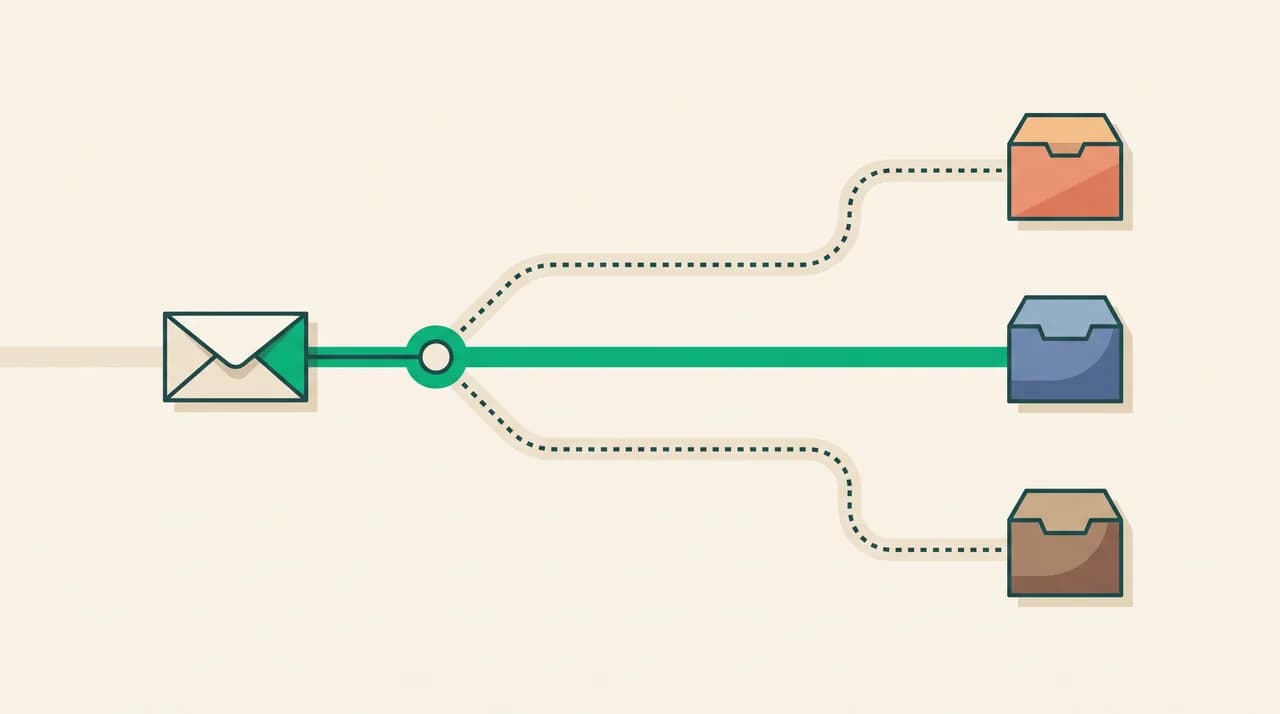
| If this is you | First pick | Second look |
|---|---|---|
| Solo dispatcher, inbox spans Gmail, Outlook and a broker IMAP account | AI Emaily | Superhuman Mail, if the constraint is typing speed rather than attention |
| Two dispatchers rotating shifts on the same dispatch@ address | Missive | AI Emaily, if the personal inbox is the bigger problem than the shared one |
| Five-plus operations team, email plus SMS plus WhatsApp inbound | Front | Missive, if the multi-channel weight is not there yet |
| Solo on Google Workspace, low daily volume, nothing broken | Stay on Gmail with one saved template | AI Emaily, when volume starts crowding out radio time |
| Already on Microsoft 365 through a carrier or brokerage | Stay on Outlook, turn on Copilot | AI Emaily, if drafting broker replies is the missing piece |
| Founder-dispatcher personally clearing 200+ emails a day | Superhuman Mail | AI Emaily in Copilot — faster drafting, not just faster triage |
The verdict#
AI Emaily is our pick for most dispatchers working email alongside radio, phone and a live dispatch board — and the reason is specific enough to check: it is the only entry here that puts Gmail, Outlook and IMAP in one inbox while keeping approval, undo and an audit log between the agent and your brokers, shippers and drivers. Dispatch email spans providers almost by definition — the broker is on Outlook, the shipper is on Gmail, the carrier custom domain is on whatever their IT set up — and one client for all of it removes the tab-switching tax that eats real minutes across a shift.
The verdict is scoped honestly. This ranks the best email app for a dispatch desk's inbox, not the best dispatch software. Samsara, Motive, ServiceTitan, Housecall Pro, Route4Me and Onfleet handle driver assignment, route planning, ELD compliance and live tracking. They keep doing that. What this evaluates is the mail that arrives before the job is in the dispatch system and the broker conversation that never enters it at all.
If two or more dispatchers rotate the same dispatch@ address every shift, we said it above and we will say it again — Missive is the honest answer for that shape of desk, and AI Emaily is not. If you are a solo dispatcher on Google Workspace and nothing is broken, one saved template on Gmail is enough and no new subscription is warranted. Everyone else — mixed providers, cross-shift continuity that fits under one personal inbox, and email that has to be answered from a phone in a yard — start the AI Emaily free trial and see how much of the queue clears itself in the first week.
Frequently asked
See it in AI Emaily
Keep reading
Sources

Written by
Nafiul HasanNafiul Hasan is an entrepreneur and AI automation system builder with 10+ years of experience turning messy, manual workflows into reliable automated systems. He designs and ships AI enterprise solutions end-to-end — the agent logic, the data plumbing, and the product people actually use — and founded AI Emaily to give busy professionals their attention back. He writes here from the builder's seat: what works, what breaks, and how to put AI to work without giving up control.